50 Practical Outdoor Skills Challenges to Try
Want to become more confident outdoors? The best way to develop practical outdoor skills is to get outside, try things for yourself and learn through experience. Reading guides can help you understand a technique, but putting it into practice is what helps turn that knowledge into a skill you can use.
The SGUK Outdoor Skills Challenges are designed to help you do exactly that. Each challenge gives you something practical to learn, practise, observe or complete, from finding north without a compass to understanding how fog behaves in woodland.
There are now 50 challenges to explore, covering navigation, bushcraft, campcraft, wildlife, weather, outdoor cooking and essential safety skills. You don’t need to tackle them all at once, and you don’t have to be an experienced outdoors person to get started. Choose a challenge that interests you, prepare properly and work through it at your own pace.
What Are the SGUK Outdoor Skills Challenges?
The SGUK Outdoor Skills Challenges are practical activities designed to help you develop your outdoor knowledge through real-world experience. Rather than simply reading about a skill, you’re encouraged to put it into practice, observe what happens and build your confidence as you progress.
Some challenges involve making something, such as a feather stick or a simple camp gadget. Others focus on learning to recognise signs in the natural environment, making safer decisions or understanding how to respond to changing conditions outdoors.
You can start with the challenges that interest you most, although beginners may find it useful to start with the earlier challenges and gradually work towards more demanding activities.
1. Navigation and Route-Finding Challenges
Being able to find your way outdoors is one of the most valuable skills you can develop. Phones and GPS devices are useful tools, but understanding your surroundings, reading a map and knowing what to do when something goes wrong can make a real difference.
These challenges help you develop your navigation skills, improve your awareness and practise communicating useful information about a route.
- Challenge 01: Find North Without a Compass
- Challenge 08: Navigate Using Landmarks
- Challenge 10: Read a Map
- Challenge 13: Learn the 3-3-3 Rule
- Challenge 15: Learn the Five Ds of Navigation
- Challenge 16: Practise the Stop-and-Think Routine
- Challenge 18: Learn How to Give a Route Message
- Challenge 20: Make a Simple Emergency Signal
- Challenge 31: Run a “What If” Scenario for a Hike
- Challenge 35: Make and Follow Trail Markers
- Challenge 43: Learn the National Trail Waymarks
- Challenge 44: Learn How what3words Works and Its Limits
What you’ll practise: map reading, observation, route awareness, navigation techniques, emergency communication and decision-making.
2. Bushcraft, Knots and Woodland Construction
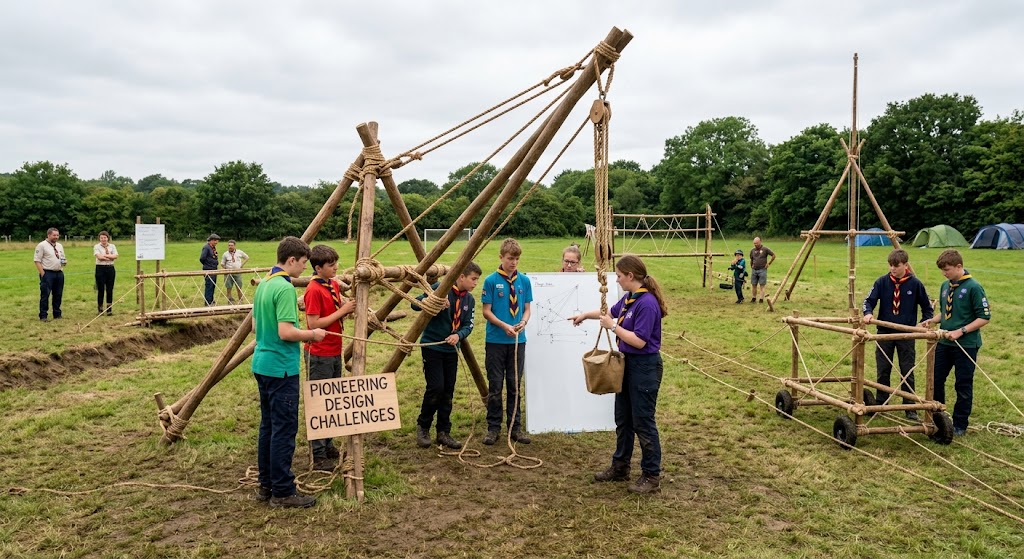
Bushcraft involves learning to work with natural materials, understand your surroundings and use practical techniques to solve problems outdoors. You don’t need expensive equipment to begin developing these skills, although some activities require suitable tools, supervision or a controlled environment.
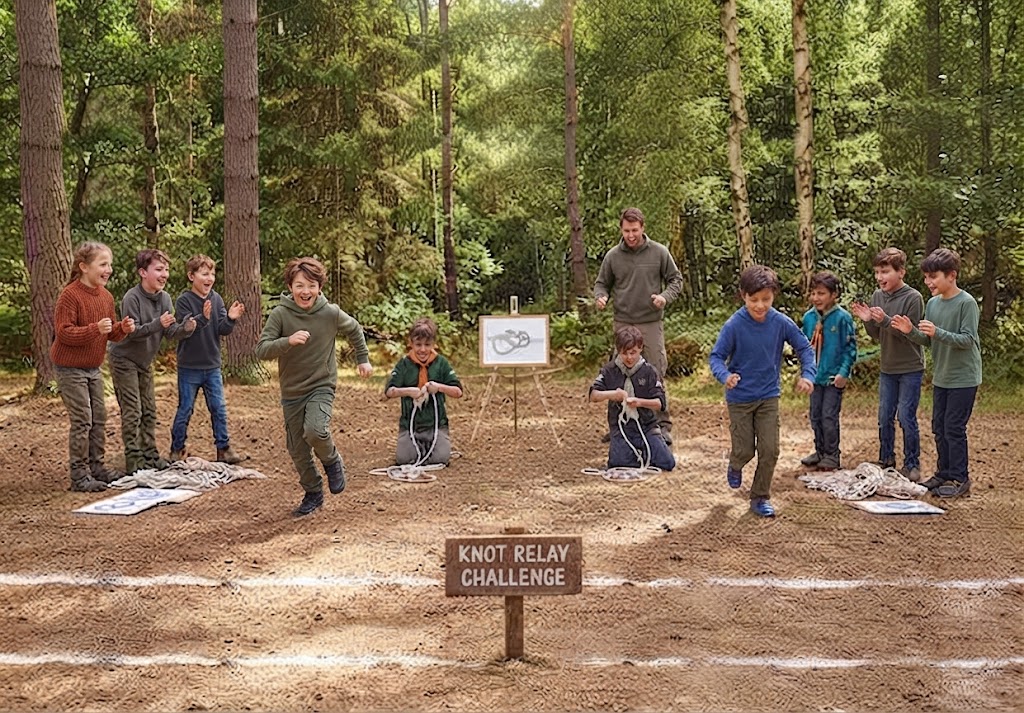
These challenges introduce useful techniques for making, tying, building and working with materials found in the outdoors.
- Challenge 02: Build a Natural Shelter
- Challenge 04: Tie a Bowline Knot
- Challenge 05: Make a Camp Gadget
- Challenge 12: Make a Feather Stick
- Challenge 21: Tie a Reef Knot
- Challenge 23: Make Natural Cordage
- Challenge 29: Build a Shelter Using Only One Tarp and One Rope
- Challenge 38: Build a Bough Bed
- Challenge 41: Make a Fire Blowpipe from a Hollow Stem
What you’ll practise: knot tying, shelter construction, working with natural materials and solving practical campcraft problems.
3. Firecraft and Outdoor Cooking
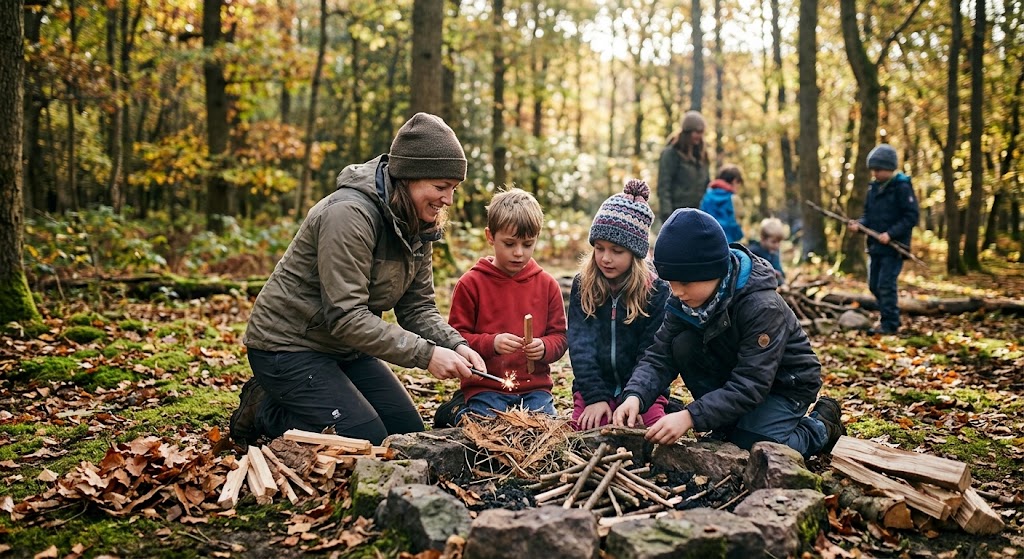
Fire skills involve much more than getting a flame started. You need to understand fuel, preparation, fire safety and how to leave a site safe when you’re finished. Cooking outdoors also gives you the opportunity to learn how different techniques work and why preparation matters.
Always follow local restrictions, use permitted fire sites and ensure you have appropriate supervision and equipment for activities involving flames, hot stones or sharp tools.
- Challenge 03: Light a Fire with Natural Tinder
- Challenge 07: Cook a Simple Camp Meal
- Challenge 14: Leave a Fire Site Safe
- Challenge 22: Make a Basic Fire Lay
- Challenge 42: Cook by Stone Boiling
What you’ll practise: fire preparation, fuel selection, outdoor cooking techniques and responsible fire management.
4. Wildlife, Trees and Plant Awareness
The natural environment offers plenty to learn if you slow down and pay attention. Trees, animal tracks, feeding signs and wildlife behaviour can all tell you something about the place you’re exploring.
These challenges encourage you to observe carefully, identify what you see and interact with the environment responsibly. Identification matters particularly when it comes to wild plants: something that looks edible isn’t necessarily safe to eat.
- Challenge 11: Identify Three Common British Trees
- Challenge 17: Identify Three Edible-Looking Plants You Should Not Eat
- Challenge 25: Find Signs of Animal Feeding
- Challenge 27: Identify a Tree Without Looking at Its Leaves
- Challenge 37: Find Five Types of Animal Homes
- Challenge 46: Learn Which Nuts Are Ready to Harvest in Autumn
- Challenge 47: Practise Leaving No Trace
- Challenge 48: Learn How to Watch Wildlife Without Disturbing It in Woodland
What you’ll practise: tree identification, wildlife observation, recognising animal signs, plant awareness and responsible outdoor behaviour.
5. Weather, Water and Understanding Your Environment
Conditions outdoors can change quickly. Learning to recognise signs of wind, understand rainfall and observe how water behaves can help you make better decisions when choosing a route or campsite.
These challenges encourage you to look beyond the obvious and understand what the environment is telling you.
- Challenge 06: Read the Weather
- Challenge 19: Estimate the Height of a Tree
- Challenge 26: Find a Safe Water Crossing
- Challenge 28: Find Five Signs of Wind Direction
- Challenge 30: Make a Rain Gauge
- Challenge 36: Learn How to Read the Surface of Water
- Challenge 40: Predict Where Water Will Pool After Rain
- Challenge 45: Find Dry Fuel in Damp Woodland
- Challenge 49: Practise Staying Warm in Woodland
- Challenge 50: Learn How Fog and Mist Behave in Woodland
What you’ll practise: weather observation, environmental awareness, simple field experiments, judging conditions and recognising potential hazards.
6. Camping, Personal Safety and First Aid
Outdoor confidence also means knowing how to prepare, recognise hazards and respond sensibly when something unexpected happens. These challenges focus on practical preparation, basic health awareness and understanding situations where safety must come first.
Some activities involve important limitations. Never deliberately enter dangerous water to practise a rescue technique, use a pulse check as a substitute for emergency assessment, or use a cooking appliance inside a tent where carbon monoxide could accumulate.
- Challenge 09: Pack a Day-Walk Rucksack
- Challenge 24: Find a Safe Campsite
- Challenge 32: Make a Wild Soup from Nettle, Wild Garlic or Sorrel
- Challenge 33: Learn the Float to Live Technique
- Challenge 34: How to Take a Pulse
- Challenge 39: Learn the Risks of Carbon Monoxide When Cooking in a Tent
What you’ll practise: trip preparation, campsite assessment, food awareness, water safety and basic first-aid knowledge.
How to Choose Your First Outdoor Skills Challenge
With 50 challenges available, you don’t have to start with the most complicated activity or attempt something that feels beyond your current ability. The best first challenge is one you can complete safely with the time, equipment and experience you have.
If you’re new to outdoor skills, consider starting with packing a day-walk rucksack, reading a map or identifying common British trees. If you already have some experience, you might prefer to practise a knot, build a tarp shelter or carry out a weather observation task.
Before starting, read the instructions carefully, check whether you need any equipment or supervision, and make sure the location and conditions are suitable. If a challenge involves fire, tools, wild plants, water or other hazards, follow the specific safety guidance and don’t attempt it in unsuitable conditions.
You can also return to a challenge later and repeat it. Repetition is a useful part of learning: the aim isn’t simply to tick off a task, but to improve your understanding and become more confident using the skill.
Turn Outdoor Knowledge into Practical Experience
Completing an outdoor skills challenge gives you a reason to put your knowledge into action. You might discover that a technique is easier than you expected, find something you need to practise further or notice details in the environment you would previously have overlooked.
The SGUK Outdoor Skills Challenges are intended to make that process more structured and rewarding. As you work through them, you can build a record of the skills you’ve practised and celebrate your progress towards the challenge milestones.
You don’t need to complete all 50 in order, and you don’t need to master everything on your first attempt. Choose a challenge, get prepared and take the next step in your outdoor skills journey.
Ready to get started? Explore the SGUK Outdoor Skills Challenges, choose your first activity and start learning by doing.
This set of 50 challenges is only the beginning. We are adding new challenges every day so make sure to check out the challenges page for all the latest. Members will earn badges and can keep track of their progress but there is no requirement to join in order to take part in what we hope will become, the biggest free outdoor skills challenge available.
🔒Ready to test your survival skills?
Join Survival Guides UK for free, complete challenges, earn badges and increase your Survival Level.
JOIN FREE →
CRAIG BURR
FOUNDER · SURVIVAL GUIDES UK
I'm Craig, the person behind Survival Guides UK. I created SGUK because I wanted somewhere people could learn real outdoor skills in a practical, straightforward way — from lighting a fire and tying knots to navigation, campcraft and everything in between.
You can read more about the story behind SGUK here as well as our approach here.