
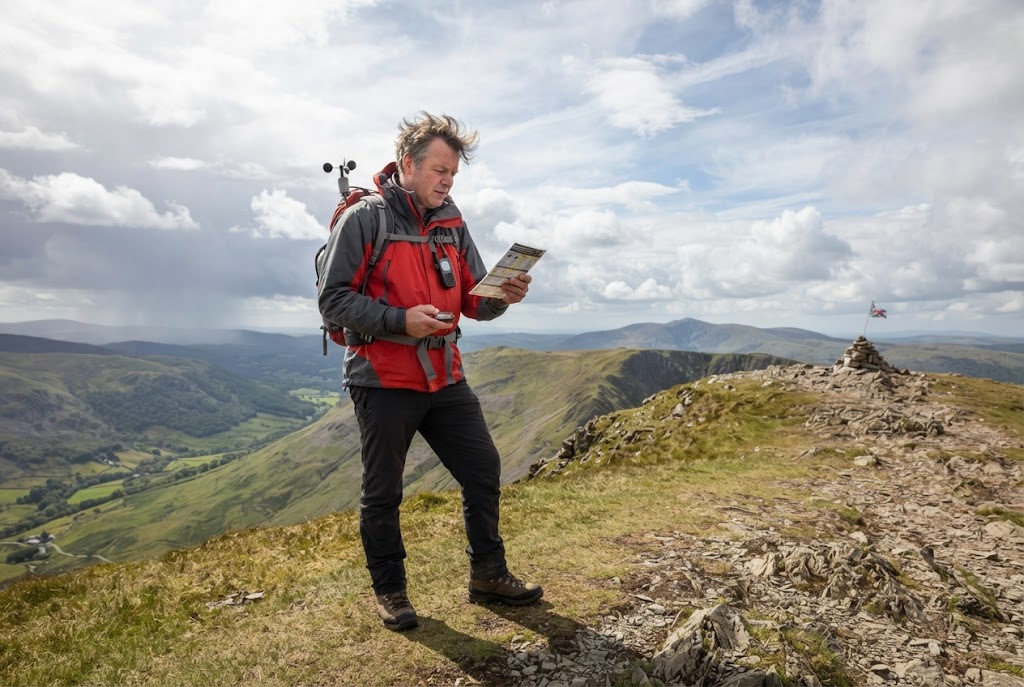
SGUK Outdoor Skills Challenge 18: Learn How to Give a Route Message
Before heading out on a walk, it’s useful to make sure someone else knows where you’re going and when you expect to return. If your plans change or you don’t come back as expected, that information can help someone work out where you might be and what to do next. That is the purpose of the SGUK Outdoor Skills Challenge 18.
A route message is a simple way of sharing your plans clearly to someone who understands it and will use actually use it when needed. It doesn’t need to be complicated, but it should contain enough detail for another person to understand your intended route, your timings and how to raise the alarm if necessary.
Your Challenge
Prepare a route message for a short walk that another person could understand without needing you to explain it. Include your starting point, destination, route, checkpoints, expected timings, who is going, and when someone should raise the alarm if you have not returned.
You can complete this challenge using a real, familiar route or a made-up scenario. You don’t actually need to go on a walk to demonstrate the skill.
What You’ll Need
- A map of your chosen walking area
- A notebook and pen, or a digital document
- Your planned route and estimated timings
- A trusted person who could receive the route message and act on it if necessary
Take the Challenge
Step 1: Identify your route
Choose a short, straightforward route and identify the starting point and destination. Include recognisable locations rather than vague descriptions such as “the woods near the village“. If you know the relevant grid references, include them, making sure you’ve copied them correctly from the map.
Step 2: Describe the route
Explain the route in the order you intend to follow it. Include major paths, junctions, landmarks and checkpoints. Another person should be able to follow your description on a map and understand which way you’re planning to go.
If you have an alternative route in case of bad weather or a blocked path, include that too. Avoid making the message so complicated that the important details become difficult to find.
Step 3: Add timings
State when you intend to set off and when you expect to return. Allow realistic time for the distance, terrain, weather, breaks and the needs of everyone in your group.
Include a clear time by which someone should start checking on you if you haven’t returned or made contact. Agree this with the person receiving the message before you leave, taking account of the route and the likely conditions.
Step 4: Include people and contact details
State who is going on the walk and provide a suitable contact number for the group leader or responsible adult. Include the name and contact details of the person who holds your route information.
For a real outing, share only the personal information needed for safety, and send it privately to a trusted person rather than posting it publicly.
Step 5: Write your route message
Bring everything together into a message that is easy to scan. You can use this template:
Route Message
|
Route Plan |
Information |
|---|---|
|
Group or walker: |
|
|
Date: |
|
|
Starting point: |
|
|
Destination: |
|
|
Planned route and checkpoints: |
|
|
Alternative route, if applicable: |
|
|
Expected start time: |
|
|
Expected return time: |
|
|
Time to raise the alarm if overdue: |
|
|
Number of people in the group: |
|
|
Relevant contact number: |
|
|
Person holding the route message: |
|
|
Emergency information or relevant considerations: |
Fill in the template using your chosen route. If a detail genuinely does not apply, write “not applicable” rather than leaving the reader guessing.
Step 6: Check that someone else understands it
Ask a friend, family member or responsible adult to read your route message. Can they identify where you plan to go, when you expect to return and what they should do if you are overdue?
If anything is unclear, improve the wording. A good route message is not just a record of your plans; it gives someone else useful information if things go wrong.
Safety
A route message is an important precaution, but it doesn’t guarantee that someone will know exactly where you are. Keep to your planned route where practical, update your contact if your plans change, and carry suitable clothing, navigation equipment and a reliable way to call for help.
For organised walks or activities, follow the group’s established route-planning and emergency procedures. The person holding your route message should know when to contact you and when to call for help. If someone is missing and you believe they may be in immediate danger, call 999 rather than waiting for an agreed overdue time to pass.
Check Your Results
Before completing the challenge, check that you can answer these questions:
- Does your route message identify the start and destination clearly?
- Could another person follow your route description on a map?
- Have you included realistic timings and a clear overdue procedure?
- Does the person holding the message know how to contact you?
- Have you explained what should happen if your plans change or you fail to return?
If another person can understand your plan and explain what they would do if you were overdue, your route message is doing its job.
Complete the Challenge
To complete Challenge 18, prepare a route message for a suitable walk and have another person check that it makes sense. You can submit a photograph or screenshot of your completed template, but remove personal phone numbers, home addresses and other private information before uploading it to your member profile.
How to Submit Your Challenge
- Go to your SGUK member profile.
- Open the Social Activity area.
- Upload a photograph of your route message or completed template to your activity wall.
- Add the hashtag #SGUKChallenge18.
- Share your post for evidence verification.
Once you’ve shared your evidence and it has been verified, the SGUK Outdoor Skills Challenge 18 is complete and the completed challenges figure will be updated on your profile.
Challenge 18 Checklist
Want to Push Yourself?
Create a second route message for a walk that has two possible routes or several checkpoints. Add an alternative plan for poor weather or a blocked path, and explain how you would notify the person holding your route details if your plans changed.
You could also ask someone to use your message to trace the route on a map. If they struggle to understand it, improve the description until the intended journey is clear.
What’s Next?
You’ve learnt how to make sure someone else knows your plans before you head outdoors. Revisit SGUK Outdoor Skills Challenge 17: Identify Three Edible-Looking Plants You Should Not Eat to reinforce the importance of making safe decisions, then explore the other SGUK Outdoor Skills Challenges and choose another skill to practise.
Learn. Practise. Master.
That’s what the SGUK Outdoor Skills Challenge is all about.
🔒Ready to test your survival skills?
Join Survival Guides UK for free, complete challenges, earn badges and increase your Survival Level.
JOIN FREE →
CRAIG BURR
FOUNDER · SURVIVAL GUIDES UK
I'm Craig, the person behind Survival Guides UK. I created SGUK because I wanted somewhere people could learn real outdoor skills in a practical, straightforward way — from lighting a fire and tying knots to navigation, campcraft and everything in between.
You can read more about the story behind SGUK here as well as our approach here.


