SGUK Outdoor Skills Challenge 19: Estimate the Height of a Tree
Have you ever looked up at a tall tree and wondered just how high it reaches? You don’t need a measuring pole, specialist equipment or a head for complicated maths to make a reasonable estimate. With a simple technique and a little practice, you can work out a tree’s approximate height using nothing more than a pencil or small stick and a tape measure. That is what you are going to learn here in the SGUK Outdoor Skills Challenge 19.
This is a useful outdoor skill that combines observation, estimation and problem-solving. It’s also a good reminder that you can learn a surprising amount about your surroundings without cutting, climbing or damaging anything.
Your Challenge
Choose a suitable tree and estimate its height using the stick method. Record your estimate, explain how you arrived at it and consider how accurate your result might be.
You don’t need to find the tallest tree in the area. A tree with a clearly visible top and enough open space around it will make the challenge much easier.
What You’ll Need
- A small straight stick or pencil
- A tape measure or measuring wheel
- A notebook and pen
- A tree that you can view clearly from a safe distance
Take the Challenge
Step 1: Choose your tree
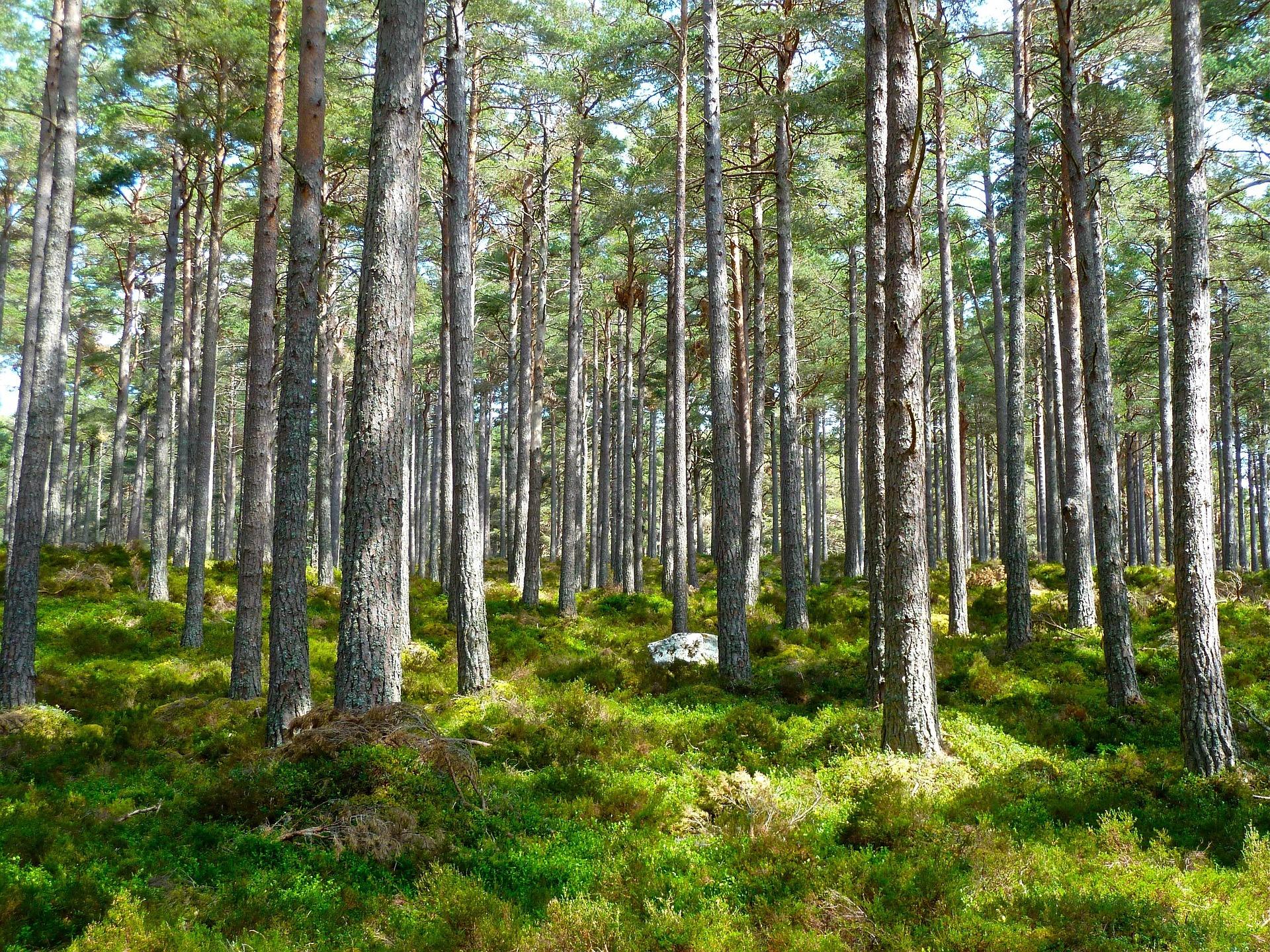
Find a tree in a park, woodland or other place where you are allowed to carry out the activity. Choose one whose top is clearly visible and where you can stand well back from the trunk without entering a road, crossing a fence or approaching a steep slope.
Before you begin, estimate how tall you think the tree is. Write down your guess so that you can compare it with your final result.
Step 2: Find a suitable viewing position
Stand a safe distance from the tree, facing it. Hold your pencil or stick vertically at arm’s length, keeping your arm straight and your viewing position consistent.
Close one eye if it helps you line things up. Adjust the stick so that its apparent length covers the tree from its base to its top. You may need to move a little further away or closer until the tree appears to fit within the stick.
Step 3: Turn the stick horizontally
Keep your arm extended and your thumb in the same position on the stick. Without moving your feet, carefully rotate the stick until it is horizontal, keeping your thumb aligned with the apparent base of the tree.
The end of the stick now indicates an approximate point along the ground. Ask a companion to stand at that point, or identify it using a safe, visible landmark.
Step 4: Measure the distance
Measure the ground distance from the base of the tree to the point indicated by the end of the horizontal stick. This distance gives you an approximate estimate of the tree’s height.
For example, if the distance is 12 metres, your estimated tree height is approximately 12 metres. The method relies on the apparent size of the tree matching the length represented by the stick at arm’s length, so careful alignment makes a big difference.
Step 5: Record your result
Write down the estimated height of the tree, your original guess and the method you used. If you have time, repeat the exercise from another safe viewing position and compare the results.
If your estimates differ, think about what might have affected them. The top of the tree may have been difficult to see, your arm may have moved, or the stick may not have been aligned accurately.
Safety
Never climb a tree, lean out over a drop or stand beneath damaged branches to complete this challenge. Keep away from roads, steep banks, unstable ground and areas where branches could fall. Choose a safe place to stand and ask a companion to help with the measurement if needed.
You should not need to touch the tree or disturb its surroundings. If the top is obscured by other trees, choose a different tree rather than trying to get a better view from an unsafe position.
Check Your Results
Before completing the challenge, consider these questions:
- What was your original estimate of the tree’s height?
- What height did the stick method suggest?
- Why must you keep your arm extended and your viewing position steady?
- What could make your estimate inaccurate?
- Why is estimating a tree’s height different from measuring it precisely?
Remember that this is an estimation technique, not a professional forestry measurement. The result may be several metres out, particularly with irregular tree shapes or difficult viewing conditions. The aim is to practise the method and understand how it works.
Complete the Challenge
To complete Challenge 19, estimate the height of one suitable tree and record your result. Include your original guess, your final estimate and a short explanation of how you used the stick method.
You can photograph your notes and, if practical, the tree from your safe viewing position. You do not need to include yourself standing next to the trunk.
How to Submit Your Challenge
- Go to your SGUK member profile.
- Open the Social Activity area.
- Upload a photograph of your notes or other evidence to your activity wall.
- Add the hashtag #SGUKChallenge19.
- Share your post for evidence verification.
Once you’ve shared your evidence and it has been verified, the SGUK Outdoor Skills Challenge 19 is complete and the completed challenges figure will be updated on your profile.
Challenge 19 Checklist
Want to Push Yourself?
Repeat the challenge with two more trees of different sizes. Record all three estimates and arrange them from shortest to tallest. Before measuring each one, try to estimate its height by eye and see how close you get.
You could also compare your technique with another method, such as the upside-down viewing method described in woodland education resources. Compare the results and consider which method you found easiest to use.
What’s Next?
You’ve practised estimating a measurement using simple equipment and careful observation. Revisit SGUK Outdoor Skills Challenge 18: Learn How to Give a Route Message to reinforce another useful outdoor skill, then explore the other SGUK Outdoor Skills Challenges and choose something new to practise.
For another approach to measuring trees, read the Royal Forestry Society’s guide, How do foresters measure trees?.
Learn. Practise. Master.
That’s what the SGUK Outdoor Skills Challenge is all about.
🔒Ready to test your survival skills?
Join Survival Guides UK for free, complete challenges, earn badges and increase your Survival Level.
JOIN FREE →
CRAIG BURR
FOUNDER · SURVIVAL GUIDES UK
I'm Craig, the person behind Survival Guides UK. I created SGUK because I wanted somewhere people could learn real outdoor skills in a practical, straightforward way — from lighting a fire and tying knots to navigation, campcraft and everything in between.
You can read more about the story behind SGUK here as well as our approach here.