SGUK Outdoor Skills Challenge 09: Pack a Day-Walk Rucksack
Packing a rucksack properly is one of those outdoor skills that makes a real difference to how comfortable and prepared you feel on a walk. It is easy to throw a few things into a bag and head out, but knowing what to take, where to put it and how to carry it comfortably takes a little more thought.
In the last challenge, you learned how to use landmarks for navigation. For this challenge, you will pack a rucksack for a short day walk. You do not need expensive equipment or a specialist hiking bag. Use what you have available, think carefully about the conditions you might encounter, and see whether you can organise your kit so that the things you need are easy to reach when you need them.
Your Challenge
Your task is to pack a day-walk rucksack with the essentials you would need for a short outdoor walk, then check that everything is secure, accessible and comfortable to carry.
Imagine you are heading out for a couple of hours on a local footpath. The weather might change, you might need to stop for a drink or snack, and you should be prepared to deal with a minor delay rather than assuming everything will go exactly to plan.
You are not trying to fill your bag with as much equipment as possible. The aim is to choose useful items for the route, the weather and the length of your walk, while keeping the overall load manageable.
Before You Start
Think about the walk you are packing for. A short walk on familiar paths in mild weather will need less equipment than a longer route over exposed ground, and a cold or wet day calls for different clothing from a warm summer afternoon.
Check the forecast before choosing your kit, but remember that conditions can change. Consider how long you expect to be out, whether there are places to get help if needed, and whether you will have access to drinking water or facilities along the way.
If you are new to walking, start with a simple route close to home. You can practise packing for longer or more demanding walks as your experience grows.
What You’ll Need
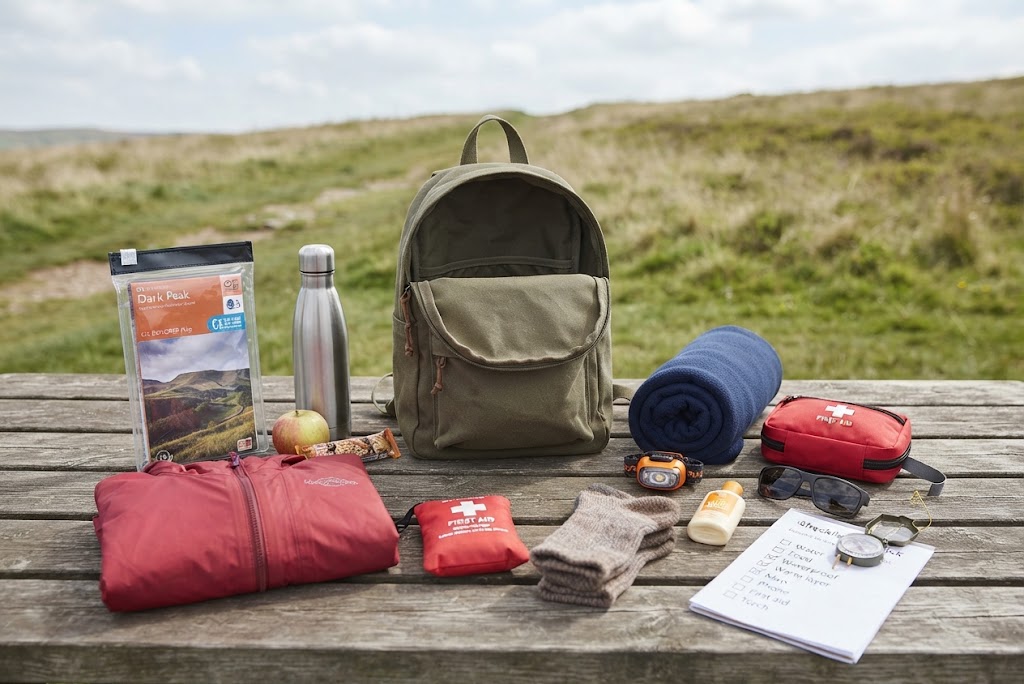
- A rucksack or comfortable day bag
- Drinking water
- Suitable snacks
- A waterproof jacket or other weather-appropriate extra layer
- A small first-aid kit
- A fully charged mobile phone
- A map or route information appropriate to your walk
- Any other essentials suited to the route and conditions
You do not need to buy anything specially for this challenge. Use the equipment you already have, and adapt the list to suit your circumstances. For example, a walk in cold weather may call for an extra warm layer, while a sunny day may make sun protection and a hat particularly useful.
Take the Challenge
Step 1: Choose Your Essentials
Lay your equipment out where you can see everything. Decide which items you genuinely need for your planned walk and check that nothing important has been overlooked.
Water, food, suitable clothing, navigation information and a means of contacting someone are good starting points. A small first-aid kit is also worth carrying. Depending on your route and the conditions, you may need additional items such as a torch, sun cream, insect repellent or spare socks.
Think about what you would do if the walk took longer than expected. You do not need to prepare for every imaginable situation, but carrying a few sensible essentials can make an unexpected delay much easier to manage.
Step 2: Pack Your Rucksack
Put heavier items close to your back where possible, rather than letting them sit at the very bottom or swing around at the outside of the bag. This helps keep the load stable and makes the rucksack more comfortable to carry.
Pack items you are unlikely to need until later towards the bottom, while keeping things such as your waterproof jacket, snacks and map or route information somewhere you can reach easily. Small items can disappear into the bottom of a bag, so use pockets or a small pouch to keep similar equipment together.
Keep water secure and upright if your bag allows it, and make sure anything that could leak is properly closed. Avoid attaching lots of loose equipment to the outside, where it may catch on branches or become unbalanced.
Step 3: Check the Weight and Fit
Put the rucksack on and adjust the straps until it sits comfortably. The bag should feel stable rather than pulling you backwards or swinging from side to side. If it feels awkward, take it off and rearrange the contents before trying again.
Walk around for a few minutes. Bend carefully, turn from side to side and check that the contents are not shifting about. If the bag feels too heavy for the walk, remove unnecessary items rather than assuming you will get used to the weight.
A well-packed bag is not simply one that contains everything on your list. It should also be comfortable enough to carry without making the walk harder than it needs to be.
Step 4: Test Your Organisation
Without unpacking everything, see how quickly you can find your water, a snack and your waterproof jacket. These are items you may want during the walk, so it helps to know exactly where they are.
If you have to empty the whole bag to find something, reorganise it. You might discover that a different pocket or a small pouch makes a big difference.
Finally, check that zips and fastenings are closed, straps are secure and nothing is likely to fall out when you move.
Check Your Results
You have completed the practical part of the challenge when you can answer yes to these questions:
If you answered no to any of these, make a few changes and test the bag again. The purpose is to improve your preparation, not to get everything perfect on the first attempt.
Complete the Challenge
Once your rucksack is packed, take a photograph showing your organised kit or your packed bag ready for the walk. Make sure the photograph represents your own work on the challenge.
How to Submit Your Challenge
- Go to your SGUK member profile.
- Open the Social Activity area.
- Upload your photograph to your activity wall.
- Add the hashtag #SGUKChallenge09 to your post.
- Share your post so your evidence can be checked.
Once you’ve shared your evidence and it has been verified, the SGUK Outdoor Skills Challenge 09 is complete and the completed challenges figure will be updated on your profile.
Challenge 09 Checklist
Before submitting your evidence, check that you have:
Want to Push Yourself?
Try packing for two different walks: one on a warm, dry day and another when colder, wetter weather is expected. Compare the contents and think about what changes, what stays the same and why.
You could also ask someone to suggest an item you have not packed and explain whether you think it is necessary for your chosen route. Being able to justify what you carry is a useful outdoor skill in its own right.
What’s Next?
A well-packed rucksack helps you prepare for a walk, but knowing how to look after yourself outdoors is just as important. Keep working through the SGUK Outdoor Skills Challenge series, practise skills in suitable conditions and build your confidence one challenge at a time.
Learn. Practise. Master. That’s what the SGUK Outdoor Skills Challenge is all about.
🔒Ready to test your survival skills?
Join Survival Guides UK for free, complete challenges, earn badges and increase your Survival Level.
JOIN FREE →
CRAIG BURR
FOUNDER · SURVIVAL GUIDES UK
I'm Craig, the person behind Survival Guides UK. I created SGUK because I wanted somewhere people could learn real outdoor skills in a practical, straightforward way — from lighting a fire and tying knots to navigation, campcraft and everything in between.
You can read more about the story behind SGUK here as well as our approach here.