SGUK Outdoor Skills Challenge 15: Learn the Five Ds of Navigation
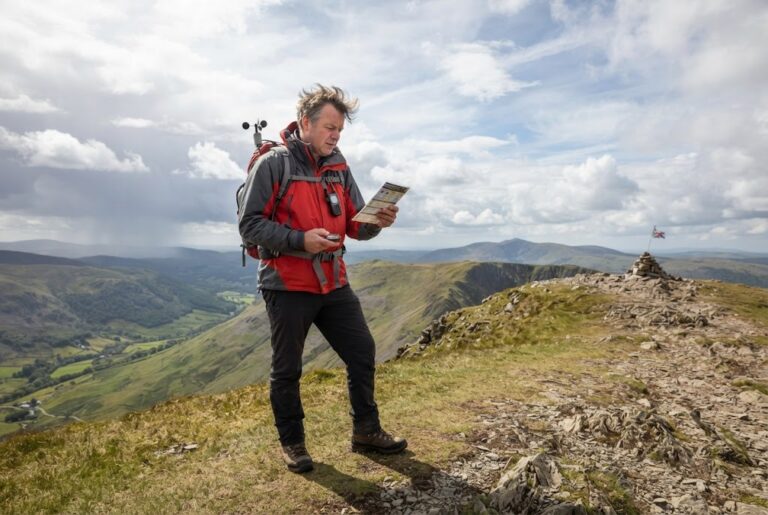
Good navigation is about more than knowing how to read a map or follow a compass bearing. You also need to keep checking your surroundings, make sensible decisions and recognise when something isn’t going to plan. The Five Ds of Navigation provide a simple way to remember important questions to ask yourself before and during a walk.
Different instructors use slightly different versions of the Five Ds, so for this challenge we’ll use Destination, Direction, Distance, Description and Duration. These give you a practical framework for thinking about where you’re going, how you’ll get there and what to expect along the way.
Your Challenge
Learn the Five Ds of Navigation, explain what each one means and use them to plan a short, familiar walk. You should be able to describe your destination, the direction of travel, the distance involved, the route features you’ll look for and the estimated time needed.
What You’ll Need
- A map covering a familiar walking area
- A compass, if appropriate for your route
- A notebook and pen
- A watch or phone to check the time
- Suitable clothing and footwear for the conditions
- A phone or camera for your proof photos
Take the Challenge
Step 1: Learn the Five Ds
Remember the five Ds and what each one helps you consider:
- Destination: Where are you going? Identify your intended destination and any intermediate checkpoints.
- Direction: Which way do you need to travel? Use your map, compass and visible landmarks to establish your route.
- Distance: How far do you need to go? Estimate the distance for the whole route and between important points.
- Description: What should you expect to see along the way? Identify paths, junctions, buildings, streams, distinctive hills or other features that can help you recognise where you are.
- Duration: How long is the journey likely to take? Allow for your walking pace, terrain, weather, breaks and the needs of everyone in your group.
Step 2: Choose a short route
Select a familiar, straightforward walk on a suitable path. Mark your starting point, destination and at least two useful checkpoints on your map. For this challenge, choose a route that matches your experience and current conditions rather than attempting difficult terrain.
Step 3: Apply each D to your route
Write down an answer for each of the five Ds. For example, your destination might be a viewpoint, your direction might follow a marked path towards the west, your distance might be two kilometres, your description might include a bridge and a path junction, and your duration might be around 35 minutes.
These are just example details; use the actual features and measurements of your own route. Your estimated time should be realistic and include a margin for delays.
Step 4: Check your plan against the map
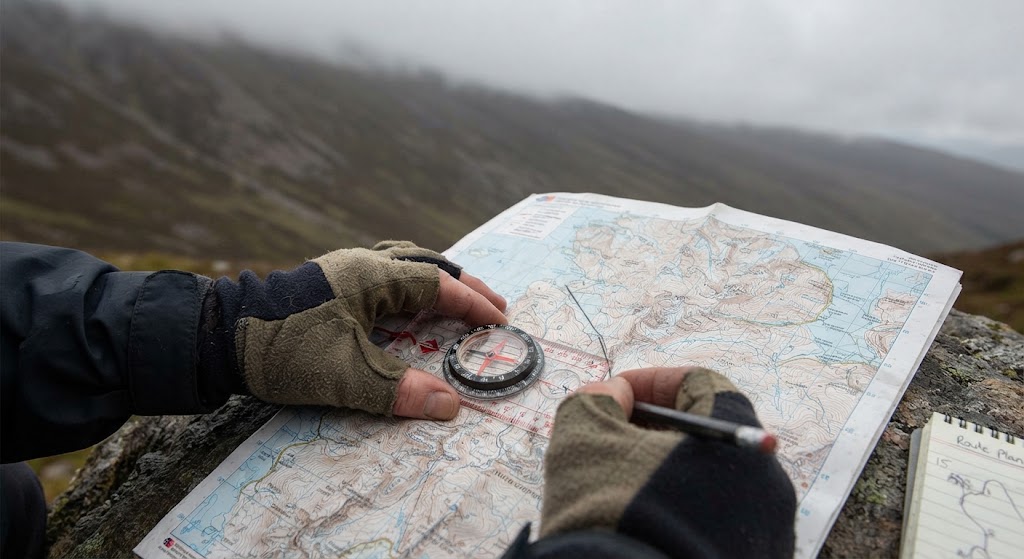
Trace the route with your finger and make sure the checkpoints appear in the correct order. Look for junctions, changes in direction, steep slopes and places where it might be easy to take the wrong path. If you are using a compass, check that you understand how it relates to the map and the direction of travel.
Step 5: Test your plan outdoors
If conditions are suitable, walk the short route with a companion or responsible adult as appropriate. At each checkpoint, stop and compare what you can see with your map and written description. Check your progress rather than relying on memory alone.
If the route no longer matches your plan, stop somewhere safe and reassess your position. Don’t keep walking in the hope that the route will become clear.
Safety
Plan your walk around your ability level, the weather, daylight and the conditions underfoot. Tell someone where you are going and when you expect to return, and carry suitable clothing, water and a way to call for help. Keep to appropriate paths and don’t approach cliffs, fast-flowing water or other hazards just to identify a landmark.
If you become unsure of your location, stop in a safe place and check your map and surroundings. If you cannot confidently establish where you are or continuing would be unsafe, seek assistance rather than guessing. In an emergency in the UK, call 999.
Check Your Results
You should now be able to answer these questions without looking at your notes:
- What are the Five Ds of Navigation used in this challenge?
- Why is it useful to identify checkpoints before setting off?
- How can distance and duration help you plan a realistic walk?
- What kinds of landmarks or route features can help confirm your position?
- What should you do if the ground around you doesn’t match your map?
You can consider the challenge complete when you can explain all five Ds in your own words and apply them to a simple route plan.
Complete the Challenge
Create a short written route plan showing your destination, direction, distance, description and estimated duration. You can submit a photograph of your notes or map with your planned route marked clearly. Avoid including private home addresses or other personal information in your evidence.
How to Submit Your Challenge
- Go to your SGUK member profile.
- Open the Social Activity area.
- Upload a photograph of your evidence to your activity wall.
- Add the hashtag #SGUKChallenge15.
- Share your post for evidence verification.
Once you’ve shared your evidence and it has been verified, the SGUK Outdoor Skills Challenge 15 is complete and the completed challenges figure will be updated on your profile.
Challenge 15 Checklist
Want to Push Yourself?
Plan a second route that includes more checkpoints or a change of direction. Compare the two plans and consider which one would be easier for another person to follow. You could also ask a friend to use your written description to identify the checkpoints on the map.
The aim isn’t to create the longest or most complicated route. It’s to make your plan clear enough that you understand where you’re going, what to look for and when to check your progress.
What’s Next?
You have added another useful navigation technique to your outdoor skills. Revisit SGUK Outdoor Skills Challenge 14: Leave a Fire Site Completely Safe to refresh your fire-safety knowledge, or explore the other SGUK Outdoor Skills Challenges and choose another skill to practise.
Learn. Practise. Master.
That’s what the SGUK Outdoor Skills Challenge is all about.
🔒Ready to test your survival skills?
Join Survival Guides UK for free, complete challenges, earn badges and increase your Survival Level.
JOIN FREE →
CRAIG BURR
FOUNDER · SURVIVAL GUIDES UK
I'm Craig, the person behind Survival Guides UK. I created SGUK because I wanted somewhere people could learn real outdoor skills in a practical, straightforward way — from lighting a fire and tying knots to navigation, campcraft and everything in between.
You can read more about the story behind SGUK here as well as our approach here.