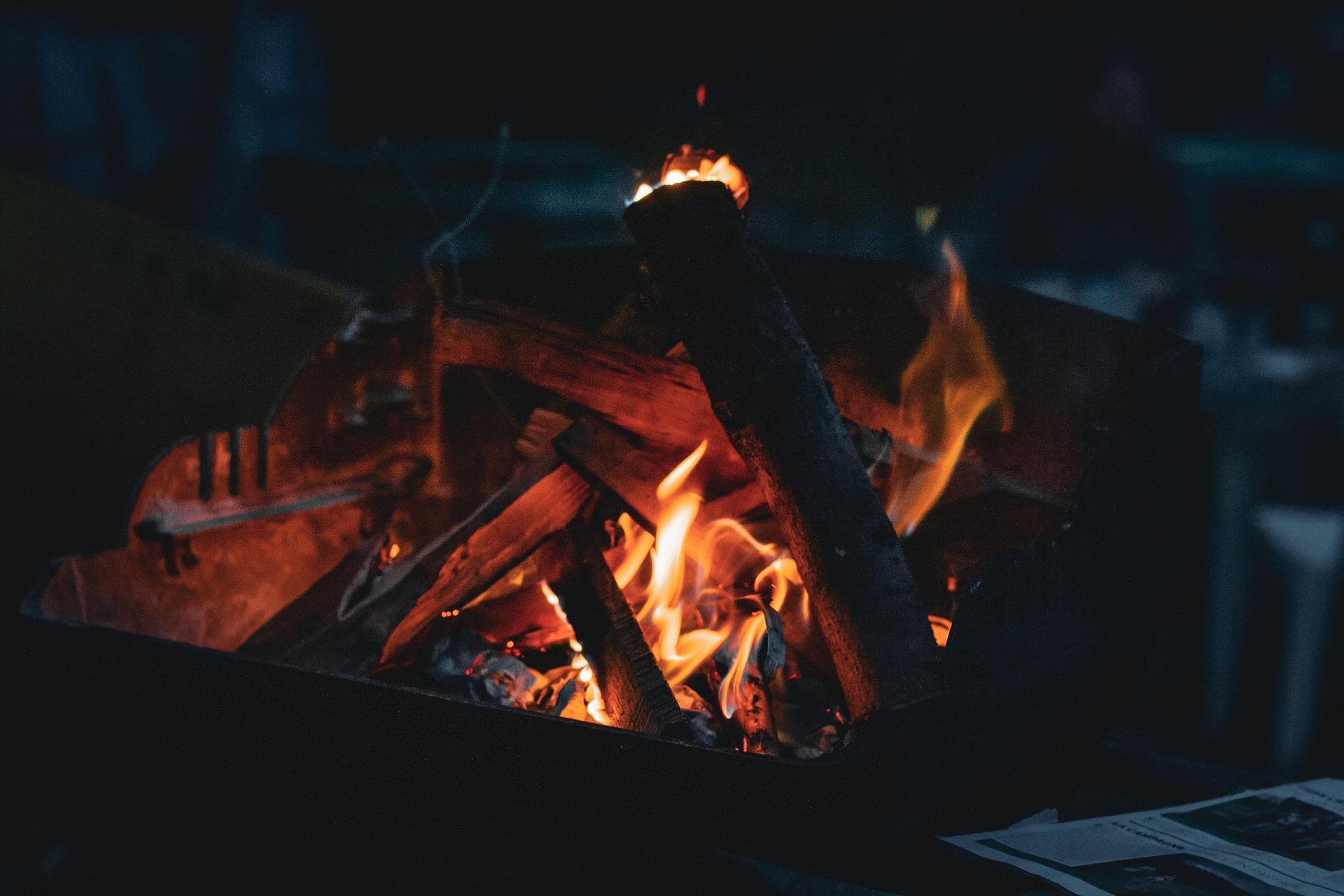
Fire Safety Challenge
Activity Overview
Difficulty: Beginner
Time: 60 minutes
Group size: 11-20
Best for: Beavers, Cubs
Skills: Fire safety, hazard awareness, decision making, communication, outdoor safety
Teach young people how to behave safely around a campfire without needing to light one.
Through a series of simple scenarios, demonstrations and team challenges, they identify hazards and decide what should and should not be done around a fire.
What You’ll Learn
Participants will learn:
- Why fires need to be treated carefully
- How to identify common fire hazards
- Where people should safely sit around a fire
- Why loose clothing and other materials can be dangerous
- How to behave around lighting and cooking fires
- What to do if something goes wrong
- Why a fire should never be left unattended
🟢 SAFETY – LOW RISK
This activity can be completed without a lit fire, making it suitable for introducing fire safety before practical fire activities.
If demonstrating around an existing fire:
- Maintain a clear safety area.
- Ensure appropriate adult supervision.
- Keep water or other suitable means of extinguishing the fire available.
- Keep young people at a safe distance.
- Do not allow participants to add fuel or handle burning materials during this activity.
The activity should be adapted to the location, weather and age of the group.
Equipment
- Fire safety picture cards or scenario cards
- Cones or markers
- Bucket of water
- Fire blanket, if available
- Selection of safe camping equipment
- Optional: unlit fire lay for demonstration
Prerequisites
No previous fire experience is required.
Explain the boundaries and basic fire safety rules before beginning.
Instructions
- Gather the group in a safe area and explain that today’s challenge is about staying safe around fire.
- Place several objects around the activity area, including safe items and potential hazards.
- Ask teams to identify anything they think could cause a problem.
- Discuss each answer and explain why it could be dangerous.
- Introduce simple scenarios, such as:
- Someone walks too close to the fire.
- A jacket sleeve gets too close to the flames.
- Someone wants to throw something into the fire.
- A person leaves the fire area without telling anyone.
- Water is not available near the fire.
- Teams decide what the person should do and explain their answer.
- Run a safe or unsafe challenge. Read out an action and have the teams move to the appropriate side of the activity area.
- Examples include:
- Sitting in the designated area — safe.
- Running near a fire — unsafe.
- Keeping water nearby — safe.
- Throwing rubbish into a fire — unsafe.
- Leaving a fire unattended — unsafe.
- Finish by asking each team to give one important fire safety rule.
Make It Harder
Give Cubs more complicated scenarios and ask them to identify several hazards at once.
You can also ask them to create their own fire safety scenario for another team to solve.
Make It Easier
Use pictures instead of written scenarios and focus on a small number of simple rules.
For Beavers, demonstrate each situation rather than relying entirely on discussion.
Final Tip
Teach fire safety before fire lighting. Young people who understand how to behave around a fire are much better prepared when they eventually take part in practical fire activities.
🔒Ready to test your survival skills?
Join Survival Guides UK for free, complete challenges, earn badges and increase your Survival Level.
JOIN FREE →
CRAIG BURR
FOUNDER · SURVIVAL GUIDES UK
I'm Craig, the person behind Survival Guides UK. I created SGUK because I wanted somewhere people could learn real outdoor skills in a practical, straightforward way — from lighting a fire and tying knots to navigation, campcraft and everything in between.
You can read more about the story behind SGUK here as well as our approach here.