SGUK Outdoor Skills Challenge 31: Run a “What If” Scenario for a Hike
A successful hike depends on more than choosing a route and putting one foot in front of the other. Conditions can change, paths can become difficult to follow, equipment can fail and people can become tired or injured. The decisions you make when something unexpected happens can have a considerable effect on how safely you get everyone home.
One of the best ways to prepare is to think through these situations before they ever occur. Walkers, mountaineers, bushcraft enthusiasts and outdoor leaders all use contingency planning to consider what could go wrong, recognise warning signs and decide how they would respond.
For this challenge, you’ll work through a realistic hiking what-if scenario, assess the situation and develop a practical response. You won’t need to create an emergency or put yourself at risk. The aim is to practise your judgement while you have the time and freedom to think carefully.
Your Challenge
Choose a realistic problem that could arise during a hike and work through it as though you were responsible for making the decisions.
You can complete the challenge alone, with a walking partner or as part of a group. If you’re an experienced walker, make the situation more demanding by introducing several connected problems rather than relying on a single obvious answer.
Your scenario must cover three things:
- Recognising the problem: What has happened, what information do you need and what are the immediate risks?
- Making a decision: What are your options, and which response best protects everyone involved?
- Planning the next steps: What will you do, what equipment or assistance might you need, and under what circumstances would you change your plan?
You’ll complete the challenge by recording your scenario, your decisions and the reasoning behind them. A good response should demonstrate sound judgement, not simply identify the first possible solution.
What You’ll Need
- A notebook for recording your decisions.
- A map, preferably one with identifiable paths, junctions and alternative escape routes.
- Information about the route, including its length, terrain, expected duration and likely conditions.
- A watch or phone to help you consider timings, daylight and communication.
- A basic understanding of the equipment you would normally carry on a hike.
You don’t need to go walking to complete this challenge. However, using a familiar route can make your decisions more realistic because you’ll have a better idea of the terrain, access points and possible alternatives.
If you’re working with other people, allow everyone to suggest a response before discussing the options. This often reveals assumptions that one person might otherwise overlook.
Take the Challenge
Step 1: Choose your hiking what-if scenario
Select one of the situations below, or develop your own based on the kind of walking you do.
Scenario A: The weather deteriorates
You’re halfway through a planned hike when the weather changes. Visibility begins to fall, the wind strengthens and rain makes the ground slippery. Your original route crosses exposed terrain before descending to a sheltered valley.
Consider whether you should continue, turn back or take an alternative route. What information would influence your decision? How would you know whether the conditions had become unacceptable, and what would you do if visibility deteriorated further?
Scenario B: Someone injures an ankle
A member of your walking group twists an ankle on uneven ground. They’re conscious and able to communicate, but putting weight on the injured leg is painful. You’re some distance from the end of the route.
Consider how you would assess the situation, keep the person comfortable and decide whether they could safely continue. Think about the terrain, the group’s equipment, the weather and the possibility that moving the injured person could make things worse.
Scenario C: You lose confidence in your navigation
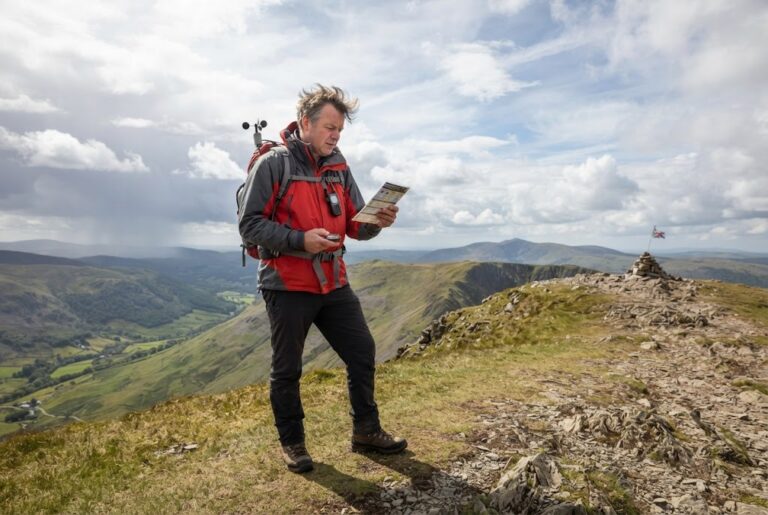
You reach a junction and realise that the path ahead doesn’t match what you expected from the map. You cannot confidently identify your current position. Your phone has limited battery remaining, and the weather is beginning to worsen.
Consider how you would establish your position, what information you could use and how you would avoid turning a small navigation error into a more serious problem.
Scenario D: Daylight is running out
Your hike has taken longer than planned. You have less daylight remaining than expected, and the route still includes rough or unfamiliar ground. Everyone is tired, but nobody is injured.
Consider whether to continue, shorten the route or retrace your steps. How would you assess the remaining distance, terrain, available light and condition of the group? What would change your decision?
Choose one scenario to begin with. You can work through the others later as additional practice.
Step 2: Establish the situation
Before deciding what to do, write down what you know and what you still need to find out.
For example, in the navigation scenario, you might know that the path does not match your expectations and that the phone battery is low. You might not know your precise location, whether the path ahead is correct or how much daylight remains.
Separate confirmed information from assumptions. A path that looks unfamiliar isn’t necessarily the wrong path, just as a forecast suggesting improving weather doesn’t guarantee that conditions on exposed ground will be safe.
Ask yourself:
- Where are we, as accurately as we can establish?
- What has changed since the hike began?
- Is anyone injured, cold, exhausted or otherwise struggling?
- What are the immediate hazards?
- How much daylight, food, water and suitable clothing remain available?
- What equipment, communication methods and alternative routes are available?
You don’t need to answer every question for every scenario. Concentrate on the information that could genuinely affect your decision.
Step 3: Identify your options
Write down at least three possible responses before choosing one.
In the worsening-weather scenario, these might be continuing towards the planned descent, retracing your route or taking a suitable alternative that avoids exposed ground.
Don’t assume that three options automatically means three equally sensible choices. Some may become unacceptable once you consider the terrain, weather, time or condition of the group.
For each option, consider the likely benefits, disadvantages and possible consequences. Ask what could happen if the situation worsened while you were following that plan. Also consider whether the decision is reversible: could you change direction or seek shelter safely if new information emerged?
This is where experience becomes particularly valuable. Rather than looking for a perfect solution, you’re trying to identify the most appropriate response with the information available.
Step 4: Choose your response and explain why
Select your preferred option and record the reasons for your decision.
A strong response should explain why the option is suitable for the circumstances, what risks remain and how you intend to manage them.
For example, if visibility is deteriorating on exposed ground, continuing simply because you’re halfway through the hike is poor reasoning. You would need to consider whether the route remains safe, whether you can navigate reliably and whether a suitable alternative is available. Depending on those findings, turning back or using a safer descent might be more appropriate.
Equally, turning back is not automatically the safest choice in every situation. The return route may be longer, more exposed or more difficult in the prevailing conditions. Good decisions depend on the actual circumstances rather than a rule that always favours one direction.
If you’re working in a group, explain your choice to the others and invite them to challenge your reasoning. Be prepared to revise your plan if someone identifies a significant risk you have overlooked.
Step 5: Plan the next 30 minutes
Now turn your decision into a practical action plan.
Describe what you would do first, what would follow and what you would monitor as the situation develops. Include any changes you would make to the group’s pace, route, equipment or communication.
Your plan might include stopping in a safe place to reassess the map, putting on waterproof clothing before people become chilled, checking whether an injured person needs urgent medical assistance, or informing someone of a significant change to your expected return.
Think about the point at which you would abandon the preferred plan and switch to another option. For example, if visibility became too poor to navigate safely, would you know when to stop progressing and seek appropriate assistance?
Where an injury or other emergency exceeds your ability to manage it safely, don’t treat completing the hike as the priority. In the UK, call 999 or 112 and ask for Mountain Rescue when appropriate. Follow the emergency operator’s instructions.
Step 6: Introduce a second problem
Once you’ve developed your initial plan, introduce another complication.
Perhaps the weather scenario now includes a tired group member. In the navigation scenario, suppose your phone battery dies. In the injury scenario, imagine that the injured person cannot bear weight and the route out is difficult.
Reassess your original decision.
Does your plan still make sense? Have your options changed? Is the risk now greater than you first thought? Do you need outside assistance?
This step is important because real incidents rarely unfold exactly as expected. A sensible plan needs to account for changing conditions, not just the situation as it first appeared.
Don’t make the scenario artificially complicated for its own sake. The additional problem should test whether your decision-making can adapt when an important assumption changes.
Step 7: Review your decision
Finish by recording what you learned from the exercise.
Identify the information that mattered most, the main risks you considered and any weaknesses in your original plan. If you were uncertain about a particular decision, research the subject using a reliable source or ask an appropriately experienced outdoor professional.
If you’re using a real route, look at the map again. Identify where you could leave the route safely, where communication might be difficult and which sections would become more challenging in poor conditions.
The purpose isn’t to prove that you would always make the perfect decision. It’s to develop a more deliberate process so that, when something unexpected happens, you have a better chance of recognising the problem and responding effectively.
Safety
Keep the exercise hypothetical. You do not need to walk into bad weather, deliberately become lost, exhaust yourself or put anyone in danger to test your response.
If you choose to complete the exercise outdoors, use a suitable route and normal equipment, and keep to conditions appropriate for your experience. Never deliberately create an emergency or withhold assistance from someone to make the scenario more realistic.
For further guidance, consult Mountain Rescue England and Wales and the Met Office mountain weather forecasts.
Check Your Results
Before marking the challenge complete, review your written response against the following standards.
Situation awareness: Have you identified the immediate problem, the main hazards and the important information that is missing? Have you distinguished what you know from what you’re assuming?
Options: Have you considered at least three possible responses and assessed their advantages and disadvantages? Have you avoided choosing an option simply because it allows you to finish the planned hike?
Decision-making: Is your preferred response supported by clear reasoning? Have you considered the safety of everyone involved, the conditions and the possibility that the situation could worsen?
Action plan: Have you explained what you would do first and what would happen next? Does your plan include communication, equipment or assistance where appropriate?
Adaptability: When you introduced the second problem, did you reconsider your decision? Have you identified the circumstances that would make you change your plan or seek outside help?
A good result is a response that is practical, proportionate to the situation and supported by sound reasoning. You should be able to explain not only what you would do, but why that response is preferable to the alternatives.
You don’t have to predict every possible outcome. You do need to recognise uncertainty and avoid relying on assumptions that could put you or others at risk.
Complete the Challenge
To complete Challenge 31, work through one hiking scenario and record your reasoning from the initial problem to your final decision.
Your record should include:
- The scenario you selected and the circumstances you considered.
- The main hazards and the information you would need.
- At least three possible responses, with a brief assessment of each.
- Your chosen response and the reasons for selecting it.
- A practical plan for the next 30 minutes.
- The additional problem you introduced and how it affected your decision.
- One lesson you would apply to a real hike.
Review your response and make any changes needed before submitting your evidence.
You can complete this challenge using a written scenario and a map; there is no requirement to go on a hike or stage a real incident.
How to Submit Your Challenge
Share Your Evidence
- Go to your SGUK member profile.
- Open Social Activity.
- Upload a photograph of your evidence to the activity wall. This could be a photograph of your completed scenario notes, your annotated map or your written decision-making plan.
- Add the hashtag #SGUKChallenge31 to your post.
- Share the post for verification.
Make sure your evidence demonstrates the decisions you made and the reasoning behind them. A photograph of a map alone may not show how you’ve completed the challenge, so include your notes or a clear summary of your response.
Once you’ve shared your evidence and it has been verified, the SGUK Outdoor Skills Challenge 31 is complete and the completed challenges figure will be updated on your profile.
Challenge 31 Checklist
Have You Completed Every Part?
Want to Push Yourself?
If your first scenario was straightforward, make your next one more demanding.
Work with a walking partner. Both of you should read the same scenario independently and write down your preferred response. Compare your decisions afterwards. Differences in your reasoning can reveal risks or alternatives that one person missed.
Use a real route. Choose a walk you know well and identify three places where an unexpected problem could change your plans. Consider the available alternatives, access points, terrain and communication options. You don’t need to visit those locations during poor conditions; the exercise is about planning ahead.
Add a time constraint. Give yourself five minutes to establish the situation and identify your options, then explain your decision. The aim is not to rush into a choice but to practise identifying the information that matters most.
Develop a group contingency plan. If you lead walks or regularly hike with others, consider how you would communicate a change of plan, account for everyone’s abilities and agree when to stop, turn back or seek assistance.
Repeat the exercise with a different problem. Navigation errors, equipment failures, unexpected cold, injuries and delays all test different aspects of outdoor judgement. Keep a record of the scenarios you’ve completed so you can identify areas where you need more knowledge or practice.
As your experience grows, try combining two problems that affect each other. For instance, a minor injury may become more serious if the weather deteriorates and the group cannot reach shelter quickly. The challenge is to recognise how the risks interact, rather than treating each problem in isolation.
What’s Next?
If you haven’t already completed the previous challenge, try SGUK Outdoor Skills Challenge 30: Make a Rain Gauge.
It provides a practical way to observe and record rainfall, which can help you become more aware of local weather conditions.
Remember, SGUK Outdoor Skills Challenges can be completed in any order. Choose whichever challenge suits your interests, experience and the skills you want to develop next.
Learn. Practise. Master.
That’s what the SGUK Outdoor Skills Challenge is all about.
🔒Ready to test your survival skills?
Join Survival Guides UK for free, complete challenges, earn badges and increase your Survival Level.
JOIN FREE →
CRAIG BURR
FOUNDER · SURVIVAL GUIDES UK
I'm Craig, the person behind Survival Guides UK. I created SGUK because I wanted somewhere people could learn real outdoor skills in a practical, straightforward way — from lighting a fire and tying knots to navigation, campcraft and everything in between.
You can read more about the story behind SGUK here as well as our approach here.