
SGUK Outdoor Skills Challenge 27: Identify a Tree Without Looking at Its Leaves
You don’t need leaves to recognise a tree. Its bark, buds, twigs, shape and even the seeds scattered beneath it can provide clues to its identity. Learning to identify a tree without leaves is especially useful in autumn and winter, when many familiar trees have lost their leaves.
For this challenge, you’ll investigate a tree and use the clues around you to work out what species it might be.
Your Challenge
Identify one tree without using its leaves as your main clue. Use at least three other features to make your identification, then photograph the tree and record your reasoning.
What You’ll Need
- A tree in a park, garden, hedgerow or woodland that you can approach safely.
- A phone or camera.
- A notebook or phone to record your observations.
Take the Challenge
Choose a tree and examine it carefully without relying on its leaves. Try these steps:
- Look at the bark. Is it smooth, rough, deeply ridged, peeling or marked with horizontal lines? Silver birch, for example, often has distinctive pale bark, while mature oaks tend to develop rugged, fissured bark.
- Examine the twigs and buds. Notice whether the buds are opposite one another or alternate along the twig. Ash has distinctive dark purple-black buds, while horse chestnut has large, sticky buds.
- Study the overall shape. Is the tree tall and narrow, broadly spreading or covered in drooping branches? Compare the shape of the whole tree rather than relying on one feature.
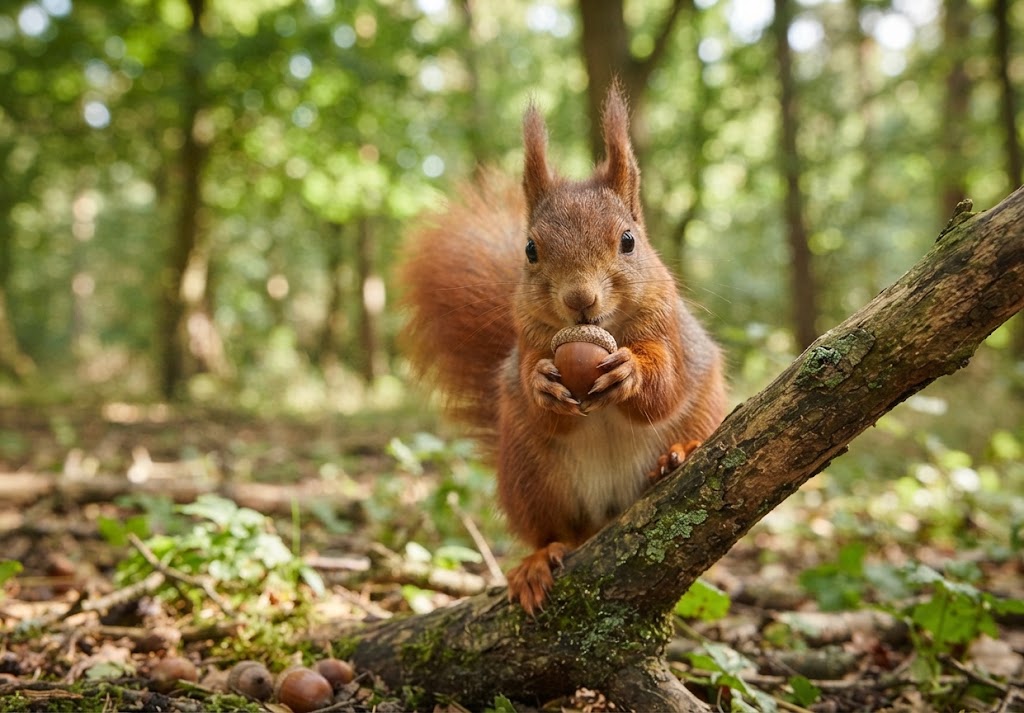
- Look at the ground nearby. Fallen acorns, conkers, seeds or seed cases may help you identify the tree. Make sure you can reasonably connect them to the tree you’re investigating.
- Put the clues together. Use at least three features to suggest an identification. If you’re uncertain, compare your observations with a reliable tree identification guide.
Don’t pick buds or break twigs off to examine them. Look closely at what is already accessible, and remember that bark and shape can vary as trees age or grow in different conditions.
Check Your Results
Before completing the challenge, check that you can:
- Identify at least three clues other than leaves.
- Suggest a likely tree species.
- Explain how the clues support your identification.
- Compare your findings with a reliable reference.
For help, use the Woodland Trust’s guide to identifying trees in winter, which includes examples of bark, buds, twigs and tree shapes.
Complete the Challenge
Take a photograph of your chosen tree and, if possible, a close-up of one identifying feature, such as its bark or buds. Record the tree you believe it is and the clues you used to reach your conclusion.
How to Submit Your Challenge
- Go to your SGUK member profile.
- Open the Social Activity area.
- Upload a photograph of your evidence to your activity wall.
- Add the hashtag #SGUKChallenge27.
- Share your post for evidence verification.
Once you’ve shared your evidence and it has been verified, the SGUK Outdoor Skills Challenge 27 is complete and the completed challenges figure will be updated on your profile.
Challenge 27 Checklist
Want to Push Yourself?
Try identifying two different trees without using their leaves. Compare their bark, buds and overall shapes, then explain which features helped you tell them apart.
You could also return to your chosen tree in spring and check your identification when its leaves appear.
What’s Next?
For your previous challenge, revisit SGUK Outdoor Skills Challenge 26: Find a Safe Water Crossing and practise observing your surroundings carefully before making an outdoor decision.
Each SGUK Outdoor Skills Challenge can be completed in any order, so choose another skill that interests you and keep building your outdoor knowledge.
Learn. Practise. Master.
That’s what the SGUK Outdoor Skills Challenge is all about.
🔒Ready to test your survival skills?
Join Survival Guides UK for free, complete challenges, earn badges and increase your Survival Level.
JOIN FREE →
CRAIG BURR
FOUNDER · SURVIVAL GUIDES UK
I'm Craig, the person behind Survival Guides UK. I created SGUK because I wanted somewhere people could learn real outdoor skills in a practical, straightforward way — from lighting a fire and tying knots to navigation, campcraft and everything in between.
You can read more about the story behind SGUK here as well as our approach here.