SGUK Outdoor Skills Challenge 25: Find Signs of Animal Feeding
You don’t always need to see an animal to know it’s been nearby. A nibbled leaf, a chewed hazelnut or a strip of missing bark can tell you that something has stopped for a little meal. Learning to spot these clues makes an ordinary walk through woodland, a park or a hedgerow much more interesting.
For this challenge, you’re going to look for evidence and signs of animal feeding and see what you can discover from the marks left behind.
Your Challenge
Find at least three signs of animal feeding outdoors. Photograph or record each one and try to work out which animal might have caused it.
What You’ll Need
- A suitable outdoor area where you can look for wildlife signs.
- A phone or camera for photographs.
- A notebook or phone to record your observations.
Take the Challenge
Look carefully around trees, hedgerows, grassy areas and the woodland floor. You’re looking for clues rather than the animals themselves.
Look for these common signs:
- Nibbled leaves and shoots: Rabbits and deer feed on vegetation, while caterpillars and other insects may leave holes or chewed edges on leaves.
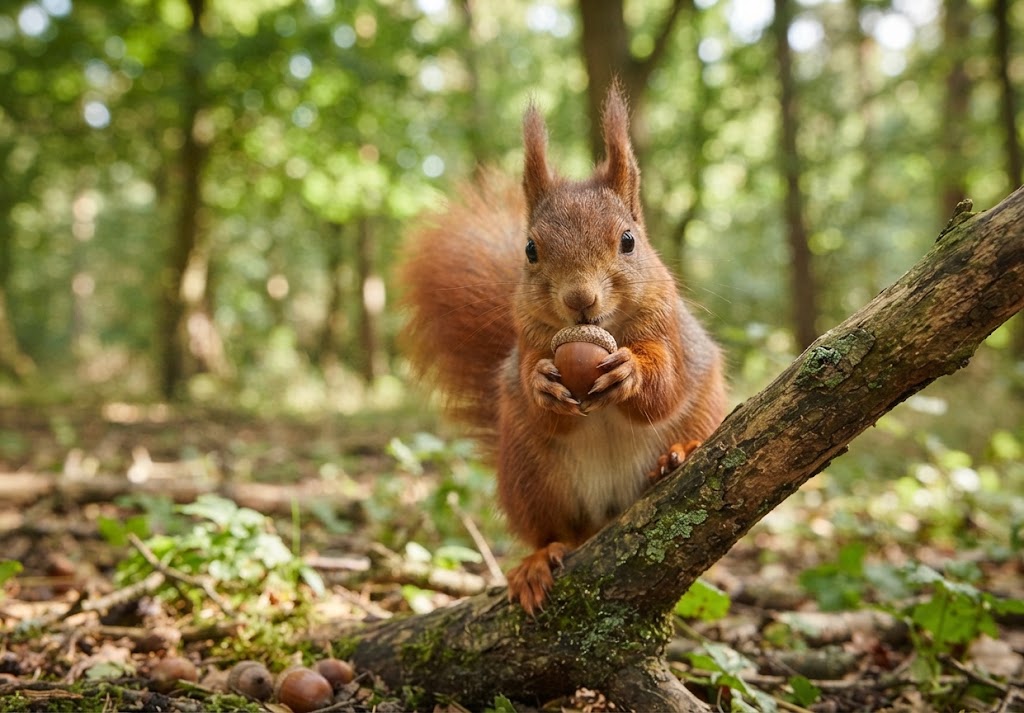
- Chewed nuts: Look for hazelnut shells or acorns with holes, tooth marks or broken edges. Different animals leave different patterns, although identifying the exact species can be tricky.
- Damaged bark: Missing bark or gnawed stems can indicate feeding by mammals such as squirrels or deer. Look at the height and shape of the damage for additional clues.
- Chewed cones and seeds: Look beneath conifer trees for cones with missing scales or other signs that something has been feeding on the seeds.
- Partly eaten fruit: Fallen berries, crab apples and other fruit may show signs of feeding by birds or mammals.
Choose three examples and examine them closely. Take photographs that show the details, not just the surrounding area. Record where you found each sign and what you think caused it.
Try not to jump to conclusions. A damaged leaf might have been eaten by an insect, while a broken twig could have been damaged by wind or people. Look for several clues before making your identification.
Leave the area as you found it. Don’t damage plants to investigate further, disturb nests or dens, or handle droppings and unidentified remains. If you find something you can’t identify safely, observe it from a distance.
Check Your Results
Before completing the challenge, check that you have:
- Found at least three possible signs of animal feeding.
- Photographed or recorded each example clearly.
- Suggested which animal might have left each sign.
- Considered whether there could be another explanation.
You don’t need to identify every animal correctly. The important thing is to observe carefully and explain how you reached your conclusions.
For more detailed examples, read How to identify wildlife feeding signs from Discover Wildlife.
Complete the Challenge
Choose your clearest photograph or create a small collection showing your three examples. Add a short explanation of what you found and which animals you think may have been feeding there.
How to Submit Your Challenge
- Go to your SGUK member profile.
- Open the Social Activity area.
- Upload a photograph of your evidence to your activity wall.
- Add the hashtag #SGUKChallenge25.
- Share your post for evidence verification.
Once you’ve shared your evidence and it has been verified, the SGUK Outdoor Skills Challenge 25 is complete and the completed challenges figure will be updated on your profile.
Challenge 25 Checklist
Want to Push Yourself?
Try returning to the same location at a different time of year. You may find different feeding signs as plants produce new leaves, nuts and berries.
You could also compare two examples of damage, such as a chewed hazelnut and a damaged leaf. What clues help you work out what might have caused each one?
What’s Next?
For your previous challenge, revisit SGUK Outdoor Skills Challenge 24: Find a Safe Campsite and consider how observing the surroundings can help you recognise potential hazards as well as signs of wildlife.
Each SGUK Outdoor Skills Challenge can be completed in any order, so keep exploring, asking questions and building your outdoor observation skills.
Learn. Practise. Master.
That’s what the SGUK Outdoor Skills Challenge is all about.
🔒Ready to test your survival skills?
Join Survival Guides UK for free, complete challenges, earn badges and increase your Survival Level.
JOIN FREE →
CRAIG BURR
FOUNDER · SURVIVAL GUIDES UK
I'm Craig, the person behind Survival Guides UK. I created SGUK because I wanted somewhere people could learn real outdoor skills in a practical, straightforward way — from lighting a fire and tying knots to navigation, campcraft and everything in between.
You can read more about the story behind SGUK here as well as our approach here.