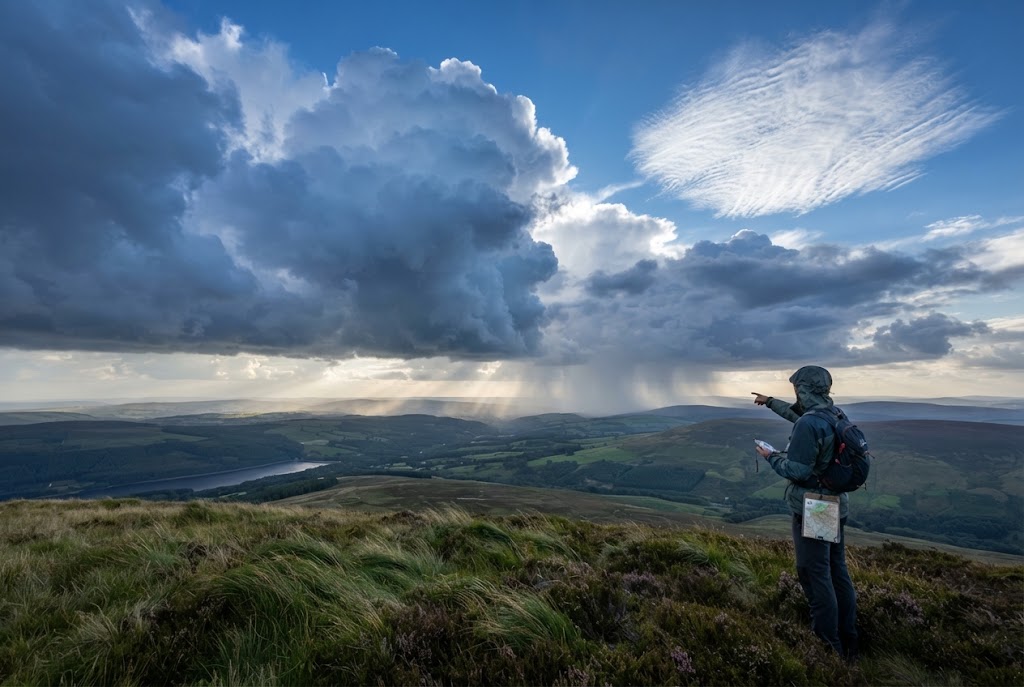
SGUK Outdoor Skills Challenge 06: Read the Weather
Have you ever looked at the sky before heading out and wondered whether the weather was about to change? Learning to notice what’s happening above you is a useful outdoor skill, particularly when you’re walking, camping or spending a day away from any shelter.
In the previous challenge, you learned how to make a camp gadget. For this challenge, you’re going to spend some time observing the weather rather than simply checking a forecast on your phone. Look at the clouds, feel which way the wind is blowing and pay attention to any changes you notice. Then make your own prediction and see how well your observations match what actually happens.
Your Challenge
Can you observe the weather and make a sensible prediction about what it will do next?
Choose a safe outdoor location where you can see the sky clearly. Spend at least 10–15 minutes observing the conditions, then write down what you think the weather will do over the next hour.
You might predict that the sky will stay clear, that cloud cover will increase, that the wind will pick up or that rain may arrive. You don’t need to predict every detail. The aim is to learn how to notice useful clues and make a reasoned judgement rather than simply guessing.
Before You Start
If you’re unfamiliar with weather signs, spend a little time learning about the things that can indicate a change in conditions.
Clouds can tell you something about what’s happening in the atmosphere, although no single cloud type guarantees a particular outcome. Wind direction, falling temperatures, changing visibility and the arrival of darker or thicker cloud can all provide useful clues when considered together.
It helps to check a reliable local weather forecast before you begin, too. This gives you a comparison for your own observations, but don’t use it to replace the prediction that you’re making for the challenge.
Remember that reading the weather is not the same as forecasting it with certainty. Conditions can change quickly, and even experienced observers get predictions wrong.
What You’ll Need
You won’t need much for this challenge:
- A safe outdoor location with a reasonably clear view of the sky
- A notebook and pencil, or somewhere to record your observations
- A watch or phone to keep track of time
- A camera or phone for your challenge photograph
- Suitable clothing for the current conditions
You can use your phone to record your observations, but try not to spend the whole challenge looking at a screen. The point is to practise noticing what’s happening around you.
Take the Challenge
Find a comfortable spot where you can observe the sky without putting yourself at risk. You don’t need to go far from home; a garden, park or other suitable open space will do.
Start by looking at the cloud cover. Is the sky mostly clear, covered in a thin layer of cloud, or filled with larger, darker clouds? Notice whether the clouds appear to be moving and, if you can tell, which direction they’re travelling.
Next, pay attention to the wind. Can you feel it on your face? Are leaves and branches moving gently, or are they beginning to sway more strongly? Notice whether the wind seems steady or changes in strength.
Think about the temperature and visibility as well. Does the air feel cooler than it did earlier? Is mist developing, or is the distance becoming harder to see? No single observation will give you the full picture, but several clues together can help you form a better judgement.
Now write down what you think will happen during the next hour. Be specific enough to check your prediction later. For example, you might expect the cloud cover to increase and the wind to become stronger, or you might think the conditions will remain dry and settled.
Once you’ve recorded your prediction, leave it alone. Don’t keep changing it to match whatever the weather happens to do.
Check Your Prediction
Return to your observations after about an hour, provided the conditions remain safe.
Look at the sky again and compare what you see with your original prediction. Did the cloud cover change? Was the wind stronger than before? Did rain arrive, or did the weather remain much the same?
Record what happened and consider which clues were useful. Perhaps you noticed the clouds thickening before the weather changed, or maybe the conditions remained settled despite looking uncertain at first.
If your prediction was wrong, don’t treat that as a failed challenge. Weather observation is a skill that develops through practice, and comparing your expectations with what actually happens is one of the best ways to improve.
Never stay outdoors just to finish an observation if a storm, lightning, dangerous wind or another hazardous condition develops. Your safety matters much more than completing the challenge.
Complete the Challenge
Now it’s time to share what you’ve learned.
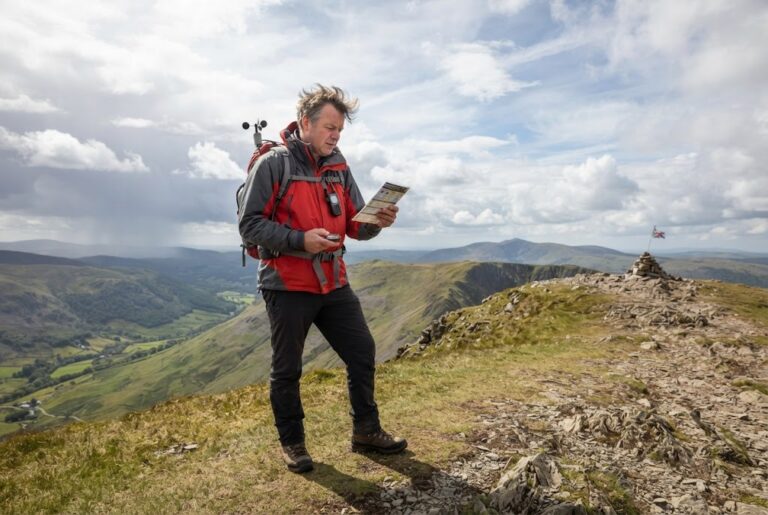
Take a photograph showing you observing the weather outdoors. You could photograph the sky you were studying, your observation notes or yourself recording the conditions from a safe location. Your photograph should relate to the activity you completed.
Then share your evidence through your SGUK member profile.
How to Submit Your Challenge
- Go to your SGUK member profile.
- Open your Social Activity area.
- Upload your challenge photograph to your activity wall.
- Add #SGUKChallenge06 to your post.
- Share your activity.
If you’d like, include a short note about your prediction and whether it turned out to be correct. It gives other members a glimpse of what you observed and what you learned.
Challenge 06 Checklist
Before you submit your evidence, make sure you have:
Once you’ve shared your evidence and it has been verified, the SGUK Outdoor Skills Challenge 06 is complete and the completed challenges figure will be updated on your profile.
Want to Push Yourself?
Try the challenge again on a different day, preferably when the weather looks noticeably different. Compare a settled day with one when cloud is building, or observe the conditions at different times of the day.
You could keep a small weather diary for a week, recording the conditions in the morning and checking them again later. Over time, you may begin to recognise patterns that you previously overlooked.
Just remember that natural observations are useful clues, not a substitute for official forecasts and weather warnings. When planning a walk or camp, always check the forecast and follow relevant safety advice.
What’s Next?
You’ve now practised looking beyond the immediate conditions and thinking about what might happen next. That’s a useful habit whenever you’re outdoors, whether you’re planning a walk, choosing a campsite or deciding whether it’s sensible to continue an activity.
You don’t have to complete the challenges in numerical order. Explore the SGUK Outdoor Skills Challenge collection and choose another challenge that interests you.
Learn the skill. Practise it. Then show us what you’ve done.
Learn. Practise. Master.
That’s what the SGUK Outdoor Skills Challenge is all about.
🔒Ready to test your survival skills?
Join Survival Guides UK for free, complete challenges, earn badges and increase your Survival Level.
JOIN FREE →
CRAIG BURR
FOUNDER · SURVIVAL GUIDES UK
I'm Craig, the person behind Survival Guides UK. I created SGUK because I wanted somewhere people could learn real outdoor skills in a practical, straightforward way — from lighting a fire and tying knots to navigation, campcraft and everything in between.
You can read more about the story behind SGUK here as well as our approach here.