
Reading Weather: Beginner’s Guide to Weather
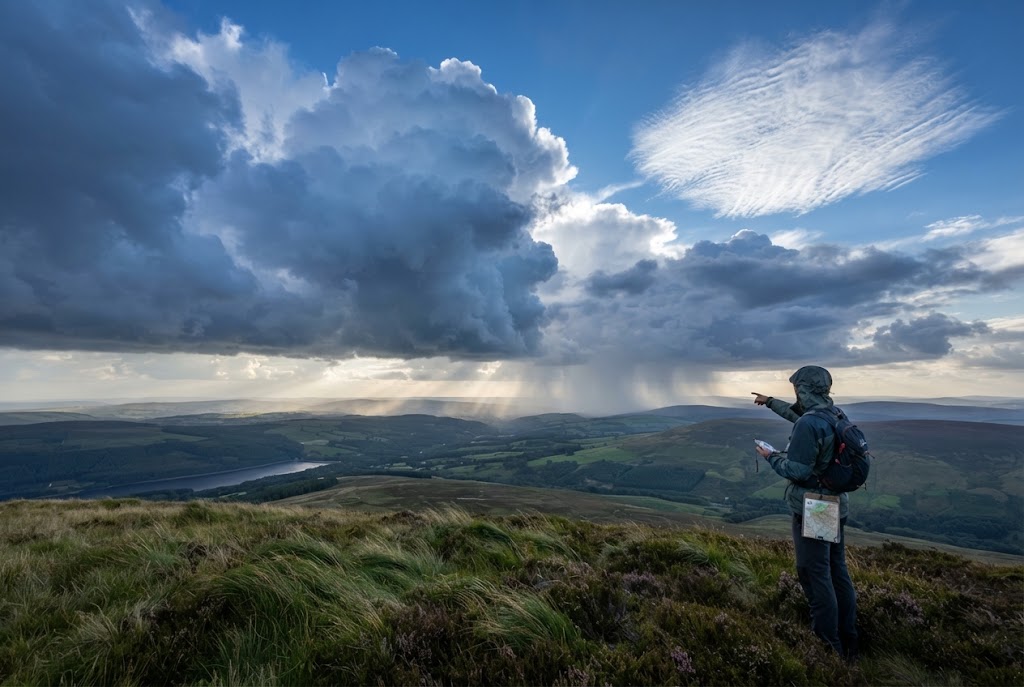
The weather can change quickly when you’re outdoors.
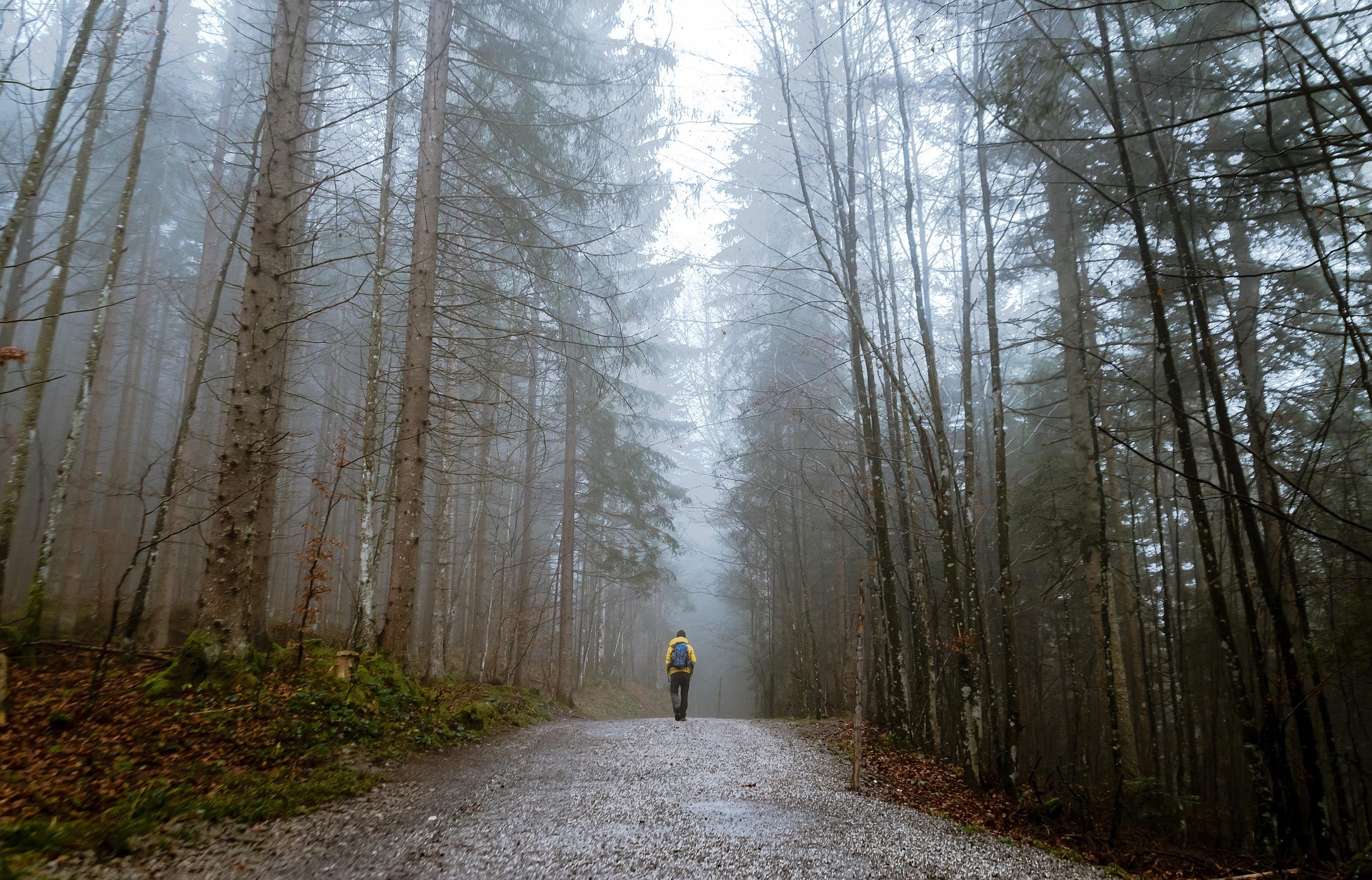
A sunny morning can become cold and wet. Fog can reduce visibility. Strong winds can make exposed areas uncomfortable or dangerous, while thunderstorms can create serious hazards.
Learning to read the weather doesn’t mean becoming a meteorologist.
It means learning to:
- Observe what’s happening around you
- Understand basic weather patterns
- Recognise warning signs
- Use forecasts properly
- Prepare for changing conditions
- Know when to change your plans
Safety First
Never rely solely on your ability to “read the signs” when making decisions about outdoor safety.
Always check an appropriate weather forecast before an activity and continue monitoring conditions where practical.
Weather can change rapidly, particularly in exposed or mountainous areas.
If conditions become unsafe, change your plans, seek shelter or turn back.
What is Weather?
Weather describes the conditions in the atmosphere at a particular time and place.
It includes things such as:
TEMPERATURE
How warm or cold the air is.
PRECIPITATION
Rain, snow, sleet, hail and other forms of falling water.
WIND
The movement of air.
CLOUD
Cloud cover can provide clues about atmospheric conditions.
VISIBILITY
How far you can see clearly.
STORMS
Thunderstorms and other severe weather can create additional hazards.
Understanding these elements helps you build a picture of what’s happening around you.
1. Start With the Forecast
One of the best weather-reading skills is actually very simple:
Check the forecast before you leave.
Look at:
- Temperature
- Rain
- Wind speed
- Wind direction
- Cloud
- Visibility
- Thunderstorms
- Weather warnings
Don’t just check whether it says:
“Sunny.”
A sunny day can still have strong winds, cold temperatures or dangerous conditions.
2. Keep Checking the Weather
A forecast is not a guarantee.
Conditions can change.
Before a longer outdoor activity, consider checking the forecast again before setting off.
If conditions are changing significantly during the activity, reassess your plans.
Ask yourself:
Is the weather still suitable for what we’re doing?
That question is more useful than simply asking:
“Will it rain?”
3. Learn to Read the Clouds
Clouds can provide useful clues about the atmosphere.
You don’t need to memorise every cloud type to benefit from observing them.
Start by looking at:
How much cloud is there?
Is the sky:
Clear?
Partly cloudy?
Mostly cloudy?
Completely covered?
Is the cloud changing?
Is it:
- Building upwards?
- Getting darker?
- Spreading?
- Moving quickly?
Changes can be more useful than simply identifying what type of cloud you’re looking at.
4. Watch the Wind
Wind can tell you a lot about changing conditions.
Notice:
- Which direction it is coming from
- Whether it is increasing
- Whether it is gusty
- Whether it changes direction
- How it affects trees and vegetation
A useful habit:
When you stop for a break, take a moment to notice the wind.
Then ask:
Has it changed since we started?
An increase in wind can be particularly important on exposed ground.
5. Look for Changing Conditions
One of the most useful weather skills is noticing trends.
For example:
You notice:
Cloud is increasing.
↓
Wind is strengthening.
↓
Temperature is dropping.
↓
Visibility is reducing.
Rather than treating each observation separately, consider the overall picture.
Ask:
Is the weather getting better, staying the same or getting worse?
6. Watch Visibility
Visibility can change surprisingly quickly.
Fog, heavy rain, snow and low cloud can all reduce how far you can see.
Reduced visibility can affect:
- Navigation
- Road crossings
- Finding paths
- Recognising landmarks
- Group management
This connects directly to our Navigating in Poor Visibility article.
If visibility starts deteriorating, don’t wait until you’re completely disorientated before doing something.
7. Understand Temperature
Temperature isn’t just about whether you’re comfortable.
Cold conditions can affect:
- Concentration
- Dexterity
- Energy
- Decision-making
Heat can also create problems, particularly when you’re active.
When planning an outdoor activity, think about:
Air temperature
But also:
Wind
Rain
Sun exposure
Physical activity
Clothing
The temperature shown on a forecast doesn’t tell the whole story.
8. Understand Wind Chill
Wind can make cold conditions feel significantly colder.
This is often called wind chill.
Imagine two days with the same air temperature.
On one day there’s little wind.
On the other, there’s a strong wind.
The second day can feel considerably colder because moving air increases heat loss from exposed skin.
Outdoor lesson:
Don’t dress for the temperature alone.
Think about the combination of:
Temperature + wind + rain + activity
9. Don’t Forget the Sun
Weather isn’t only about rain and storms.
Sun exposure matters too.
On bright days:
A day that looks perfect for an outdoor activity can still require preparation.
10. Recognising Thunderstorms
Thunderstorms deserve particular respect.
If you hear thunder, lightning is close enough to be a potential hazard.
Don’t treat a thunderstorm as simply “a bit of rain.”
Conditions can include:
- Lightning
- Strong winds
- Heavy rain
- Hail
- Rapid changes in visibility
If thunderstorms are forecast:
Consider whether the activity should go ahead at all.
If a storm develops during an activity, follow your group’s established safety procedures and seek appropriate shelter or move to a safer location as instructed.
11. Weather Can Change With Location
The weather you experience at one location isn’t necessarily the same as somewhere nearby.
This is especially important in:
- Mountains
- Moorland
- Coastlines
- Valleys
- Exposed hills
Conditions can change significantly with elevation and terrain.
You might leave a sheltered valley in calm weather and encounter much stronger wind higher up.
Remember:
The weather where you are now isn’t necessarily the weather where you’re going.
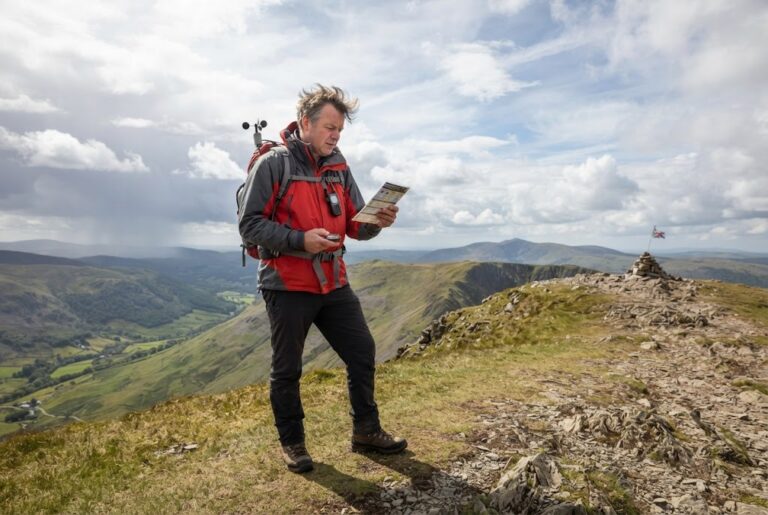
12. Use Weather Information With Your Map
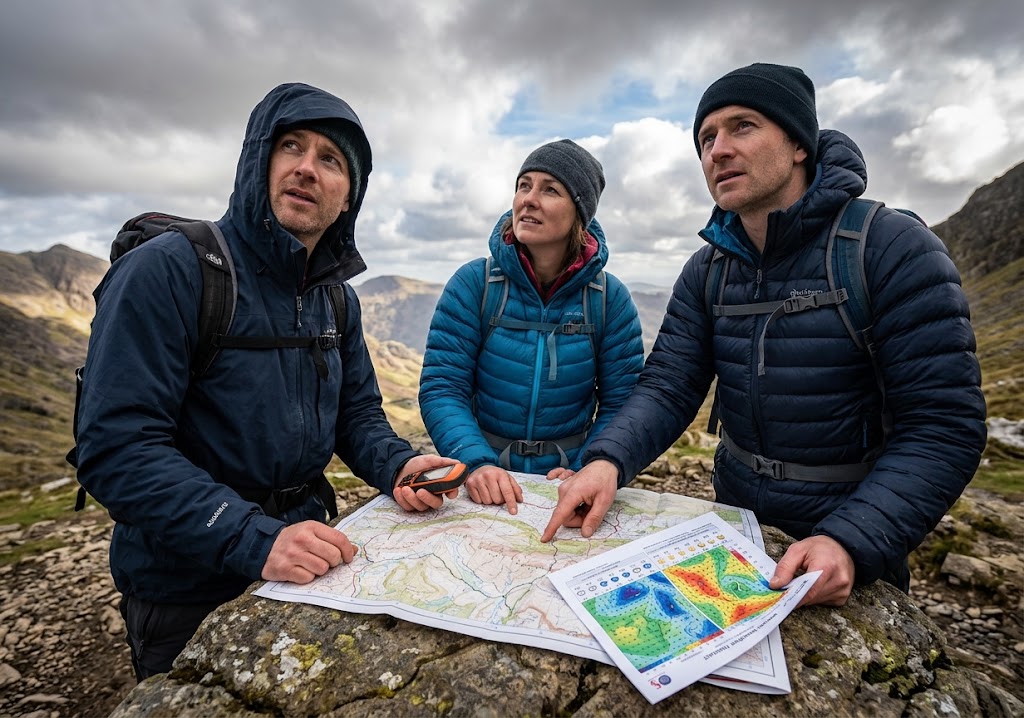
Weather and navigation work together.
Imagine you’re planning a route across exposed countryside.
Your map tells you:
Where you’re going.
Your weather information tells you:
What conditions you may encounter.
You can then make better decisions.
For example:
Strong winds + exposed ridge + poor visibility
might make a route inappropriate.
A sheltered alternative could be a much better choice.
13. Learn to Make Decisions
The ultimate purpose of reading weather isn’t to impress people with your cloud knowledge.
It’s to make better decisions.
Ask yourself:
GREEN
Conditions are suitable.
Continue as planned.
AMBER
Conditions are becoming less suitable.
Monitor closely and consider changing the plan.
RED
Conditions are unsuitable or dangerous.
Stop, turn back or seek appropriate shelter.
The exact decision depends on the activity, location, group and conditions.
14. Keep a Weather Journal
A weather journal is an excellent way to develop observation skills.
Record:
Date: __________
Time: __________
Temperature: __________
Cloud: __________
Wind direction: __________
Wind strength: __________
Visibility: __________
Rain: __________
Forecast: __________
What actually happened: __________
After several weeks, compare your observations with the forecasts.
This teaches you something important:
Weather observation is a skill you develop through practice.
The Weather Reading Process
Here’s the system I want SurvivalGuidesUK readers to remember:
CHECK → OBSERVE → COMPARE → ASSESS → ACT
CHECK
Look at the forecast.
OBSERVE
Look at what’s actually happening around you.
COMPARE
Is reality matching the forecast?
ASSESS
Are conditions improving or deteriorating?
ACT
Continue, change the plan, turn back or seek shelter as appropriate.
Your First Weather Challenge
The Weather Watch
Choose a day when you’re going to be outdoors.
Before leaving:
Record the forecast.
Write down:
Temperature: ______
Rain: ______
Wind: ______
Visibility: ______
Warnings: ______
Then go outside and make your own observations.
Record:
What can you actually see?
What can you feel?
What can you hear?
Has the wind changed?
Has the cloud changed?
Is the temperature changing?
At the end of your activity:
Compare your observations with the forecast.
What was accurate?
What changed?
Bonus Challenge: Predict the Next Hour
This challenge is about observation rather than being “right.”
Stand somewhere safe and observe the weather.
Write down what you think will happen during the next hour.
For example:
“The cloud will increase and the wind will strengthen.”
Then check again after an hour.
How did you do?
More importantly:
What signs did you notice before the change happened?
Explorer Challenge: The Weather Decision Challenge
Your leader gives you a scenario.
For example:
You’re halfway through a countryside walk. The wind is increasing, cloud is building and visibility is beginning to fall. The forecast shows deteriorating conditions. You still have several hours of walking ahead.
Your team needs to decide:
What is changing?
How could it affect navigation?
How could it affect the group?
What equipment might become important?
Should you change your route?
At what point would you turn back?
Explain your decision.
There isn’t necessarily one correct answer.
The important thing is that you can justify your decision using the information available.
What Have You Learned?
You should now understand that reading weather isn’t about predicting the future perfectly.
You’ve learned how to:
Most importantly:
The best weather skill isn’t predicting what will happen. It’s recognising when you need to change your plan.
Scout Connection
Reading weather develops several useful Scout skills.
OBSERVATION
Learning to notice changes in the environment.
NAVIGATION
Understanding how weather affects visibility and route choice.
CAMPING
Choosing appropriate clothing, shelter and equipment.
DECISION-MAKING
Knowing when conditions require a change of plan.
ENVIRONMENTAL AWARENESS
Understanding how weather affects the landscape and wildlife.
LEADERSHIP
Recognising changing conditions and communicating decisions to the group.
Weather observation also works particularly well as a regular Scout activity. A group could keep a weather chart at camp and compare observations throughout the year.
SurvivalGuidesUK is an independent educational resource and isn’t an official Scouts website. Always follow the current Scouts programme requirements and your leader’s instructions.
SurvivalGuidesUK Safety Notice
Weather can change quickly and conditions can become hazardous.
This guide is intended for general outdoor education and should not replace official weather warnings, specialist mountain weather information, formal training or appropriate risk assessment.
Before outdoor activities, check the appropriate forecast and weather warnings for your location and activity.
If conditions become unsafe, don’t continue simply to complete your planned route. Change your plans, turn back or seek appropriate shelter.
🔒Ready to test your survival skills?
Join Survival Guides UK for free, complete challenges, earn badges and increase your Survival Level.
JOIN FREE →
CRAIG BURR
FOUNDER · SURVIVAL GUIDES UK
I'm Craig, the person behind Survival Guides UK. I created SGUK because I wanted somewhere people could learn real outdoor skills in a practical, straightforward way — from lighting a fire and tying knots to navigation, campcraft and everything in between.
You can read more about the story behind SGUK here as well as our approach here.