What Should You Do If Your Clothing Gets Wet Outdoors?
Affiliate disclosure: This article contains affiliate links. If you purchase something through one of our links, we may earn a commission at no additional cost to you.
⚠️ SAFETY FIRST
Wet clothing can become dangerous in cold, windy or exposed conditions.
Water conducts heat away from the body much faster than dry air, and wind can increase heat loss further. If someone is becoming very cold, confused, unusually tired or is struggling to stay awake, treat this as a potential medical emergency.
Get them somewhere sheltered, remove wet clothing where practical, replace it with dry insulation and seek appropriate medical help.
Don’t rely on a campfire as your only solution.
Getting Wet Outdoors Can Be More Serious Than It Seems
Getting caught in a shower might seem like nothing more than an inconvenience.
But if you’re outdoors for a long time, particularly in cold, windy or wet weather, wet clothing can become a genuine safety concern.
Once your clothes become soaked, they lose much of their insulating ability.
You can then start losing body heat faster than you can replace it.
This is one of the reasons experienced outdoor people take waterproof clothing and spare dry layers seriously.
💡 QUICK TIP
If you know you’re going somewhere where you could get wet, preventing your clothing from becoming soaked is usually easier than trying to dry everything afterwards.
Waterproof outer layers, appropriate footwear and protecting spare clothing can make a huge difference.
What Should You Do First?
If your clothing gets wet, the first question isn’t:
“How do I dry it?”
It’s:
“Am I getting cold?”
Think about your overall situation.
Ask yourself:
- Is it cold?
- Is it windy?
- Am I exposed?
- Am I far from shelter?
- Am I getting colder?
- Do I have dry clothing?
- Can I get somewhere sheltered?
- Is anyone showing signs of hypothermia?
If you’re becoming cold, deal with heat loss first.
1. Get Out of the Weather
Your first priority should usually be to reduce further exposure.
Look for appropriate shelter from:
- Rain
- Wind
- Snow
- Cold air
- Direct exposure
This might mean returning to:
- A building
- A vehicle
- A campsite shelter
- A suitable emergency shelter
- Another safe, sheltered location
If you’re on a planned hike and conditions are deteriorating, turning around early is often the right decision.
You don’t get extra points for continuing into increasingly dangerous weather.
🏕️ REMEMBER
Shelter is part of staying warm.
Getting out of the wind can make a surprisingly large difference, even before you’ve managed to change your clothes.
You can read more in our guide to Emergency Shelters.
2. Remove Wet Outer Clothing
If you have a waterproof jacket or other outer layer that’s soaked, remove it when you’re somewhere suitable and protected.
If the clothing underneath is also wet, you may need to change that too.
The aim is to stop continuing to lose heat through wet fabric.
However, don’t strip down in an exposed location if doing so would make you colder.
Move to shelter first where possible.
3. Put on Dry Clothing
If you have spare dry clothing, this can be one of the most useful things you can carry.
Prioritise keeping your:
- Torso
- Head
- Hands
- Feet
warm and dry.
A dry base layer can make a significant difference.
It’s also worth carrying spare socks on longer outdoor trips.
Wet feet aren’t just uncomfortable. They can contribute to cold injury and make walking more difficult.
🎒 THE SPARE CLOTHING RULE
For longer outdoor trips, consider carrying at least one dry insulating layer in waterproof protection.
There’s little benefit in carrying a spare fleece if it gets soaked inside your backpack.
4. Protect Your Dry Clothes
This is an easy mistake to make.
You might carry a dry change of clothing in your backpack, only to discover that the bag has leaked and everything inside is damp.
Use appropriate waterproof protection for important spare clothing.
Options include:
- Dry bags
- Waterproof stuff sacks
- Properly sealed waterproof bags
Your emergency clothing should remain dry until you actually need it.
5. Add Insulation
Once you’re somewhere sheltered and have removed wet clothing, add insulation.
This could include:
- Fleece
- Wool
- Synthetic insulation
- A warm jacket
- Blankets
- An emergency blanket
The aim is to reduce further heat loss.
Don’t assume that simply putting a waterproof jacket over soaking-wet clothing has solved the problem.
If you’re already becoming cold, dry insulation is much more useful.
6. Keep Moving — But Know When Not To
If you’re only slightly wet and still warm, gentle movement can help you generate body heat.
Walking back to a safe location may be appropriate.
However, don’t rely on exercise to solve serious cold exposure.
If someone is becoming exhausted, confused or increasingly cold, continuing to walk may make the situation worse.
The priority becomes:
Shelter → Insulation → Warmth → Help
rather than simply trying to keep moving.
7. Have a Warm Drink If Appropriate
If you’re somewhere safe and have access to a suitable warm drink, it can be comforting and may help someone who is cold and alert.
Good options include:
- Warm water
- Tea
- Soup
- Hot chocolate
Avoid using alcohol as a way to warm someone up.
And remember:
A warm drink isn’t a treatment for hypothermia.
Someone showing significant symptoms needs proper medical attention.
8. Eat Something If You Can
Your body uses energy to generate heat.
If you’ve been hiking, camping or working outdoors for several hours, you may also be running low on energy.
A suitable snack can help provide fuel.
Useful options include:
- Energy bars
- Nuts
- Chocolate
- Dried fruit
- Sandwiches
- Other high-energy foods
Again, this is supportive rather than a substitute for dealing with serious cold exposure.
What About Drying Clothes?
Once you’re warm and sheltered, you can think about drying your clothing.
There are several ways to do this safely.
Air Drying
Hang clothing somewhere dry with good airflow.
This is slow but safe.
Indoor Heat
If you’re somewhere with appropriate heating, hang clothing where it can dry without touching a heater or other heat source.
Campfire
A campfire can help dry clothing if the situation, location and fire rules allow one.
But this needs particular care.
🔥 FIRE SAFETY
Never hold clothing directly over a fire or place it directly against flames.
Clothing can ignite surprisingly quickly.
Sparks can also burn holes in synthetic materials.
If using a fire to provide warmth, keep clothing and other combustible materials at a safe distance and supervise them continuously.
See our guides to Fire Safety, Fire Maintenance and Extinguishing Fires for more information.
Don’t Try to Dry Everything at Once
If you’re carrying several wet layers, it can be tempting to pile everything around a heat source.
Don’t.
Instead:
The goal is controlled drying, not maximum heat.
Be Careful With Synthetic Clothing
Modern outdoor clothing often contains synthetic fibres.
These can melt, deform or ignite if exposed to excessive heat.
This is another reason not to place clothing directly beside a fire, stove or heater.
Even if something doesn’t catch fire, excessive heat can damage:
- Waterproof membranes
- Insulation
- Synthetic fibres
- Elastic
- Zips
- Other components
A slower, safer drying method is usually preferable.
What About Wet Boots?
Wet footwear can be particularly difficult.
If you’re somewhere safe:
Avoid placing boots directly against intense heat.
Leather and some synthetic footwear can be damaged by rapid drying.
What If You Don’t Have Spare Clothes?
This is where prevention and shelter become particularly important.
If you don’t have dry clothing, concentrate on:
Getting out of the wind
Wind can dramatically increase heat loss.
Finding shelter
Even basic shelter can reduce exposure.
Insulating yourself
Use appropriate dry materials available to you.
Protecting your core
Keep your torso insulated.
Keeping clothing as dry as possible
Don’t expose yourself to additional water unnecessarily.
If you’re becoming increasingly cold, prioritise getting to safety and obtaining help.
What If Your Backpack Gets Wet Too?
This is why waterproof packing matters.
Important items such as:
- Spare clothing
- Sleeping bags
- Food
- Maps
- Electronics
- First-aid equipment
should be appropriately protected.
A backpack may be described as water-resistant without being completely waterproof.
A waterproof liner or dry bags can provide another layer of protection.
What If You’re Lost and Your Clothes Are Wet?
This becomes more serious.
If you’re lost, wet and getting cold, your priorities change.
Don’t simply keep walking because you think movement will keep you warm.
Instead, assess:
Can I safely reach known shelter?
Can someone find me where I am?
Are weather conditions deteriorating?
Am I becoming cold or confused?
If continuing would increase the danger, stop, shelter and signal for help where appropriate.
Our Getting Lost and Survival Priorities guides cover this situation in more detail.
Wet Clothing and Hypothermia
Hypothermia occurs when the body’s core temperature falls dangerously low.
Wet clothing can contribute to this because water increases heat loss.
Early signs can include:
- Shivering
- Feeling very cold
- Tiredness
- Clumsiness
- Difficulty concentrating
As hypothermia becomes more serious, symptoms can include:
- Confusion
- Slurred speech
- Increasing drowsiness
- Loss of coordination
- Unusual behaviour
- Reduced or absent shivering
Severe hypothermia is a medical emergency.
🚨 KNOW THE WARNING SIGNS
Don’t assume someone is “just cold” if they are becoming:
Confused
Very sleepy
Uncoordinated
Weak
Difficult to communicate with
These can be warning signs of serious cold exposure.
If someone is showing significant symptoms, seek emergency medical assistance and keep them sheltered and insulated while waiting for help.
What Should You Do If Someone Else Is Wet and Cold?
If you’re responsible for someone who has become wet and cold:
1. Get them out of the weather
Reduce exposure to wind and rain.
2. Remove wet clothing
Do this somewhere sheltered and appropriate.
3. Replace it with dry insulation
Use spare clothing, blankets or other suitable insulation.
4. Keep monitoring them
Pay attention to changes in:
- Alertness
- Speech
- Coordination
- Behaviour
- Shivering
5. Get medical help if necessary
Don’t underestimate serious cold exposure.
Should You Use an Emergency Blanket?
An emergency blanket can help reduce heat loss by reflecting some body heat back towards the person.
They’re:
- Lightweight
- Compact
- Cheap
- Easy to carry
They’re particularly useful as part of an emergency kit.
However, an emergency blanket doesn’t replace dry clothing or proper shelter.
Think of it as another layer of protection.
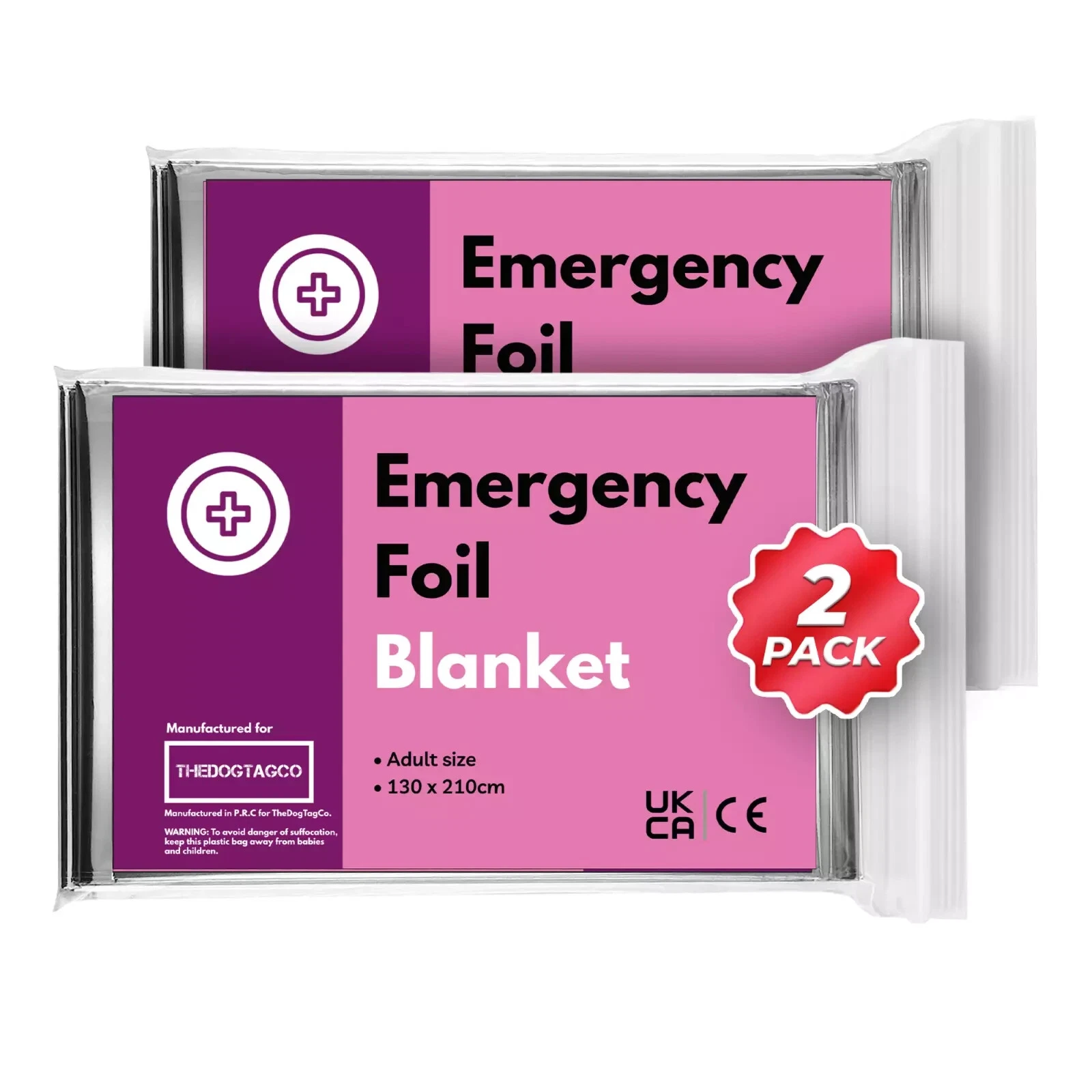
EMERGENCY Blanket Foil 2-Pack
Dive into the great outdoors with confidence and warmth with our Emergency Survival Thermal Foil Blanket. Perfect for adventurers who refuse to let the cold dictate their journey
What Should You Pack to Deal With Wet Weather?
A good outdoor clothing system is designed around layers.
For a day outdoors, consider:
Base Layer
Moves moisture away from the skin.
Insulating Layer
Provides warmth.
Examples include fleece or suitable wool/synthetic insulation.
Waterproof Outer Layer
Protects against rain and wind.
Depending on the activity, you may also want:
- Spare socks
- Spare base layer
- Hat
- Gloves
- Waterproof trousers
- Gaiters
- Emergency blanket
- Waterproof map protection
- Dry bags
The exact clothing system depends on the activity and conditions.
Cotton and Wet Weather
You may have heard the phrase:
“Cotton kills.”
This is an oversimplification, but it comes from a useful principle.
Cotton can absorb significant amounts of water and can take a long time to dry.
When wet, it provides considerably less insulation than when dry.
That doesn’t mean cotton is inherently dangerous.
It means that in cold, wet environments, clothing that retains less water and dries more readily can be a better choice.
Wool and Synthetic Layers
Wool and modern synthetic fabrics are commonly used for outdoor insulation because they can continue to provide useful insulation under damp conditions and/or dry more readily than cotton, depending on the garment.
Different materials have different advantages.
For outdoor activities, think about the entire clothing system rather than searching for one “perfect” fabric.
The Best Solution Is Prevention
The easiest wet-clothing problem to solve is the one you prevent.
Before heading outdoors, check:
- Weather forecast
- Temperature
- Wind
- Rain probability
- Route
- Exposure
- Available shelter
Then dress appropriately.
Carry waterproof protection even if the weather currently looks good.
Conditions can change quickly.
🎒 THE OUTDOOR RULE
Pack for the conditions you might encounter, not just the conditions you have when you leave home.
A sunny morning doesn’t guarantee a dry afternoon.
What If You Fall Into Water?
This is more serious than simply getting caught in rain.
If someone falls into cold water:
Get out of the water as quickly and safely as possible.
Then:
Cold-water exposure can cause rapid heat loss and can be dangerous even when the surrounding air doesn’t feel particularly cold.
See our Water Safety article for more information.
Wet Clothes: Quick Action Plan
If you suddenly find yourself soaked outdoors, remember:
STOP
Don’t immediately panic or rush onwards.
SHELTER
Get out of wind and rain if possible.
CHANGE
Remove wet clothing and replace it with dry layers where practical.
INSULATE
Use warm clothing, blankets or an emergency blanket.
WARM
Use safe methods to restore warmth.
MONITOR
Watch for signs of hypothermia.
GET HELP
If someone is seriously cold, confused or deteriorating, seek emergency medical assistance.
Wet Clothing Checklist
Before a wet-weather trip:
If you become wet:
Final Thoughts
Getting wet outdoors isn’t automatically an emergency.
If it’s a warm summer day and you’re wearing quick-drying clothing, getting caught in a shower might simply be uncomfortable.
But in cold, windy or exposed conditions, wet clothing can become a serious problem.
The key is to act before you become dangerously cold.
Get sheltered.
Get dry.
Add insulation.
Protect yourself from wind.
Monitor for signs of hypothermia.
And remember that prevention is often easier than recovery.
Carrying a waterproof jacket and a dry change of clothing may seem unnecessary when you leave home in sunshine.
But if the weather changes, those items can become some of the most valuable things in your pack.
🧭 THE SIMPLE RULE
If your clothes get wet outdoors, don’t ignore it. Get out of the weather, get dry if you can, add insulation and keep an eye on your condition.
Wet + cold + wind is the combination to take seriously.
🔒Ready to test your survival skills?
Join Survival Guides UK for free, complete challenges, earn badges and increase your Survival Level.
JOIN FREE →
CRAIG BURR
FOUNDER · SURVIVAL GUIDES UK
I'm Craig, the person behind Survival Guides UK. I created SGUK because I wanted somewhere people could learn real outdoor skills in a practical, straightforward way — from lighting a fire and tying knots to navigation, campcraft and everything in between.
You can read more about the story behind SGUK here as well as our approach here.