Survival Priorities: What Matters Most in an Emergency
What Are Survival Priorities?
When something goes wrong outdoors, it can be tempting to start thinking about everything you might need.
You need food.
You need water.
You need a fire.
You need shelter.
You need to find your way home.
But trying to do everything at once can lead to poor decisions.
Survival priorities give you a framework for deciding what needs dealing with first.
A useful general order is:
- Protect yourself from immediate danger
- Get help and raise the alarm
- Treat serious injuries
- Protect yourself from the environment
- Stay warm and dry
- Secure safe drinking water
- Manage food and energy
- Navigate or arrange rescue
- Maintain morale and make a plan
The exact order can change.
For example, if you’re standing in a dangerous location, moving to safety comes before building a shelter.
If somebody has a life-threatening injury, first aid comes before finding food.
If you’re already safely sheltered with plenty of water, your priorities will be different again.
SURVIVAL PRINCIPLE
Don’t blindly follow a checklist.
Assess the situation first, then decide what matters most.
⚠️ SAFETY FIRST
Survival situations are unpredictable, and there is no single list of priorities that works perfectly in every emergency.
Your immediate danger always comes first.
A serious injury, fire, flood, dangerous terrain or extreme weather can change what you need to deal with first.
If you’re in immediate danger in the UK, call 999 or 112. In mountainous areas, ask for Police and Mountain Rescue.
The purpose of survival skills is not to avoid professional help. It’s to help you make safer decisions while getting yourself and others to safety.
1. Deal With Immediate Danger
Your first priority is always to get away from whatever is threatening you.
This might be:
- Fire
- Flooding
- Falling rocks
- A dangerous road
- Fast-flowing water
- Unstable ground
- A collapsing structure
- Severe weather
- An aggressive animal
- Other immediate hazards
There’s no point building a shelter while standing underneath a dangerous tree.
There’s no point collecting firewood if a wildfire is approaching.
There’s no point trying to navigate while standing in a dangerous river.
Safety comes first.
FIRST QUESTION
“Am I safe where I am right now?”
If the answer is no, deal with that before anything else.
2. Get Help
One of the biggest mistakes in a survival situation is assuming you need to handle everything yourself.
You don’t.
Modern emergency services exist for exactly this reason.
If you’re lost, injured or in immediate danger, getting help may be the most important thing you can do.
In the UK, call:
999 or 112
Tell the operator:
- What has happened
- Where you are
- Who is with you
- Whether anyone is injured
- What the weather is like
- What equipment you have
If you’re in mountainous or remote upland terrain, ask for Police and Mountain Rescue.
Mountain Rescue England and Wales provides extensive advice on preparing for outdoor activities and what to do when things go wrong.
Mountain Rescue England and Wales
IMPORTANT
Calling for help isn’t a failure of survival skills.
Knowing when to call for help is itself a survival skill.
3. Deal With Serious Injuries
If someone is badly injured, medical care becomes an immediate priority.
Check for serious problems and provide appropriate first aid if you are trained to do so.
Depending on the situation, this could include dealing with:
- Severe bleeding
- Breathing problems
- Unconsciousness
- Serious fractures
- Burns
- Shock
- Hypothermia
Don’t make an injury worse by moving someone unnecessarily.
If the person is in immediate danger, however, you may need to move them to a safer location.
FIRST-AID RULE
If you’re going into the outdoors regularly, consider taking a recognised first-aid course rather than relying entirely on information from the internet.
Survival skills and first aid complement each other, but neither should replace proper training.
4. Shelter
Once immediate dangers and serious injuries have been dealt with, protection from the environment becomes extremely important.
Shelter can protect you from:
- Wind
- Rain
- Snow
- Sun
- Cold
- Heat
A shelter doesn’t have to be complicated.
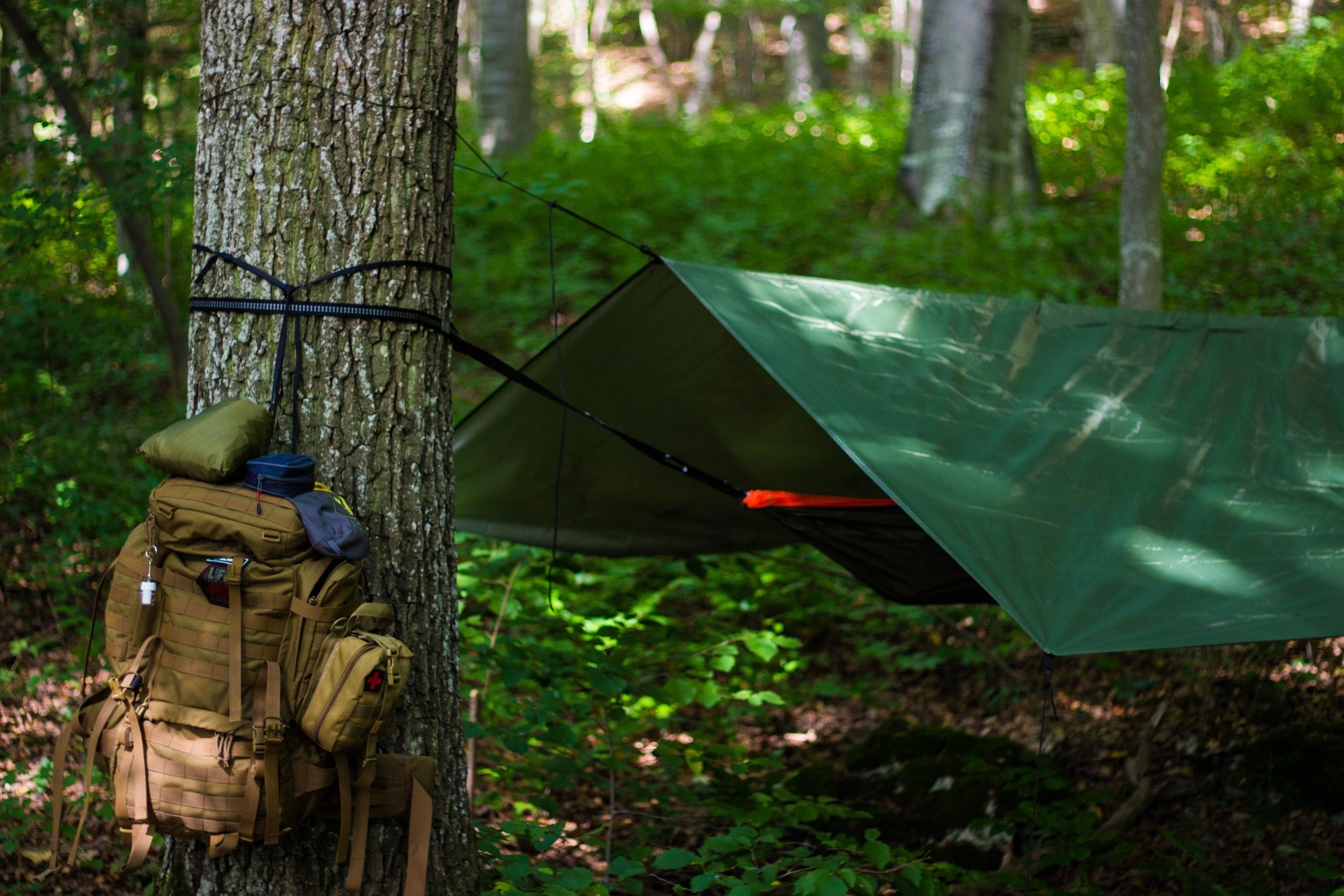
A tarp, emergency bivvy, tent or suitable natural shelter can all provide protection.
The most important thing is that it is safe and appropriate for the conditions.
We’ve covered this in more detail in our guide:
Emergency Shelters: A Beginner’s Guide to Staying Safe Outdoors
SHELTER TIP
A shelter that protects you from wind and rain can be more valuable than an impressive shelter that takes hours to construct.
5. Stay Warm and Dry
Shelter and warmth are closely connected, but they’re not exactly the same thing.
You can have a shelter and still become cold.
Wet clothing, wind and contact with cold ground can all increase heat loss.
Use what you have available.
This might include:
- Warm clothing
- Waterproof layers
- Blankets
- Sleeping bags
- Emergency bivvies
- Ground insulation
- A suitable shelter
If your clothes are wet, getting them dry can become an important priority.
Avoid unnecessary exposure to wind and rain.
Our guide Staying Warm Outdoors covers this in more detail.
SURVIVAL TIP
Protect yourself from wind, rain and cold before you start worrying about less urgent problems.
6. Water
After immediate safety, shelter and warmth, access to safe drinking water becomes increasingly important.
The human body can cope with going without food for considerably longer than it can cope without water.
But that doesn’t mean you should simply drink whatever water you find.
Natural water can contain:
- Bacteria
- Viruses
- Parasites
- Chemicals
- Agricultural contaminants
- Other pollutants
Clear-looking water isn’t automatically safe.
WATER RULE
Never assume that natural water is safe to drink simply because it looks clean.
Where possible, carry enough drinking water with you rather than relying on finding it.
Finding Water
If you’re genuinely stranded and need to find water, look for appropriate natural sources.
These might include:
- Streams
- Springs
- Rainwater
- Other suitable sources
But location matters.
Avoid water that may be contaminated by:
- Dead animals
- Pollution
- Sewage
- Agricultural runoff
- Salt water
Water should generally be treated appropriately before drinking when its safety is uncertain.
We’ll cover finding and treating water in more detail in a dedicated guide.
7. Food
Food is important — but it’s often not as urgent as people think.
This is one of the biggest misconceptions about survival.
Hollywood survival scenarios often begin with someone desperately searching for food.
In many short-term emergencies, that shouldn’t be your first concern.
If you have:
- Shelter
- Warmth
- Water
- A way to contact help
then food may be a lower priority.
SURVIVAL FACT
Don’t waste valuable energy searching for food when you already have more urgent problems to solve.
If you have food with you, rationing it sensibly may be useful.
Don’t immediately start eating everything simply because you’re worried about becoming hungry.
8. Fire
Fire can be extremely useful.
It can provide:
- Warmth
- Light
- A way to dry equipment
- Cooking
- Morale
- A signalling method in some circumstances
But fire isn’t automatically a survival priority.
It depends on your situation.
If you’re cold, wet and exposed, warmth may make fire important.
If you’re already warm inside a suitable shelter, spending an hour collecting wood may be unnecessary.
Fire also introduces risk.
It can cause:
- Burns
- Wildfires
- Smoke inhalation
- Damage to vegetation
- Carbon monoxide exposure
Never use a fire inside a tent, tarp shelter or enclosed natural shelter.
Our previous guides cover Fire Safety, Fire Maintenance, Extinguishing Fires and Campfires in more detail.
FIRE RULE
Fire is a tool — not a survival requirement in every situation.
9. Signalling
If you’re lost or waiting for rescue, you need to make yourself easier to find.
This is where signalling becomes important.
Useful signalling equipment can include:
- Whistle
- Torch
- Phone
- Signal mirror
- Bright clothing
- Emergency beacon
- Appropriate visual signals
A whistle is particularly useful because it can carry over a considerable distance without requiring you to shout continuously.
Mountain Rescue England and Wales recommends carrying essential equipment including a torch and whistle when heading into the outdoors.
Mountain Rescue England and Wales – Safety Advice
SIGNALLING TIP
Don’t make rescuers search harder than necessary.
Stay visible and make sensible use of your signalling equipment.
10. Navigation
Once you’re safe, sheltered and have dealt with immediate needs, you may need to work out where you are.
This doesn’t necessarily mean immediately setting off.
First ask:
Do I know where I am?
If you do, you may be able to navigate safely towards help.
If you don’t, continuing to walk can make the situation worse.
Use:
- Map
- Compass
- GPS
- Phone
- Known landmarks
- Signposts
But don’t rely entirely on technology.
A paper map and compass don’t run out of battery.
11. Conserve Energy
Energy is another survival resource.
Every action costs something.
Walking uses energy.
Building shelters uses energy.
Collecting firewood uses energy.
Searching for water uses energy.
If you’re lost, don’t waste energy on unnecessary activities.
Think before you act.
Ask:
Will this improve my situation?
If the answer is no, consider whether it’s worth doing.
SURVIVAL PRINCIPLE
Don’t spend energy simply because you’re anxious about doing nothing.
Sometimes the smartest thing you can do is sit somewhere safe and wait.
12. Maintain Morale
This one is easy to overlook.
Fear and panic can make an already difficult situation much worse.
If you’re frightened, your ability to think clearly can suffer.
Try to stay calm.
Focus on what you can control.
For example:
I’m safe.
I have shelter.
I have water.
I have my phone.
I know what I’m going to do next.
Breaking a difficult situation into small, manageable tasks can help.
MENTAL SURVIVAL
Don’t think:
“How am I going to survive all night?”
Think:
“What is the next useful thing I can do?”
The Survival Priority Pyramid
A useful way to remember the general hierarchy is:
🔴 IMMEDIATE DANGER
Get yourself away from immediate threats.
🩹 INJURY
Deal with serious injuries and obtain medical help.
🏕️ SHELTER
Protect yourself from the environment.
🔥 WARMTH
Stay warm, dry and protected from the cold.
💧 WATER
Secure safe drinking water.
🍲 FOOD
Manage your food and energy.
📡 SIGNAL
Make it easier for rescuers to find you.
🧭 NAVIGATION
Work out where you are and decide whether moving is safe.
🧠 MORALE
Stay calm, conserve energy and make sensible decisions.
The order isn’t fixed.
The situation determines the priority.
The Rule of Three
You may have heard of the Rule of Three in survival training.
It is sometimes presented as:
- Three minutes without air
- Three hours without shelter
- Three days without water
- Three weeks without food
It’s a useful memory aid, but it shouldn’t be treated as a precise scientific countdown.
People can survive for different lengths of time depending on temperature, health, activity level, injuries and many other factors.
For example, extreme cold can make exposure dangerous much faster than the simple “three hours” rule suggests.
REMEMBER
The Rule of Three is a way of remembering priorities — not a timetable for how long you have left to live.
Why Food Comes Last
This is worth emphasising.
If you become lost for a few hours, food is unlikely to be your biggest problem.
But imagine spending two hours searching the woods for edible plants while:
- You’re getting colder
- You’re becoming dehydrated
- Darkness is approaching
- Your phone battery is falling
- You still haven’t found shelter
You’ve made the situation worse.
Your priority should have been dealing with the more immediate risks.
This is why survival training is about decision-making, not simply collecting survival tricks.
Don’t Eat Unknown Plants
A survival situation is not the time to experiment with plants you don’t recognise.
Some plants can cause serious poisoning.
The same applies to:
- Mushrooms
- Berries
- Seeds
- Roots
- Other wild foods
Never assume something is edible because an animal appears to eat it.
If you’re interested in foraging, learn from a properly qualified source before relying on it as a survival skill.
Don’t Drink Untreated Water Just Because You’re Thirsty
Thirst can create a strong urge to drink the first water you find.
But contaminated water can make you seriously ill.
If possible, carry enough water for your planned activity.
If you need to use natural water, understand appropriate treatment methods before relying on it.
Water safety should always be considered alongside water availability.
Don’t Build a Fire Just Because You’re Lost
Fire is one of the most recognisable survival skills.
That doesn’t mean it’s always necessary.
Before lighting one, consider:
- Do I actually need the heat?
- Is fire permitted here?
- Is the ground suitable?
- Is there a wildfire risk?
- Is there enough safe fuel?
- Could the fire spread?
- Can I extinguish it completely?
If you have an emergency bivvy, warm clothing and shelter, a fire may provide little additional benefit while creating considerable risk.
Don’t Leave Your Shelter Without a Reason
If you’ve contacted rescuers and given them your location, staying put may be the safest option.
Leaving can make you much harder to find.
This is particularly important if:
- You’re injured
- It’s getting dark
- Weather is deteriorating
- You’re in remote terrain
- Search teams are already looking for you
Follow instructions from emergency services.
Survival Priorities for Different Situations
The priorities can change dramatically.
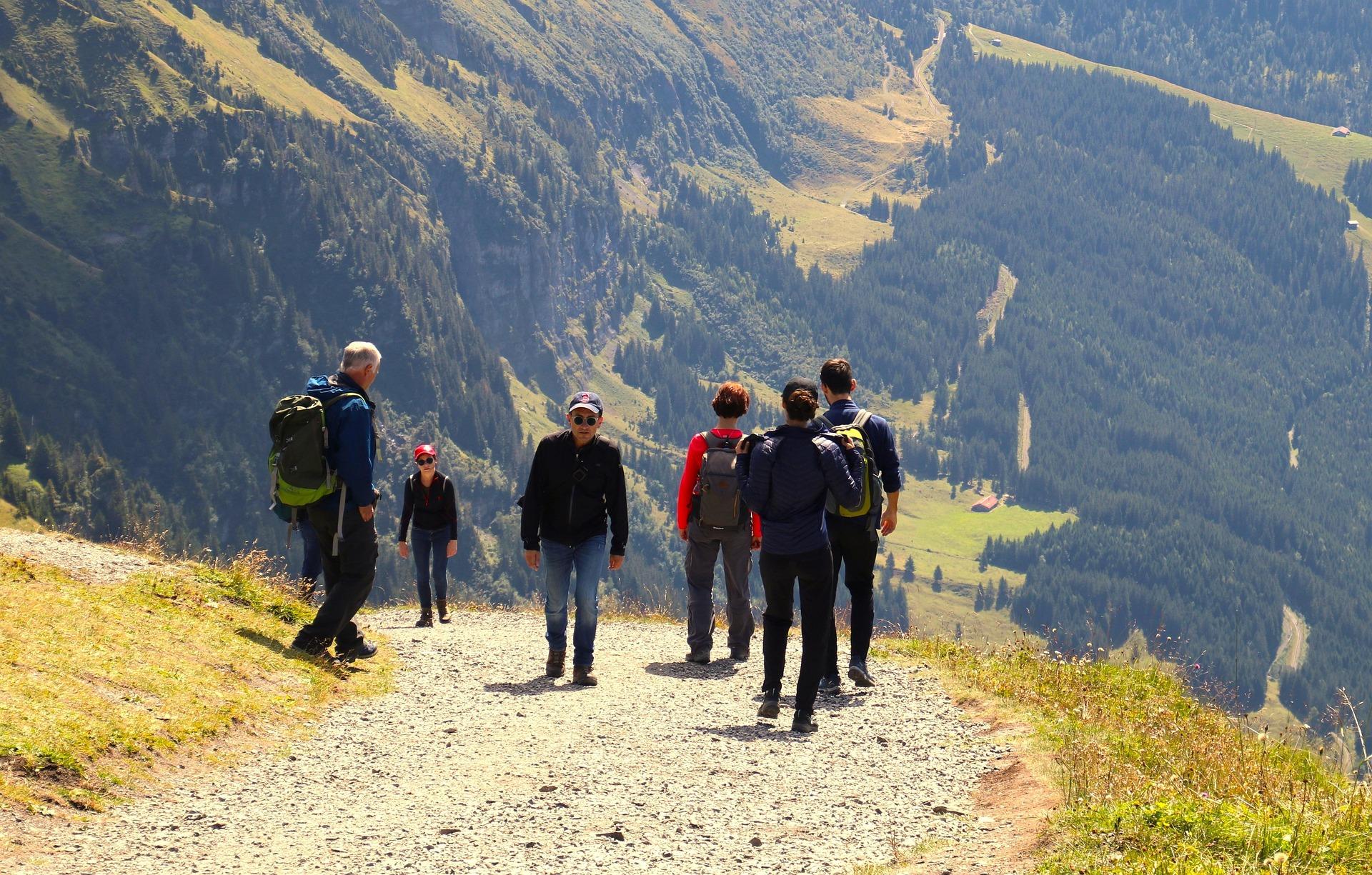
If You’re Lost in Summer
Your biggest concern may be:
Shade → water → signalling → navigation
rather than warmth.
If You’re Lost in Winter
The priorities may become:
Shelter → warmth → signalling → water
because exposure can become dangerous quickly.
If Someone Is Seriously Injured
Your priority may be:
Safety → first aid → emergency services → shelter
If You’re Near Flooding
Your priority is:
Get to safe ground.
Don’t stop to build a shelter or collect firewood.
If You’re Already Safely Sheltered
Your priorities may shift towards:
Water → food → signalling → planning
This is why survival isn’t about memorising one rigid list.
It’s about assessing the situation.
Survival Priorities for Scouts
Survival priorities can make an excellent Scout activity because they encourage young people to think rather than simply memorise instructions.
Give a group a fictional scenario.
For example:
“You’ve become lost during a woodland walk. It’s raining, one person has a minor injury, you have a small amount of food and water, and it will be dark in two hours. What do you do first?”
Ask them to rank the following:
- Find food
- Build a shelter
- Call for help
- Light a fire
- Find water
- Treat the injury
- Start walking
- Make a signal
- Stay together
Then discuss their choices.
There may not be one perfect answer.
The important thing is why they chose their priorities.
Scouts’ survival activities similarly focus on practical decision-making, shelter, signalling and responding to changing conditions.
SCOUT TIP
The best survival exercise isn’t necessarily the one with the most impressive shelter.
It’s the one where everyone can explain why they made their decisions.
A Simple Survival Decision-Making System
When something goes wrong, use five questions:
1. Am I Safe?
If not, get to safety.
2. Is Anyone Seriously Injured?
If yes, deal with the emergency and get help.
3. What Is the Biggest Environmental Threat?
Cold?
Heat?
Wind?
Rain?
Flooding?
Deal with the most immediate threat.
4. Can I Get Help?
Phone emergency services or use appropriate signalling.
5. What Do I Need to Do Next?
Make a plan.
Then reassess regularly.
SURVIVAL TIP
Don’t make one plan and blindly stick to it.
Reassess as conditions change.
Survival Priorities Checklist
If you find yourself in an unexpected outdoor emergency, work through this list:
Survival Priorities Challenge
Here’s a great activity for Scouts, families or anyone learning outdoor skills.
Write the following on separate cards:
Shelter
Water
Food
Fire
First Aid
Signalling
Navigation
Warmth
Emergency Services
Safety
Now create different scenarios.
For example:
You’re lost in a forest during heavy rain. It’s getting dark and you’re becoming cold. You have a phone, tarp, food and water.
Ask:
What are your top three priorities?
Then change the scenario:
You’re walking beside a river when someone falls and seriously injures their leg.
Ask the same question.
Then:
You’re camping during a heatwave and discover you’ve run out of water.
Again, rank the priorities.
The exercise demonstrates something important:
There isn’t one universal survival order.
Final Thoughts
Survival isn’t about having the biggest knife, building the largest fire or knowing how to eat wild plants.
At its heart, survival is about making good decisions when circumstances change.
When something goes wrong, stop and assess the situation.
Deal with immediate danger.
Get help when you need it.
Look after injuries.
Protect yourself from the environment.
Stay warm and dry.
Find safe drinking water.
Manage your food and energy.
Make yourself easier to find.
And don’t take unnecessary risks simply because you feel that you need to do something.
The best survival skill is often the ability to recognise what doesn’t need to be done.
THE GOLDEN RULE OF SURVIVAL
Stop. Think. Prioritise. Act. Reassess.
Good survival decisions can be more valuable than any piece of equipment.
⚠️ SurvivalGuidesUK Safety Notice
This article provides general educational information and is not a substitute for professional first-aid, navigation, survival or emergency-response training.
Survival priorities vary according to the environment, weather, injuries, available equipment and individual circumstances.
Always plan outdoor activities appropriately and carry equipment suitable for the conditions.
If you are lost, injured or in immediate danger in the UK, call 999 or 112. In mountainous areas, ask for Police and Mountain Rescue.
The goal of survival isn’t to prove how tough you are. It’s to stay safe and get home.
🔒Ready to test your survival skills?
Join Survival Guides UK for free, complete challenges, earn badges and increase your Survival Level.
JOIN FREE →
CRAIG BURR
FOUNDER · SURVIVAL GUIDES UK
I'm Craig, the person behind Survival Guides UK. I created SGUK because I wanted somewhere people could learn real outdoor skills in a practical, straightforward way — from lighting a fire and tying knots to navigation, campcraft and everything in between.
You can read more about the story behind SGUK here as well as our approach here.