
Deciding Whether to Stay or Move
Activity Overview
Difficulty: Intermediate
Time: 45–60 minutes
Location: Suitable indoor or outdoor training area
Best for: Scouts and Explorers
Skills: Decision-making, navigation, emergency planning, situational awareness, risk assessment
When something goes wrong outdoors, one of the most important decisions is whether to stay where you are or move to somewhere else.
Moving may take you towards safety, help, shelter or a known location. However, moving without good information can make a situation worse, particularly if you are lost, injured, exhausted or dealing with deteriorating weather.
A useful rule is:
If you are safe where you are and have no reliable reason to move, staying put is often safer than wandering.
If your current location is dangerous, or you have reliable information that moving will significantly improve your situation, then moving may be appropriate.
The decision should be based on the actual circumstances rather than fear, impatience or the feeling that you must do something.
What You’ll Learn
You will learn how to compare the advantages and disadvantages of staying and moving during an outdoor emergency.
You will consider your location, immediate hazards, weather, daylight, physical condition, navigation information, communications and the likelihood of being found.
The aim is not to teach a single rule that applies to every emergency. Instead, you will learn how to assess the situation and make a reasoned decision.
🟢 SAFETY – LOW RISK
This article is primarily about decision-making and controlled scenarios, so the activity itself has a low physical risk.
Practical exercises should not deliberately put Scouts into situations where they are genuinely lost, isolated or exposed to hazardous conditions. Outdoor training should use a known, safe area with appropriate supervision and normal emergency arrangements.
In a real emergency, Scouts should follow their group’s established emergency procedures and involve the responsible adult rather than attempting an independent survival exercise.
Equipment
A map and compass are particularly useful because navigation information can strongly influence a stay-or-move decision.
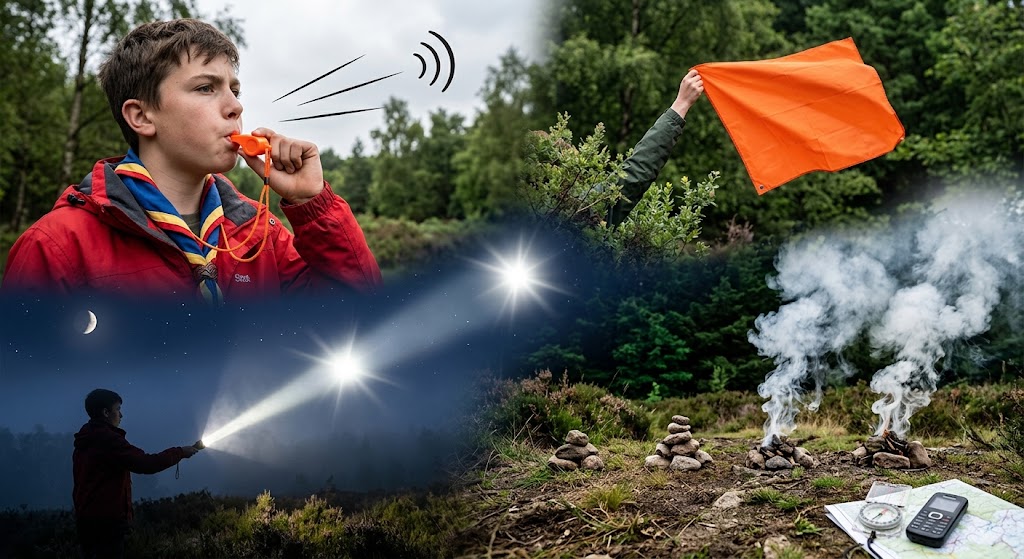
A whistle, phone or other agreed communication equipment can be included in scenarios, along with a torch, waterproof clothing and basic emergency equipment.
The purpose is to encourage Scouts to think about the resources they actually have available rather than assuming that help or equipment will always be immediately accessible.
Prerequisites
Scouts should understand basic navigation and outdoor safety.
They should also know the group’s emergency procedures, how to communicate with their leader and how to raise the alarm when necessary.
Understanding the STOP principle is useful because Stop, Think, Observe and Plan provides a simple framework for making the decision.
Instructions
1. Stop Before Deciding
The first step is to avoid making a rushed decision.
If you are somewhere safe, stop and assess the situation.
Fear and uncertainty can create a strong urge to move simply because staying still feels like doing nothing. That is not necessarily true.
Staying in a safe location can itself be a deliberate survival decision.
2. Check Whether Your Current Location Is Safe
The first question is not “Can I find my way home?”
It is:
“Is it safe to remain here?”
Look for immediate hazards such as falling rocks, unstable ground, flooding, fire, dangerous traffic, exposure or other environmental threats.
If your current position is becoming dangerous, moving to a safer nearby location may be necessary even if you do not know exactly where you are.
Safety takes priority over maintaining your original position.
3. Work Out What You Know
Separate reliable information from guesses.
Ask yourself:
When and where was I last certain of my location?
Do I know which direction I need to travel?
Can I identify any landmarks?
Do I have a map, compass or reliable digital location information?
Do other people know where I am?
The more reliable information you have, the more confidently you can evaluate whether movement is worthwhile.
4. Consider Staying Put
Staying in one location has several potential advantages.
It prevents you from becoming progressively further from your last known position. It can also make it easier for people searching for you to locate you, particularly if someone knows where you were expected to be.
A stationary person can also concentrate on other priorities such as keeping warm, staying hydrated, protecting themselves from weather and making themselves visible or audible.
Staying does not mean simply sitting down and waiting without thinking. You should continue monitoring conditions and following your emergency plan.
5. Consider the Case for Moving
There are circumstances where moving may be the better option.
Your current location might be unsafe. You may have reliable information showing that a known safe location is nearby. You may need to move to obtain shelter or escape an immediate environmental hazard.
The important distinction is between moving because you have a good reason and moving because you are anxious about staying still.
Before moving, identify where you are going, why you are going there and how you will know whether you are making progress.
6. Think About Navigation Confidence
Navigation confidence is critical.
If you know your position and have a clear route to a safe destination, movement can be much more controlled.
If you have no reliable idea where you are, moving randomly is generally a poor strategy.
For example, repeatedly choosing a direction because it feels right can take you further away from the area where people expect you to be.
Never confuse confidence with certainty.
A person can feel very confident about a direction and still be completely wrong.
7. Consider Weather and Daylight
Conditions can change the decision.
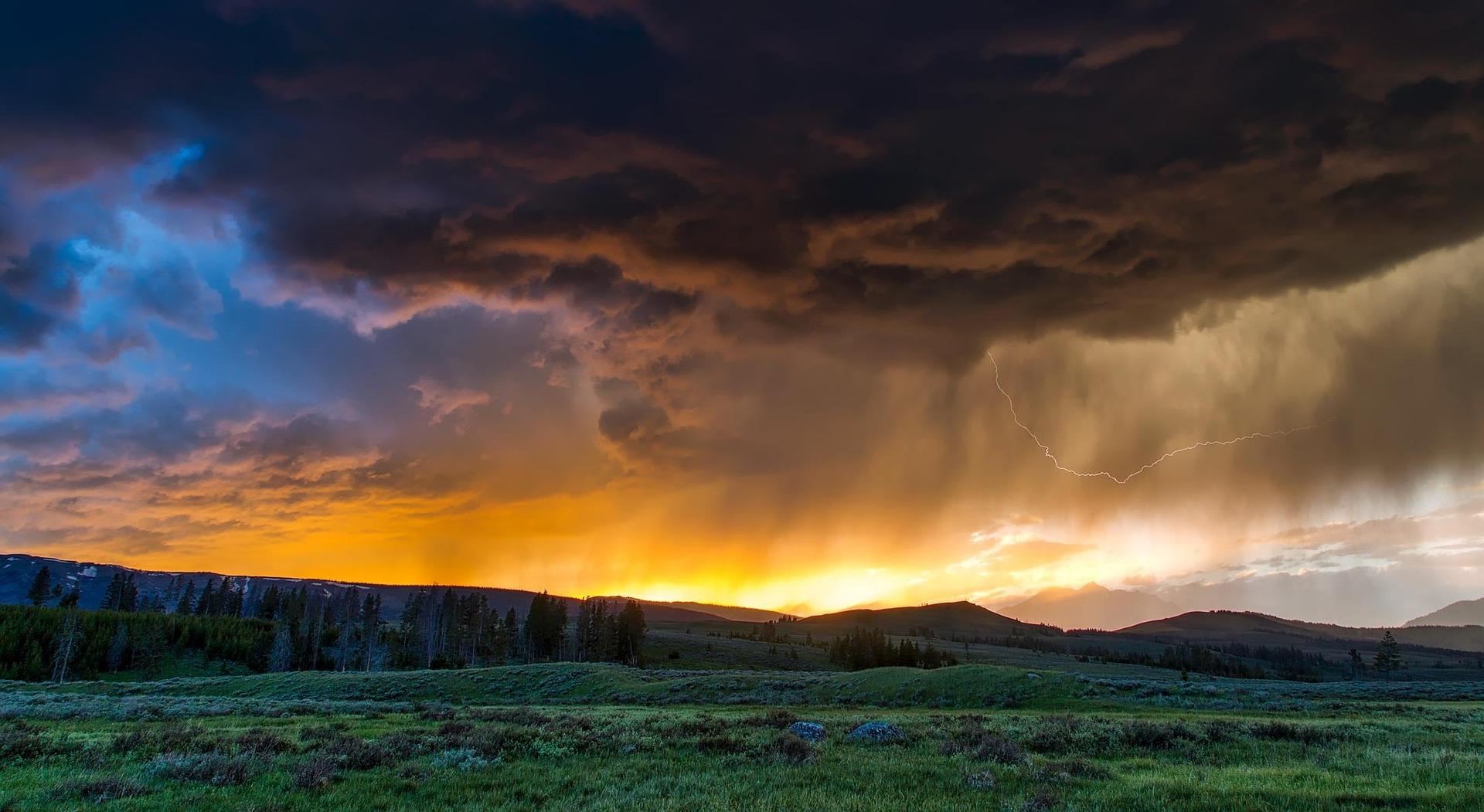
Moving across difficult terrain in darkness, heavy rain, strong winds or poor visibility may introduce hazards that did not exist earlier.
Consider whether movement will improve your situation or expose you to greater risks.
If daylight is disappearing and you are uncertain of your route, continuing into unfamiliar terrain may be much less sensible than establishing yourself somewhere safe and following the appropriate emergency procedure.
8. Consider Your Physical Condition
Your ability to move safely matters.
Fatigue, cold, dehydration, injury and hunger can all affect judgement and physical performance.
A route that would normally be easy may become dangerous when someone is exhausted or injured.
If someone in the group is struggling, include their condition in the decision rather than expecting them to simply keep going.
The safest decision for a group may be different from the safest decision for a fit individual travelling alone.
9. Consider How You Will Be Found
Think about what information other people have.
If someone knows your planned route and last known location, staying nearby may make a search easier.
If you move, the people looking for you may be searching in the wrong area unless they know that you have moved and where you have gone.
This is why communication is so important.
If you can communicate safely, tell the responsible person what has happened and follow the agreed emergency plan rather than making an uncoordinated decision.
10. Make the Decision
Bring the information together.
Ask:
Is where I am safe?
Do I know where I am?
Do I have a reliable reason to move?
Will moving make the situation safer or more dangerous?
What are the weather, daylight and terrain doing?
What does the emergency plan require?
Then make a deliberate decision.
There is no universal rule saying always stay or always move. The correct response depends on the circumstances.
11. If You Move, Have a Clear Plan
If movement is justified, don’t simply start walking.
Know your intended destination and route. Keep the group together where appropriate and use navigation rather than guesswork.
Continue reassessing the situation.
If conditions change or your navigation becomes uncertain, stop and reconsider rather than continuing simply because you have already started moving.
12. If You Stay, Stay Actively
Staying put should be an active decision.
Monitor the weather and your surroundings. Keep yourself and the group as safe and comfortable as possible. Use appropriate signalling methods and maintain communication where possible.
If the reason for staying changes, reassess.
The decision is not permanent. A safe location can become unsafe, and new information can make movement more sensible.
13. Practise With Scenarios
Give Scouts different situations and ask them to decide whether staying or moving is more appropriate.
For example:
“You are walking on a marked route when visibility suddenly becomes very poor. You are unsure of your exact position, but your current location is sheltered and safe.”
Then change one factor:
“You discover that the area where you are standing is becoming unsafe because of rising water.”
Discuss how the decision changes.
The objective is to show that there is no automatic answer. Good emergency decisions depend on information and changing circumstances.
Final Tip
Don’t move just because staying still feels uncomfortable.
Before you move, ask whether you know where you are going and whether moving will genuinely improve the situation. If you are safe, uncertain of your location and have no reliable reason to move, staying put and following your emergency plan may be the wiser choice.
Stay when staying is safer. Move when you have a clear, safer reason to move.
🔒Ready to test your survival skills?
Join Survival Guides UK for free, complete challenges, earn badges and increase your Survival Level.
JOIN FREE →
CRAIG BURR
FOUNDER · SURVIVAL GUIDES UK
I'm Craig, the person behind Survival Guides UK. I created SGUK because I wanted somewhere people could learn real outdoor skills in a practical, straightforward way — from lighting a fire and tying knots to navigation, campcraft and everything in between.
You can read more about the story behind SGUK here as well as our approach here.