Lost-Person Procedures
Activity Overview
Difficulty: Intermediate
Time: 45–60 minutes
Location: Suitable indoor or outdoor training area
Best for: Scouts and Explorers
Skills: Emergency procedures, leadership, communication, headcounts, search planning, risk assessment
A lost-person situation should be treated as an emergency that needs an organised response, not as an excuse for everyone to immediately spread out and search.
The first priorities are to confirm who is missing, establish where and when they were last seen, protect the rest of the group and raise appropriate help.
A useful sequence is:
Recognise → Account → Protect → Inform → Plan → Search → Reassess
The exact response depends on the circumstances. A young person missing from a busy campsite is different from someone separated from a group on a remote hill. Weather, daylight, terrain, age, experience and the person’s individual needs can all affect the response.
Scouts’ current safety guidance emphasises headcounts, registers, emergency procedures and having an InTouch system in place. (Scouts)
What You’ll Learn
You will learn how to respond systematically when someone is unexpectedly missing from a Scout activity.
The most important lesson is that searching is only one part of the response. Before anyone goes looking, leaders need accurate information, a clear picture of the situation and a plan that does not create additional risk.
You will also learn why keeping records, maintaining communication and knowing when to involve emergency services are important parts of managing a missing-person incident.
🟡 SAFETY – MODERATE RISK
The procedure itself can be taught safely through discussion and controlled scenarios. However, a real missing-person incident can rapidly become a serious emergency, particularly in poor weather, remote terrain, near water, at night or when a young person may be vulnerable.
Never create a genuine lost-person scenario as a training exercise. Scouts should not be deliberately separated from the group or sent into unfamiliar areas to practise being lost.
If someone is genuinely missing and there is reason to believe they may be in danger, raise the alarm promptly and contact emergency services rather than delaying while attempting an improvised search. Scouts’ emergency guidance says to assess danger, raise the alarm and get help, and keep emergency services and the designated InTouch contact updated.
Equipment
Good preparation is more important than specialist search equipment.
A group should have an accurate register, emergency contact details, communication equipment and the information needed to identify the group’s location.
For outdoor activities, maps, compasses, phones or radios where appropriate, torches and suitable clothing may also be important.
Before an activity, leaders should know the planned route, meeting points and relevant emergency access information. A functioning InTouch system is required for Scout activities.
Prerequisites
Scouts should understand the importance of staying with their group and reporting immediately if they become separated from others.
Leaders should understand their group’s emergency arrangements, including the InTouch system, registers, headcounts and local procedures.
Anyone responsible for managing an actual incident should know when to involve emergency services and should not rely solely on the Scouts’ training article as a substitute for the group’s established emergency plan.
Instructions
1. Recognise That Someone Is Missing
The first indication may be a failed headcount, a Scout who does not arrive at a meeting point or someone who cannot be located when the group changes activity.
Do not dismiss a discrepancy as a counting mistake.
Stop and establish whether the person is genuinely missing.
Regular headcounts are an important preventative measure because they can identify a separation quickly, before the missing person has travelled a significant distance.
2. Account for Everyone Else
Once someone is believed to be missing, make sure you know where everyone else is.
Do not allow the entire group to disperse in an attempt to search.
Maintain supervision of the remaining Scouts and establish who is responsible for them.
This is one of the most important principles in a missing-person incident: solving one emergency must not create another.
3. Confirm the Last Known Information
Establish the person’s:
Avoid speculation.
The difference between “They were probably heading towards the toilets” and “They were seen walking towards the toilets at 14:20” can be extremely important.
Record reliable facts separately from assumptions.
4. Check the Immediate Area
If appropriate and safe, check obvious nearby locations connected with the person’s plans.
They may have gone to a toilet block, activity area, meeting point, tent, vehicle or other location without realising that the group had moved.
However, this should be an organised check rather than everyone wandering off.
Consider environmental hazards as well. Water, roads, cliffs, steep ground, buildings and other dangers may change the urgency and search strategy.
5. Inform the Responsible People
Tell the leader in charge immediately and follow the group’s emergency procedure.
The Scouts emergency procedure requires appropriate help to be obtained and emergency services contacted when necessary. It also emphasises maintaining communication with the designated InTouch contact and keeping them updated as the situation develops.
Do not wait for a situation to become obviously serious before communicating concerns.
6. Decide Whether Emergency Services Are Needed
The urgency depends on the circumstances.
Consider:
Who is missing?
Where are they?
How long have they been missing?
What are the weather and environmental conditions?
Are there significant hazards nearby?
Do they have any particular vulnerabilities or support needs?
How confident are you about their likely location?
If there is an immediate danger, a serious concern for their welfare or insufficient information to keep them safe, contact 999 or 112 and request the appropriate emergency service.
Do not delay an emergency call simply because you are still gathering information.
7. Give Emergency Services Useful Information
When contacting emergency services, be ready to provide clear facts.
Tell them what happened, who is missing, where they were last known to be, what they are wearing, what equipment they have, the terrain and weather, and any other relevant information.
Give your exact location where possible, including an OS Grid Reference or suitable location information.
Stay available for further questions and follow the instructions given.
8. Do Not Create an Uncontrolled Search
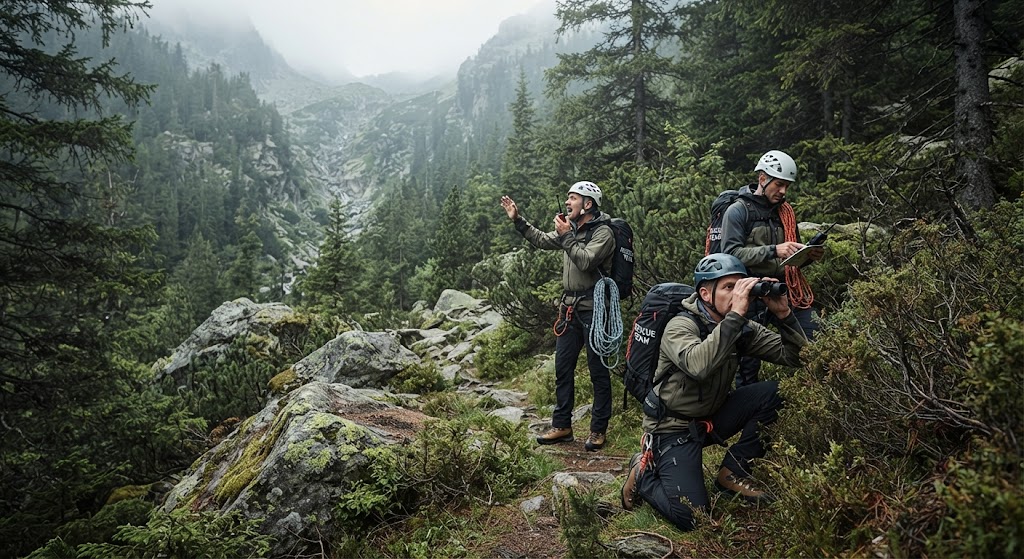
A common mistake is to send numerous people in different directions without a plan.
This can make the situation more difficult to manage and may put searchers at risk.
If a search is appropriate, it should be coordinated by the responsible leader and, where emergency services are involved, carried out according to their instructions.
Searchers should only undertake tasks appropriate to their training, equipment and conditions.
Nobody should enter dangerous terrain simply because they believe the missing person might be there.
9. Keep the Rest of the Group Safe
While the incident is being managed, the rest of the Scouts still need supervision.
Keep them together where appropriate and move them somewhere safe if necessary.
Explain enough to keep them calm without creating unnecessary alarm or sharing private information.
Continue monitoring the group for cold, distress, dehydration or other problems, particularly if the incident causes a long delay.
10. Keep a Record
Write down important events as they happen.
Record times, communications, sightings, decisions and significant changes in circumstances.
This creates a reliable timeline and reduces the chance that important information will be forgotten when people are stressed.
11. Keep Communication Open
Once emergency services or other responsible people are involved, keep them updated when there are significant developments.
If the missing person is located, communicate that immediately.
If new information changes the likely location, condition or circumstances, pass that information on.
Do not assume that someone else has already communicated important information.
12. Reunite Safely
Finding the missing person is not necessarily the end of the incident.
Check their condition and make sure they are safe before simply returning to the activity.
They may be cold, frightened, injured, dehydrated or embarrassed about what happened.
Reassure them and involve the responsible adult. If there are concerns about their physical or emotional wellbeing, follow the appropriate welfare and first-aid procedures.
13. Review What Happened
After the immediate situation has been resolved, review the incident.
Ask:
Why did the person become separated?
When was the separation first noticed?
Did headcounts work effectively?
Was communication clear?
Did everyone know their role?
Were there any delays in raising the alarm?
What could be changed next time?
The purpose is not simply to find someone to blame. It is to make the next activity safer.
14. Prevent the Situation Before It Happens
The best lost-person procedure begins before anyone goes missing.
Use accurate registers and regular headcounts. Make sure Scouts understand where they are expected to be and what they should do if they become separated.
Establish meeting points and clear boundaries. Make sure the leadership team understands who is responsible for each part of the group.
Have an emergency communication system in place and ensure leaders know the planned route and relevant hazards.
Final Tip
The first priority is not finding the missing person as quickly as possible. It is managing the situation safely and intelligently.
Account for everyone, establish the facts, protect the rest of the group, communicate clearly and get appropriate help. A calm, organised response gives search and emergency teams the best possible information while preventing the situation from becoming more dangerous.
🔒Ready to test your survival skills?
Join Survival Guides UK for free, complete challenges, earn badges and increase your Survival Level.
JOIN FREE →
CRAIG BURR
FOUNDER · SURVIVAL GUIDES UK
I'm Craig, the person behind Survival Guides UK. I created SGUK because I wanted somewhere people could learn real outdoor skills in a practical, straightforward way — from lighting a fire and tying knots to navigation, campcraft and everything in between.
You can read more about the story behind SGUK here as well as our approach here.