How to Ask for Help Outdoors: A Skill Every Child Should Know
Knowing when to ask for help is an important outdoor skill, but it is one that can easily be overlooked. When you’re exploring somewhere new, something doesn’t feel right or you simply don’t know what to do, speaking up can make a situation much easier to deal with.
Asking for help isn’t a sign that you have failed. Good outdoor explorers know their limits and they understand that getting help when they need it is part of staying safe.
What You’ll Learn
This guide will help you understand when to ask for help, who to ask and what information can be useful when explaining what has happened.
Know When You Need Help
You don’t have to wait until something becomes an emergency before you reach out for help.
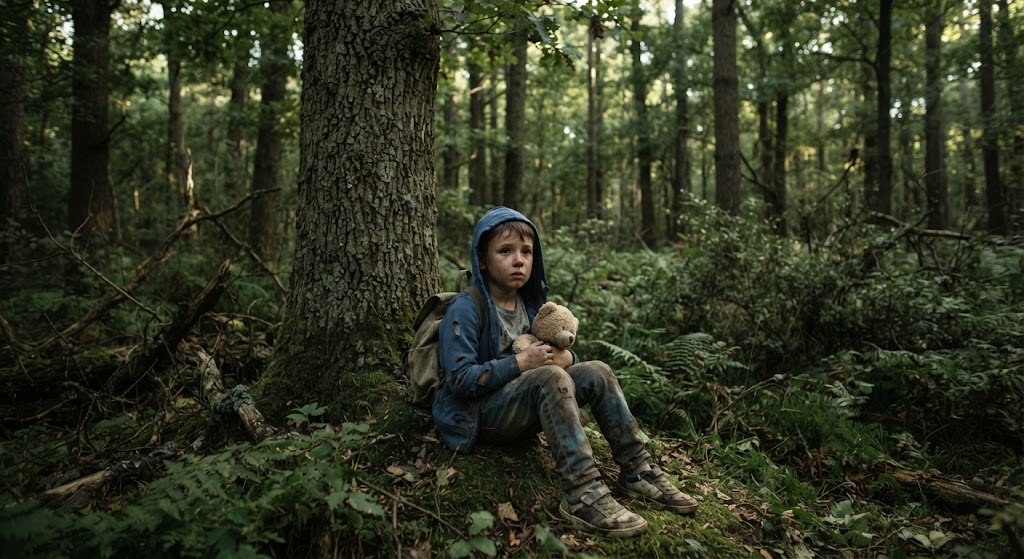
You might need help because you’ve become separated from your group, you’re hurt, you’ve lost your way, the weather has changed or you’re unsure how to do something safely.
You might also simply have a feeling that something isn’t right. That’s worth paying attention to.
If you’re unsure, tell a responsible adult rather than keeping the problem to yourself.
Speak Up Early
Small problems are often much easier to solve than big ones.
If your feet are starting to hurt, tell someone before you have blisters. If you’re getting cold, say something before you’re shivering. If you aren’t sure which way you’re supposed to go, ask before you start walking in the wrong direction.
You don’t need to have all the answers yourself. The important thing is letting someone know what is happening.
Who Should You Ask?
If you’re outdoors as part of a group, your first choice should normally be the adult responsible for you.
This could be a parent, teacher, youth leader, instructor or another responsible adult.
If you’re separated from your group and need help from someone you don’t know, look for a trustworthy adult or someone in an appropriate position to help, depending on the situation.
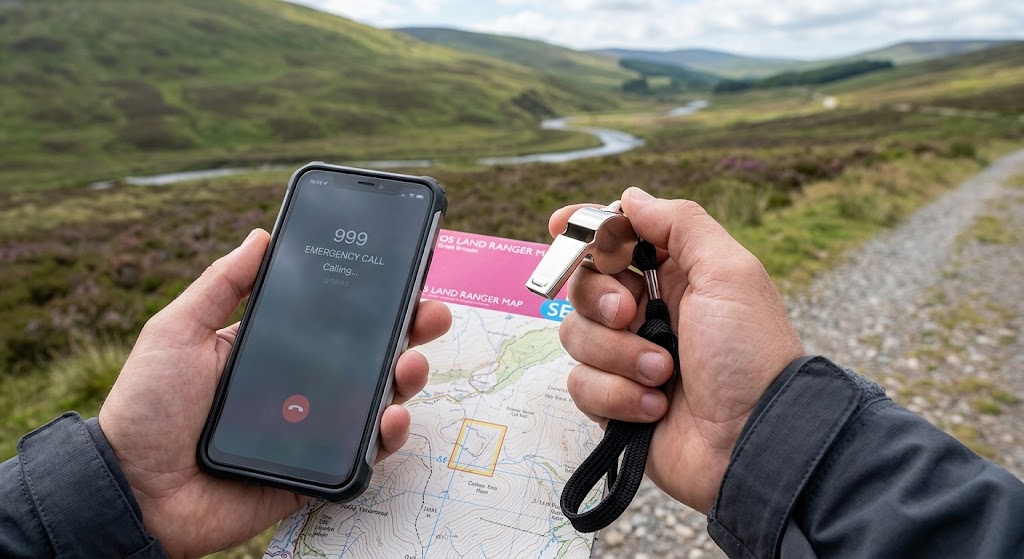
If you’re in immediate danger or there is a serious emergency, emergency services may be needed.
Explain What Has Happened
When you ask for help, try to explain the situation clearly.
You don’t need to use complicated words. Start with the most important information.
For example:
“I’ve hurt my ankle and I can’t walk properly.”
Or:
“I’ve become separated from my group and I don’t know where they are.”
This gives the person helping you a clear starting point.
Know Where You Are
Being able to explain where you are can be extremely useful.
When you’re outdoors, pay attention to things around you such as paths, signs, buildings, roads, landmarks and distinctive features.
If you’re using a map, knowing how to describe your location on it is even better.
You don’t need to know an exact postcode in the middle of a woodland. Being able to say something such as “I’m on the footpath near the bridge” can still provide useful information.
Stay Calm
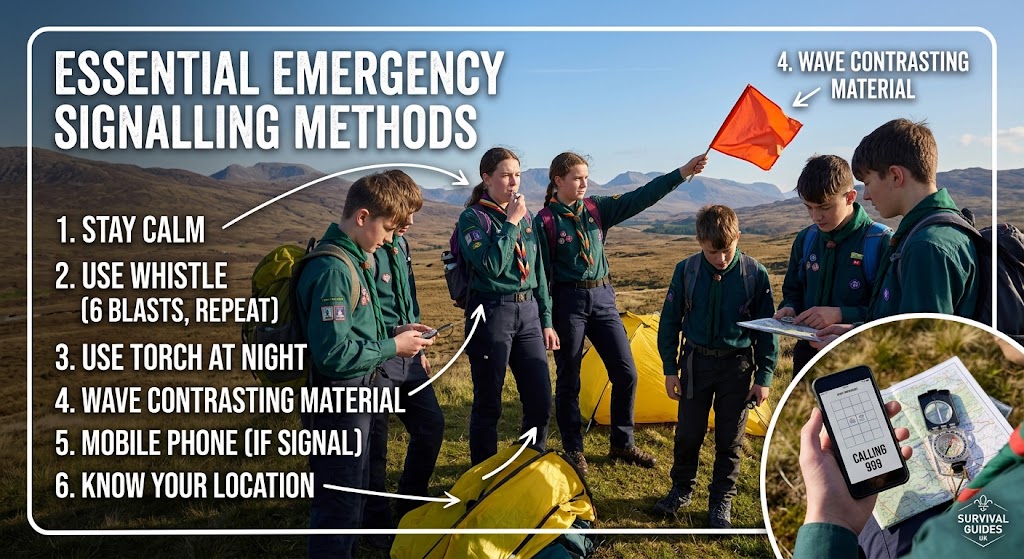
If you need help, take a breath and try to explain what has happened calmly.
You might be frightened, upset or confused, particularly if something unexpected has happened. That’s completely normal.
You don’t need to pretend that you’re fine. Tell the person helping you how you’re feeling as well as what has happened.
Practise Asking for Help
This is a skill you can practise without anything going wrong.
Next time you’re out with a parent or leader, imagine that you’ve become separated from the group or need help with a problem. Practise explaining where you are, what has happened and what you need.
You could even practise giving a simple location from a map.
The more familiar you are with asking for help, the easier it will be to do it if you ever genuinely need to.
Final Tip
You don’t need to solve every outdoor problem by yourself.
Knowing when to stop, speak up and ask for help is a sign that you’re becoming a more capable outdoor explorer. The aim isn’t to avoid needing help altogether — it’s to recognise when help is needed and know what to do next.
🔒Ready to test your survival skills?
Join Survival Guides UK for free, complete challenges, earn badges and increase your Survival Level.
JOIN FREE →
CRAIG BURR
FOUNDER · SURVIVAL GUIDES UK
I'm Craig, the person behind Survival Guides UK. I created SGUK because I wanted somewhere people could learn real outdoor skills in a practical, straightforward way — from lighting a fire and tying knots to navigation, campcraft and everything in between.
You can read more about the story behind SGUK here as well as our approach here.