Emergency Communication: How to Call for Help and Pass Information Clearly
Activity Overview
Difficulty: Beginner
Time: 45–60 minutes
Location: Suitable indoor or outdoor training area
Best for: Scouts and Explorers
Skills: Communication, emergency signalling, navigation, decision-making, teamwork, situational awareness
Emergency communication is the ability to get the right information to the right person quickly and clearly when something goes wrong.
The most important message is not necessarily the longest one. Emergency responders need to understand what has happened, where you are, who is involved, what dangers exist and what help is required.
A useful communication sequence is:
Raise the alarm → Give your location → Explain what happened → Describe the people involved → State what help is needed → Follow instructions
Good communication also means listening. Once you have contacted someone who can help, follow their instructions carefully and keep them updated if the situation changes.
What You’ll Learn
You will learn how to communicate during an emergency without allowing panic or confusion to interfere with the message.
You will practise giving useful location information, explaining an incident clearly, using different communication methods and deciding what information is most important.
The aim is to develop a habit of communicating calmly, accurately and concisely.
🟢 SAFETY – LOW RISK
Learning emergency communication is a low-risk activity when practised through discussion and controlled scenarios.
Training exercises should never involve deliberately creating a genuine emergency or contacting emergency services unnecessarily. Any outdoor exercise should take place in a suitable area with normal supervision and emergency arrangements.
Equipment
A phone is useful for practising emergency calls and discussing what information should be given.
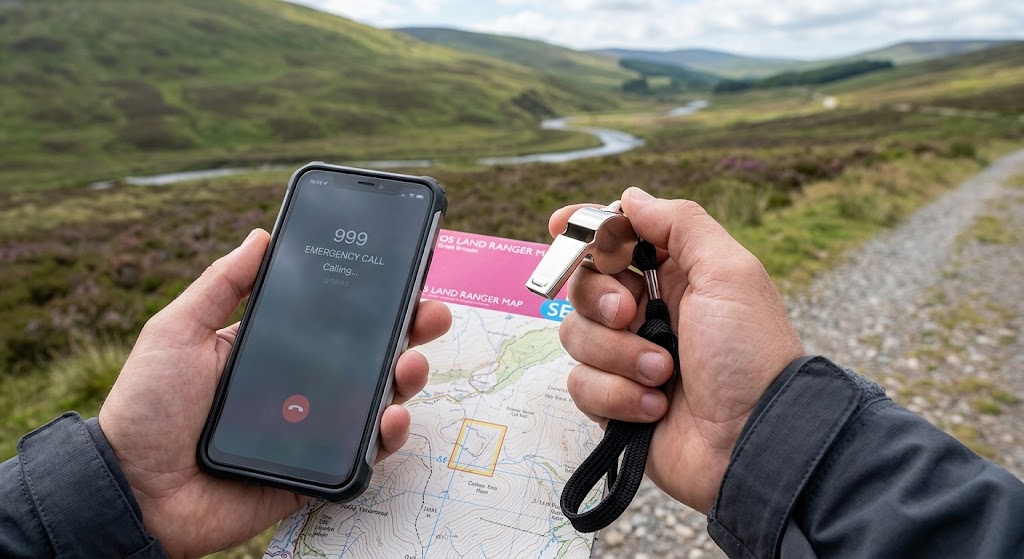
For outdoor activities, a whistle, map, compass, torch and, where appropriate, a radio can provide alternative ways of communicating.
A written emergency contact list and accurate location information are also valuable. Communication equipment should be checked before activities rather than discovered to be unusable during an emergency.
Prerequisites
Scouts should know who is responsible for them during an activity and understand the group’s emergency arrangements.
Basic map-reading is particularly useful because knowing how to describe a location can make a major difference when requesting assistance.
Scouts should also understand that 999 and 112 are for genuine emergencies and should not be used for practice calls.
Instructions
1. Recognise When Communication Is Needed
Communication should happen as soon as there is a genuine need for assistance.
This might include a serious injury, someone becoming missing, a dangerous environmental situation or an incident that the group cannot safely manage itself.
Don’t assume that you have to solve everything internally before telling someone what is happening.
Early communication can give other people more time to help.
2. Stay Calm Before Speaking
Fear and excitement can make people speak very quickly or forget important information.
Before communicating, take a moment to organise your thoughts if circumstances allow.
You don’t need to be perfectly calm. You simply need to communicate clearly enough for another person to understand the situation.
Think about:
What happened?
Where are we?
Who needs help?
What is happening now?
What do we need?
3. Give Your Location First
One of the most useful pieces of information in an outdoor emergency is where you are.
A street address may not exist in the countryside, so learn how to communicate your location using available information.
Depending on the situation, this might include:
If you are unsure of your exact position, say so.
Don’t invent a location because you think it sounds more useful.
4. Explain What Has Happened
Describe the incident simply.
For example:
“One person has fallen and injured their leg.”
is more useful than:
“Something terrible has happened and we don’t know what to do.”
Give the important facts first.
You can provide additional detail when asked.
5. Explain Who Needs Help
Give information about the people involved.
Explain how many people are affected and, where relevant, their approximate age and condition.
For example:
“One young person is injured. They are conscious and breathing normally but cannot stand.”
This gives the person receiving the message useful information about the seriousness of the situation.
Avoid unnecessary personal information.
6. Describe Immediate Hazards
Tell the recipient about anything that could affect the safety of the group or rescuers.
This might include:
This information can affect how assistance is provided.
7. Say What Help You Need
Be clear about what you are requesting.
You may need first aid advice, assistance locating someone, evacuation or emergency services.
Don’t assume that the person receiving the message knows what you need.
A clear statement such as:
“We need an ambulance because one person has a suspected serious injury”
is much more useful than simply saying:
“We need help.”
8. Listen and Follow Instructions
Emergency communication is a two-way process.
Once you have raised the alarm, listen carefully.
You may be asked to provide additional information, move to a safer location, give your exact coordinates or carry out another action.
Don’t talk over the person giving instructions.
If you don’t understand something, ask them to repeat it rather than guessing.
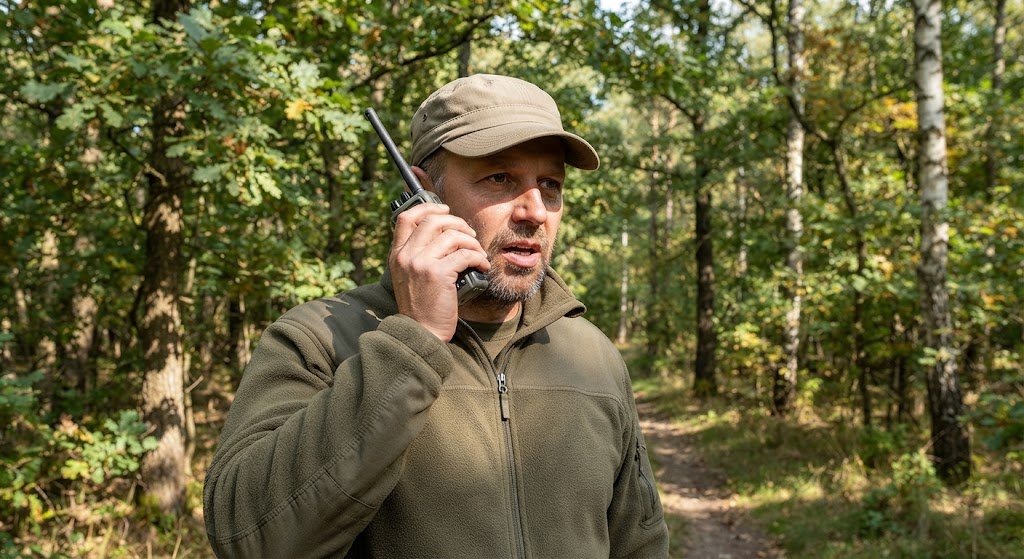
9. Use a Radio Correctly
When radios are available, messages should be brief and clear.
Identify who you are calling and who you are, then give the essential information.
Avoid filling the channel with unnecessary conversation during an emergency.
If several people are using the same radio network, keep transmissions short so that other important messages can get through.
Radio procedures vary between groups and equipment, so learn the system being used on your activity before you need it.
10. Use a Whistle When Appropriate
A whistle can be useful when people are separated outdoors or when shouting would be tiring.
A commonly taught distress signal is six blasts, followed by a pause, repeated as necessary.
If you hear a recognised distress signal, don’t automatically run towards it. Establish where it is coming from and follow your group’s emergency procedure.
Whistle signals should be agreed and practised before an activity so that everyone knows what they mean.
11. Use Visual Signals
If people searching for you are nearby, visual signals can help attract attention.
A torch can be used at night and movement or other agreed signals may help during daylight.
The key principle is deliberate signalling rather than random activity.
If you are in a location where you are expected to remain, make yourself as visible as is safely possible.
12. Make the Most of Your Phone
A phone can be an extremely useful emergency communication tool, but it should not be treated as infallible.
Battery life, signal coverage, weather and damage can all affect its usefulness.
Keep the phone protected and charged where possible.
If you have enough information to communicate your location, give it clearly. If you don’t, don’t waste valuable time repeatedly trying to produce an inaccurate location.
Follow the instructions of the person you contact.
13. Have a Backup Method
Don’t rely entirely on one communication method.
Depending on the activity, alternatives might include a whistle, radio, written information, a map or another person’s phone.
Before leaving, consider:
What happens if the phone fails?
What happens if there is no signal?
How will the group communicate if people become separated?
Planning these answers beforehand is much easier than trying to invent a system during an emergency.
14. Keep the Message Consistent
In a group emergency, appoint someone to coordinate communication where practical.
If several people are giving different versions of what happened, confusion can develop quickly.
Make sure important information is shared with the responsible leader and that updates are passed on accurately.
If new information becomes available, communicate the change rather than allowing outdated information to continue circulating.
15. Record Important Information
During a prolonged incident, write down important details where possible.
Record times, messages, instructions, changes in circumstances and important decisions.
This can be particularly useful if different people become involved in managing the incident.
Writing information down also reduces the chance that stress will cause important details to be forgotten.
16. Practise Giving an Emergency Message
Create a fictional scenario and ask Scouts to communicate it to another person.
For example:
“A member of your group has fallen on a walking route. They are conscious but cannot put weight on one leg.”
Ask the Scout to explain:
Where are you?
What happened?
How many people are involved?
What is their condition?
Are there any immediate hazards?
What help is required?
Afterwards, discuss whether the message was clear and whether any important information was missing.
17. Know When to Escalate
Not every problem requires emergency services, but Scouts should never be discouraged from raising a genuine concern.
If there is immediate danger, serious injury, a missing person or another situation requiring urgent assistance, contact the appropriate emergency service.
In the UK, 999 or 112 can be used to contact emergency services.
Once help has been requested, remain available to provide further information and follow instructions.
Final Tip
In an emergency, clear information is almost as important as having a means of communication.
Remember:
Where are you? What happened? Who needs help? What dangers exist? What do you need?
Speak clearly, listen carefully and don’t guess. A short, accurate message can give someone the information they need to send the right help.
🔒Ready to test your survival skills?
Join Survival Guides UK for free, complete challenges, earn badges and increase your Survival Level.
JOIN FREE →
CRAIG BURR
FOUNDER · SURVIVAL GUIDES UK
I'm Craig, the person behind Survival Guides UK. I created SGUK because I wanted somewhere people could learn real outdoor skills in a practical, straightforward way — from lighting a fire and tying knots to navigation, campcraft and everything in between.
You can read more about the story behind SGUK here as well as our approach here.