Observation Games for Scouts and Guides
Activity Overview
Difficulty: Easy
Time: 10–30 minutes
Location: Indoors or outdoors
Best for: Small groups, patrols and activity sessions
Skills: Observation, memory, attention to detail, communication and teamwork
Observation games are simple activities that challenge young people to notice, remember and communicate details about their surroundings. They can be run indoors or outdoors and usually require little or no specialist equipment.
A good observation game should have a clear objective, a manageable amount of information to remember and enough time for everyone to take part. Games can be made easier for younger participants or more challenging for older Scouts by increasing the number of objects, reducing viewing time or introducing distractions.
What You’ll Learn
By running observation games, young people can practise:
These are useful everyday skills as well as foundations for activities such as navigation, campcraft and outdoor awareness.
🟢 SAFETY – LOW RISK
Most observation games involve little physical risk. The main considerations are the environment in which the game is played and the age of the participants.
Choose a suitable playing area and remove obvious trip hazards. If the activity takes place outdoors, establish clear boundaries and make sure participants understand where they are allowed to go.
Avoid turning observation games into races where participants run while looking backwards or concentrating on something other than where they are walking.
Equipment
The equipment depends on the game, but many activities can be run with items already available at camp.
Useful equipment includes:
For outdoor games, the surrounding environment can often provide everything you need.
Prerequisites
No previous experience is required.
Before starting, explain that the aim is to observe carefully rather than simply look quickly. Encourage participants to notice small details such as shape, colour, position, texture and number.
For younger children, begin with a small number of obvious objects. Older or more experienced groups can be given shorter observation periods or asked to remember more detailed information.
Instructions
1. Choose a suitable game and location
Select an activity that matches the size and age of your group.
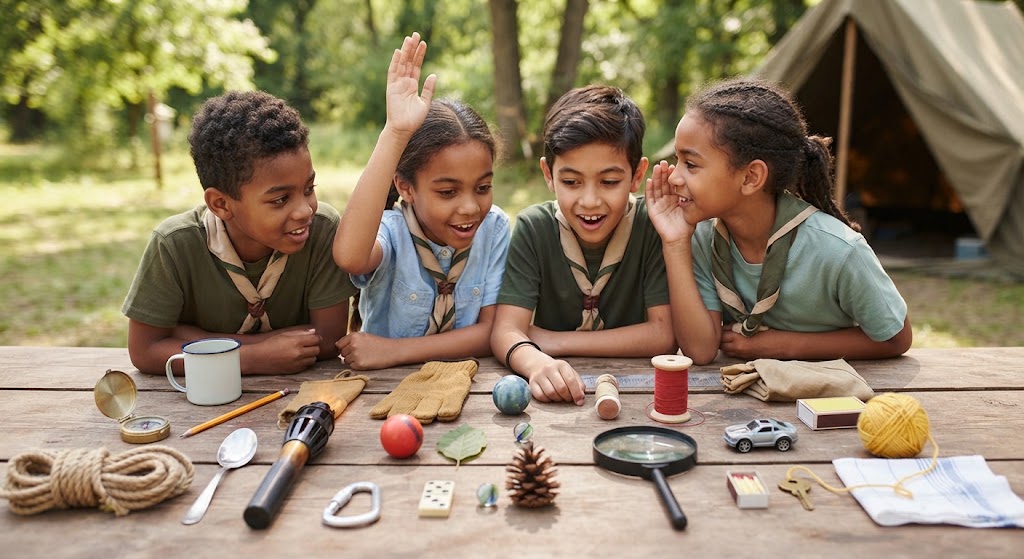
For a quick indoor activity, a table containing several objects works well. For an outdoor session, you can use a campsite, woodland edge, field or another clearly defined area.
Make sure participants know the boundaries before beginning.
2. Start with a simple observation challenge
Place several objects where everyone can see them.
Give the group a short period to study the objects. Depending on their age and experience, this might be anywhere from 30 seconds to a couple of minutes.
Ask them to look carefully without touching anything.
After the observation period, cover the objects or remove them from sight.
Ask questions such as:
The group can answer individually or work together.
3. Introduce Kim’s Game
Kim’s Game is one of the simplest ways to develop observation and memory.
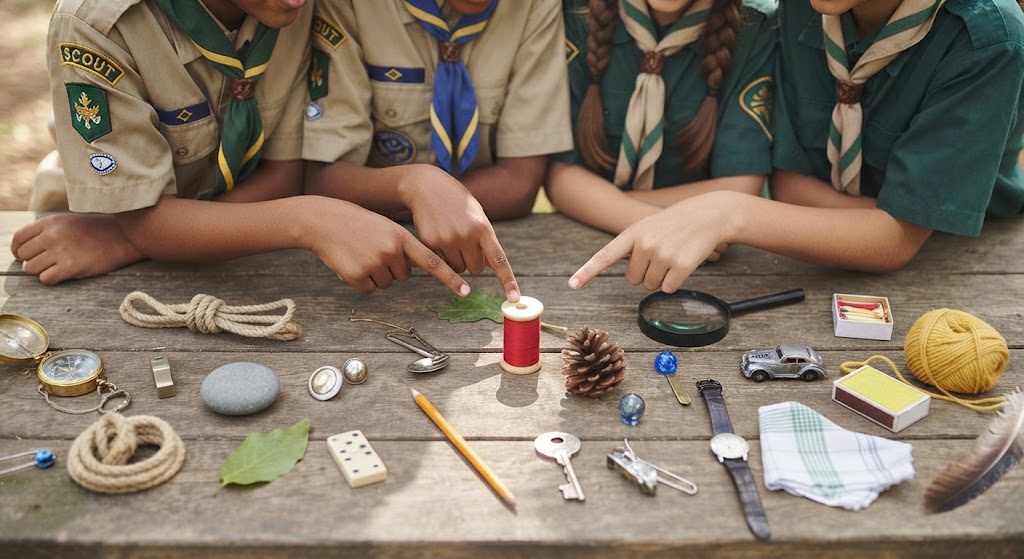
Place around 10–20 objects under a cloth or on a table. Give the group time to examine them before covering them.
Participants then write down or call out as many objects as they can remember.
For a more challenging version, remove one object while the group is not looking. Uncover the remaining objects and ask them to identify what has disappeared.
This can also be reversed by adding an extra object and asking what has changed.
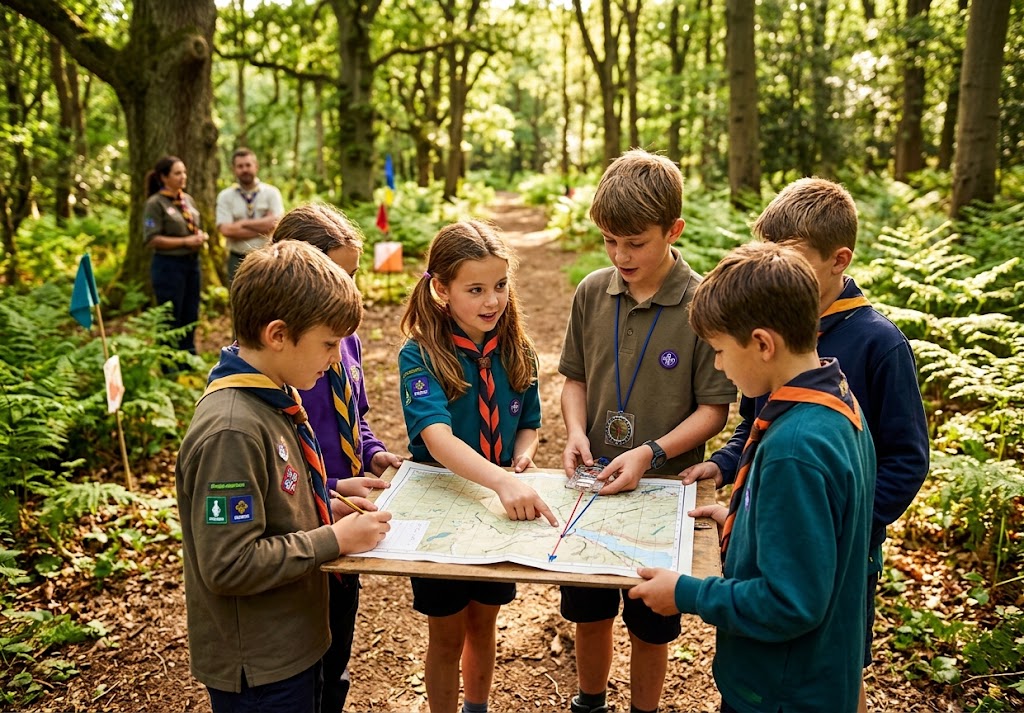
4. Try an outdoor observation game
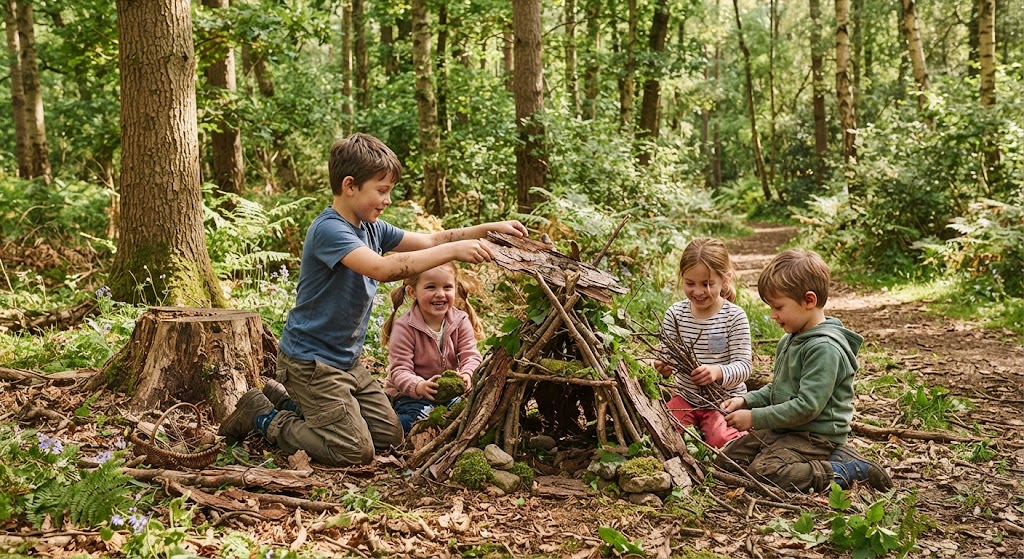
Take the group outside and choose a defined area containing a variety of natural and man-made features.
Give participants a short time to study the area.
Move the group away and ask them questions about what they saw.
For example, you might ask them to remember the number of trees beside a path, the position of a particular sign, the colour of a gate or something unusual they noticed.
The objective isn’t to test whether they know the names of everything they saw. It is to encourage them to pay attention.
5. Play “What Has Changed?”
Arrange a small area or collection of objects so everyone can study it.
Ask participants to turn away or close their eyes while you make one or more changes.
You could move an object, remove something, change its position or add something new.
Let the group look again and identify what has changed.
Start with one change and gradually increase the difficulty.
This works particularly well because participants quickly learn that simply looking at something isn’t enough — they need to deliberately remember its details.
6. Add a memory relay
Divide the group into small teams.
Place an object or information sheet at a location a short distance away. One participant from each team can go and observe it before returning to tell their team what they saw.
The next participant can then check the information or continue the task.
For example, the leader could display a short list of objects, a simple arrangement or a pattern made from equipment.
The team must recreate what they observed using the materials available.
Keep the distance short and make sure the activity does not encourage participants to run into obstacles.
7. Use nature for observation challenges
Outdoor observation games don’t need prepared equipment.
Ask participants to find or identify things such as:
Set clear boundaries and avoid asking participants to collect living plants, disturb wildlife or enter unsuitable areas.
For a more advanced challenge, ask participants to remember where they found each item rather than collecting it.
8. Make the game progressively harder
Once the group understands the basic activity, increase the challenge rather than changing the game completely.
You can reduce the observation time, increase the number of objects or ask for more precise information.
Another option is to introduce distractions. For example, allow the group to observe a campsite for one minute and then ask them to remember specific details about it.
Older participants can be asked to record their observations and compare their answers afterwards.
9. Finish with a short review
Bring everyone together and discuss what helped them remember details.
Ask questions such as:
The review is useful because it turns a simple game into a lesson about observation.
Encourage participants to develop a habit of deliberately looking for details rather than assuming they will remember whatever they happen to see.
Final Tip
Keep observation games short, varied and achievable. The aim is not to catch participants out. It is to teach them to slow down, look carefully and notice things they might otherwise overlook.
Once a group becomes good at basic memory games, take the activities outdoors and use real surroundings. This makes the skill more practical and provides a natural introduction to the awareness and attention to detail needed for other outdoor activities.
🔒Ready to test your survival skills?
Join Survival Guides UK for free, complete challenges, earn badges and increase your Survival Level.
JOIN FREE →
CRAIG BURR
FOUNDER · SURVIVAL GUIDES UK
I'm Craig, the person behind Survival Guides UK. I created SGUK because I wanted somewhere people could learn real outdoor skills in a practical, straightforward way — from lighting a fire and tying knots to navigation, campcraft and everything in between.
You can read more about the story behind SGUK here as well as our approach here.