10 Outdoor Survival Games for Scouts: Fun Activities for Leaders
⚠️ SAFETY FIRST
Outdoor survival games should be fun, educational and appropriately supervised. Activities involving water, fire, tools, heights or challenging terrain require additional planning and suitable controls.
Adapt every activity to the age, ability and experience of your group, the location and the weather. Follow your organisation’s current safety guidance and any rules applying to the site.
These games are designed to teach survival principles, not to put young people into genuine survival situations.
10 Outdoor Survival Games for Scouts
Survival skills don’t have to be taught through long explanations or formal instruction.
For Scouts, turning a skill into a game or challenge can make it much more memorable.
A navigation exercise can become a race.
Learning about shelter can become a team challenge.
Observation skills can become a treasure hunt.
And learning about survival priorities can become a scenario where patrols have to decide what they would do next.
The key is to make the activity challenging without making it dangerous.
Here are 10 outdoor survival games that Scout leaders can adapt for their own groups.
💡 LEADER TIP
Don’t make every game about winning.
The most useful question at the end of an activity is often:
“What did you learn?”
A five-minute debrief can turn a fun game into a valuable outdoor-skills lesson.
1. Survival Kit Challenge
The idea
Give each patrol a selection of objects and ask them to decide which items would be most useful in an outdoor survival situation.
You can include a mixture of genuinely useful items and completely impractical ones.
For example:
- First-aid kit
- Water bottle
- Waterproof jacket
- Map
- Torch
- Emergency blanket
- Rope
- Whistle
- Chocolate bar
- Sunglasses
- Mobile phone
- Frying pan
- Toy
- Inflatable beach ball
The Scouts must choose a limited number of items.
The challenge
“You can only take five. Which ones do you choose?”
The important part isn’t necessarily choosing the “correct” five.
It’s explaining why.
One team might prioritise shelter.
Another might prioritise signalling.
Another might prioritise water.
That creates an excellent discussion about survival priorities.
Skills developed
Leader twist
Give each patrol a different scenario.
For example:
“You’re lost on a cold, wet afternoon.”
versus:
“You’re stranded on a hot summer day.”
Do their choices change?
2. Survival Scenario Challenge
This takes the previous activity a step further.
Give the patrol a fictional scenario.
For example:
“Your group has become separated from the main party while walking. You know roughly where you are, but it’s getting dark and rain is starting.”
Give the Scouts a few minutes to decide what they would do.
They then explain their plan.
Possible scenarios
- Lost on a walk
- Sudden storm
- Injured team member
- Wet clothing
- Broken compass
- Nightfall approaching
- Unexpected cold weather
- Separated from the group
The scenarios don’t need to involve elaborate props.
The challenge is getting Scouts to think rather than panic.
Skills developed
🧠 LEADER TIP
There may be more than one sensible answer.
Encourage Scouts to explain their reasoning rather than simply trying to guess the answer the leader wants.
3. Navigation Treasure Hunt
Turn basic navigation into a treasure hunt.
Set up a series of checkpoints around a suitable area.
Each team receives:
- A map
- A starting point
- A series of clues
They need to navigate between the checkpoints.
At each location they can find another clue.
The final checkpoint contains a small prize or team challenge.
Make it more challenging
Require teams to:
- Follow a bearing
- Estimate a distance
- Identify a feature on the map
- Find a grid reference
- Identify a landmark
- Complete a short task
Skills developed
You can also introduce a time element, but accuracy should be more important than speed.
4. What’s Missing?
This is a brilliant game for developing observation skills.
Place a collection of outdoor-related objects on the ground.
Give everyone a minute to look at them.
Then cover the objects and secretly remove one.
Reveal them again.
What’s missing?
Start with a small number of obvious objects.
Then make it harder.
You can eventually use 15–20 objects and remove two or three.
Outdoor version
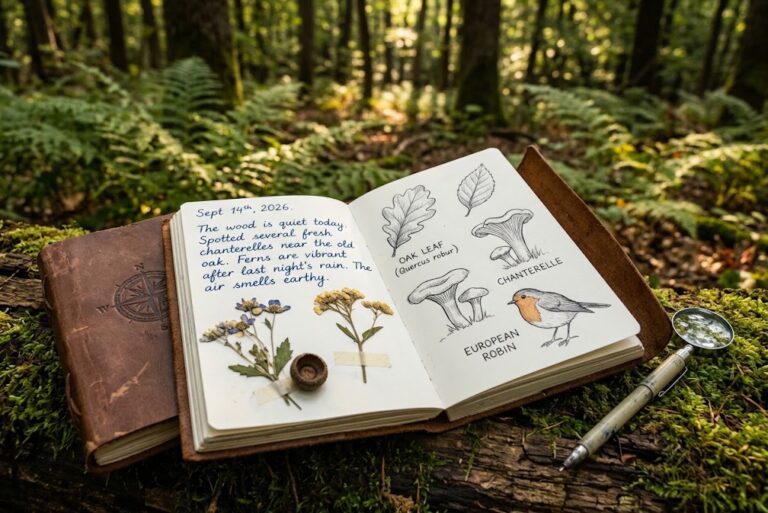
Use natural objects such as:
- Pine cone
- Stick
- Stone
- Leaf
- Feather
- Acorn
alongside outdoor equipment.
Skills developed
Leader twist
Don’t just remove objects.
Move one.
Can the Scouts spot what’s changed?
5. Camouflage and Observation Game
Choose a safe outdoor area with clear boundaries.
One leader or Scout hides a number of suitable objects in the area.
The objects shouldn’t be dangerous or difficult to retrieve.
Teams then have a limited amount of time to find as many as possible.
The objects can be made deliberately difficult to spot.
For example, a coloured peg partially hidden among vegetation.
Skills developed
Important safety point
Don’t allow Scouts to wander into unsuitable terrain simply to find an object.
Set clear boundaries before the game begins.
The aim is observation, not exploration of dangerous areas.
6. Emergency Shelter Challenge
This is a great practical team activity.
Give each patrol a selection of suitable shelter materials.
For example:
- Tarps
- Rope
- Pegs
- Poles
- Groundsheets
Give them a scenario:
“You need to create a shelter that protects your team from wind and rain.”
Give them a set amount of time to plan and build.
You can then inspect each shelter.
Score it on:
- Stability
- Weather protection
- Use of materials
- Teamwork
- Planning
- Ease of entry and exit
Don’t score children on whether the shelter would genuinely keep them alive in an emergency.
This is a learning exercise, not a real survival test.
Skills developed
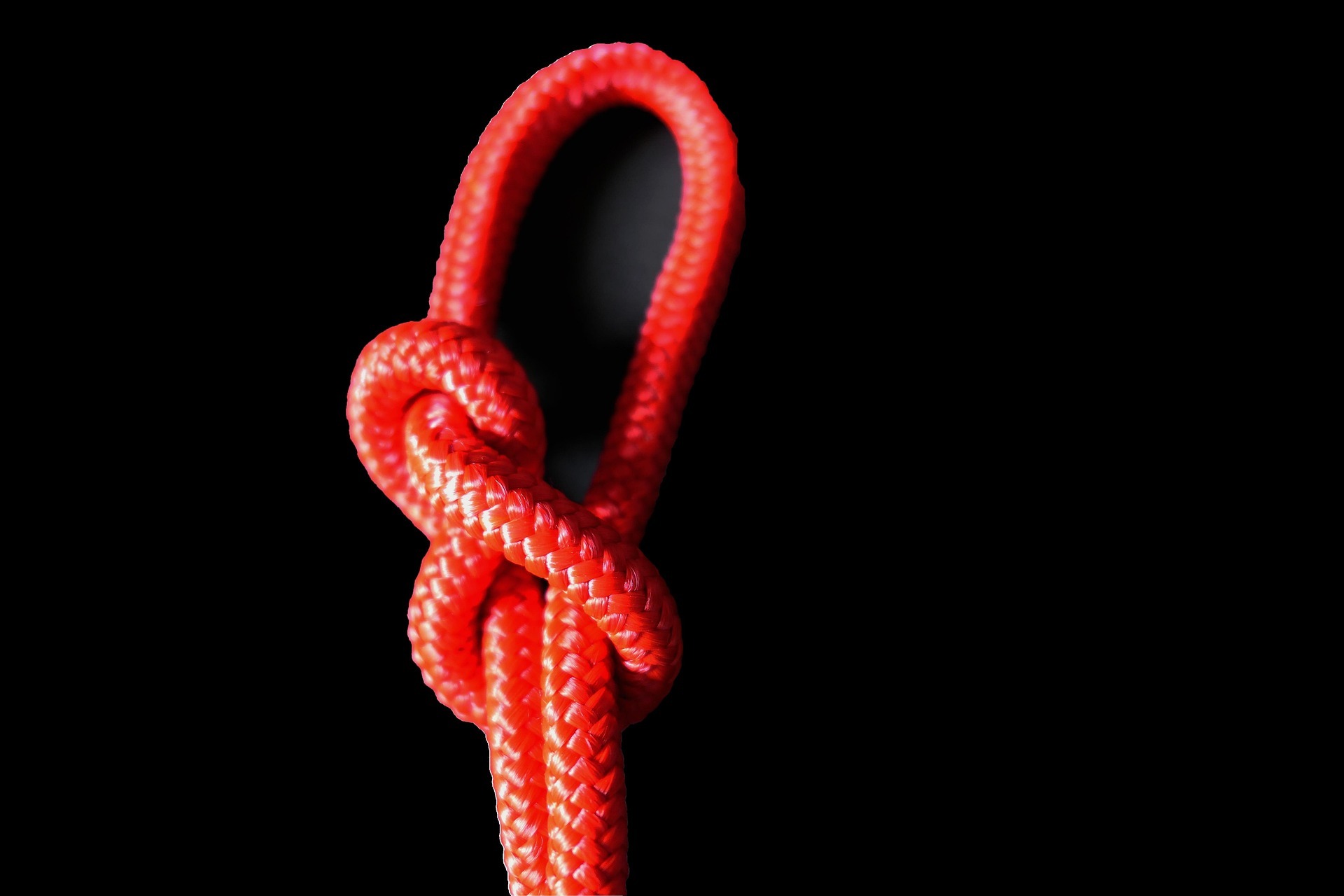
7. Knot Relay
Turn basic knots into a relay challenge.
Set up several stations.
Each station requires a particular knot or rope task.
For example:
Station 1: Tie a reef knot.
Station 2: Tie a clove hitch.
Station 3: Tie a round turn and two half hitches.
Station 4: Identify a knot from a picture.
Station 5: Explain what a particular knot is commonly used for.
The patrol completes each station before moving to the next.
Make it about accuracy
Don’t make Scouts race while handling rope or equipment.
A better scoring system is:
Correct knot = points
Correctly explained use = bonus points
Helping another team member = bonus points
Skills developed
8. Survival Signal Challenge
Teach Scouts how important signalling can be when someone is lost or needs assistance.
Give each patrol a scenario:
“You need to attract the attention of a search party.”
They must decide how they would signal using the resources available.
Possible signalling methods can include:
- Whistle
- Torch
- Bright clothing
- Appropriate visual signals
- Voice
- Agreed signals
You can turn this into a challenge by having leaders positioned at a safe distance.
The patrol has to attract their attention using an agreed signalling method.
Skills developed
🚨 IMPORTANT
Make sure Scouts understand the difference between a game signal and a genuine emergency signal.
Avoid encouraging unnecessary emergency calls or signals to members of the public or emergency services.
9. Water Collection Challenge
Water is one of the most important survival considerations, making it a useful subject for a game.
However, you don’t need Scouts drinking water from streams or experimenting with untreated water.
Instead, create a water transport challenge.
Give each team:
- A container
- A measured amount of water
- A designated starting point
- A safe destination
They have to transport the water while losing as little as possible.
You can introduce obstacles or require them to work as a team.
Alternative
Give each team several containers with different properties.
Ask:
Which would be best for carrying water?
Then discuss:
- Capacity
- Weight
- Leakage
- Durability
- Portability
Skills developed
10. Survival Priorities Game
This is perhaps the easiest game to run because it requires almost no equipment.
Give each patrol a list of survival problems.
For example:
- You’re cold.
- You’re thirsty.
- You’re lost.
- Someone has a minor injury.
- It’s getting dark.
- Rain is starting.
- You have limited food.
Ask them to put the problems in the order they would deal with them.
Then compare the answers.
The discussion afterwards is more important than the ranking.
Leader questions
Ask:
“Why did you choose that first?”
“What would happen if you ignored it?”
“Would your answer change in different weather?”
“What if someone was injured?”
This encourages Scouts to understand that survival isn’t about memorising one fixed list.
It’s about assessing the situation and dealing with the most immediate dangers first.
Skills developed
Bonus Game: Survival Bingo
If you want something less competitive, create a bingo card containing outdoor observations.
For example:
☐ Find three different leaf shapes
☐ Identify a natural shelter
☐ Find a safe source of shade
☐ Identify north
☐ Find a natural material suitable for tinder
☐ Identify an animal track
☐ Find something that could be used as a natural cordage material
☐ Spot a potential hazard
☐ Identify a tree species
☐ Find evidence of water
The Scouts move around the designated area completing the challenges.
This works particularly well as a team activity.
How to Make Survival Games Work for Different Ages
The same activity can often be adapted for different sections.
Younger Scouts
Keep challenges:
- Short
- Simple
- Highly supervised
- Focused on observation and teamwork
Older Scouts
Introduce:
- Navigation
- More complex scenarios
- Planning
- Leadership
- Problem-solving
Explorer Scouts
You can introduce greater responsibility by allowing teams to:
- Plan their own approach
- Lead activities
- Assess hazards
- Explain their decisions
- Teach skills to others
The important thing is to increase complexity, not unnecessary danger.
Turning a Game Into a Learning Activity
One of the easiest mistakes leaders can make is finishing the game as soon as the winner is announced.
Instead, spend a few minutes discussing it.
Ask:
What worked?
What did your team do well?
What didn’t work?
Where did things go wrong?
What would you change?
What would you do differently next time?
What did you learn?
Can you connect the game to a real outdoor situation?
That short conversation can be the most valuable part of the activity.
🧠 THE LEARNING CYCLE
Do it → Discuss it → Learn from it → Try again
Survival skills become much more memorable when Scouts get the chance to experience the problem rather than simply being told the answer.
Keep Competition Fun
Competition can make games exciting, but it shouldn’t become the main objective.
Consider awarding points for:
- Teamwork
- Good communication
- Creativity
- Safety
- Accuracy
- Helping others
rather than simply giving points for being the fastest.
A team that takes an extra minute to complete a navigation challenge accurately has arguably demonstrated better survival skills than the team that races to the wrong location.
5 Simple Rules for Survival Games
Before starting any activity, establish some basic rules.
1. Stay within the boundaries
Everyone should know where they can and cannot go.
2. Stop means stop
Have a clear command that immediately ends the activity.
3. No unnecessary risks
Don’t make an activity dangerous simply to make it exciting.
4. Look after each other
Team members should communicate and raise concerns.
5. Safety beats winning
If something becomes unsafe, the game stops.
Equipment You Could Keep in a Survival Games Kit
A small activity kit can make planning easier.
Consider keeping:
You don’t need everything for every activity.
A surprising number of games can be run with rope, paper, a few markers and imagination.
Outdoor Survival Games Checklist for Leaders
Before running an activity:
Final Thoughts
Outdoor survival skills don’t have to mean sitting around listening to a long explanation.
For Scouts, games can be one of the best ways to learn.
A navigation treasure hunt can teach map reading.
A shelter challenge can teach planning and teamwork.
A survival scenario can teach decision-making.
A simple observation game can teach Scouts to pay attention to their surroundings.
The important thing is to make the activity safe, purposeful and appropriate for the group.
And don’t forget the debrief.
The winning team might remember who won.
But the team that discusses why their shelter collapsed, why they chose a particular route or why they prioritised one problem over another is much more likely to remember the skill.
🏕️ THE BIG IDEA
Good survival games aren’t about pretending Scouts are in danger.
They’re about giving them a safe way to practise thinking, communicating and solving problems before they ever need those skills for real.
🔒Ready to test your survival skills?
Join Survival Guides UK for free, complete challenges, earn badges and increase your Survival Level.
JOIN FREE →
CRAIG BURR
FOUNDER · SURVIVAL GUIDES UK
I'm Craig, the person behind Survival Guides UK. I created SGUK because I wanted somewhere people could learn real outdoor skills in a practical, straightforward way — from lighting a fire and tying knots to navigation, campcraft and everything in between.
You can read more about the story behind SGUK here as well as our approach here.