What Is Bushcraft? A Simple Guide for Beginners
⚠️ SAFETY FIRST
Bushcraft involves real-world outdoor skills, including fire lighting, knife use, shelter building, cooking and working with natural materials.
These activities can involve genuine risks. Learn skills progressively, use appropriate equipment, follow local rules and get suitable instruction or supervision where needed.
Bushcraft is about understanding and respecting the outdoors — not taking unnecessary risks.
What Is Bushcraft?
Bushcraft is the collection of practical skills and knowledge used to live, work and enjoy yourself in the outdoors.
It involves learning how to make the most of what you have available — including your equipment, the environment and your own skills.
Bushcraft can include things such as:
But bushcraft isn’t simply about “surviving in the wilderness”.
In fact, survival and bushcraft are related but different things.
Bushcraft in Simple Terms
If you wanted to explain bushcraft to someone in one sentence, you could say:
Bushcraft is learning how to use practical skills, knowledge and natural resources to live comfortably and responsibly outdoors.
It’s about understanding how things work.
How does a fire burn?
How do different types of wood behave?
How do you build a shelter?
How do you cook outside?
How do you safely use a knife?
How do you recognise useful natural materials?
How does the weather affect your plans?
Bushcraft takes those questions and turns them into practical skills.
💡 EXPLAIN IT SIMPLY
Bushcraft = Outdoor knowledge + practical skills + experience
You don’t need to be an expert survivalist.
You don’t need expensive equipment.
And you certainly don’t need to disappear into the wilderness for weeks.
Bushcraft can be as simple as learning how to safely light a campfire, cook outdoors or make something useful from a piece of wood.
Where Does the Word Bushcraft Come From?
The word bushcraft is generally associated with practical skills for living and travelling in the bush or wilderness.
The term became particularly associated with people who developed detailed knowledge of how to operate in remote environments.
Modern bushcraft has developed into a broad outdoor hobby.
For some people, it means:
- Camping
- Fire lighting
- Woodcraft
- Shelter building
For others, it includes:
- Tracking
- Foraging
- Wilderness travel
- Traditional crafts
- Navigation
- Outdoor cooking
There isn’t one single definition that everyone uses.
Is Bushcraft the Same as Survival?
No — although there is considerable overlap.
This is one of the easiest things to get confused about.
Survival
Survival is primarily about staying alive and getting through an emergency.
For example:
You become lost.
Your vehicle breaks down.
The weather changes unexpectedly.
You become injured.
You need to get help.
Survival skills are focused on managing those situations.
Bushcraft
Bushcraft is generally about developing the knowledge and skills to live comfortably and competently outdoors.
You might practise:
- Making a shelter
- Cooking over a fire
- Carving wood
- Identifying trees
- Making useful objects
- Using natural materials
You may never actually be in an emergency.
THE SIMPLE DIFFERENCE
Survival: “What do I need to do to get through this emergency?”
Bushcraft: “How can I use my skills and knowledge to live well outdoors?”
The two overlap considerably, which is why many people who enjoy one also enjoy the other.
Is Bushcraft the Same as Camping?
Not exactly.
Camping is primarily about staying outdoors, usually with equipment such as:
- A tent
- Sleeping bag
- Camping stove
- Mat
- Camping furniture
Bushcraft often places greater emphasis on skills and self-reliance.
For example, someone camping might bring a camping stove.
A bushcrafter might choose to cook over a properly managed campfire where permitted.
Someone camping might sleep in a tent.
A bushcrafter might practise building a shelter.
Neither approach is necessarily better.
They’re simply different ways of enjoying the outdoors.
What Skills Does Bushcraft Include?
Bushcraft covers a surprisingly large range of skills.
🔥 Fire
Fire is one of the skills most commonly associated with bushcraft.
Learning about fire can involve understanding:
- Fuel
- Kindling
- Fire lays
- Ignition
- Heat
- Smoke
- Fire safety
- Extinguishing fires
The important part isn’t simply learning to make a flame.
It’s understanding how fire behaves and how to control it safely.
🌳 Woodcraft
Woodcraft is another major part of bushcraft.
This can involve:
- Identifying different trees
- Understanding different types of wood
- Working with fallen timber
- Carving
- Whittling
- Making simple tools
- Making camp equipment
Woodcraft teaches you to look at a piece of wood and understand what you could do with it.
🏕️ Shelter Building
Bushcraft often involves learning about shelters.
This can include:
- Tarps
- Natural shelters
- Lean-tos
- Windbreaks
- Simple emergency shelters
The objective isn’t necessarily to build the biggest shelter possible.
It’s to understand:
- Location
- Weather
- Insulation
- Waterproofing
- Ventilation
- Safety
🍳 Outdoor Cooking
Cooking outdoors is another popular bushcraft skill.
It can involve:
- Campfires
- Dutch ovens
- Billy cans
- Grills
- Skewers
- Outdoor stoves
- Simple camp meals
Cooking teaches several skills at once:
Fire + food + preparation + hygiene + safety.
🔪 Knife Skills
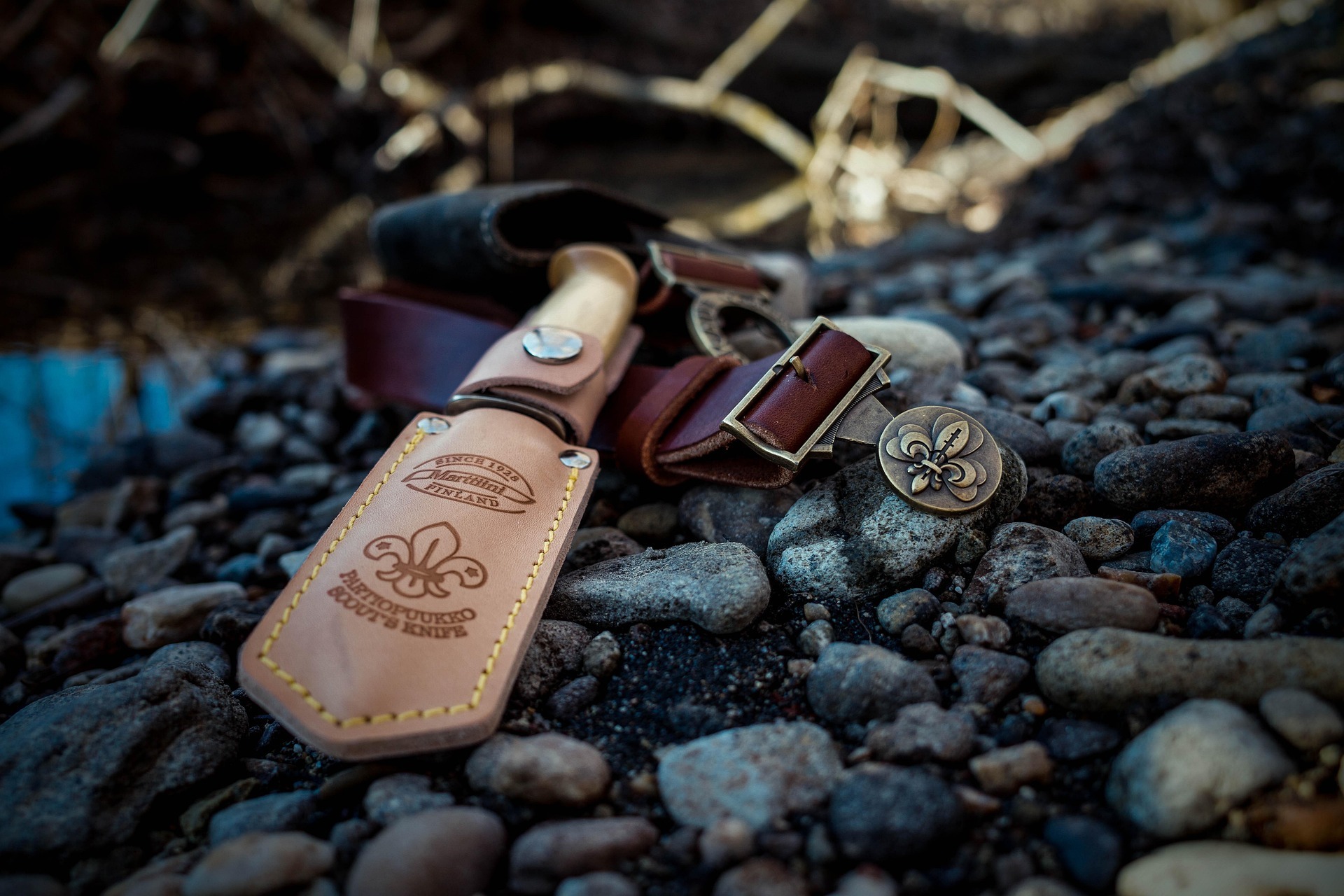
Knives are often associated with bushcraft because they’re useful tools for working with wood and other materials.
Bushcraft knife skills might include:
- Safe handling
- Cutting techniques
- Whittling
- Carving
- Making tent pegs
- Preparing kindling
However, knives should never be treated as toys.
⚠️ KNIFE SAFETY
Always use an appropriate knife safely and legally.
Learn correct handling techniques, maintain a safe working area and follow the laws and rules that apply where you are.
Children and young people should have age-appropriate instruction and supervision.
What Is Woodcraft?
You might also hear the word woodcraft when people talk about bushcraft.
Woodcraft is essentially the skill of understanding and working with wood.
It can include:
- Tree identification
- Wood selection
- Carving
- Whittling
- Pioneering
- Making utensils
- Making tent pegs
- Building simple structures
Woodcraft is a great example of the philosophy behind bushcraft.
Instead of seeing a piece of timber as simply “a stick”, you begin to see its properties and possibilities.
What Is Foraging?
Foraging means finding and collecting wild foods and other useful natural materials.
It can include:
- Wild plants
- Fruits
- Nuts
- Mushrooms
- Herbs
However, foraging requires considerable knowledge.
Some wild plants and fungi are poisonous, and some can be difficult to identify correctly.
⚠️ FORAGING SAFETY
Never eat a wild plant, mushroom or other natural material unless you are completely certain of its identification and safety.
Some dangerous species look remarkably similar to edible ones.
Beginners should learn from a suitably qualified or experienced instructor rather than relying on photographs or internet identification alone.
Bushcraft isn’t about proving that you can eat something you find.
It’s about knowledge and responsible interaction with the environment.
Does Bushcraft Mean Living in the Woods?
No.
This is one of the biggest misconceptions.
You don’t have to:
- Live outdoors
- Give up modern technology
- Sleep rough
- Go deep into the wilderness
- Build everything from natural materials
to enjoy bushcraft.
You can practise bushcraft skills:
- In your garden
- At a campsite
- In a woodland where activities are permitted
- At a Scout camp
- On an organised bushcraft course
For many people, bushcraft is simply a way of spending more meaningful time outdoors.
Why Do People Enjoy Bushcraft?
There are lots of reasons.
Learning
Bushcraft gives you practical skills that you can actually use.
Being Outdoors
It encourages people to spend time outside rather than indoors.
Self-Reliance
Learning to make, build, cook and solve problems can increase confidence.
Creativity
Bushcraft often involves finding different solutions to practical problems.
Slowing Down
Making something by hand takes longer than buying it.
That’s part of the appeal.
Connection With Nature
Bushcraft encourages you to notice:
- Trees
- Plants
- Weather
- Wildlife
- Seasons
- Landscape
🌲 BUSHCRAFT ISN’T ABOUT ESCAPING MODERN LIFE
You don’t have to reject modern equipment to enjoy bushcraft.
A modern tarp, sleeping bag or knife can be perfectly compatible with bushcraft.
The important part is developing the knowledge and skills to use what you have effectively.
Bushcraft and Scouts
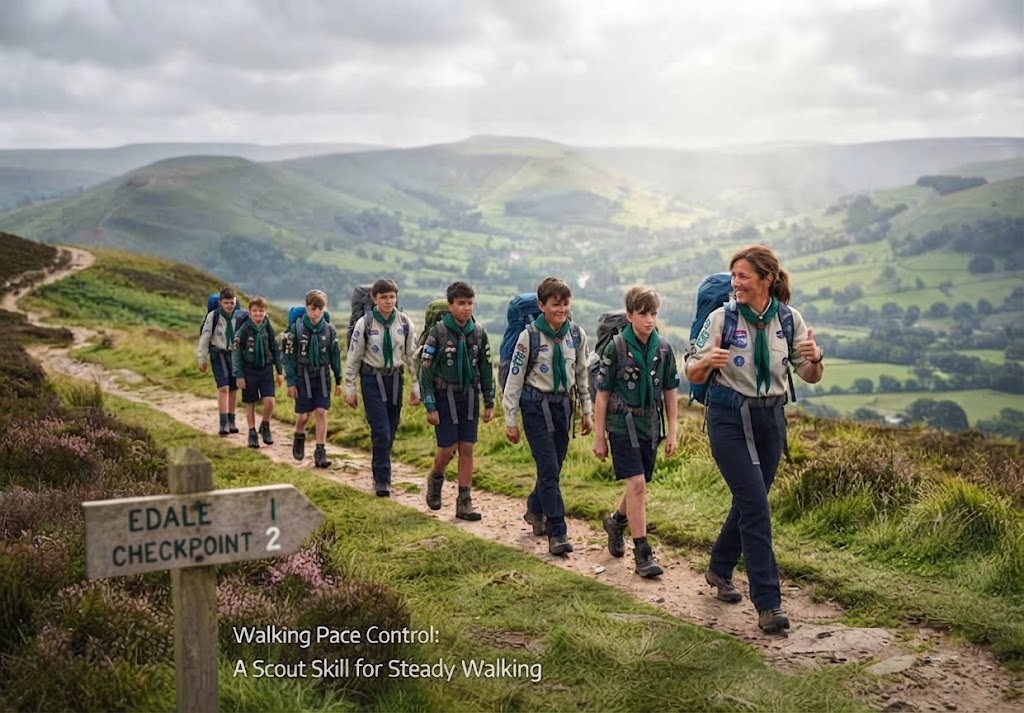
Bushcraft fits naturally into Scouting.
Scouts can learn many bushcraft-related skills through activities involving:
- Camping
- Fire
- Shelters
- Knots
- Woodcraft
- Navigation
- Outdoor cooking
- Survival
- Pioneering
The skills can also progress naturally through the sections.
Cubs
Learn basic outdoor skills.
Scouts
Develop practical outdoor skills and take greater responsibility.
Explorers
Apply those skills more independently and develop more advanced knowledge.
This is one reason bushcraft works so well alongside the Scouts programme.
Bushcraft vs Survival vs Camping
Here’s the simple version:
|
Activity |
Main Focus |
|---|---|
|
Camping |
Staying and enjoying yourself outdoors |
|
Bushcraft |
Practical outdoor skills and knowledge |
|
Survival |
Staying alive during an emergency |
|
Hiking |
Travelling through the outdoors |
|
Wild Camping |
Camping away from established campsites |
|
Pioneering |
Building structures using poles, rope and knots |
There’s plenty of overlap between all of them.
Someone might go hiking, wild camp, practise bushcraft and use survival skills on the same trip.
What Equipment Do You Need for Bushcraft?
The good news is:
You don’t need much to start.
You could begin with:
- Appropriate outdoor clothing
- A shelter such as a tarp
- Sleeping equipment
- Water bottle
- Basic cooking equipment
- Cordage
- First aid kit
- Torch
- Navigation equipment
As you gain experience, you might add specialist equipment.
But don’t fall into the trap of thinking:
More equipment = more bushcraft skill.
The opposite can sometimes be true.
Learning to use simple equipment effectively is part of the appeal.
Do You Need to Go Into the Wilderness?
No.
Bushcraft can be practised in many different environments.
A beginner could start by learning:
- Basic knots
- Safe fire principles
- Outdoor cooking
- Tarp shelters
- Wood identification
- Navigation
- Campcraft
You don’t need to disappear into a remote forest.
How Can a Beginner Start Bushcraft?
The best approach is to learn one skill at a time.
Step 1: Learn outdoor safety
Understand the risks associated with:
- Fire
- Knives
- Weather
- Water
- Navigation
Step 2: Learn basic knots
Start with useful knots rather than trying to memorise dozens.
Step 3: Learn about shelters
Understand how tarps work and how shelter location affects comfort and safety.
Step 4: Learn fire safety
Understand fire before worrying about fire-lighting techniques.
Step 5: Learn outdoor cooking
Start with simple meals.
Step 6: Learn about the environment
Start recognising trees, plants, weather and signs of changing conditions.
Step 7: Put everything together
Once you’ve developed individual skills, use them during a camping trip or organised bushcraft session.
Bushcraft Is About Practice
Reading about bushcraft is useful.
Watching videos is useful.
But bushcraft is fundamentally a practical activity.
You need to:
Try.
Make mistakes.
Learn.
Try again.
For example, building a tarp shelter on a calm summer afternoon is very different from doing it when it’s:
- Cold
- Wet
- Windy
- Dark
Experience teaches things that instructions can’t always explain.
Is Bushcraft Useful for Survival?
Yes.
Many bushcraft skills have applications in survival situations.
For example:
Shelter building can help in an emergency.
Fire knowledge can help with warmth and cooking.
Navigation can help you find your way.
Water knowledge can help you manage hydration.
Outdoor cooking can help you prepare food.
Woodcraft can help you improvise.
But there’s an important distinction.
Bushcraft skills can support survival — but bushcraft isn’t a substitute for proper survival planning.
The best survival skill is still avoiding unnecessary emergencies in the first place.
Bushcraft and the Environment
Responsible bushcraft should leave as little impact as possible.
That means thinking about:
- Where you camp
- Where you light fires
- What you collect
- What you cut
- What you leave behind
- Wildlife
- Vegetation
- Waste
Always check whether the activity you’re planning is permitted.
Not every woodland is a place where you can legally light fires, cut wood or camp.
🌿 LEAVE NO TRACE
One of the most important bushcraft skills is knowing when not to use your skills.
Don’t damage living trees just to practise a carving technique.
Don’t light fires where they’re prohibited.
Don’t disturb wildlife unnecessarily.
Take your rubbish home.
Leave the environment ready for the next person.
Common Bushcraft Myths
“Bushcraft means surviving without equipment.”
No.
Bushcraft is about skills and knowledge, not deliberately making life harder.
“You need to live in the wilderness.”
No.
Bushcraft can be enjoyed at campsites, Scout camps and suitable outdoor locations.
“Bushcraft is the same as survival.”
Not quite.
They overlap, but survival focuses on emergencies while bushcraft is generally about outdoor living skills and knowledge.
“You need expensive equipment.”
Definitely not.
Skill and experience are more important than having the latest gear.
“Bushcraft means cutting down trees.”
No.
Responsible bushcraft should minimise environmental impact.
“You have to light fires.”
No.
Fire is an important bushcraft skill, but it isn’t compulsory.
What Should You Learn First?
If you’re completely new to bushcraft, I’d recommend this order:
1. Outdoor safety
↓
2. Knots
↓
3. Shelter
↓
4. Fire safety
↓
5. Outdoor cooking
↓
6. Navigation
↓
7. Woodcraft
↓
8. More advanced skills
This gives you a solid foundation without trying to learn everything at once.
Beginner Bushcraft Skills Checklist
Final Thoughts
So, what is bushcraft?
At its simplest:
Bushcraft is the practical knowledge and skills that help you live, work and enjoy yourself outdoors.
It’s about understanding the environment rather than simply passing through it.
It’s about knowing how to:
Build.
Cook.
Navigate.
Make.
Repair.
Adapt.
Explore.
And perhaps most importantly:
Learn.
You don’t need to become a survival expert.
You don’t need a huge collection of equipment.
And you don’t need to disappear into the wilderness.
Start with one skill.
Practise it safely.
Then learn another.
Over time, those individual skills begin to connect — and that’s where bushcraft really becomes interesting.
🌲 THE SIMPLE DEFINITION
Bushcraft is learning how to be more capable outdoors.
The more you understand, the less you need to rely on luck.
🔗 Explore More
If you’re interested in learning bushcraft skills, these guides are a good place to continue:
- Tarp Shelters — discover how to create practical shelters using a tarp.
- Emergency Shelters — understand the principles of shelter when things don’t go to plan.
- Fire Safety — learn how to use fire responsibly outdoors.
- Fire Maintenance — understand how to safely manage an outdoor fire.
- Extinguishing Fires — learn how to properly put a fire out.
- Staying Warm — understand how to stay warm outdoors.
- Water Safety — learn how to manage one of the most important outdoor hazards.
- Survival Priorities — understand what matters most during an emergency.
🔒Ready to test your survival skills?
Join Survival Guides UK for free, complete challenges, earn badges and increase your Survival Level.
JOIN FREE →
CRAIG BURR
FOUNDER · SURVIVAL GUIDES UK
I'm Craig, the person behind Survival Guides UK. I created SGUK because I wanted somewhere people could learn real outdoor skills in a practical, straightforward way — from lighting a fire and tying knots to navigation, campcraft and everything in between.
You can read more about the story behind SGUK here as well as our approach here.