Explorers Progression: A Guide to Skills, Badges, Awards and Moving On to Network
⚠️ SAFETY & AGE-APPROPRIATENESS NOTE
Explorer Scouts are generally 14–18 years old, so the programme can involve significantly more independence, responsibility and challenging activities.
However, greater independence does not mean ignoring safety procedures or appropriate supervision.
Activities involving fire, knives, tools, water, climbing, camping, navigation, expeditions and survival skills should be properly planned and risk assessed.
Explorers should increasingly learn to identify hazards, assess risks, make sensible decisions and take responsibility for their own safety and that of others.
What Is Explorer Progression?
Explorers are the fifth section of the Scouts programme, for young people aged 14–18.
This is a significant stage in the Scout journey.
By the time a young person reaches Explorers, they may already have spent years learning practical skills through:
Squirrels → Beavers → Cubs → Scouts
Explorers provide an opportunity to take those skills much further.
But there’s an important difference.
Explorer progression is increasingly youth-led.
Rather than simply being told what activity they are going to complete, Explorers are encouraged to have a say in:
- What they want to learn
- What activities they want to undertake
- What challenges they want to tackle
- What skills they want to develop
- What projects they want to undertake
- How they want to contribute to their community
The new Explorer programme is specifically designed around greater choice, real-life skills, wellbeing, community involvement and youth-led experiences.
THE BIG IDEA
At Squirrels, progression is about discovering.
At Beavers, it’s about trying.
At Cubs, it’s about developing.
At Scouts, it’s about taking responsibility.
At Explorers, it’s about taking ownership.
The New Explorer Programme
In June 2026, Scouts launched a redesigned Explorer programme.
The new programme includes:
- New Activity Badges
- Six Challenge Awards
- Existing and updated activities
- Top Awards
- Youth-led projects
- Greater emphasis on real-world skills
- More opportunities for leadership and personal development
Scouts says more than 3,000 young people and volunteers helped shape the refreshed programme.
The new Activity Badges include subjects such as Employability, Democracy, Content Creation and Life Skills, alongside established areas such as Pioneering, Survival Skills, Camper and Caving.
This makes the Explorer programme particularly broad.
It isn’t just about traditional Scout skills.
It’s also about preparing young people for adult life, education, employment and independence.
How Does Explorer Progression Work?
Explorers have several ways to develop.
These include:
- Membership Award
- Activity Badges
- Challenge Awards
- Chief Scout’s Platinum Award
- Chief Scout’s Diamond Award
- King’s Scout Award
- Young Leader Award
- Duke of Edinburgh’s Award
- Explorer Belt
- Joining In Awards
- Moving On Award
- Other opportunities and recognised awards
Unlike the younger sections, Explorers can work towards multiple top awards and choose pathways that suit their interests and ambitions.
Starting Explorers
Moving from Scouts to Explorers can be a big change.
A young person may suddenly find themselves working alongside people who are considerably older than them.
They may also experience:
- Greater independence
- More choice
- Different meeting structures
- More complex activities
- More responsibility
- New leadership opportunities
- Greater involvement in planning
The Membership Award provides the starting point for a new Explorer.
But the bigger change is cultural.
Explorers are increasingly expected to have a voice in what happens.
From Scouts to Explorers
The transition might look something like this:
Scouts: Take part in an expedition.
Explorers: Help design and organise one.
Scouts: Learn navigation.
Explorers: Use navigation as part of a longer journey.
Scouts: Learn fire safety.
Explorers: Develop a deeper understanding of fire, fuel, weather, risk and environmental impact.
Scouts: Help lead an activity.
Explorers: Plan and deliver a project.
Scouts: Learn practical skills.
Explorers: Decide which skills they want to develop and why.
The progression is increasingly about ownership rather than instruction.
The Six Explorer Challenge Awards
The new Explorer programme introduces six Challenge Awards:
- Adventure Challenge
- Community Challenge
- Employability Challenge
- International Challenge
- Leadership Challenge
- Values Challenge
These are designed around longer-term projects rather than simply completing a short activity.
Each Challenge Award follows a basic journey:
Identify → Plan → Act → Review
Explorers choose something meaningful to them, decide how they’re going to achieve it, carry it out and then reflect on what they learned.
This is a major change in emphasis from the younger sections.
Adventure Challenge
The Adventure Challenge encourages Explorers to take on a meaningful challenge.
This could involve:
- Hiking
- Camping
- Climbing
- Water activities
- Expeditions
- Outdoor exploration
- Adventure sports
- A personal physical challenge
But the challenge doesn’t have to be extreme.
A good Explorer adventure is one that requires:
- Preparation
- Commitment
- Decision-making
- Problem-solving
- Reflection
🏕️ ADVENTURE TIP
The best adventure isn’t necessarily the most dangerous or difficult.
It’s the one that gives an Explorer an opportunity to stretch their abilities and learn something about themselves.
Community Challenge
The Community Challenge encourages Explorers to identify something that matters in their community and take action.
That could mean:
The important part is that the Explorer isn’t simply turning up and helping.
They’re encouraged to identify a need and make something happen.
Employability Challenge
One of the most interesting additions to the new Explorer programme is the Employability Challenge.
Explorers are at an age where thoughts about:
- Jobs
- College
- University
- Apprenticeships
- Volunteering
- Interviews
- Skills
- Careers
become increasingly relevant.
The Employability Challenge gives young people opportunities to develop skills that can transfer directly into adult life.
These can include:
- Communication
- Organisation
- Teamwork
- Planning
- Problem-solving
- Confidence
- Presenting
- Working with others
It’s a good example of the new programme moving beyond traditional Scouting.
International Challenge
The International Challenge encourages Explorers to look beyond their own community and country.
This might involve:
The focus isn’t simply on learning facts.
It’s about understanding different perspectives.
Leadership Challenge
Leadership becomes a major part of Explorer progression.
The Leadership Challenge encourages Explorers to take ownership of a project or activity and develop their ability to lead others.
Leadership can involve:
A good Explorer leader doesn’t need to have all the answers.
They need to know how to bring people together and move a project forward.
Values Challenge
The Values Challenge encourages Explorers to think about the principles that guide their decisions and actions.
This can involve:
- Personal values
- Ethics
- Responsibility
- Inclusion
- Respect
- Making difficult decisions
- Understanding different viewpoints
It’s an opportunity to think about what kind of person they want to become, rather than simply what skills they want to acquire.
Challenge Awards Are Different
The new Explorer Challenge Awards are deliberately different from the younger-section awards.
Scouts describes them as longer-term projects where Explorers take the lead.
The process is:
1. Identify
What do I want to achieve?
2. Plan
How am I going to do it?
3. Act
Put the plan into practice.
4. Review
What happened?
What did I learn?
What would I do differently?
This final step is particularly important.
Reflection turns an activity into development.
Explorer Activity Badges
The new Explorer programme also introduces a range of new and updated Activity Badges.
Scouts says there are 40 new and updated badges as part of the refreshed programme.
These cover a much wider range of interests than simply traditional outdoor activities.
Examples include:
- Survival Skills
- Pioneering
- Camper
- Caving
- Life Skills
- Content Creation
- Employability
- Democracy
- S.T.E.M.
- Other practical, creative and outdoor skills
This means Explorers can build a programme around their own interests.
Survival Skills for Explorers
The new Explorer programme specifically includes a Survival Skills Activity Badge.
Relevant skills can include:
- Shelter
- Fire
- Water
- Navigation
- Outdoor safety
- Weather
- First aid
- Food
- Emergency planning
- Environmental awareness
But survival training should always start with the most important principle:
Prevention is better than survival.
Good preparation, planning and risk awareness can prevent many emergencies from happening in the first place.
Explorer Camping Progression
By the Explorer stage, camping can become much more than simply sleeping outdoors.
An Explorer can become involved in:
- Choosing a campsite
- Planning equipment
- Planning food
- Route planning
- Weather checking
- Transport
- Camp layout
- Cooking
- Fire safety
- Waste management
- Environmental considerations
- Emergency planning
The progression becomes:
“Where are we camping?”
to:
“How are we going to organise this?”
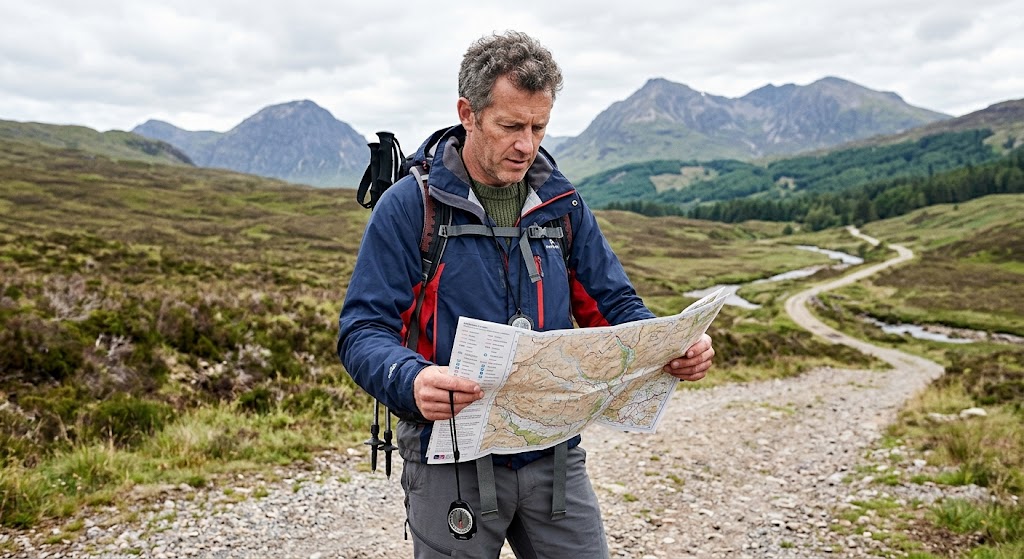
Explorer Navigation Progression
Navigation can also become significantly more advanced.
A Scout may learn:
- Map reading
- Compass use
- Route planning
An Explorer can begin applying those skills to:
- Longer routes
- Expeditions
- Remote environments
- Group planning
- Changing weather
- Contingency planning
The important skill isn’t simply knowing how to read a map.
It’s knowing what to do when the plan doesn’t go exactly as expected.
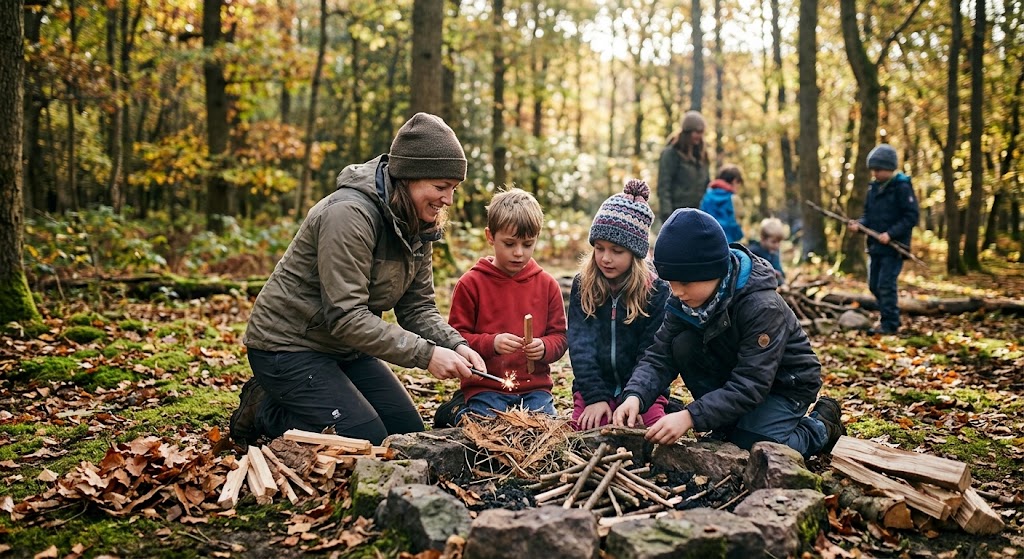
Explorer Fire Skills
Fire skills can also develop.
An Explorer may learn more about:
- Fire behaviour
- Fuel selection
- Fire safety
- Weather
- Site selection
- Cooking fires
- Campfire management
- Extinguishing fires
- Environmental impact
But increased knowledge should come with increased responsibility.
An Explorer should understand that:
A fire can be useful.
A fire can also become dangerous very quickly.
The goal is to develop sound judgement rather than simply technical ability.
Explorer First Aid
First aid becomes increasingly important as young people take part in more independent activities.
Explorers can develop their knowledge of:
For expeditions and adventurous activities, first aid knowledge can become particularly valuable.
The aim isn’t to encourage Explorers to take unnecessary risks.
It’s to make sure they know what to do when something goes wrong.
Leadership and the Young Leaders’ Scheme
One of the biggest opportunities available to Explorers is the Young Leaders’ Scheme.
Explorers can volunteer with a younger section such as:
- Squirrels
- Beavers
- Cubs
This gives them the opportunity to develop real leadership experience while helping younger Scouts.
They can learn about:
- Planning
- Communication
- Responsibility
- Safeguarding
- Teamwork
- Running activities
- Supporting younger people
- Reflecting on their own leadership
Scouts lists the Young Leader Award among the key Explorer awards.
LEADERSHIP TIP
One of the best ways to demonstrate that you’ve mastered a skill is to teach it to someone else.
Chief Scout’s Platinum Award
The Chief Scout’s Platinum Award is one of the major top awards available to Explorers.
Scouts describes it as an opportunity to celebrate progress and recognise how far an Explorer has come.
The current requirements include:
- Being an Explorer for at least six months
- Completing eight nights away, including at least four camping
- Completing the required International, Community and Values activities
- Completing a personal development element
- Completing the relevant top-award requirements
The nights-away requirements were updated in 2025. (Scouts)
The Platinum Award is closely connected to the Duke of Edinburgh’s Award structure.
Chief Scout’s Diamond Award
The Chief Scout’s Diamond Award is the highest of the Chief Scout’s Awards.
It is the next step after Platinum and sits immediately before the King’s Scout Award.
The current requirements include:
The Diamond Award represents a considerable commitment.
It’s not something that needs to be rushed.
The King’s Scout Award
The King’s Scout Award is the highest award available to Explorer Scouts and Scout Network members.
It’s a major achievement and can be worked towards during the Explorer and Network years.
For some young people, this becomes the ultimate long-term Scout goal.
It can bring together:
- Expedition
- Volunteering
- Skills
- Physical activity
- Leadership
- Personal development
- International experience
- Community involvement
It’s a significant step beyond simply completing individual badges.
Duke of Edinburgh’s Award
Explorers can also take part in the Duke of Edinburgh’s Award (DofE).
The DofE provides another structured way to develop:
- Volunteering
- Physical activity
- Skills
- Expedition experience
- Personal development
The Scouts Explorer programme and DofE can complement each other particularly well.
For young people interested in outdoor skills, expeditions and personal challenges, there can be considerable overlap.
The Explorer Belt
The Explorer Belt is one of the most ambitious challenges available to young Scouts.
Scouts describes it as a ten-day challenge involving exploration and getting to grips with another culture.
It is designed to test:
- Independence
- Resilience
- Navigation
- Communication
- Cultural awareness
- Teamwork
- Problem-solving
It represents a very different type of adventure from a normal Scout camp.
Progression Through Independence
Perhaps the biggest change during Explorers is how much responsibility young people can take.
The progression might look like:
Scouts: Follow the plan.
Early Explorer: Help make the plan.
Developing Explorer: Make part of the plan.
Experienced Explorer: Lead the plan.
Young Leader: Help someone else learn how to plan.
That is genuine progression.
Progression Through Survival Skills
For an Explorer, survival skills can become less about individual tricks and more about decision-making.
For example:
Water
Not simply:
“How do I find water?”
But:
“How do I avoid dehydration, identify risks and obtain safe drinking water?”
Fire
Not simply:
“How do I light a fire?”
But:
“Do I actually need a fire, where can I safely have one and how will I extinguish it?”
Shelter
Not simply:
“Can I build a shelter?”
But:
“Where should I shelter, what weather am I expecting and what will keep me safe?”
Navigation
Not simply:
“Can I use a compass?”
But:
“Where am I, where am I going, and what will I do if the route becomes unsafe?”
That’s the difference between learning a survival trick and developing survival judgement.
Preparing for Adult Life
This is one of the major differences between Explorers and the younger sections.
Explorers are approaching adulthood.
The programme can therefore support skills such as:
- Cooking
- Money awareness
- Communication
- Teamwork
- Leadership
- Employability
- Planning
- Organisation
- Problem-solving
- Confidence
- Resilience
- Community involvement
The new Explorer programme specifically puts real-world skills and employability at its heart.
Explorer Progression Checklist
Personal Development
- Can set meaningful goals
- Can plan how to achieve them
- Can reflect on successes and failures
- Takes responsibility for personal development
- Can identify strengths and weaknesses
Independence
- Can prepare equipment
- Can plan for an activity
- Can make sensible decisions
- Can identify hazards
- Knows when to ask for help
Outdoor Skills
- Has camping experience
- Can navigate independently at an appropriate level
- Understands outdoor safety
- Understands fire safety
- Can plan outdoor equipment
- Has experience with expeditions
Leadership
- Has led an activity
- Has helped plan a project
- Has taught another person a skill
- Can communicate effectively
- Can support younger members
Survival Skills
- Understands shelter
- Understands water safety
- Understands fire safety
- Understands outdoor first aid
- Understands weather risks
- Understands emergency planning
Real-World Skills
- Can cook basic meals
- Can organise equipment
- Can communicate professionally
- Has explored employability
- Has experience working as part of a team
- Has developed a useful personal skill
Moving From Explorers to Network
Eventually, Explorers move on to Scout Network, the fifth and final section of the Scouts journey, for young adults aged 18–25.
The Moving On Award helps Explorers prepare for this transition. Scouts describes Network as the next big adventure after Explorers.
The move represents another change.
Rather than:
“What activities are being provided?”
the question increasingly becomes:
“What do we want to do?”
Scout Network is run by its members, giving young adults considerable ownership over what they do and how the section operates.
From Explorer to Network
The journey can therefore be seen as:
Scouts
Learn to take responsibility.
↓
Explorers
Take ownership of projects and development.
↓
Network
Create and lead your own Scouting experience.
This is the culmination of years of progression.
Explorers Progression: The Bigger Picture
The full Scout journey now looks something like this:
Squirrels
Discover and explore.
Beavers
Try new things and build confidence.
Cubs
Develop skills, adventure and teamwork.
Scouts
Take responsibility and develop independence.
Explorers
Take ownership, lead projects and prepare for adult life.
Network
Create your own adventures and contribute as a young adult.
Every section builds on what came before.
Final Thoughts
Explorers represent a major change in the Scout journey.
Young people are no longer simply being introduced to skills.
They’re being encouraged to decide:
What do I want to achieve?
Why does it matter?
How am I going to make it happen?
What have I learned?
The new Explorer programme reflects that change, with youth-led Challenge Awards, a much broader range of Activity Badges, real-world skills and greater opportunities for leadership.
And the journey can go much further.
From the Chief Scout’s Platinum Award, through Diamond, to the King’s Scout Award, Explorers have opportunities to take on some genuinely demanding challenges.
But the most important achievement isn’t a badge.
It’s becoming someone who can:
Plan.
Think.
Adapt.
Lead.
Help others.
Take responsibility.
And ultimately, make their own decisions about where their adventure goes next.
🏕️ THE EXPLORER PROGRESSION MOTTO
Choose the challenge. Make the plan. Take the lead. Learn from the experience.
At Explorers, the adventure increasingly belongs to you.
Useful official resources
Scouts – Explorer Challenge Awards
🔒Ready to test your survival skills?
Join Survival Guides UK for free, complete challenges, earn badges and increase your Survival Level.
JOIN FREE →
CRAIG BURR
FOUNDER · SURVIVAL GUIDES UK
I'm Craig, the person behind Survival Guides UK. I created SGUK because I wanted somewhere people could learn real outdoor skills in a practical, straightforward way — from lighting a fire and tying knots to navigation, campcraft and everything in between.
You can read more about the story behind SGUK here as well as our approach here.