Scouts Progression: A Guide to Skills, Badges and Moving On to Explorers
⚠️ SAFETY & AGE-APPROPRIATENESS NOTE
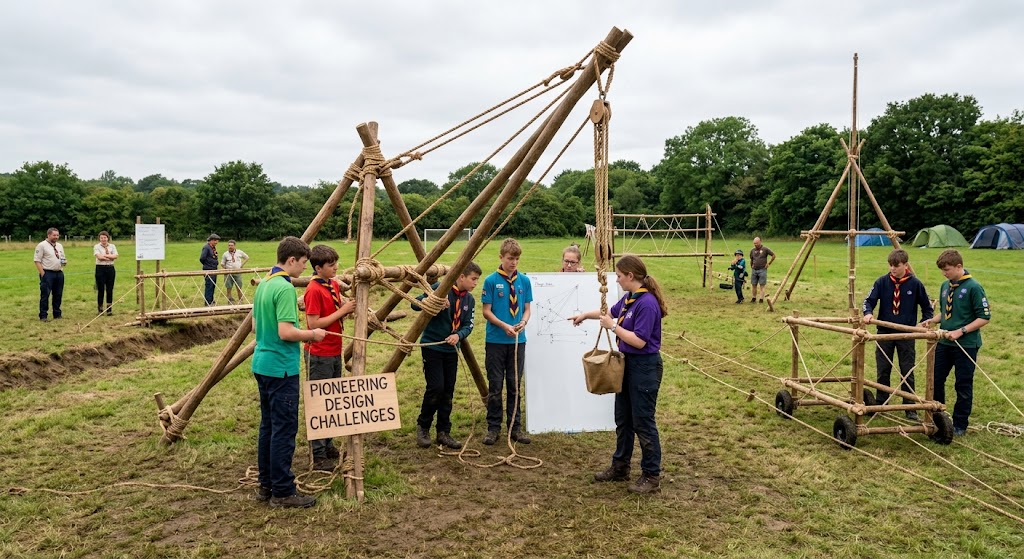
Scouts are generally 10½–14 years old, so activities can become more challenging and young people can take on greater responsibility.
However, greater independence does not mean removing appropriate adult supervision or safety procedures.
Activities involving fire, knives, tools, water, climbing, cooking, camping, navigation and survival skills should be properly risk assessed and supervised according to the activity and the young person’s experience.
The aim of progression is to develop knowledge, confidence, judgement and responsibility — not simply to make activities harder.
What Is Scouts Progression?
Scouts are the fourth section of the Scouts programme, generally for young people aged 10½ to 14 years old.
By this stage, young people have already had opportunities to develop many fundamental skills through Squirrels, Beavers and Cubs.
Scouts is where those foundations can start becoming much more advanced.
Young people can:
- Develop practical skills
- Take part in adventurous activities
- Explore the outdoors
- Learn leadership
- Plan activities
- Take responsibility
- Work independently
- Solve problems
- Support younger members
- Discover new interests
- Prepare for Explorers
The Scouts programme is designed around learning by doing.
THE BIG IDEA
Progression isn’t about simply making every activity more difficult.
It’s about giving young people more responsibility for what they do, how they do it and why it matters.
How Does Scouts Progression Work?
Scouts have several different ways to develop and demonstrate their skills.
These include:
- Membership Award
- Challenge Awards
- Activity Badges
- Staged Activity Badges
- Joining In Awards
- Leadership Stripes
- Moving On Award
- Chief Scout’s Gold Award
- Other programme awards and opportunities
The current Scouts programme has nine Challenge Awards, which form the core of the Chief Scout’s Gold Award.
Starting Scouts
For a young person moving up from Cubs, Scouts can feel like a significant change.
They may encounter:
The Membership Award helps new Scouts settle into the Troop and begin their journey.
For an existing Cub, the transition is about building on what they already know.
For someone completely new to Scouts, it’s an opportunity to start developing those skills from the beginning.
From Cubs to Scouts
The progression from Cubs to Scouts should feel like a natural development.
For example:
Cubs: Follow a simple route.
Scouts: Plan and navigate a route.
Cubs: Learn basic knots.
Scouts: Select and use appropriate knots for a practical task.
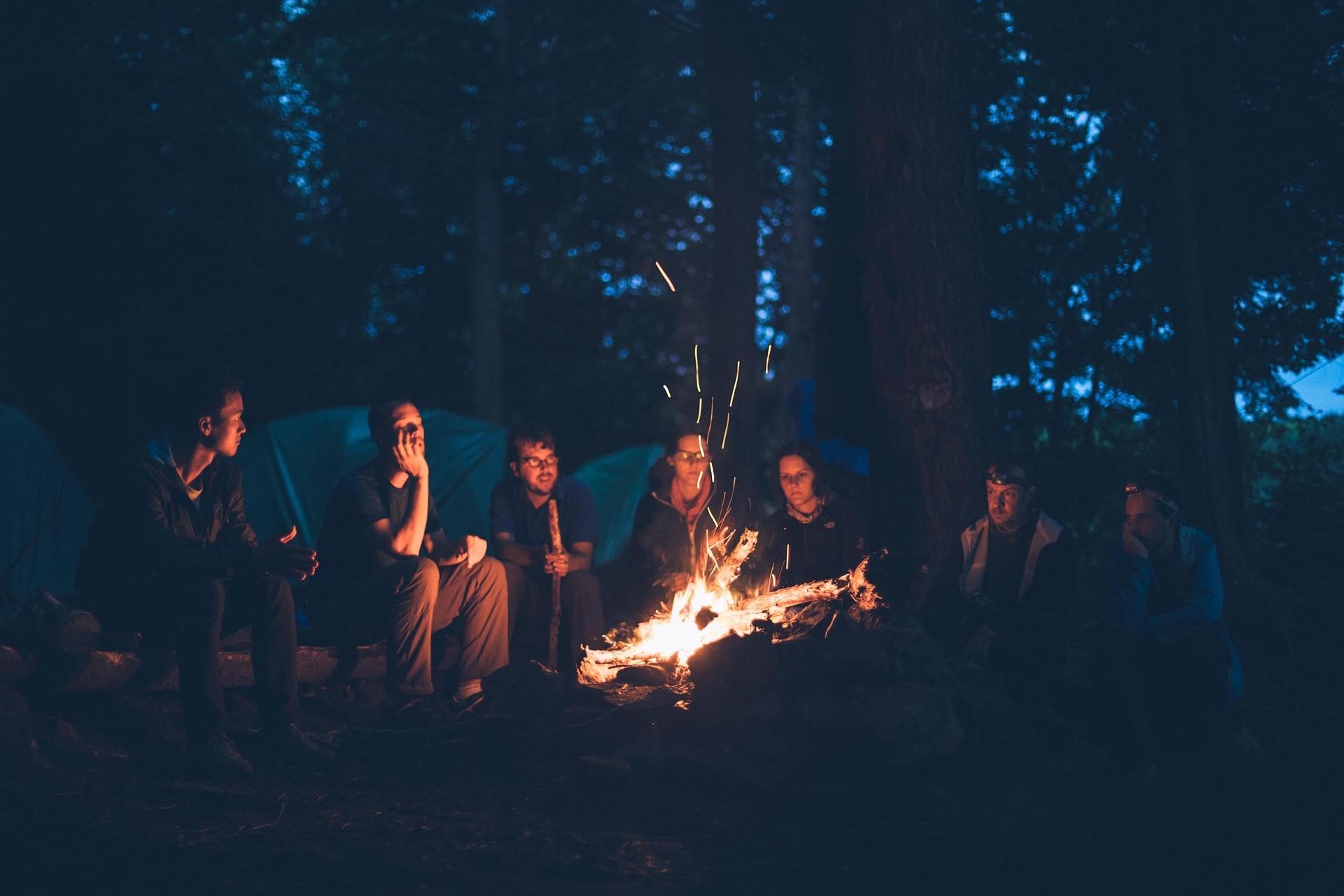
Cubs: Help with a campfire.
Scouts: Understand fire safety, fire preparation and appropriate camp responsibilities.
Cubs: Take part in camping.
Scouts: Help plan, prepare for and run parts of a camp.
Cubs: Work within a Six.
Scouts: Work within a Patrol and begin taking leadership roles.
The biggest change isn’t necessarily the activity itself.
It’s the level of ownership.
The Nine Scouts Challenge Awards
The current Scouts programme has nine Challenge Awards:
- Our World Challenge Award
- Our Skills Challenge Award
- Our Outdoors Challenge Award
- Our Adventure Challenge Award
- Teamwork Challenge Award
- Team Leader Challenge Award
- Personal Challenge Award
- World Challenge Award
- Expedition Challenge Award
All nine Challenge Awards contribute towards the Chief Scout’s Gold Award.
Together they cover:
- Personal development
- Skills
- Adventure
- Outdoor activities
- Teamwork
- Leadership
- Community
- International awareness
- Expeditions
Our World Challenge Award
Scouts are encouraged to understand the world around them and their place within it.
The Our World Challenge Award can involve exploring:
- Communities
- The environment
- Different cultures
- Local issues
- Global issues
- Ways of making a positive difference
At this age, young people can begin thinking beyond:
“What can I do?”
and towards:
“What difference can I make?”
This can be a powerful part of Scout progression.
Our Skills Challenge Award
The Our Skills Challenge Award focuses on developing practical and personal skills.
Scouts can use it to explore an existing interest or learn something completely new.
This might include:
- Cooking
- Photography
- Creative skills
- Technology
- Building
- Music
- Craft
- Outdoor skills
- Communication
- Problem-solving
The important part is development.
A Scout doesn’t need to be an expert.
They need to demonstrate that they’ve learned, practised and improved.
SKILLS TIP
Encourage Scouts to choose skills that they genuinely want to develop.
A personal interest can be much more motivating than simply completing another requirement.
Our Outdoors Challenge Award
This is one of the most useful Challenge Awards for outdoor-focused Scouts.
The Our Outdoors Challenge Award gives young people opportunities to develop their understanding of the natural world and outdoor activities.
It can connect naturally with:
- Camping
- Navigation
- Shelter building
- Wildlife
- Weather
- Outdoor cooking
- Fire safety
- Knots
- Environmental awareness
- Survival skills
By the Scout stage, young people can start taking considerably more responsibility for planning and preparing outdoor activities.
Our Adventure Challenge Award
Adventure is a major part of the Scout programme.
The Our Adventure Challenge Award encourages young people to experience activities that challenge them.
Adventure can take many forms:
- Climbing
- Water activities
- Hiking
- Cycling
- Orienteering
- Caving
- High ropes
- Camping
- Expeditions
- Other adventurous activities
The important factor is that the young person is challenged appropriately.
Adventure isn’t about frightening someone.
It’s about encouraging them to discover:
“I can do more than I thought I could.”
Teamwork Challenge Award
Scouts are expected to work increasingly effectively with others.
The Teamwork Challenge Award develops skills such as:
Patrol activities are particularly useful here.
A successful Patrol isn’t simply a group of people completing the same task.
It’s a group that can communicate and work towards a common objective.
Team Leader Challenge Award
Leadership becomes much more significant during the Scout years.
Scouts can begin taking responsibility for:
Leadership should be treated as a skill that can be learned.
A good Scout leader doesn’t simply tell people what to do.
They:
Listen.
Plan.
Communicate.
Delegate.
Encourage.
Take responsibility.
Personal Challenge Award
The Personal Challenge Award recognises individual development.
Every Scout has different strengths and weaknesses.
One Scout might be confident outdoors but struggle with communication.
Another might be an excellent communicator but lack confidence in physical activities.
Another might need to work on organisation.
Personal challenges allow young people to identify something they genuinely want to improve.
Examples could include:
PERSONAL PROGRESSION
The best challenge is not necessarily the hardest one.
It’s the one that requires the young person to stretch themselves and genuinely develop.
World Challenge Award
The World Challenge Award gives Scouts opportunities to explore the wider world.
This can include:
It’s an opportunity to develop curiosity and understanding beyond their own immediate surroundings.
Expedition Challenge Award
The Expedition Challenge Award represents a significant step in outdoor progression.
It encourages Scouts to develop the skills needed to plan and take part in an expedition.
This can include:
- Route planning
- Navigation
- Equipment
- Food
- Clothing
- Safety
- Teamwork
- Preparation
- Travelling together
- Reviewing the experience afterwards
This is where earlier outdoor skills begin coming together.
A Scout isn’t simply going for a walk.
They’re learning how to plan and manage an outdoor journey.
🧭 EXPEDITION TIP
Good preparation is one of the most important outdoor skills a Scout can learn.
Knowing what could go wrong — and preparing for it — is just as important as knowing where you’re going.
Activity Badges
Challenge Awards provide the broad framework.
Activity Badges allow Scouts to explore their individual interests.
There is a huge range of possibilities, covering areas such as:
- Outdoor adventure
- Sports
- Water activities
- Technology
- Creativity
- Cooking
- Nature
- Science
- Communication
- Hobbies
- Skills
- Performing arts
This allows two Scouts to have completely different programme experiences while both making excellent progress.
One Scout might focus on:
Camping, navigation and climbing.
Another might choose:
Photography, cooking and music.
Both are valid.
Staged Activity Badges
Staged Activity Badges provide another form of long-term progression.
A young person may begin a skill at Beavers or Cubs and continue developing it through Scouts.
Examples include staged badges covering areas such as:
- Emergency Aid
- Navigation
- Swimming
- Music
- Digital skills
- Hikes Away
- Air activities
- Water activities
- Nautical skills
This gives young people a clear opportunity to keep developing rather than starting again from scratch.
For example:
Beginner navigation → developing navigation → more advanced navigation
The same principle can apply to first aid, swimming, music and other skills.
The Chief Scout’s Gold Award
The Chief Scout’s Gold Award is the highest award in the Scouts section.
It brings together the young person’s achievements across their time in Scouts.
To complete the award, a Scout needs to achieve the required Challenge Awards and Activity or Staged Activity Badges specified by the current Scouts programme.
The award is therefore much more than one activity.
It represents a broad range of experiences.
Gold Award Progression
The Gold Award should not become a race.
A Scout has time to work through the programme and should have opportunities to choose activities that interest them.
The award should represent:
- Skills learned
- Challenges completed
- Adventures experienced
- Personal development
- Leadership
- Teamwork
- Outdoor experience
🥇 GOLD AWARD TIP
The Chief Scout’s Gold Award should be seen as a journey through Scouts, not a checklist to rush through.
What Happens If a Scout Doesn’t Finish?
Not every young person will complete every requirement before they leave the Scout section.
That isn’t a failure.
The Scouts programme provides routes for young people to continue appropriate outstanding awards when they move into Explorers, depending on the award and current programme rules.
The important thing is to keep the focus on development rather than deadlines.
Outdoor Skills and Scouts Progression
The progression can look something like this:
Knots
Cubs: Learn and use basic knots.
Scouts: Select appropriate knots for a task.
Developing: Use knots as part of pioneering, shelters or camp projects.
Shelters
Cubs: Build a simple shelter.
Scouts: Plan and construct a more effective shelter.
Developing: Consider weather, location, materials and comfort.
Fire
Cubs: Learn basic fire safety.
Scouts: Understand safe fire preparation and management.
Developing: Take on appropriate supervised responsibilities.
Navigation
Cubs: Follow a simple route.
Scouts: Plan and navigate a route.
Developing: Take part in an expedition.
Camping
Cubs: Experience camping.
Scouts: Help organise camp activities.
Developing: Take greater responsibility for planning, equipment and camp routines.
Progression Through Survival Skills
Survival skills can be particularly useful when taught as a combination of several other Scout skills.
A Scout learning basic survival skills might develop:
- Shelter building
- Fire safety
- Water awareness
- Navigation
- Weather awareness
- First aid
- Outdoor clothing
- Food and cooking
- Signalling
- Emergency planning
The most important lesson should always be:
Avoid getting into an emergency wherever possible.
Good preparation is a survival skill.
Fire Skills
Fire is an excellent example of increasing responsibility.
Younger sections
Learn:
- Fire hazards
- Safe behaviour
- What to do around a fire
- How fires can spread
Scouts
Can develop an understanding of:
- Fire preparation
- Fuel
- Fire safety
- Campfire management
- Extinguishing fires
- Environmental responsibility
More advanced progression
Scouts can learn to make better decisions about:
- Where a fire can safely be used
- What fuel is appropriate
- How weather affects fire behaviour
- How to extinguish a fire properly
- How to leave the area safe
The important point is that skill never replaces safety procedures.
Navigation Progression
Navigation can develop considerably during the Scout years.
Beginner
Understand map symbols and directions.
Developing
Use a map and compass.
Confident
Plan a route.
Advanced
Navigate as part of an expedition.
Leadership
Help another Scout understand the route.
At this point, navigation isn’t simply about knowing where north is.
It’s about planning, decision-making and adapting when circumstances change.
First Aid Progression
First aid is another area where Scouts can develop increasing confidence.
They can learn:
As their knowledge increases, they can begin taking part in more structured first-aid training.
The objective isn’t to turn young people into medical professionals.
It’s to give them the confidence to recognise an emergency, stay safe and get appropriate help.
Camping Progression
Camping is where many Scout skills come together.
A Scout can increasingly become involved in:
- Planning
- Packing
- Route selection
- Tent setup
- Cooking
- Camp hygiene
- Fire safety
- Equipment management
- Weather preparation
- Navigation
- Environmental care
A useful progression is:
“Help me.”
→ “I’ll help.”
→ “I’ll do it.”
→ “I’ll show someone else.”
That final step is particularly important.
Teaching someone else demonstrates genuine understanding.
Leadership in Scouts
Leadership becomes a much bigger part of the Scout experience.
Scouts can take roles within their Patrols and may be given opportunities to lead activities.
A young leader might:
Leadership should always be appropriately supported.
The aim is to give young people real responsibility within safe boundaries.
From Cubs’ Leadership to Scout Leadership
The difference can be subtle but important.
Cubs: Help their Six.
Scouts: Take responsibility within their Patrol.
Developing Scout: Plan activities.
More experienced Scout: Lead others through an activity.
Senior Scout: Help younger Scouts develop their skills.
This is one of the clearest examples of progression throughout the Scout sections.
Independence and Decision-Making
Perhaps the biggest change during Scouts is the development of independent thinking.
Instead of always asking:
“What should I do?”
a Scout can start asking:
“What are my options?”
Then:
“Which option is safest and most effective?”
And eventually:
“I’ve considered the risks, and this is what I think we should do.”
That is a valuable life skill far beyond Scouting.
Don’t Turn Progression Into Competition
One Scout might earn many badges.
Another might focus heavily on one or two skills.
Another might make significant personal progress without collecting a huge number of badges.
The number of badges doesn’t tell the whole story.
Progression can mean:
- Becoming more confident
- Becoming more responsible
- Learning to lead
- Learning to solve problems
- Developing practical skills
- Becoming more resilient
- Learning to support others
Preparing to Move to Explorers
Eventually, Scouts move on to Explorers, generally between the ages of 14 and 18.
The move is another important step towards greater independence.
The Moving On Award helps young people prepare for the transition.
This can include:
The aim is for Scouts to see the move as:
“What’s next?”
rather than:
“What am I leaving behind?”
From Scouts to Explorers
The progression continues.
Cubs: Develop basic skills.
Scouts: Develop greater independence.
Explorers: Take greater ownership of activities.
Young people can begin taking more responsibility for:
- Planning
- Leadership
- Expeditions
- Skills development
- Activities
- Community projects
- Their own progression
The Scout years therefore provide an important foundation for the greater independence of Explorers.
What Should a Scout Be Able to Do Before Explorers?
There isn’t a universal checklist that every Scout needs to complete.
However, by the time they move on, they may have developed experience in:
Personal Skills
- Setting goals
- Taking responsibility
- Managing equipment
- Planning activities
- Persevering with difficult tasks
Teamwork
- Working within a Patrol
- Communicating effectively
- Supporting others
- Resolving disagreements
Leadership
- Leading activities
- Teaching skills
- Supporting younger Scouts
- Planning group activities
Outdoor Skills
- Camping
- Navigation
- Knots
- Shelter building
- Fire safety
- Weather awareness
- Outdoor cooking
- First aid
Adventure
- Hiking
- Expeditions
- Water activities
- Climbing
- Other adventurous activities
Independence
- Making informed decisions
- Assessing basic risks
- Preparing equipment
- Solving problems
- Knowing when to ask for help
Scouts Progression Checklist
Confidence
Independence
Teamwork
Outdoor Skills
Leadership
Personal Development
Scouts Progression: The Bigger Picture
The Scout journey has gradually changed from supported participation towards independence.
Squirrels
Discover and explore.
Beavers
Try new things and build confidence.
Cubs
Develop skills, adventure and leadership.
Scouts
Take greater responsibility and develop independence.
Explorers
Take greater ownership of their adventures and development.
Eventually, young people can progress to Network, where the emphasis shifts even further towards self-directed activities, leadership and adult life.
Final Thoughts
The Scout section is where many young people start to realise that the skills they’ve been learning can be used to take responsibility and lead others.
They learn to:
Plan.
Prepare.
Explore.
Solve problems.
Lead.
Help others.
Take responsibility.
The Challenge Awards provide the broad framework, while Activity and Staged Activity Badges allow Scouts to explore their own interests.
The Chief Scout’s Gold Award brings together a significant part of that journey.
But, as with Squirrels, Beavers and Cubs, the badge isn’t the most important thing.
The real achievement is the young person who has become:
More capable.
More confident.
More responsible.
More independent.
And ready for their next adventure.
⚜️ THE SCOUT PROGRESSION MOTTO
Learn it. Use it. Lead it. Pass it on.
The greatest Scout skill is being able to use what you’ve learned — and help someone else learn it too.
Useful official resources
🔒Ready to test your survival skills?
Join Survival Guides UK for free, complete challenges, earn badges and increase your Survival Level.
JOIN FREE →
CRAIG BURR
FOUNDER · SURVIVAL GUIDES UK
I'm Craig, the person behind Survival Guides UK. I created SGUK because I wanted somewhere people could learn real outdoor skills in a practical, straightforward way — from lighting a fire and tying knots to navigation, campcraft and everything in between.
You can read more about the story behind SGUK here as well as our approach here.