Explorers Camping Activities
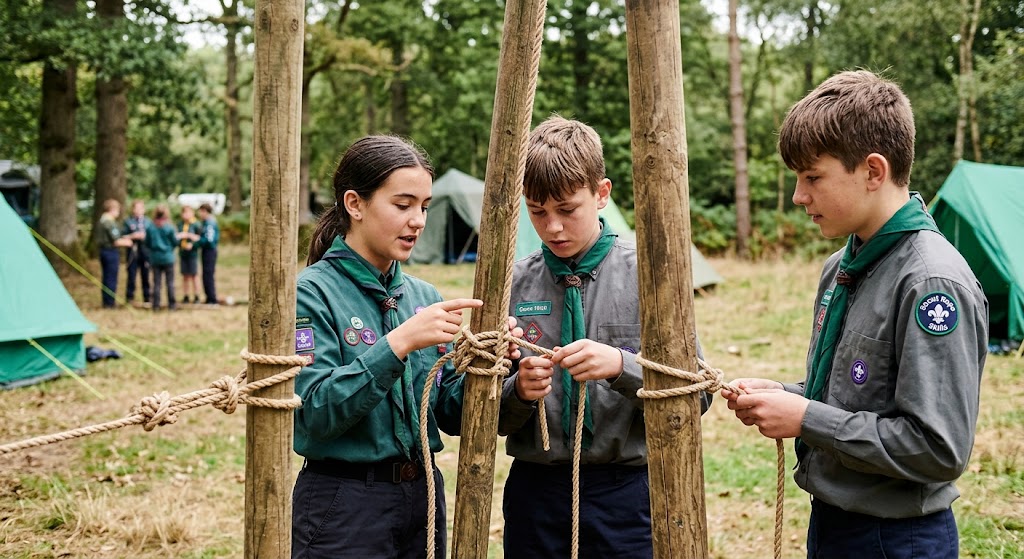
Camping gives Explorers the chance to put their outdoor skills into practice.
It’s one thing to learn how to use a map, cook outdoors or put up a tent during a meeting.
It’s another thing to use those skills as part of a real camping experience.
Explorer camping activities can therefore be more challenging and give young people greater responsibility for planning, organising and solving problems.
The aim isn’t simply to keep everyone busy.
It’s to give Explorers opportunities to learn, lead, make decisions and enjoy being outdoors.
⚠️ SAFETY FIRST
Camping activities should be properly planned, risk assessed and supervised in accordance with current Scouts safety and safeguarding guidance.
Take particular care with fires, cooking equipment, knives and tools, water, heights, weather, wildlife and activities taking place after dark.
Explorers can take increasing responsibility, but leaders remain responsible for providing appropriate supervision and safety arrangements.
1. Campsite Setup Challenge
Turn setting up camp into a team challenge.
Give each Patrol responsibility for establishing its camping area.
They need to think about where tents, equipment, cooking areas and other facilities should go.
Afterwards, ask each group why they chose their particular layout.
This encourages Explorers to think about organisation and campsite safety, rather than simply putting tents wherever there happens to be space.
2. Tent Pitching Challenge
Give Patrols a limited amount of time to pitch their tents correctly.
Don’t make speed the only objective.
A tent that is pitched quickly but badly isn’t a successful result.
Look at:
Correct pitching
Tension
Positioning
Weather protection
Tidiness
Teamwork
Once everyone is comfortable pitching standard tents, introduce a fictional change such as poor weather or a different campsite layout and ask how they would adapt.
3. Campcraft Skills Challenge
Set up a series of campcraft stations.
Explorers could practise:
Tent care.
Packing equipment.
Using guy lines safely.
Organising a campsite.
Looking after wet equipment.
Preparing a sleeping area.
Managing rubbish.
The activities can be completed as Patrol challenges rather than individual tests.
4. Outdoor Cooking Challenge
Give each Patrol responsibility for preparing a simple meal outdoors.
They need to think about ingredients, equipment, hygiene, cooking methods and cleaning up afterwards.
More experienced Explorers can plan the menu and organise the shopping themselves.
SAFETY NOTE
Cooking activities need appropriate supervision, particularly when using stoves, fires, sharp equipment or hot food. Follow current Scouts guidance for outdoor cooking.
5. Camp Menu Planning
Give Explorers a fictional camping trip and ask them to create a menu.
They need to consider:
Nutrition
Storage
Cooking time
Equipment
Weather
Waste
Dietary requirements
The challenge becomes more interesting when you introduce a restriction.
For example:
“You can only carry a small amount of cooking equipment.”
What would they change?
6. Campfire Skills
A supervised campfire can become a practical learning opportunity.
Explorers can learn about fire safety, fuel, heat, airflow and maintaining an appropriate fire.
Rather than making the biggest fire possible, challenge them to maintain a small, controlled fire suitable for its purpose.
Always follow local restrictions, site rules and current Scouts fire safety guidance.
7. Fire Maintenance Challenge
Once a supervised fire is established, ask Explorers to observe it.
Is it producing enough heat?
Is it becoming too large?
Is it producing excessive smoke?
Does it need more fuel?
Are sparks escaping?
The challenge is to make the smallest safe adjustment necessary.
This develops observation and judgement.
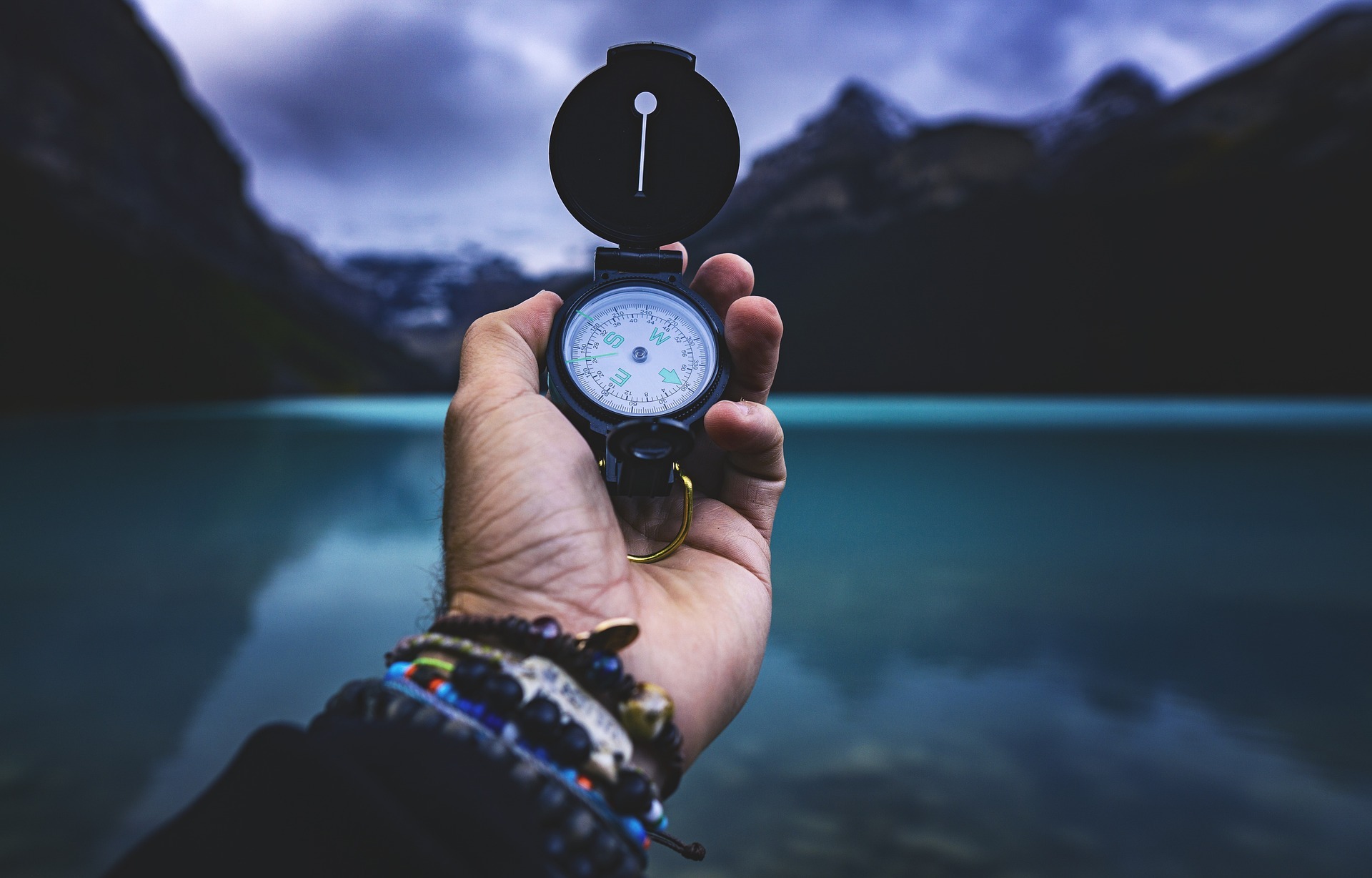
8. Navigation Around Camp
Create a short navigation course around the campsite.
Use maps, grid references and natural landmarks.
Explorers can navigate between checkpoints and complete a small challenge at each one.
This can be particularly useful for practising skills before a larger expedition.
9. Night Navigation
For suitably experienced Explorers, a planned night navigation activity can provide a memorable challenge.
Use a suitable route, clear boundaries, appropriate lighting and an emergency plan.
Explorers should never be deliberately made to become lost.
Start with a familiar area before progressing to more challenging navigation.
10. Camp Cooking Without a Recipe
Give Patrols a selection of ingredients and ask them to design a simple meal.
They need to work out how to combine the ingredients and cook them safely.
This tests planning and problem-solving as well as cooking ability.
Make sure food allergies and dietary requirements are considered before the activity.
11. Waterproofing Challenge
Give Explorers a fictional scenario:
“Heavy rain is forecast tonight. How would you prepare your campsite?”
Ask them to inspect their tents and equipment.
Where could water enter?
What equipment needs protecting?
Where should wet clothing go?
What would they change before the rain arrives?
The activity teaches preparation rather than simply reacting to bad weather.
12. Camp Packing Challenge
Ask Explorers to pack for a specific trip.
For example:
One night at camp
A weekend expedition
A wet-weather camp
A summer hike
Give them a list of possible equipment and ask them to decide what is actually necessary.
This teaches an important outdoor lesson:
Good packing is about carrying what you need, not everything you own.
13. Camp Hygiene Challenge
Camping provides an excellent opportunity to discuss hygiene.
Ask Explorers to identify how they would manage:
Food preparation.
Hand washing.
Toileting.
Dirty clothing.
Rubbish.
Washing equipment.
Food storage.
The challenge can involve designing a simple campsite hygiene plan.
14. Food Storage Challenge
Give Patrols a fictional campsite and a selection of food.
Ask them to decide how each item should be stored.
Discuss keeping food protected from contamination, heat and animals.
Explorers should also understand that food should not be left lying around the campsite unnecessarily.
15. Emergency Planning Challenge
Give Explorers a fictional emergency.
“Someone becomes injured during a camp activity.”
Ask the Patrol to work out what they would do.
Where is the first aid kit?
Who gets the leader?
How would emergency services find the campsite?
What information would they need?
What happens to the rest of the group?
This combines camping with first aid, communication and planning.
16. Weather Watch
Ask Explorers to monitor the weather during camp.
They can compare the forecast with what they actually experience.
Look for changes in:
Wind
Cloud
Temperature
Rain
Visibility
Then discuss whether the weather should change any planned activities.
This reinforces the idea that outdoor plans should remain flexible.
17. Leave No Trace Challenge
Give each Patrol responsibility for checking the environmental impact of the campsite.
Look for:
Litter.
Food waste.
Damage to vegetation.
Unnecessary disturbance.
Poorly managed washing areas.
Then ask:
“Can we leave this campsite better than we found it?”
This is an excellent opportunity to connect camping with environmental responsibility.
18. Camp Improvement Challenge
Ask Explorers to identify one thing that could make their campsite work better.
Perhaps equipment is difficult to find.
The cooking area isn’t organised efficiently.
Wet clothing has nowhere suitable to dry.
The group keeps losing small items.
Give them responsibility for developing a solution.
This turns everyday camping problems into design challenges.
19. Camp Skills Relay
Create several stations around camp.
One might involve packing.
Another could involve tent equipment.
Another could involve navigation.
Another could involve first aid scenarios.
Another could involve identifying camping equipment.
Patrols rotate between stations.
The variety keeps the activity moving while reinforcing practical skills.
20. Shelter Challenge
Give Explorers a fictional scenario where they need to create emergency shelter.
This should be treated as a supervised skills exercise rather than a genuine survival situation.
They can discuss location, weather protection, insulation and environmental impact.
Don’t encourage Explorers to damage trees or vegetation while building shelters.
21. Camp Leadership Challenge
Give an Explorer responsibility for leading part of the camp programme.
They could organise a meal, lead a short activity, coordinate a campsite task or brief the group before an expedition.
The leader remains responsible for safety while the Explorer takes responsibility for the activity itself.
This is a useful way to develop leadership skills.
22. Camp Problem-Solving Scenarios
Give Patrols fictional camping problems.
“Your tent has started leaking.”
“The weather forecast has changed.”
“You have forgotten an important piece of equipment.”
“Your planned route is no longer suitable.”
Ask them to come up with several possible solutions.
The best answer isn’t always the most complicated one.
Often it’s simply to stop, assess the problem and adapt the plan.
23. Campfire Story Challenge
After a suitable supervised campfire activity, give Explorers a storytelling challenge.
Each Patrol creates a short story involving an outdoor adventure.
It could include navigation, wildlife, camping or survival themes.
This provides a relaxed evening activity without needing additional equipment.
24. Night Sky Challenge
On a clear night, take some time to observe the sky.
Explorers can try to identify visible constellations, planets or other features.
They could record what they see and compare it with a suitable star map or astronomy app.
Keep the activity within the campsite’s agreed boundaries and make sure appropriate lighting and supervision are maintained.
25. The Ultimate Explorer Camp Challenge
Bring several skills together.
Give Patrols responsibility for a fictional weekend camp.
They need to:
Plan the menu.
Choose equipment.
Organise the campsite.
Plan activities.
Monitor the weather.
Navigate a route.
Manage an emergency scenario.
Leave the site safely.
The challenge isn’t about creating the most complicated camp.
It’s about demonstrating planning, teamwork, judgement and independence.
Let Explorers Take Responsibility
Explorer camping should give young people opportunities to take ownership.
Instead of leaders organising every detail, let Explorers make appropriate decisions.
Ask:
“How are you going to organise this?”
“What equipment do you need?”
“What could go wrong?”
“What would you change?”
This helps Explorers develop skills that go far beyond camping.
Make Camping About More Than Survival
Camping doesn’t need to become a survival exercise.
Explorers should have time to relax, socialise and enjoy being outdoors.
Games, cooking, stories, nature walks and simply sitting around camp can be just as important as learning technical skills.
A successful camp should leave Explorers thinking:
“I’d like to do that again.”
Build Towards Expeditions
Camping activities can also prepare Explorers for longer adventures.
Navigation builds confidence with route finding.
Cooking teaches planning and self-sufficiency.
Campcraft develops organisation.
First aid develops emergency awareness.
Leadership activities encourage responsibility.
Together, these skills can provide a strong foundation for expeditions and other outdoor challenges.
Final Thoughts
Camping is one of the best places for Explorers to put their outdoor skills into practice.
The tent becomes a lesson in organisation.
The campsite becomes a lesson in planning.
The weather becomes a lesson in decision-making.
The cooking becomes a lesson in teamwork.
And unexpected problems become opportunities to learn.
🏕️ THE BIG IDEA
The best camping activities don’t just keep Explorers occupied — they give them responsibility.
Let them plan.
Let them try.
Let them solve problems.
Let them learn from mistakes.
And give them the support they need to do it safely.That’s how a weekend camping trip can become a genuine outdoor learning experience.
🔒Ready to test your survival skills?
Join Survival Guides UK for free, complete challenges, earn badges and increase your Survival Level.
JOIN FREE →
CRAIG BURR
FOUNDER · SURVIVAL GUIDES UK
I'm Craig, the person behind Survival Guides UK. I created SGUK because I wanted somewhere people could learn real outdoor skills in a practical, straightforward way — from lighting a fire and tying knots to navigation, campcraft and everything in between.
You can read more about the story behind SGUK here as well as our approach here.