Pioneering Knot Challenges
Activity Overview
Difficulty: Intermediate
Time: 30–60 minutes
Location: Campsite or suitable outdoor activity area
Best for: Scouts and Explorers
Skills: Knots, ropework, pioneering, teamwork, problem-solving, communication
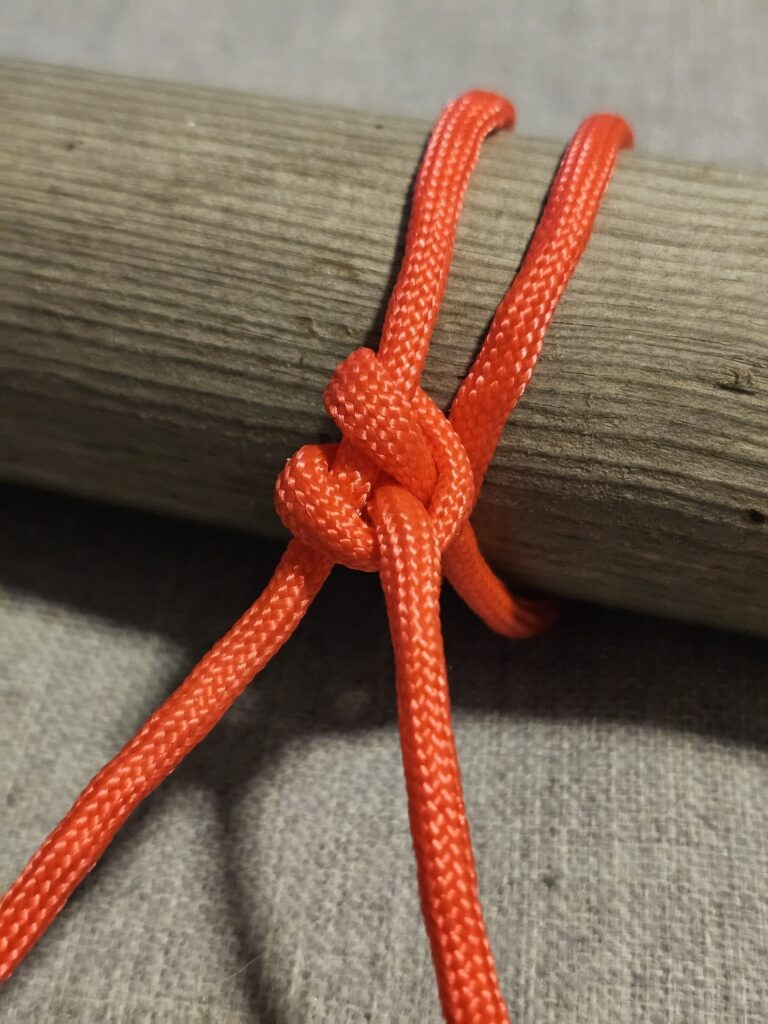
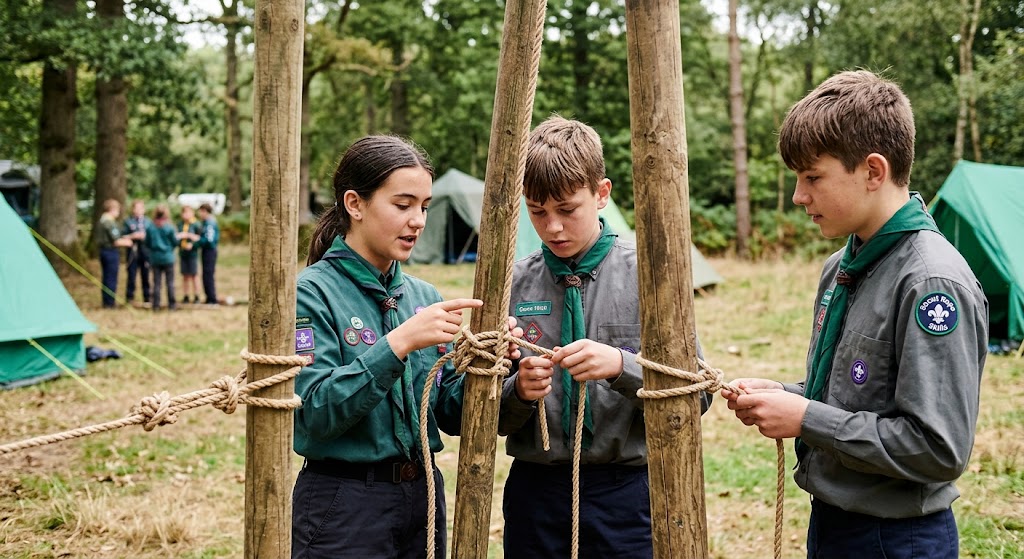
Pioneering knot challenges turn basic rope skills into practical team activities. Instead of simply tying knots from memory, Scouts have to choose the correct knot, tie it accurately and explain why it is suitable for the job.
Challenges can be run individually, in pairs or as Patrol competitions.
What You’ll Learn
You will practise tying common pioneering knots under different conditions while developing accuracy, speed and confidence.
You will also learn that choosing the right knot for the job is more important than simply being able to tie lots of knots quickly.
🟢 SAFETY – LOW TO MODERATE RISK
Ropework is generally low risk, but ropes can create trip and entanglement hazards. Keep the activity area tidy and make sure ropes are not left stretched across walkways.
Do not wrap ropes tightly around hands, fingers, necks or other parts of the body.
If the challenge involves poles or constructing a pioneering structure, the activity becomes higher risk and should be managed accordingly.
Inspect ropes before use and remove damaged ropes from the activity.
Equipment
You will need lengths of pioneering rope, suitable poles if the challenges involve practical construction, and enough space for teams to work.
A selection of challenge cards or a prepared list of tasks can make the activity easier to run.
Prerequisites
Scouts should already know the basic knots and lashings being tested.
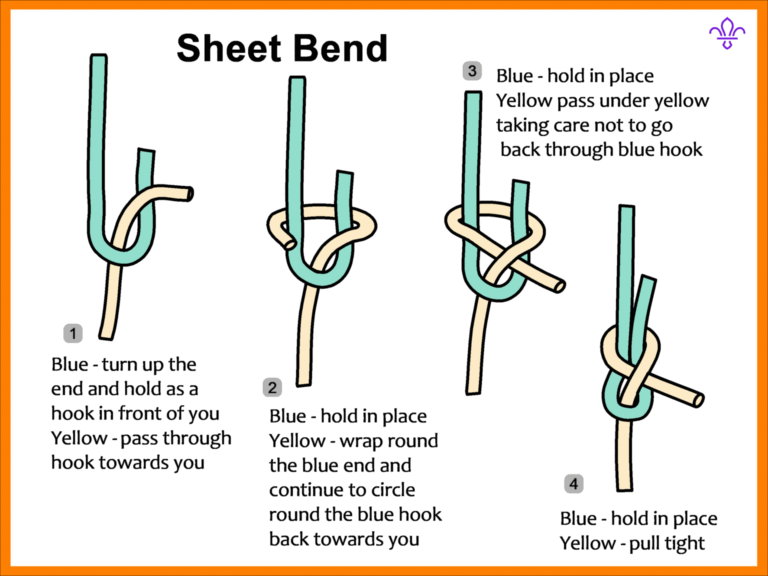
Useful knots include the reef knot, sheet bend, clove hitch, round turn and two half hitches, bowline and timber hitch. The exact selection can be adapted to the skills of the Patrol.
Instructions
1. Set up the challenge
Divide Scouts into individuals, pairs or Patrols.
Give each team the rope they need and explain that the challenge is about accuracy as well as speed.
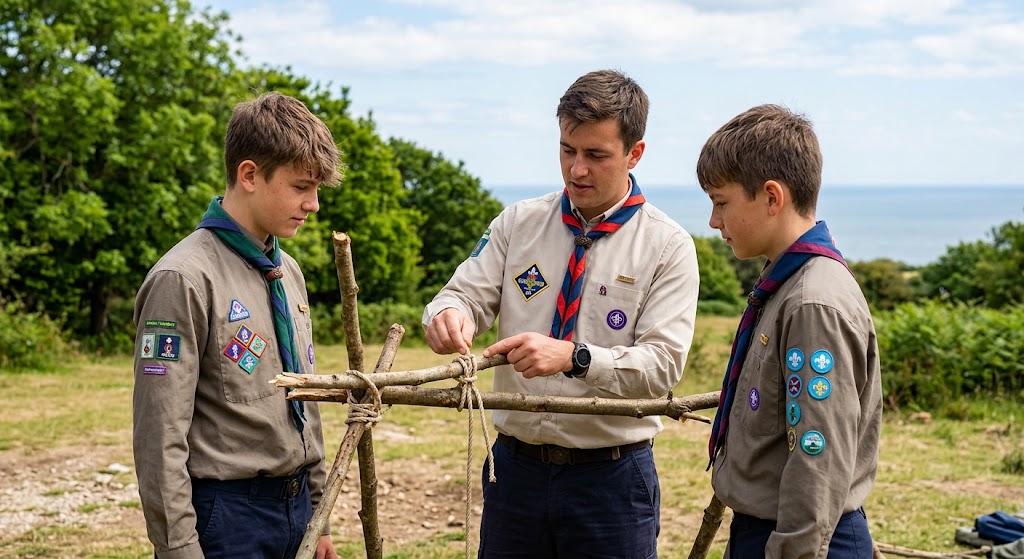
Before starting, demonstrate any knots that the Scouts are expected to know.
2. Challenge: Knot Relay
Place a selection of knot names at one end of the activity area.
One Scout runs to collect a knot name, returns to the team and ties it correctly. The next Scout then takes a turn.
The first team to correctly complete the required set wins.
Do not award a win for a fast but incorrectly tied knot.
3. Challenge: Which Knot?
Give each team a practical problem rather than the name of a knot.
For example, ask them to join two ropes of different thicknesses or attach a rope securely to a pole.
The team must choose an appropriate knot and explain their choice.
This develops understanding rather than simple memorisation.
4. Challenge: Blind Instruction
One Scout is given a knot to tie but cannot demonstrate it.
They must explain the steps verbally while their partner attempts to tie it.
The pair then compare the finished knot with the correct version.
This is particularly useful for developing communication and leadership skills.
5. Challenge: Speed and Accuracy
Give everyone the same knot to tie.
Time how long each Scout takes, but only record a result if the knot is correctly tied and properly dressed.
Run the challenge several times and see whether Scouts can improve their technique.
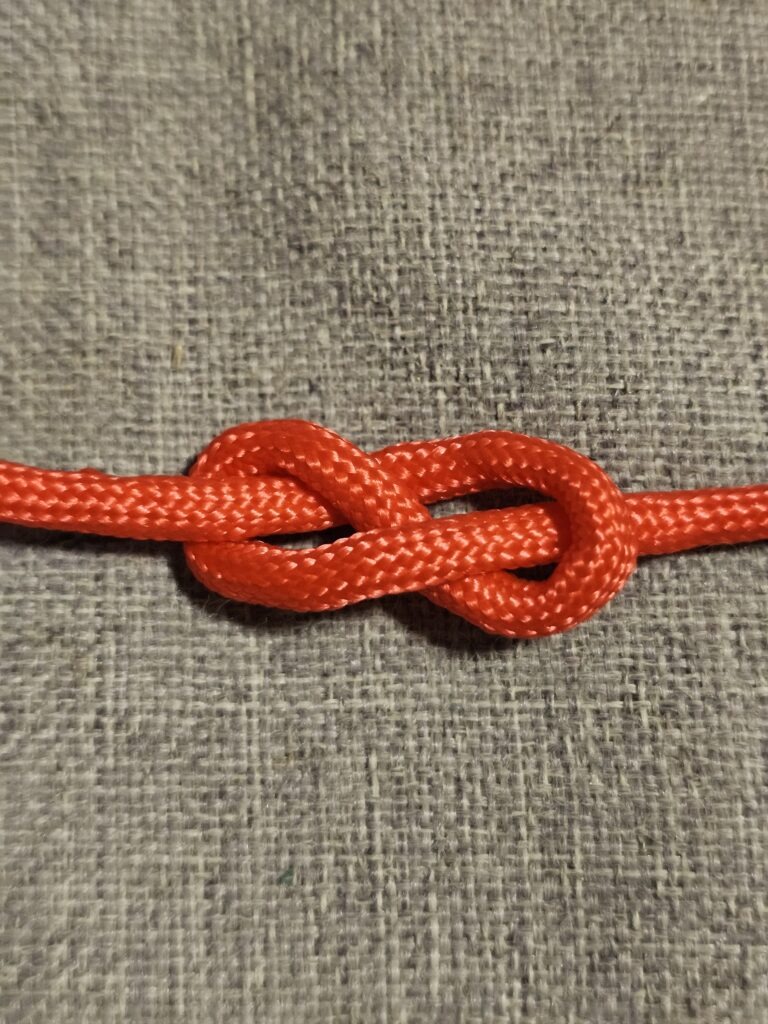
6. Challenge: Knot Identification
Tie several different knots and place them where everyone can see them.
Scouts must identify each knot and explain one appropriate use for it.
For an advanced version, include knots that look similar or ask Scouts to identify an unsuitable knot for a particular task.
7. Challenge: Rope Rescue
Give each Patrol a simple scenario requiring them to use ropework.
For example, they might need to create a secure attachment point or join ropes together to achieve a particular task.
The team must decide which knot is appropriate before starting.
Keep the scenario entirely on the ground unless the activity has been separately risk assessed and supervised as a more advanced pioneering exercise.
8. Challenge: Knot Memory
Display several knots for a short period before covering them.
Scouts then have to remember the knots and reproduce them from memory.
Increase the difficulty by adding more knots or asking Scouts to give a use for each one.
9. Challenge: Knot Master
Choose one Scout from each Patrol to become the team’s knot expert.
Give them a series of problems to solve, but allow the rest of the team to ask questions.
This encourages Scouts to teach one another rather than simply competing.
10. Score the challenges
Award points for correctly tied knots, appropriate knot selection, good explanations and teamwork.
Avoid making speed the only measure of success.
A Patrol that consistently produces secure, correctly tied knots should score better than one that rushes and makes mistakes.
11. Finish with a practical test
End the session by giving each Patrol a practical pioneering task.
Ask them to select the knots they need without being told which ones to use.
Once complete, have them explain why they selected each knot.
This brings together the skills developed during the individual challenges.
Final Tip
Don’t just learn how to tie a knot—learn when to use it. A Scout who can quickly choose the correct knot for a particular job has developed a much more useful pioneering skill than someone who can simply tie a long list of knots from memory.
🔒Ready to test your survival skills?
Join Survival Guides UK for free, complete challenges, earn badges and increase your Survival Level.
JOIN FREE →
CRAIG BURR
FOUNDER · SURVIVAL GUIDES UK
I'm Craig, the person behind Survival Guides UK. I created SGUK because I wanted somewhere people could learn real outdoor skills in a practical, straightforward way — from lighting a fire and tying knots to navigation, campcraft and everything in between.
You can read more about the story behind SGUK here as well as our approach here.