Scouts Navigation Activities: Fun Ways to Learn Navigation
Navigation is one of the most useful outdoor skills a Scout can develop.
It can turn a walk into an adventure and give Scouts the confidence to explore unfamiliar places safely.
But navigation doesn’t have to start with complicated bearings and technical terminology.
Scouts can learn through games, challenges, route planning and practical outdoor activities.
As their confidence grows, simple map reading can develop into proper compass work, orienteering and expedition navigation.
⚠️ SAFETY FIRST
Navigation activities should always take place in a suitable, checked and clearly defined area, with supervision appropriate to the activity.
Scouts should never be deliberately made to become lost. Make sure leaders know the route and boundaries, and have appropriate emergency arrangements in place.
Take particular care around roads, water, cliffs, steep or unstable ground, dense vegetation and changing weather. Night navigation requires additional planning, lighting and supervision.
Follow current Scouts safety, safeguarding and activity guidance.
1. Map Treasure Hunt
Give each Patrol a simple map with several locations marked.
Their challenge is to navigate between the points and find a series of clues.
The clues could lead to a final message, puzzle or activity.
Start with a familiar area before progressing to more challenging terrain.
2. Map the Campsite
Ask Scouts to create a simple map of the campsite.
They can include:
Tents
Paths
Buildings
Trees
Cooking areas
Important landmarks
Then compare their maps with the real environment.
This demonstrates that a map is a simplified representation of the landscape.
3. Find North
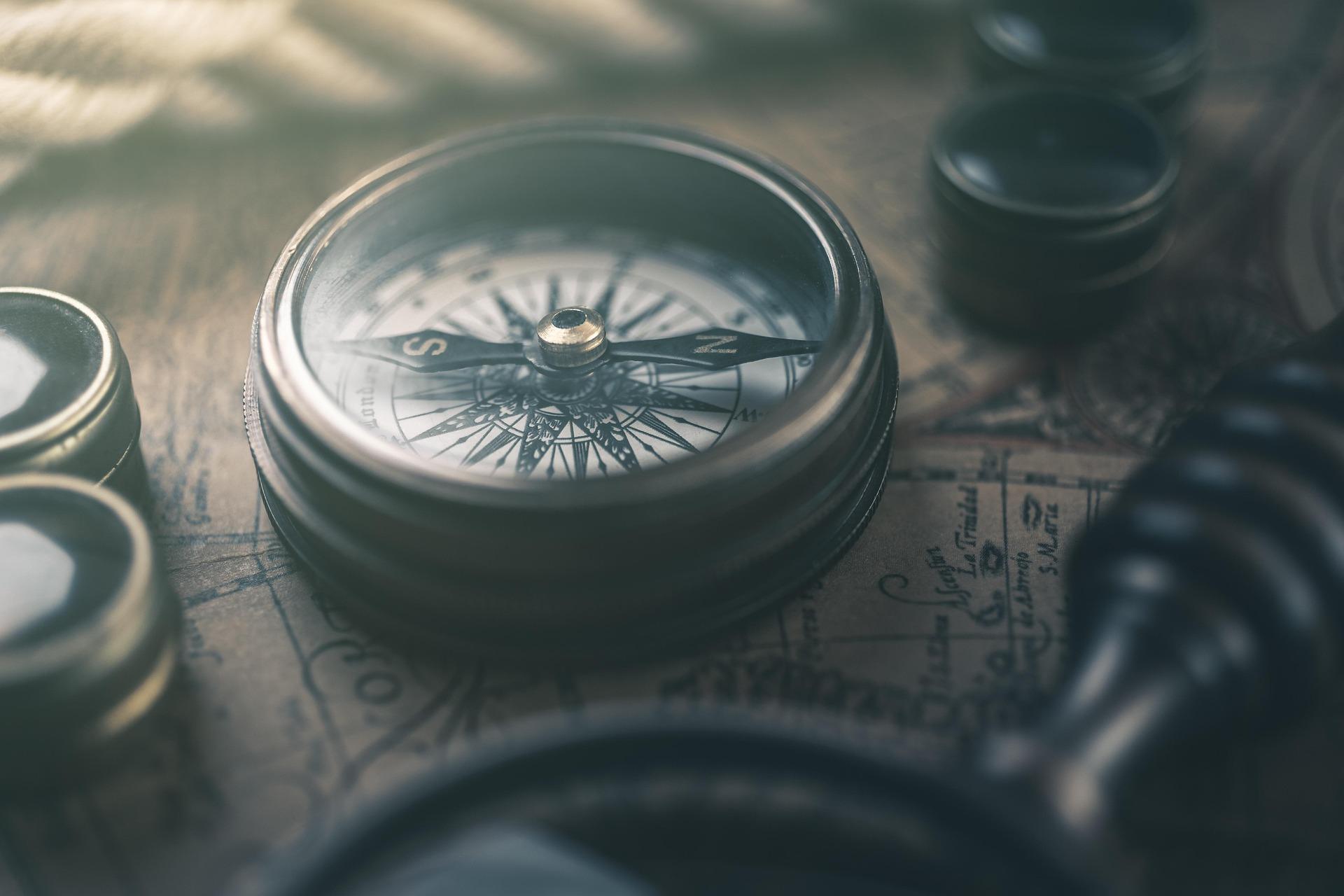
Give every Patrol a compass and ask them to find north.
Once they’ve done that, ask:
“What is directly east of us?”
“Which direction would we travel to reach the campsite?”
It sounds simple, but it gets Scouts thinking about direction in relation to their surroundings.
4. Compass Direction Game
Choose a safe, open area.
Call out directions and have Scouts turn to face them.
Start with the four main directions before introducing more precise directions when they’re ready.
For example:
“Face north.”
“Turn east.”
“Now face south.”
Once Scouts are comfortable, let them take turns calling the directions.
5. Follow the Route
Give Scouts a simple route marked on a map.
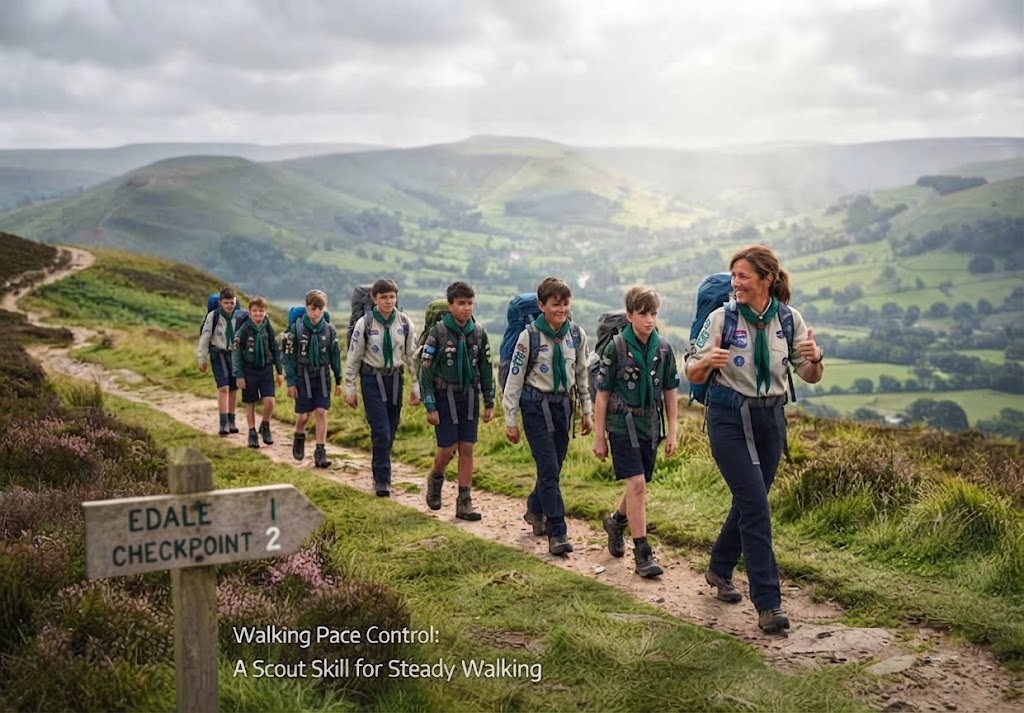
They need to follow it and identify landmarks along the way.
At each checkpoint, they could answer a question or complete a small challenge.
This teaches Scouts to constantly compare the map with what they can actually see.
6. Grid Reference Challenge
Introduce grid references using a suitable map.
Give Scouts several locations and ask them to identify them.
Then reverse the activity.
Give them a feature and ask them to provide its grid reference.
Turn it into a competition between Patrols if appropriate.
7. Map Symbol Challenge
Give Scouts a selection of common map symbols.
Can they identify what each represents?
Then ask them to find examples on a real map.
This is particularly useful before taking Scouts on a longer hike.
8. Landmark Navigation
Choose several obvious landmarks around your activity area.
A gate.
A large tree.
A bridge.
A building.
A path junction.
Give Scouts instructions that use the landmarks to create a route.
Eventually, let Scouts create the instructions for another Patrol.
9. Route Planning Challenge
Give Patrols a map and a starting and finishing point.
Ask them to plan a route.
Then introduce a problem:
“This path is closed.”
Or:
“The weather has become poor.”
Or:
“You need to avoid this steep section.”
Scouts need to adapt their route.
This teaches an important lesson: navigation isn’t simply following a line on a map.
10. Orienteering Course
Set up a short orienteering course with clearly marked checkpoints.
Scouts use a map to find each point.
Don’t make speed the only objective.
Encourage Scouts to think carefully about their route and check their position regularly.
As they improve, introduce more complex courses.
11. Compass Treasure Hunt
Create a short compass-based course.
Give Scouts simple directions and distances to follow.
For example:
“Travel north for a short distance and look for the next marker.”
Keep the course compact and supervised.
As Scouts gain confidence, introduce more precise navigation.
12. Navigation Relay
Create several navigation stations.
One might involve map symbols.
Another could involve grid references.
Another could involve finding north.
Another could involve choosing a route.
Patrols move between the stations and complete each challenge.
This works well when Scouts have different levels of experience.
13. Memory Navigation
Give Scouts a map and allow them a short amount of time to study it.
Take it away.
Ask them questions about the route.
“Which direction was the stream?”
“Where was the path junction?”
“What feature was beside the route?”
This encourages Scouts to actually study the map rather than simply follow instructions.
14. Navigation Bingo
Create cards containing navigation tasks.
For example:
Find north.
Identify a map symbol.
Find a grid reference.
Locate a footpath.
Identify a contour feature.
Scouts complete the tasks as they navigate around the area.
15. Contour Challenge
Introduce Scouts to contour lines.
Start by explaining the basic idea:
Close contour lines usually mean a steeper slope.
Then give Scouts a map and ask them to identify hills, valleys, ridges and steep areas.
Once they understand the map, compare it with the actual landscape.
16. What’s the Best Route?
Give Scouts several possible routes between two points.
Ask them which they would choose.
Then discuss why.
The shortest route isn’t necessarily the best.
A slightly longer route might use a clearer path, avoid steep ground or be more suitable in poor weather.
This develops navigation judgement.
17. Night Navigation
For experienced Scouts, a carefully planned night navigation activity can provide a memorable challenge.
Use a suitable route with clear boundaries and appropriate lighting.
Scouts can practise map reading and direction-finding while dealing with reduced visibility.
Night navigation requires additional safety planning. Never use it as an opportunity to deliberately separate Scouts or make them become lost.
18. Navigation Without a Compass
Give Scouts a simple scenario where their compass is unavailable.
Ask:
“What could you use instead?”
They can discuss maps, landmarks, the shape of the landscape and other navigation information.
The activity should focus on understanding navigation rather than relying on a single piece of equipment.
19. GPS Navigation Challenge
Introduce modern navigation alongside traditional methods.
Give Scouts a GPS device or suitable phone-based navigation equipment and ask them to locate predetermined points.
Then compare the GPS information with the paper map.
Discuss why carrying a map and knowing how to use it remains important.
Technology can fail, lose signal or run out of power.
20. What3words and Location Sharing
Introduce Scouts to modern ways of communicating locations.
Discuss systems such as what3words and GPS coordinates.
Give Scouts fictional locations and ask them to explain which information they would give to someone who needed to find them.
Emphasise that digital location systems should complement rather than replace sensible navigation and emergency planning.
21. Navigation Mystery
Create a fictional adventure.
“A message has been hidden somewhere around the campsite.”
Scouts receive a map and a series of clues.
Each clue leads them to another location.
The final location contains the message.
This can make even basic navigation feel like an expedition.
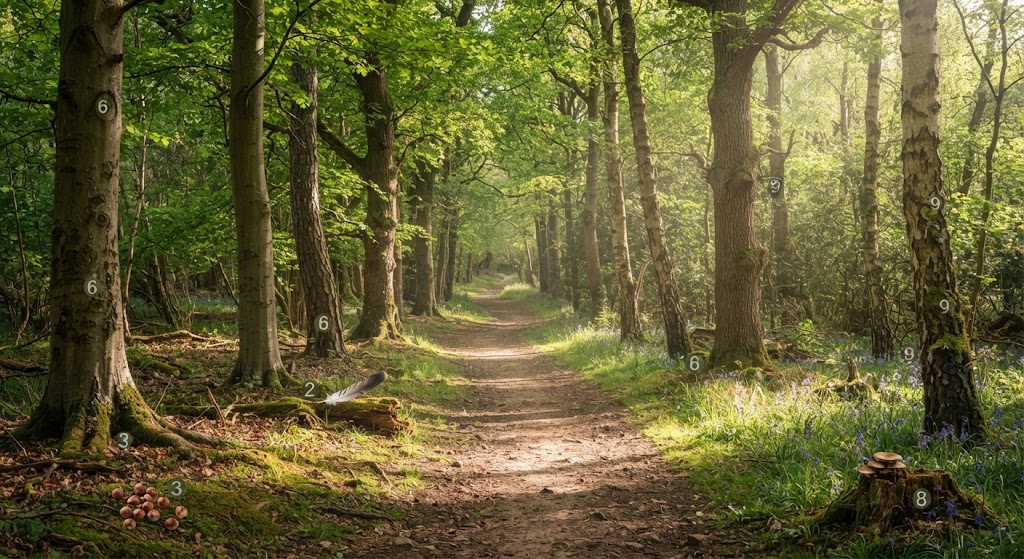
22. Navigation and Nature
Combine navigation with wildlife observation.
Give Scouts a route containing several natural landmarks.
At each point they might identify a tree, record a bird sighting or investigate an animal track.
This encourages Scouts to navigate by understanding the landscape around them.
23. Navigation and Weather
Give Scouts a route and a fictional weather forecast.
Ask them to decide whether the route is still appropriate.
Then introduce changes:
Heavy rain
Strong wind
Poor visibility
Very hot weather
Scouts can decide whether to continue, change the route or turn back.
This reinforces an important outdoor principle:
Good navigation includes knowing when to change the plan.
24. Lead the Route
Give a Scout responsibility for leading part of a familiar route.
They need to explain where the group is going and point out relevant landmarks.
An adult remains responsible for supervision and safety.
Rotate the role so several Scouts get an opportunity to lead.
This combines navigation with communication and leadership.
25. The Ultimate Navigation Challenge
Bring several skills together.
Give Patrols a map and a planned route.
Along the way they must:
Identify grid references.
Use a compass.
Recognise landmarks.
Interpret contours.
Make route decisions.
Complete checkpoints.
Adapt to a fictional change in conditions.
The objective isn’t simply to reach the finish.
Ask each Patrol to explain how they knew where they were and why they chose their route.
That turns navigation from a test into genuine learning.
Teach Navigation in Stages
Navigation becomes much easier when Scouts learn it progressively.
Start with:
Where am I?
Then:
Which way is north?
Then:
Where do I want to go?
Then:
How will I get there?
Finally:
How will I know that I’m still on the right route?
Those four questions form the foundation of good navigation.
Teach Scouts to Look Up
One of the biggest mistakes beginners make is staring at the map constantly.
Encourage Scouts to look at the landscape.
Look for the path.
Find the hill.
Identify the tree line.
Spot the building.
Then check the map.
Good navigation is a continuous conversation between map and landscape.
Don’t Make Everything a Race
Navigation competitions can be great fun, but speed shouldn’t always be the goal.
A Scout who takes an extra minute to check their position has demonstrated an important skill.
Encourage Scouts to prioritise:
Accuracy
Awareness
Decision-making
Communication
Safety
Speed can come later.
Let Scouts Make the Decisions
As Scouts become more experienced, give them increasingly realistic navigation problems.
Don’t immediately tell them which route to take.
Ask:
“What do you think?”
“Why would you choose that route?”
“What could make you change your plan?”
This develops judgement rather than simple map-reading ability.
Navigation Is More Than Maps and Compasses
Modern Scouts may use paper maps, compasses, GPS devices and smartphone apps.
Each has advantages and limitations.
The most useful skill is understanding where you are and how to work out where you need to go.
Equipment should support that understanding rather than replace it.
Final Thoughts
Navigation activities can turn an ordinary walk into a genuine adventure.
A map becomes a puzzle.
A compass becomes a challenge.
A landmark becomes a clue.
A route becomes a decision.
As Scouts progress, these simple activities can develop into proper orienteering, hiking and expedition skills.
🧭 THE BIG IDEA
Good navigation isn’t about never getting confused. It’s about noticing when you’re unsure, stopping, checking your information and making a sensible decision.
Know where you are.
Know where you’re going.
Check your route.
Watch the conditions.
Be prepared to change your plan.Those are the foundations of confident navigation.
🔒Ready to test your survival skills?
Join Survival Guides UK for free, complete challenges, earn badges and increase your Survival Level.
JOIN FREE →
CRAIG BURR
FOUNDER · SURVIVAL GUIDES UK
I'm Craig, the person behind Survival Guides UK. I created SGUK because I wanted somewhere people could learn real outdoor skills in a practical, straightforward way — from lighting a fire and tying knots to navigation, campcraft and everything in between.
You can read more about the story behind SGUK here as well as our approach here.