Scouts Nature Activities: Fun Ways to Explore the Outdoors
Nature is everywhere.
A woodland, campsite, park, beach or even the grounds around a Scout meeting place can become an opportunity to explore the outdoors.
For Scouts, nature activities can go beyond simply identifying plants and animals.
They can involve observation, navigation, photography, conservation, tracking and problem-solving.
The best activities encourage Scouts to look more closely at the environment and understand their place within it.
⚠️ SAFETY FIRST
Nature activities should take place in a suitable area that has been checked and risk assessed beforehand.
Take particular care around roads, water, cliffs, steep ground, unstable trees, poisonous plants, stinging or biting insects and changing weather.
Scouts should not eat wild plants, berries or fungi unless this forms part of a properly planned activity led by appropriately knowledgeable adults. Avoid deliberately handling wildlife and wash hands after outdoor activities.
Follow current Scouts safety, safeguarding and environmental guidance.
1. Wildlife Spotting Challenge
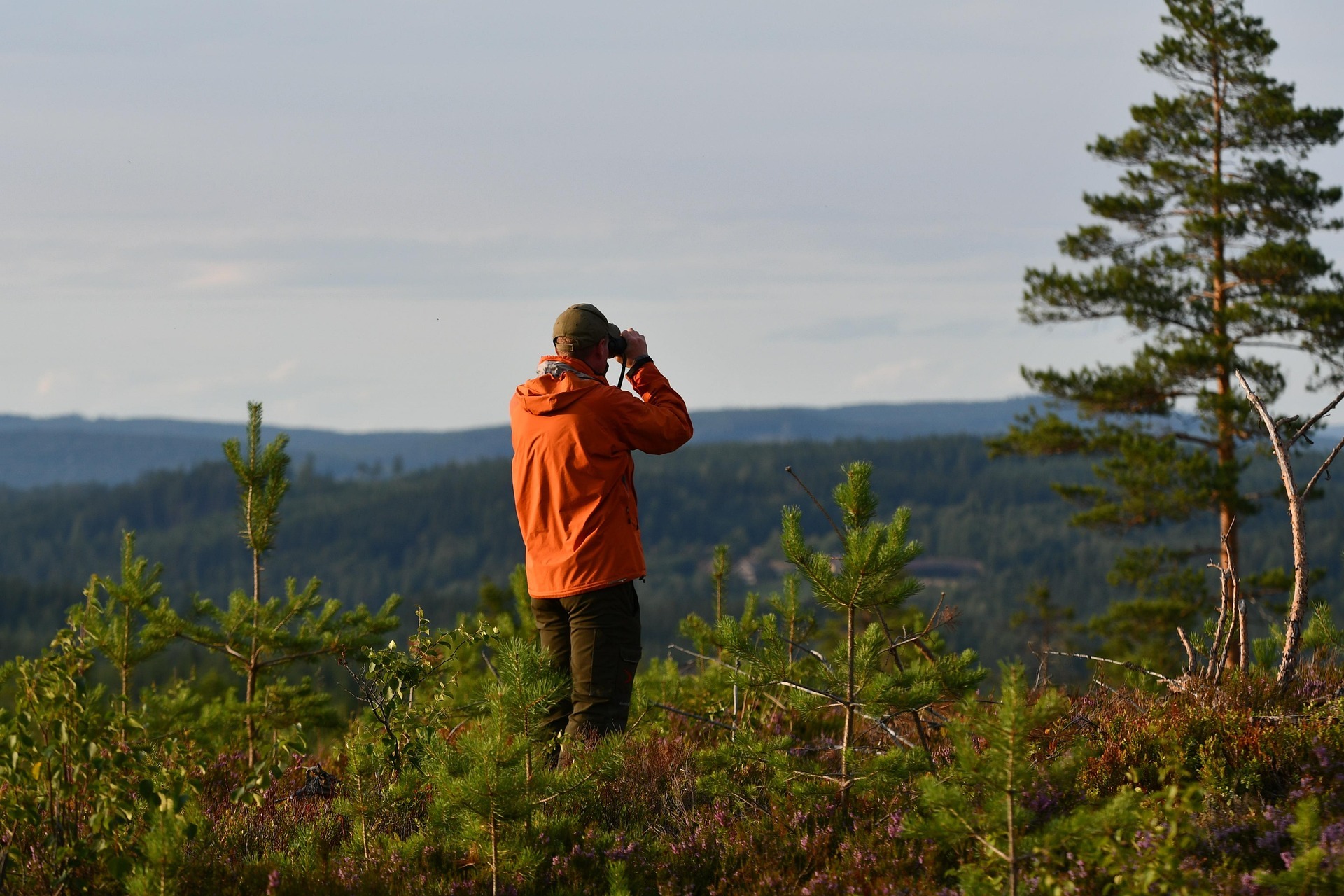
Take Scouts somewhere suitable and give them time to observe.
Rather than simply looking for as many animals as possible, challenge them to record what they see.
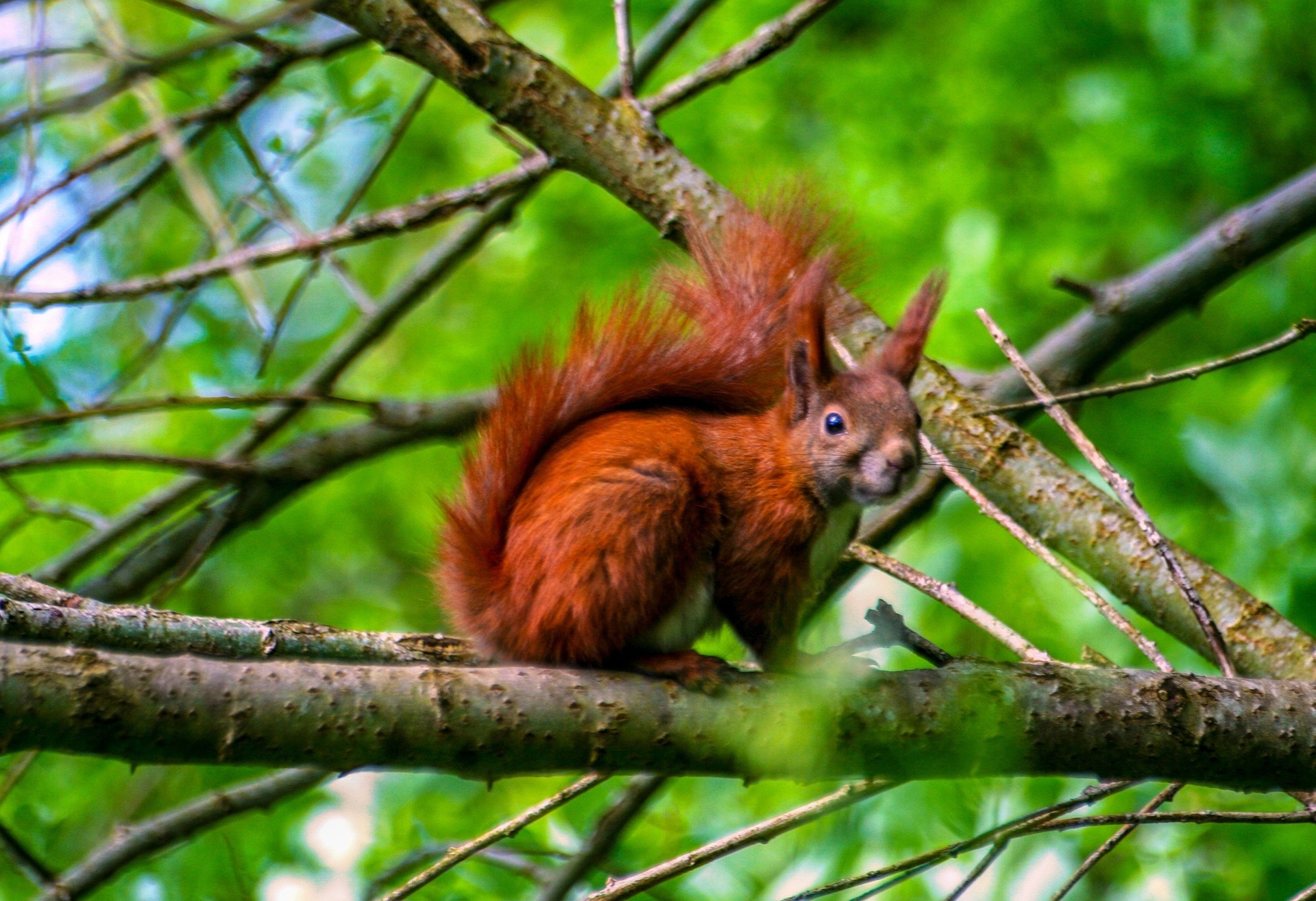
They might spot birds, insects, mammals or signs that animals have been present.
Binoculars can be useful, but they’re not essential.
Sometimes the best wildlife activity is simply standing still and watching.
2. Nature Scavenger Hunt
Give Scouts a list of things to find.
Something rough.
Something smooth.
A seed.
A feather.
A leaf with an unusual shape.
Evidence of an animal.
A natural object that has been damaged by weather.
The important rule is that Scouts find rather than collect wherever possible.
This keeps the activity focused on observation while reducing disturbance to the environment.
3. Tree Detective
Choose several trees and ask Scouts to work out how they differ.
Look at the leaves, bark, shape, seeds and surrounding habitat.
Then challenge them to identify the species using a suitable field guide or identification app.
For an extra challenge, let Scouts teach the rest of their Patrol what they’ve discovered.
4. Nature Photography Challenge
Give Scouts a photography challenge based on natural patterns.
They could look for:
Textures
Colours
Symmetry
Camouflage
Reflections
Shapes
Signs of wildlife
The objective isn’t necessarily to take the best photograph.
It’s to encourage Scouts to notice details they might normally walk past.
5. Mini Beast Survey
Choose a suitable area and conduct a simple survey of insects and other small creatures.
Scouts can record what they find and compare different habitats.
For example, is there a difference between a grassy area and a woodland edge?
Treat creatures carefully and return anything temporarily moved for observation to where it was found.
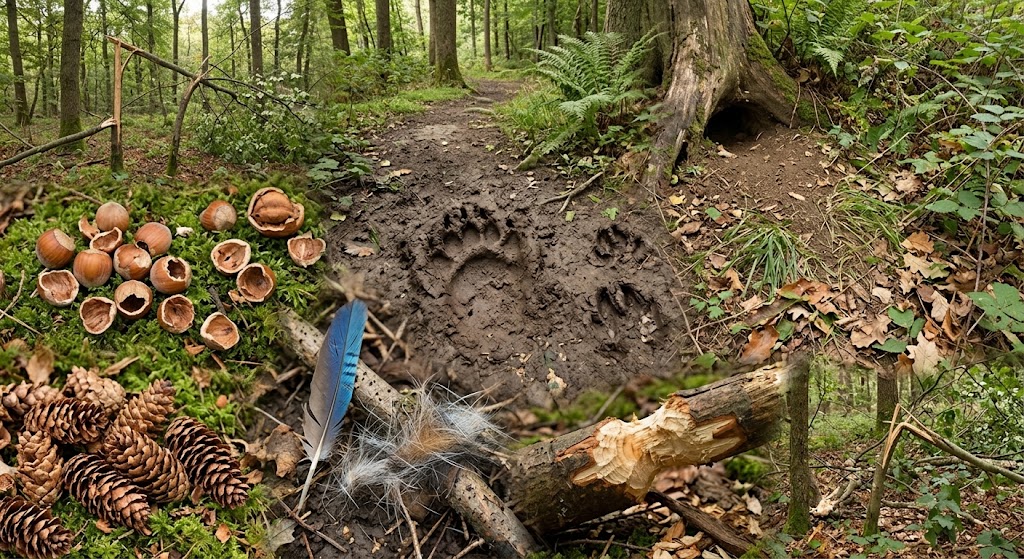
6. Animal Tracks and Signs
Animals don’t always make themselves easy to spot.
Instead, look for evidence.
Footprints.
Feeding marks.
Feathers.
Nests.
Burrows.
Droppings.
Scratched bark.
Scouts can use photographs or field guides to investigate what animal may have left the evidence.
This introduces the idea of tracking without needing to follow or disturb wildlife.
7. Nature Navigation
Combine nature observation with navigation.
Give Patrols a map and a route containing several natural landmarks.
They might need to locate a distinctive tree, stream, hill or hedgerow.
At each point, they complete a nature-related challenge before continuing.
This helps Scouts understand that navigation involves recognising the landscape as well as reading a map.
8. Birdsong Challenge
Find a quiet location and spend several minutes listening.
How many different bird calls can Scouts hear?
Can they work out which direction the sounds are coming from?
If they don’t recognise the birds, they can investigate afterwards using a suitable guide or recording.
This activity can be surprisingly effective at teaching Scouts to slow down and pay attention.
9. Nature Sound Map
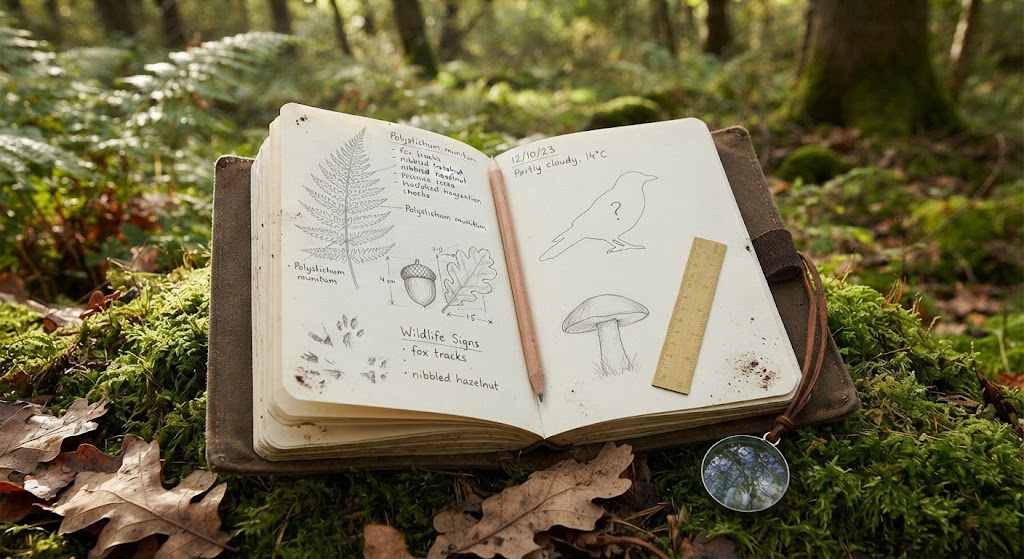
Give Scouts paper and ask them to mark their position in the centre.
Every time they hear a sound, they record it in the direction it came from.
A bird might be marked to the north.
A stream might be to the east.
The wind could be coming from behind them.
The result is a simple map of the natural soundscape.
10. Habitat Hunt
Choose several different habitats within an activity area.
Perhaps:
Woodland
Grassland
Hedgerow
Pond edge
Ask Scouts what kinds of plants and animals they expect to find in each.
Then investigate.
They may discover that different habitats support very different communities of wildlife.
11. Seasonal Nature Walk
Repeat the same route at different times of year.
What changes?
Trees lose and grow leaves.
Flowers appear.
Birds change their behaviour.
Different insects become visible.
Weather changes the landscape.
This is a simple way of demonstrating that nature is constantly changing.
12. Nature’s Camouflage
Ask Scouts to look for examples of camouflage in nature.
Can they spot an insect that blends into its surroundings?
Why might that be useful?
You can then create a safe camouflage game using artificial objects rather than hiding Scouts in potentially unsuitable areas.
13. Cloud and Weather Watch
Give Scouts time to observe the sky.
What types of clouds can they see?
What weather might they indicate?
How quickly are they changing?
Then compare their observations with the forecast.
This can link naturally with hiking, camping and expedition planning.
14. Nature’s Colours
Give Patrols a colour challenge.
Can they photograph or identify natural examples of:
Red
Yellow
Green
Brown
Purple
White
You can make it more difficult by asking them to find several different shades of one colour.
15. Nature Map
Ask Scouts to create a map of the natural features in an area.
They could include trees, streams, paths, slopes, habitats and wildlife sightings.
Then compare their maps with an actual map.
What information does a conventional map show?
What information have they discovered that isn’t shown?
16. Wildlife Camera Challenge
If suitable equipment is available, set up a wildlife camera in an appropriate location.
Leave it undisturbed and return later to see what has been recorded.
Scouts can identify the animals and discuss why they might have chosen that location.
Make sure the camera is positioned responsibly and doesn’t interfere with wildlife or private areas.
17. Conservation Challenge
Give Scouts a small conservation project.
This could involve removing litter, helping maintain an appropriate habitat or taking part in a recognised local conservation activity.
The activity should be planned with the landowner or relevant organisation where necessary.
The aim is to show Scouts that enjoying nature also means looking after it.
18. Build a Bug Hotel
Create a small habitat using suitable natural materials.
Scouts can think about what different creatures might use the structure and where it should be positioned.
Use untreated, appropriate materials and avoid introducing anything that could harm local wildlife.
Then leave the habitat undisturbed and check it periodically.
19. Nature Detective Mystery
Create a fictional wildlife mystery.
“Something has been feeding on these leaves. What could it be?”
Give Scouts several clues.
They need to examine the evidence and decide which explanation is most likely.
This encourages observation and reasoning rather than simply memorising species names.
20. Leave No Trace Challenge
Take Scouts on a walk and ask them to look at the environmental impact of people using the area.
Where do they see evidence of litter?
Are paths being damaged?
Are people disturbing wildlife?
What could visitors do differently?
You can then challenge Scouts to leave the area better than they found it.
21. Tree Age Investigation
Choose suitable trees and ask Scouts how they might estimate their age.
Discuss growth rings, tree size and environmental factors.
Don’t cut or damage living trees to investigate them.
The activity can instead focus on photographs, fallen timber or information provided by a knowledgeable source.
22. Nature’s Weathering Challenge
Ask Scouts to find examples of how weather has changed the landscape.
Look for:
Eroded soil
Weathered rocks
Broken branches
Wind-shaped vegetation
Puddles and drainage patterns
Discuss how wind, rain, frost and sunlight gradually alter the environment.
23. Night Nature Walk
A supervised night walk can completely change how Scouts experience a familiar environment.
Listen for nocturnal animals.
Look at the night sky.
Notice how much harder it is to identify things without daylight.
Keep the route suitable and clearly planned, with appropriate lighting and boundaries.
Never encourage Scouts to wander off alone or deliberately become lost.
24. Nature Investigation
Give Patrols a question to investigate.
For example:
“Which part of this campsite has the greatest variety of plant life?”
They decide how to investigate it, record observations and explain their findings.
This turns a simple outdoor activity into a small scientific investigation.
25. The Big Nature Challenge
Bring several activities together.
Give Scouts a route to follow.
Along the way they might identify trees, record wildlife, investigate animal signs, photograph natural patterns and complete a simple habitat survey.
Finish by asking each Patrol:
“What did you discover that you hadn’t noticed before?”
That question can be more valuable than any score.
Encourage Scouts to Ask Questions
Nature activities work best when Scouts are encouraged to be curious.
If a Scout asks:
“Why is that tree growing differently from the others?”
don’t feel that you need to have an immediate answer.
Investigate it together.
Learning how to find information is itself an important skill.
Observation Before Identification
It’s tempting to make every nature activity about naming species.
But identification should come second to observation.
Ask Scouts:
What can you see?
What can you hear?
What has changed?
What evidence can you find?
Only then ask:
What do you think it is?
This develops stronger observation skills and makes activities accessible even when Scouts don’t know many species.
Respect Wildlife
A simple rule works well:
Look, listen and leave it where it is.
Scouts don’t need to catch animals to learn about them.
Watching a bird, finding a footprint or discovering a spider web can provide just as much interest.
Wildlife should be observed responsibly and never deliberately placed under unnecessary stress.
Combine Nature With Other Scout Skills
Nature activities don’t have to exist separately from the rest of the programme.
Combine wildlife with navigation.
Combine conservation with community service.
Combine nature walks with hiking.
Combine weather observation with camping.
Combine animal tracking with problem-solving games.
This helps Scouts understand how different outdoor skills work together.
Give Scouts Responsibility
Older Scouts can take an active role in organising nature activities.
They could choose the location, research what wildlife might be found there, plan a survey or lead part of a nature walk.
Adults should still provide appropriate supervision and retain responsibility for safety.
The aim is to develop supported independence.
Final Thoughts
Nature activities can turn an ordinary walk into an adventure.
A tree becomes a mystery.
A footprint becomes a clue.
A bird call becomes a challenge.
A patch of woodland becomes a scientific investigation.
And a simple litter-picking activity becomes an opportunity to take responsibility for the environment.
Scouts don’t need to travel to a remote wilderness to experience nature.
They simply need to slow down, look carefully and ask questions.
🌿 THE BIG IDEA
The outdoors is full of things to discover if you take the time to notice them.
Look closely.
Listen carefully.
Investigate what you find.
Respect wildlife.
Leave the environment better than you found it.Those habits can turn a nature activity into a lifelong appreciation of the outdoors.
🔒Ready to test your survival skills?
Join Survival Guides UK for free, complete challenges, earn badges and increase your Survival Level.
JOIN FREE →
CRAIG BURR
FOUNDER · SURVIVAL GUIDES UK
I'm Craig, the person behind Survival Guides UK. I created SGUK because I wanted somewhere people could learn real outdoor skills in a practical, straightforward way — from lighting a fire and tying knots to navigation, campcraft and everything in between.
You can read more about the story behind SGUK here as well as our approach here.