How to Make a Naturalist’s Field Notebook
What Is a Naturalist’s Field Notebook?
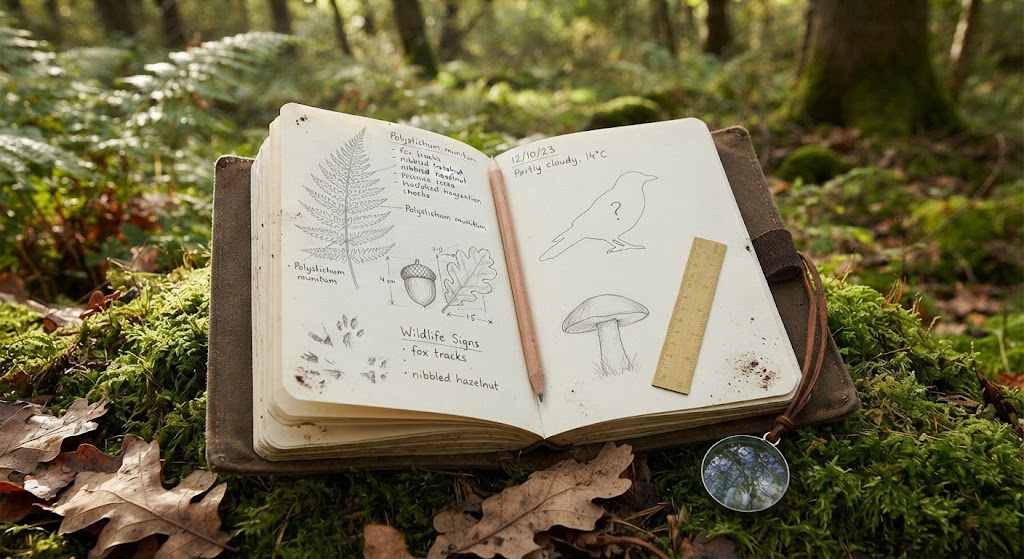
A naturalist’s field notebook is simply a place to record things you notice outdoors.
It doesn’t need to be fancy.
A cheap notebook and pencil can be enough.
The important part is learning to observe carefully and record useful details.
Your notebook might contain:
- Wildlife sightings
- Plant observations
- Animal tracks
- Weather notes
- Sketches
- Questions
- Interesting discoveries
- Maps
- Measurements
- Ideas for further investigation
Choose the Right Notebook
A small notebook is usually better than a huge one.
It should be easy to carry in:
- A coat pocket
- Daypack
- Rucksack
- Scout activity bag
A pencil is generally more useful than a pen outdoors because it can still work if the page becomes slightly damp.
For wet conditions, use a notebook with reasonably durable paper or protect it inside a waterproof pouch.
Start Every Entry With the Basics
At the top of each page, record:
Date:
Time:
Location:
Weather:
Who was with you:
These simple details become surprisingly useful later.
You may notice that the same bird appears in the same place at different times of year, or that certain plants appear after particular weather conditions.
Draw What You See
You don’t need to be an artist.
A simple sketch can sometimes record information better than a photograph.
Try drawing:
- A leaf
- A feather
- A footprint
- A tree shape
- A mushroom
- A shell
- A bird silhouette
- A piece of bark
Add arrows pointing towards interesting features.
Record Wildlife Signs
You don’t have to see an animal to record it.
Write down evidence such as:
- Tracks
- Droppings
- Feathers
- Nibbled nuts
- Gnawed wood
- Burrows
- Nests
- Feeding marks
If you are unsure what created the sign, say so.
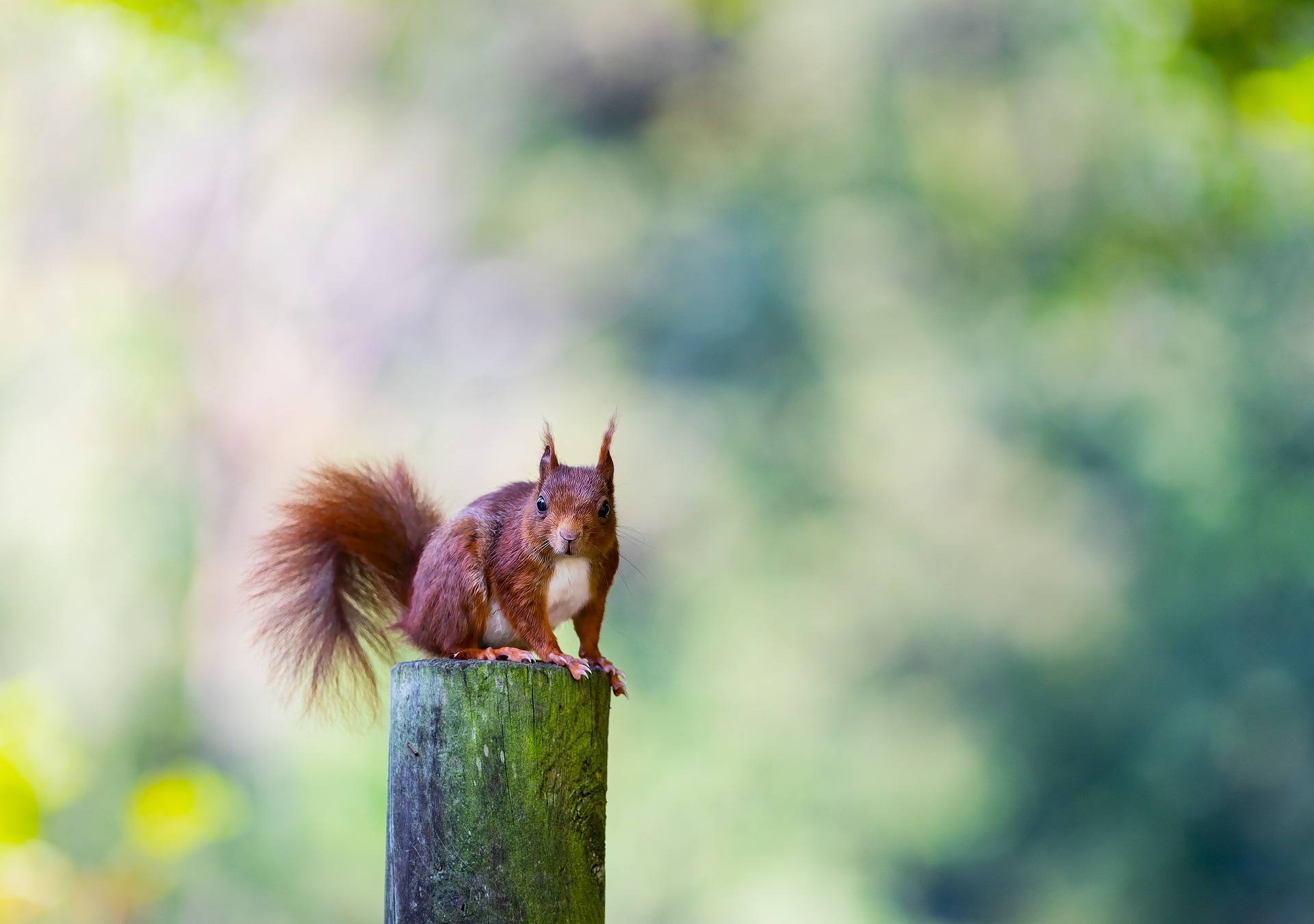
Writing “possibly squirrel” is better than confidently recording something you haven’t actually established.
Keep a Question Page
One of the best sections of a field notebook is a list of things you don’t know.
For example:
- What made these tracks?
- Why are these leaves different?
- Which bird made that call?
- Why is this tree growing at an angle?
- What caused these marks on the bark?
Questions give you something to investigate later.
Add Simple Measurements
You don’t need specialist equipment.
A small ruler can help with:
- Leaf length
- Footprint size
- Feather length
- Conker size
- Mushroom diameter
Measurements make observations more useful because they give you something concrete to compare.
Make a Weather Record
Add simple weather observations to each entry.
You could record:
- Sunny or cloudy
- Dry or wet
- Windy or calm
- Approximate temperature
- Recent rainfall
Over time, you may start noticing connections between weather and wildlife activity.
Create a Species List
Reserve a few pages at the back of the notebook for a running list.
You could divide it into:
Birds
Mammals
Insects
Plants
Trees
Fungi
You can tick species off when you see them.
Don’t worry if you cannot identify everything immediately.
Use Your Notebook to Slow Down
Perhaps the biggest benefit of a field notebook is that it encourages you to stop.
Instead of walking past a tree, you might spend five minutes examining its bark.
Instead of simply seeing a feather, you might sketch it and notice its pattern.
The notebook turns “I saw something interesting” into “I looked carefully and recorded what I found.”
A Simple Field Notebook Challenge
On your next walk, find:
- One leaf
- One tree
- One wildlife sign
- One bird call
- One interesting texture
- One question
Record each one.
Then compare everyone’s observations at the end.
Protect Wildlife While You Observe
A field notebook should encourage observation, not interference.
Don’t remove nests, disturb burrows or handle wildlife simply to make your notes better.
You can record something without touching it.
For sensitive wildlife, avoid writing down or sharing precise locations publicly.
Your Notebook Will Get Better Over Time
Don’t try to create perfect pages.
The first few entries may be basic.
After a few walks, you’ll naturally start recording more useful details.
Eventually your notebook becomes a record of how your observation skills have developed.
And that is what makes a field notebook so useful.
🔒Ready to test your survival skills?
Join Survival Guides UK for free, complete challenges, earn badges and increase your Survival Level.
JOIN FREE →
CRAIG BURR
FOUNDER · SURVIVAL GUIDES UK
I'm Craig, the person behind Survival Guides UK. I created SGUK because I wanted somewhere people could learn real outdoor skills in a practical, straightforward way — from lighting a fire and tying knots to navigation, campcraft and everything in between.
You can read more about the story behind SGUK here as well as our approach here.