What Should My Child Take to Their First Scout Camp?
If your child is going on their first Scout camp, working out what they actually need to take can be surprisingly difficult.
You don’t want them arriving without something important, but you also don’t want to fill their rucksack with things they won’t use.
The good news is that most Scout camps don’t require huge amounts of specialist equipment. With sensible clothing, suitable sleeping equipment, basic personal items and a few useful extras, your child should have everything they need for a comfortable and enjoyable camp.
Always check the kit list provided by your child’s Scout group first, as requirements can vary depending on the type of camp, location, weather and activities planned.
Scout Camp Packing List
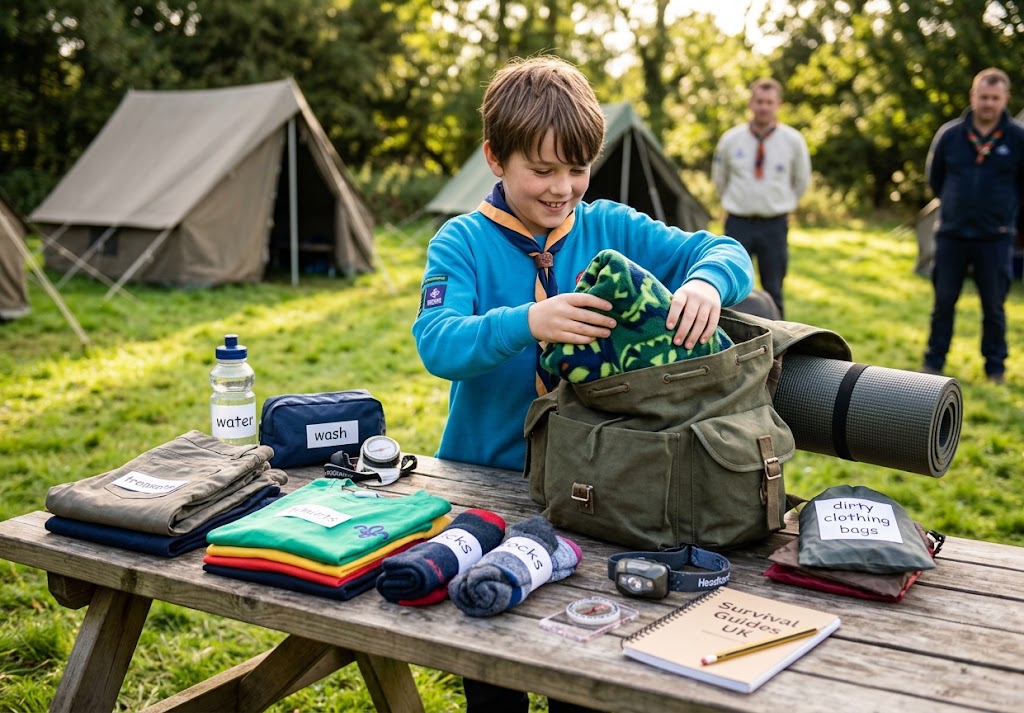
Before packing anything, lay everything out and work through the list. This makes it much easier to spot anything you’ve forgotten.
Clothing
Weather in the UK can change quickly, so your child needs clothing that can cope with both wet and dry conditions.
A typical Scout camp may require:
Don’t rely on the weather forecast alone. Even during summer, a cold or wet evening can make a big difference when your child is sleeping outdoors.
Spare socks are particularly important. Wet feet can quickly become uncomfortable, so having a dry pair available can make a big difference.
Sleeping Equipment
Your child’s sleeping equipment will depend on the type of camp and what their Scout group provides.
For a normal camping trip, they may need:
A sleeping bag suitable for the expected conditions is important. There is little benefit in taking an extremely warm sleeping bag during mild summer camping, while a lightweight summer bag may not be suitable for a cold-weather camp.
If you’re buying a sleeping bag specifically for your child, check the temperature ratings and consider how they will actually use it rather than simply choosing the cheapest option.
Personal Items
Children will also need the usual personal items they would take on an overnight trip.
These can include:
Keep toiletries to a sensible size. There is no need for a child to take a full bathroom cabinet with them.
A small wash bag is ideal because it keeps everything together and makes it easier for your child to find what they need.
Food and Drinks
Your Scout leader should tell you what food is being provided and whether your child needs to bring anything themselves.
Don’t send your child to camp with a huge amount of extra food unless their leaders have specifically asked for it.
A reusable water bottle is usually one of the most useful things they can have with them. Your child should know where it is and be able to access it easily during activities.
If your child has allergies, dietary requirements or medication relating to food, make sure the leaders are aware of these before the camp.
Useful Camping Equipment
There are a few small items that can make life much easier at camp.
Consider packing:
A few strong bin bags are particularly useful. They can be used to separate dirty clothing from clean clothing and help prevent wet kit from soaking everything else in the rucksack.
Should My Child Take a Phone?
This depends entirely on the rules of the Scout group and the type of camp.
Some camps may allow phones, while others may have restrictions or expect them to remain switched off and stored away.
Before sending your child with an expensive phone, check the rules with the leaders.
It’s also worth considering whether your child actually needs one. A Scout camp is an opportunity to spend time outdoors, learn new skills and socialise with other young people.
Don’t Forget to Label Everything
One of the simplest things you can do before Scout camp is label your child’s belongings.
Clothing, sleeping bags, water bottles, torches and other equipment can easily become mixed up when a group of children are all camping together.
Name labels or permanent marker can help identify their belongings quickly.
This is particularly useful for items such as:
It may seem like a small thing, but it can save a lot of confusion when everyone is packing up at the end of camp.
Don’t Overpack
One of the biggest mistakes parents can make is trying to prepare their child for every possible situation.
Remember that your child has to carry their own equipment in many circumstances.
A huge rucksack filled with unnecessary items can become uncomfortable and make camping less enjoyable.
Before putting something into the bag, ask yourself whether your child genuinely needs it.
If the answer is no, leave it at home.
The Scout group’s own kit list should always take priority over a generic packing list.
Pack With Your Child
Don’t simply pack your child’s rucksack yourself and send them off.
Instead, get them involved.
Show them where everything is and let them help organise their own equipment. This gives them a better understanding of what they have brought and helps them become more independent.
They should ideally know:
This is part of the value of Scouting. Children aren’t just learning how to camp; they’re learning how to look after themselves and their own equipment.
A Simple Scout Camp Checklist
For a quick final check, your child’s Scout camp kit may include:
Clothing
Sleeping
Washing and Personal Items
Other Essentials
What Your Child Doesn’t Need
It can be just as useful to know what to leave at home.
Unless specifically requested, avoid filling their rucksack with unnecessary items such as:
The aim is to give your child the equipment they need without making their rucksack unnecessarily heavy.
The Most Important Thing Is Preparation
A first Scout camp can be exciting, but it can also be a little daunting for both children and parents.
The best approach is to follow the Scout group’s kit list, prepare for the weather and make sure your child knows what they’ve packed and where it is.
You don’t need to buy every piece of camping equipment available. Start with the essentials and build up their kit gradually as they gain experience.
Most importantly, involve your child in the process. Learning how to prepare, pack and look after their own equipment is an important outdoor skill in itself.
A well-packed rucksack isn’t just about having the right equipment. It’s another opportunity for your child to become more confident and independent outdoors.
🔒Ready to test your survival skills?
Join Survival Guides UK for free, complete challenges, earn badges and increase your Survival Level.
JOIN FREE →
CRAIG BURR
FOUNDER · SURVIVAL GUIDES UK
I'm Craig, the person behind Survival Guides UK. I created SGUK because I wanted somewhere people could learn real outdoor skills in a practical, straightforward way — from lighting a fire and tying knots to navigation, campcraft and everything in between.
You can read more about the story behind SGUK here as well as our approach here.