Historical Scouting Communication
Activity Overview
Difficulty: Beginner
Time: 45–90 minutes
Location: Suitable indoor or outdoor training area
Best for: Scouts, Explorers and outdoor enthusiasts
Skills: Communication, signalling, teamwork, observation, Morse code, semaphore, message handling
Communication has always been an important part of Scouting.
Before mobile phones and digital radios, Scouts had to rely on a combination of spoken messages, written notes, runners, flags, semaphore, Morse code, whistles and agreed signals.
These methods fitted naturally into the patrol system. Scouts needed to communicate across campsites, organise groups, pass information and sometimes send messages over considerable distances.
Recreating historical communication methods gives modern Scouts an opportunity to experience the challenges of communicating without modern technology.
The key principle remains the same:
Send information clearly → receive it accurately → confirm what was understood.
What You’ll Learn
By the end of this guide, you’ll understand:
- How Scouts historically communicated.
- Why the patrol system depended on good communication.
- How runners and written messages were used.
- How semaphore and Morse code fitted into traditional Scouting.
- How whistles, flags and other signals could be used.
- How to recreate historical communication exercises safely.
- What modern Scouts can learn from older communication methods.
🟢 SAFETY – LOW RISK
Historical Scouting communication is generally a low-risk activity.
The main hazards come from the environment rather than the communication methods themselves.
When running outdoor exercises:
- Keep participants within defined boundaries.
- Don’t send Scouts into unsafe areas simply to increase the distance.
- Don’t use signals that could be mistaken for genuine emergency signals.
- Avoid flashing lights towards roads, aircraft or other hazards.
- Make sure everyone knows where to return after completing a message.
- Keep historical communication exercises separate from genuine emergency procedures.
The objective is to recreate the communication challenge, not create unnecessary risk.
Equipment
A historical communication exercise can be run with very little equipment.
Useful items include:
- Notebook and pencil.
- Message cards.
- Semaphore flags.
- Morse code reference sheet.
- Whistle.
- Signal flags.
- Torch or signalling lamp.
- Map and compass.
- Stopwatch.
- Simple two-way radios for comparison.
Modern replicas are perfectly suitable for most historical activities.
Prerequisites
No specialist knowledge is required.
Before beginning, Scouts should understand:
- The boundaries of the activity.
- Who is responsible for each communication station.
- How messages will be recorded.
- Which signals are being used.
- How important information will be checked.
If using semaphore or Morse code, teach the system before introducing a competitive exercise.
Instructions
1. Understand the Patrol System
Traditional Scouting placed considerable emphasis on the patrol.
A patrol was a small team that needed to operate together, sometimes with members spread around a campsite or activity area.
Good communication was therefore essential.
Scouts needed to be able to:
- Pass instructions.
- Report information.
- Organise activities.
- Communicate between groups.
- Send messages to a leader.
- Coordinate activities at a distance.
Communication wasn’t necessarily about sophisticated equipment.
It was about having simple systems that everyone understood.
2. Use Written Messages
One of the simplest historical methods was to write a message down and have someone carry it to the intended recipient.
Create two stations some distance apart.
Give one Scout a short written message.
They must deliver it to the other station without changing its wording.
The recipient then reads the message and records it.
Compare the original and final versions.
This demonstrates why written messages needed to be clear and why important information sometimes had to be checked carefully.
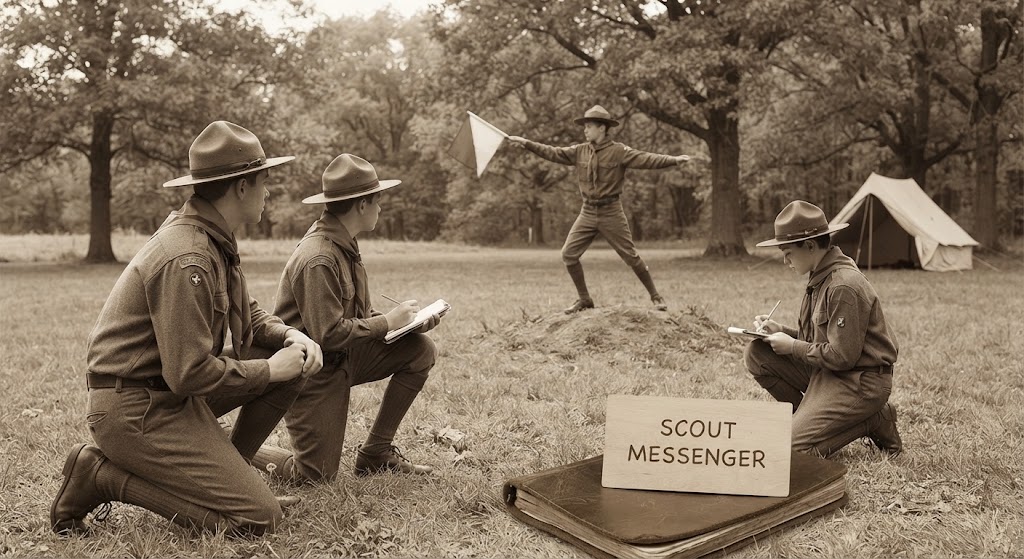
3. Try the Messenger System
A Scout acting as a messenger could physically carry information between locations.
Set up several patrol stations.
Give one station a message that needs to reach another.
The Scout acting as messenger must deliver it accurately.
Make the exercise progressively harder by introducing:
- Longer distances.
- More than one message.
- Several receiving stations.
- Time limits.
The aim isn’t simply to see who can run fastest.
A messenger who arrives quickly but delivers the wrong information has failed the communication task.
4. Learn Semaphore
Semaphore became a useful visual signalling method for Scouts.
Two flags are held in different positions to represent letters.
The sender creates a sequence of positions while the receiver watches and records the letters.
Start with short words.
Once Scouts become familiar with the system, introduce short sentences or instructions.
Semaphore is particularly useful for demonstrating how standardised visual communication works.
5. Practise Morse Code
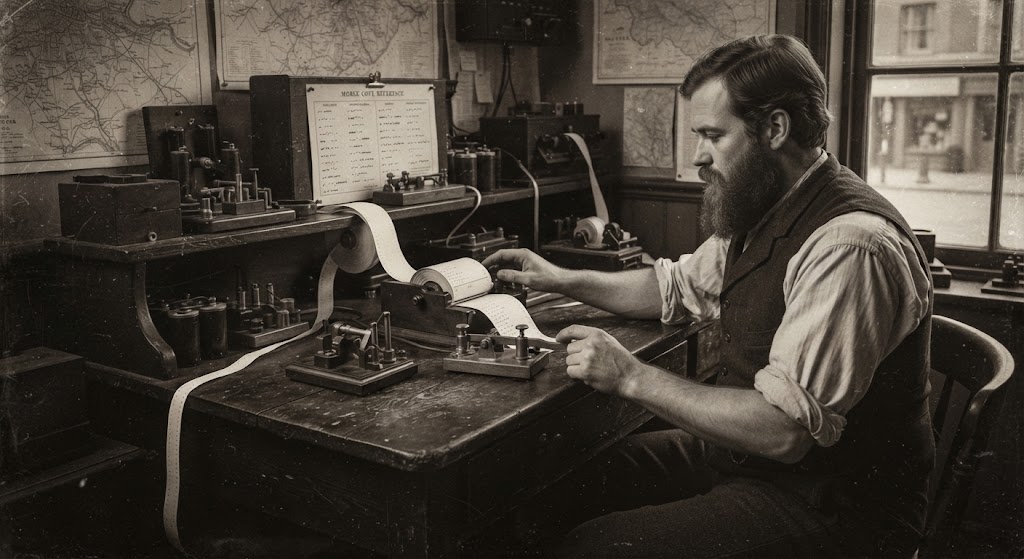
Morse code provides another historical communication exercise.
Letters and numbers are represented by combinations of short and long signals.
Scouts can practise Morse using:
- Sound.
- Light.
- Tapping.
- A signalling lamp.
Begin with a small number of letters and build gradually.
Once the group is confident, set up two stations and have them exchange short messages.
6. Use Whistle Signals
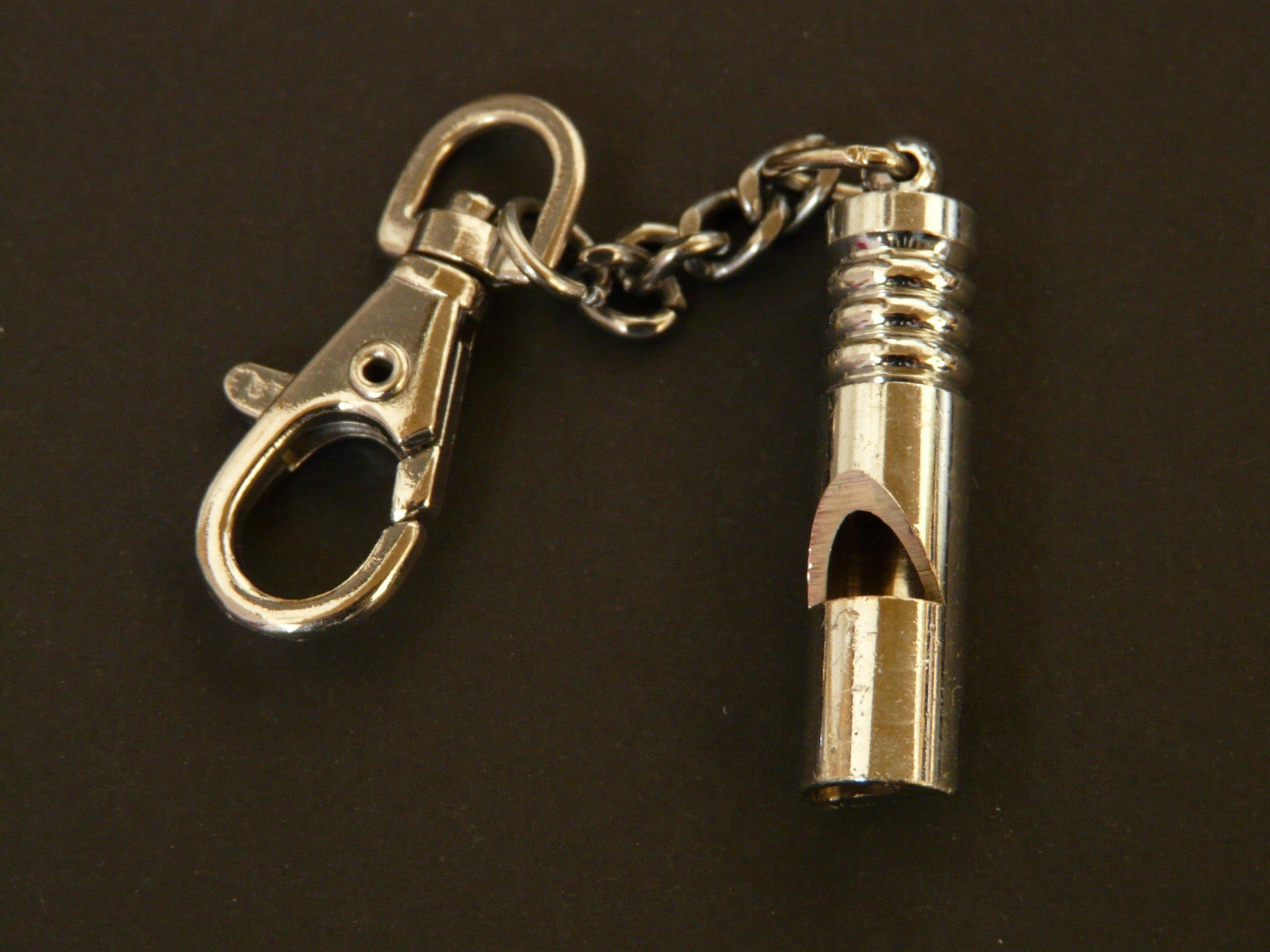
Whistles were useful because their sound could travel considerably further than a normal speaking voice.
Rather than immediately teaching a complicated code, establish a few simple signals for the exercise.
For example, you could designate signals for:
- Attention.
- Return.
- Stop.
- Message ready.
The meanings must be agreed beforehand.
This demonstrates an important communication principle: a signal has no useful meaning unless everyone understands the code.
7. Explore Flag Signals
Flags can be used for semaphore or for simple predetermined signals.
Give one station a sequence of signals to transmit to another.
The receiving station records what it sees.
Gradually increase the distance while keeping the signals visible.
You can also introduce an observation exercise where Scouts have to identify a signal from a distance.
This develops concentration as well as signalling ability.
8. Build a Historical Communication Network
For a larger activity, create several stations around a campsite or field.
For example:
Station A → Station B → Station C → Station D
Give Station A a message.
It must travel through the network until it reaches Station D.
Each station uses the agreed historical communication method to pass it onwards.
At the end, compare the original message with the final version.
This introduces the problem of message degradation.
Every additional stage creates another opportunity for information to be misunderstood.
9. Add a Code or Call Sign
Historical communication exercises can become more interesting when Scouts have to identify the correct recipient.
Give each station a simple call sign or identifier.
Messages must include the correct recipient before being passed on.
This teaches Scouts to pay attention to both the content of a message and its destination.
It also provides a natural introduction to radio communication procedures.
10. Introduce a Map
A map can turn communication into a navigation exercise.
Give each patrol a map showing several communication stations.
A message might instruct a patrol to:
- Find a particular location.
- Send a signal.
- Report an observation.
- Pass information to another station.
The patrol has to navigate to the appropriate location before communicating.
This recreates the way communication and navigation could work together during traditional outdoor activities.
11. Compare Historical and Modern Communication
After trying the historical methods, compare them with modern equipment.
For example:
Messenger: Physical movement required.
Semaphore: Requires line of sight.
Morse: Requires an agreed code.
Whistle: Good for simple signals but carries little information.
Radio: Allows rapid two-way communication over distance.
Mobile phone: Can carry large amounts of information but depends on the device and network.
The important lesson isn’t that older methods were better.
Modern communication is considerably more capable.
However, historical methods demonstrate that effective communication is fundamentally about clarity and shared understanding, not technology.
12. Practise Message Confirmation
Historical communication also provides a useful lesson in checking information.
After receiving an important message, repeat it back where the signalling method allows.
For example:
Sender: Transmits message.
Receiver: Records message.
Receiver: Confirms the message.
Sender: Corrects any error.
This simple process reduces mistakes.
It remains useful today, whether communicating face-to-face, over a radio or using a phone.
13. Create a Historical Communication Challenge
Finish with a patrol competition.
Give each patrol a starting message.
They must use several historical communication methods to get the information to a final station.
For example:
Stage 1: Written message
Stage 2: Messenger
Stage 3: Semaphore
Stage 4: Morse
Stage 5: Final message read-back
Score the activity primarily on accuracy, with speed as a secondary consideration.
This reinforces the central lesson: communication isn’t successful unless the information arrives correctly.
14. Review What You Have Learned
After the activity, discuss the experience.
Ask:
- Which communication method was easiest?
- Which was hardest?
- Where did mistakes occur?
- How did distance affect communication?
- Why was standardisation important?
- How would bad weather affect the system?
- Which historical method could still be useful today?
The discussion helps connect historical Scouting with modern outdoor communication.
Final Tip
Good communication doesn’t depend on having the latest technology.
Historical Scouting shows how much could be achieved with simple equipment, agreed signals and disciplined teamwork.
Modern Scouts have access to radios, phones and digital technology, but the underlying skills remain the same: be clear, listen carefully, confirm important information and make sure the message reaches the right person.
🔒Ready to test your survival skills?
Join Survival Guides UK for free, complete challenges, earn badges and increase your Survival Level.
JOIN FREE →
CRAIG BURR
FOUNDER · SURVIVAL GUIDES UK
I'm Craig, the person behind Survival Guides UK. I created SGUK because I wanted somewhere people could learn real outdoor skills in a practical, straightforward way — from lighting a fire and tying knots to navigation, campcraft and everything in between.
You can read more about the story behind SGUK here as well as our approach here.