17 Camp Furniture Ideas: Easy Bushcraft Camp Gadgets
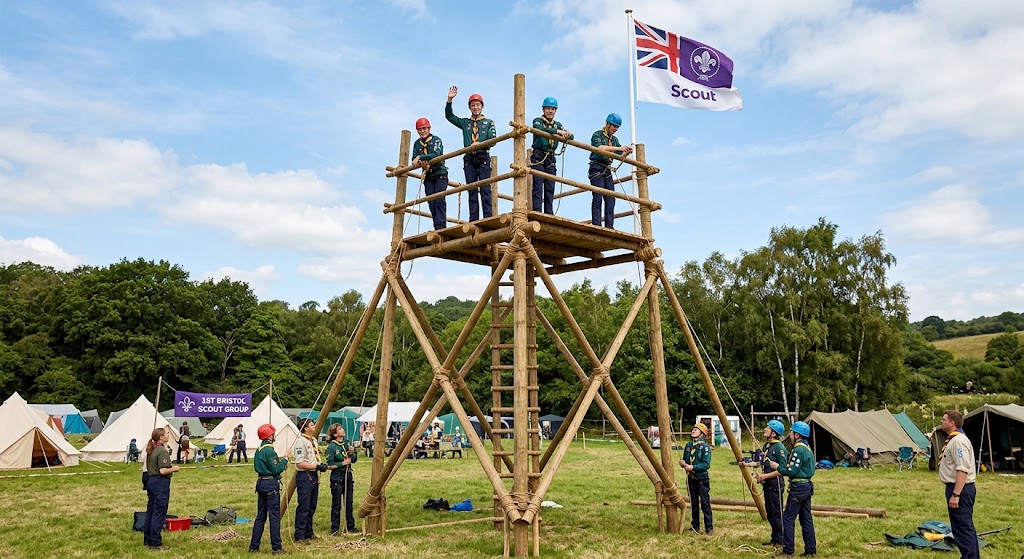
There is something satisfying about arriving at camp with little more than some rope, a few useful tools and whatever suitable materials you can find around you, then turning the campsite into something that actually works for you.
A simple tripod can become a kitchen. A few poles can turn into a gear rack. With the right design, you can create somewhere to sit, somewhere to wash, somewhere to dry wet equipment and even a raised sleeping platform.
That’s the idea behind campcraft. Instead of bringing everything with you, you use practical skills to build useful things at camp.
We’ve created the Camp Furniture Blueprints tool to make these projects easier to try. Choose a project and you’ll get simple, text-based instructions that take you through the construction step by step.
Camp Furniture Blueprints
Choose a project below to see the simple construction steps.
Camp Furniture Blueprints
System Module v1.2 • Primitive Engineering Engine
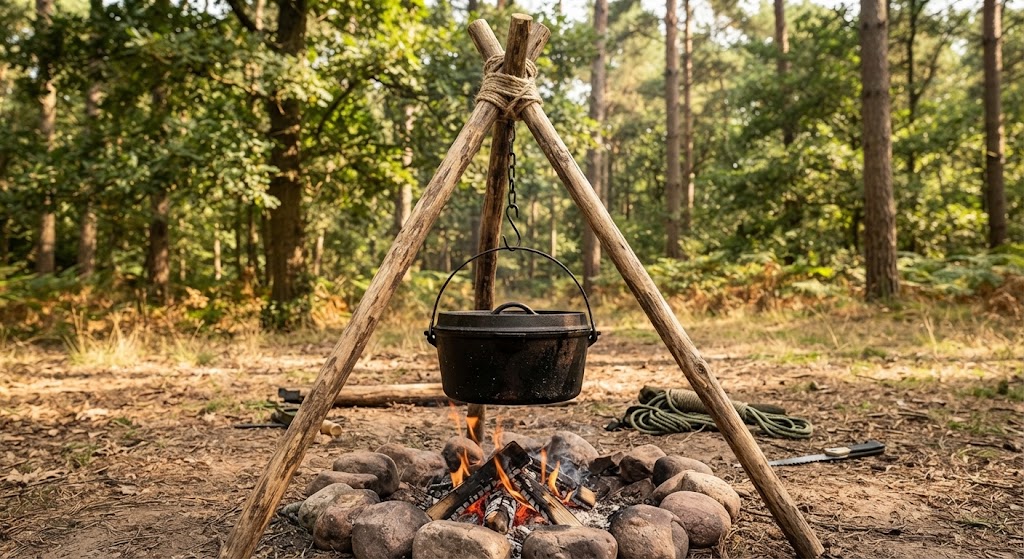
Tripod Camp Kitchen
A rigid freestanding frame designed to safely suspend cookpots and hold utensils over a fire zone.
Core Knots & Construction Sequence
- 1 Lashing Requirement: Lay the three 6ft spars parallel and apply a secure, slightly loose Tripod Lashing across the top tips.
- 2 Frame Deployment: Stand the tripod apex up and spread the legs symmetrically into a stable triangular base around your intended hearth area.
- 3 Crossbar Integration: Lash the horizontal 4ft crossbars to the outer legs using tight Square Lashings to form support shelves for pot hooks and tools.
The designs range from very simple camp gadgets that can be built quickly to larger projects that require more poles, rope and preparation.
Before building anything, make sure you have permission to collect or use natural materials and never cut living trees or damage vegetation.
1. Tripod Kitchen
A tripod kitchen gives you a useful place to organise cooking equipment around the campfire.
The basic structure uses three strong poles lashed together at the top, with additional horizontal poles creating shelves or hanging points.
It’s a great introduction to campcraft because you can start with a simple tripod and gradually add features as your skills improve.
2. Raised Gear Rack
A raised gear rack keeps equipment off the ground and makes a campsite considerably easier to organise.
Wet clothing, backpacks and other equipment can be placed where they are less likely to get covered in mud or accidentally stood on.
It is particularly useful on longer camps where equipment starts spreading everywhere.
3. Billy-Can Crane
A billy-can crane allows you to suspend a cooking pot over a fire and adjust its position or height.
This is a classic campcraft project and a good opportunity to practise strong lashings and secure construction.
Always make sure the crane is stable before hanging a hot or heavy billy can from it.
4. Reflector Bench
A simple camp bench gives you somewhere to sit around the fire rather than having everyone balancing on logs or sitting directly on the ground.
Position it carefully so that people remain a safe distance from the fire and don’t create a trip hazard around the cooking area.
5. Wilderness Tool Rack
A tool rack keeps axes, saws and other camp equipment organised rather than scattered around the campsite.
Keeping tools in one dedicated location also makes it much easier to see where everything is and reduces the chance of someone accidentally stepping on or tripping over equipment.
6. Primitive Cob Oven
A primitive cob oven is a much more ambitious campcraft project.
It uses a mixture of natural materials to create an insulated cooking chamber capable of retaining heat from a fire.
Because construction and firing require considerably more time than the smaller projects in this list, it is best treated as a project for an established camp rather than something to throw together during a short overnight trip.
7. Fire Reflector Wall
A fire reflector wall can be positioned behind a campfire to reflect heat back towards the seating or cooking area.
It also introduces an important campcraft principle: the position and shape of your campsite structures can make a big difference to how effectively you use a fire.
Build it securely and keep combustible materials appropriately positioned around the fire.
8. Camp Washing Station
A washing station gives you a dedicated place to wash hands, equipment or cooking items without turning the whole campsite into a muddy mess.
Keeping washing activities away from drinking-water collection points and natural watercourses is particularly important.
9. Tripod Wash Station
A tripod can also be turned into a simple washing station.
A container can be suspended from the structure at a convenient height, creating a practical hands-free or controlled water supply.
It’s a straightforward project that demonstrates how the same basic tripod design can be adapted for completely different jobs around camp.
10. Tripod Wash Basin
Instead of suspending water alone, a tripod can support a basin at a useful working height.
This can make washing dishes or cleaning equipment much easier than repeatedly crouching beside a stream or water container.
Always dispose of wastewater responsibly and away from natural watercourses.
11. Wilderness Latrine
A wilderness latrine is designed to provide a designated place for human waste where normal toilet facilities aren’t available.
This is one project where location matters just as much as construction.
It must be positioned appropriately away from water, campsites and areas where people are likely to walk, and local land-management rules must always be followed.
12. Raised Bed Platform
A raised bed platform lifts your sleeping area above the ground.
It can provide additional comfort and insulation and is an excellent demonstration of more advanced campcraft construction.
However, this is a substantial structure and requires careful construction. It should only be built where you have permission and where the ground and materials can support it without causing environmental damage.
13. Swivel Grill Crane
A swivel grill crane provides an adjustable way of positioning cookware over a fire.
The ability to swing the grill away from the flames can make cooking and checking food considerably easier.
As with any fire structure, stability is critical. A collapsing crane carrying hot food or cookware can cause serious burns.
14. Water Filter Tower
A water filter tower uses height to help organise a gravity-fed water filtration setup.
The upper container holds the untreated water while filtered water collects below.
The tower must be stable and the filtration system itself must be suitable for the type of water being treated. Never assume that simply passing water through a homemade filter makes it safe to drink.
15. Campfire Tripod Chair
A tripod chair provides a simple seat using three supporting poles and a suitable seating surface.
It is a fun campcraft project because it combines practical construction with something you’ll actually use around camp.
Make sure the finished chair is stable before sitting on it and inspect the lashings regularly.
16. Pack Frame Hanger
A pack frame hanger gives you somewhere to store a backpack or other equipment above the ground.
Keeping packs off wet ground can help protect them from moisture, mud and insects while also making them easier to access.
It is another small project that can make a campsite feel considerably more organised.
17. Wood Drying Rack
A wood drying rack allows you to keep firewood raised above damp ground while allowing air to circulate around it.
Dryer wood generally makes much better firewood, so a simple rack can be surprisingly useful during a longer camp.
Position it safely away from the fire and don’t overload the structure.
Why Build Camp Furniture?
Camp furniture isn’t just about making a campsite look impressive.
These projects teach some genuinely useful outdoor skills:
- Choosing suitable materials
- Measuring and positioning structures
- Making secure lashings
- Understanding load and balance
- Working safely with tools
- Building around the available space
- Solving practical problems
- Making a campsite more comfortable
- Working as a team
The more you build, the more you start looking at a campsite differently. Instead of seeing a collection of poles, rope and open space, you start seeing possibilities.
Start With Simple Campcraft
You don’t need to begin with a raised bed platform or a full camp kitchen.
Start with something small such as a gear rack, wood drying rack or simple tripod. Once you’re comfortable with basic lashings and construction, move on to more complicated projects.
One of the best things about campcraft is that every project teaches you something that can be used in the next one.
Campcraft Is About Making Camp Work for You
The best camp gadgets aren’t necessarily the most complicated.
Sometimes the most useful thing you can build is simply a place to hang your wet jacket, somewhere to keep your cooking equipment organised or a sturdy seat beside the fire.
That’s what makes camp furniture such a useful outdoor skill. You’re not just following a blueprint — you’re learning how to look at a problem at camp and build a practical solution with what you have available.
Use the Camp Furniture Blueprints tool to choose a project, gather the materials you are permitted to use and have a go.
Once you’ve built a few of them, you may find yourself designing your own.
🔒Ready to test your survival skills?
Join Survival Guides UK for free, complete challenges, earn badges and increase your Survival Level.
JOIN FREE →
CRAIG BURR
FOUNDER · SURVIVAL GUIDES UK
I'm Craig, the person behind Survival Guides UK. I created SGUK because I wanted somewhere people could learn real outdoor skills in a practical, straightforward way — from lighting a fire and tying knots to navigation, campcraft and everything in between.
You can read more about the story behind SGUK here as well as our approach here.