How to Set Up a Tent: A Beginner’s Guide for Children
Setting up a tent is one of the most useful camping skills you can learn. The first few times it can seem confusing, especially when you’re faced with poles, pegs and a bundle of fabric, but it becomes much easier once you understand the basic process.
You don’t need to do everything perfectly straight away. Start by learning how your particular tent works, practise putting it up with a parent or responsible adult, and you’ll soon become much more confident.
What You’ll Learn
By the end of this guide, you should understand:
- How to choose a suitable place for your tent
- How to lay out your tent before putting it up
- How tent poles and pegs are used
- How to make your tent secure
- How to check your tent before using it
Choose a Good Place
Before you unpack the tent, look carefully at where you’re going to put it.
Choose ground that is reasonably flat and free from obvious stones, sticks, branches and other things that could damage the tent or make sleeping uncomfortable. Avoid places where water could collect if it rains, such as dips in the ground.
You should also think about what is above and around you. Don’t pitch directly underneath dead branches or somewhere that could be affected by falling objects, flooding or other hazards.
If you’re camping at an organised campsite, follow the campsite’s instructions and use the areas provided for tents.
Lay Everything Out
Take the tent out of its bag and lay the main parts on the ground.
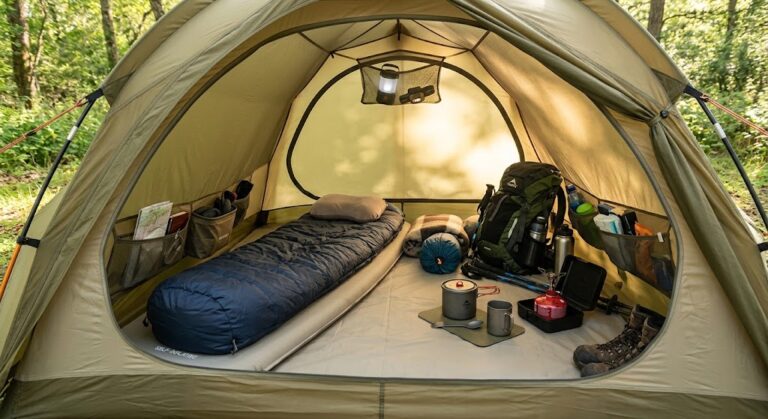
Most tents will have the tent fabric, poles, pegs and possibly a separate groundsheet or flysheet. The exact parts vary between tents, so it’s worth knowing how yours works before you head out camping.
Don’t start putting poles together while everything is still tangled up in the bag. Spread the equipment out where you can see it and identify each part.
Position the Tent
Lay the tent in the direction you want it to face.
Think about where the entrance will be and which way you want it pointing. If there’s a strong wind, you may want to consider how the tent is positioned rather than simply putting the door wherever looks convenient.
If your tent has a separate footprint or groundsheet, place it underneath the tent as directed by the manufacturer.
Put the Poles Together
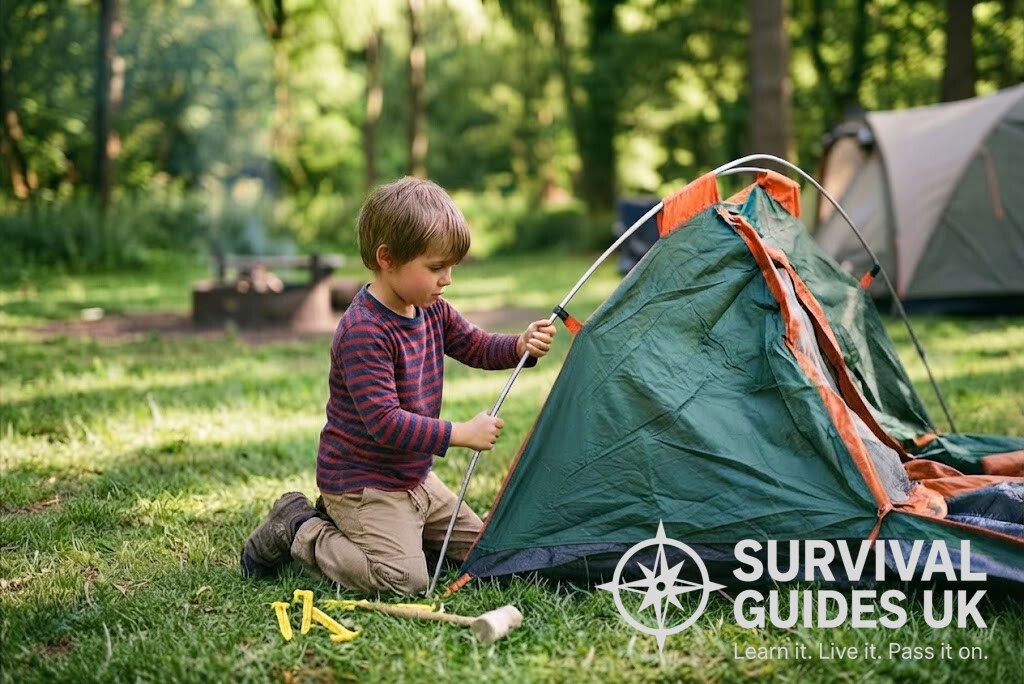
Most modern tents use flexible poles that join together to create the frame.
Carefully connect the sections rather than forcing them together. Once the poles are assembled, follow your tent’s instructions to attach them to the correct sleeves, clips or fittings.
This is usually the part that feels most complicated the first time, so don’t worry if you need help. Every tent is slightly different.
Raise the Tent
Once the poles are in the correct position, they will begin to give the tent its shape.
Work carefully and make sure the poles are sitting in the fittings or clips properly. Don’t force anything if it doesn’t seem to fit. Stop and check the instructions instead.
If you’re setting up a tent with someone else, it can be much easier to have one person hold or position part of the tent while the other works on the poles.
Put the Pegs In
Once the tent is standing, use the pegs to secure it to the ground.
Push or hammer the pegs into the ground as directed by the tent manufacturer, taking care not to damage the tent or hurt yourself. Pegs should hold the tent firmly without pulling the fabric excessively tight.
Don’t try to put your foot on a peg or hit it with something unsuitable. If the ground is very hard, ask a responsible adult for help.
Check the Tent
Before you start using the tent, walk around it and check everything.
Make sure the tent is properly attached to the poles, the pegs are secure and the doors and zips work correctly. If your tent has guy lines, make sure they are positioned properly and pulled tight enough to help support the tent.
The fabric should be reasonably smooth without being stretched excessively.
It’s also worth checking that the tent isn’t sitting in a place where rainwater could run underneath it.
Practise Before Camping
One of the best ways to learn is to practise at home.
Put the tent up in the garden with a parent or responsible adult and then take it down again. You can learn where each pole goes, how the clips work and how everything fits back into the bag without the pressure of trying to work it out for the first time at camp.
After a few attempts, you’ll probably find that setting up the tent becomes much quicker.
Final Tip
Don’t judge yourself by how quickly someone else can put up a tent. Learn the process properly first, then speed will come naturally.
Take your time, follow the instructions for your particular tent and ask for help when you need it. Being able to set up your own tent is a great step towards becoming more confident and capable outdoors.
🔒Ready to test your survival skills?
Join Survival Guides UK for free, complete challenges, earn badges and increase your Survival Level.
JOIN FREE →
CRAIG BURR
FOUNDER · SURVIVAL GUIDES UK
I'm Craig, the person behind Survival Guides UK. I created SGUK because I wanted somewhere people could learn real outdoor skills in a practical, straightforward way — from lighting a fire and tying knots to navigation, campcraft and everything in between.
You can read more about the story behind SGUK here as well as our approach here.