How to Make a Smoke Signal
A column of smoke can be visible from much further away than a person, particularly in open countryside where there are few other sources of smoke. In an emergency, a controlled smoke signal can therefore be useful for attracting the attention of rescuers or other people who may be able to help.
Smoke signalling is mainly useful during daylight. It also requires a fire, so it should only ever be attempted where fires are permitted and where you can control the fire safely.
Decide Whether a Smoke Signal Is Appropriate
Before making smoke, think about who you are trying to attract and whether anyone is likely to see it.
Smoke is most useful in open areas where it can rise above vegetation and be seen from a distance. Dense woodland, heavy rain, fog and strong wind can make it much less effective.
If you already have a mobile phone and can contact the emergency services, do that first. A smoke signal should support your efforts to get help rather than replace a reliable means of communication.
Choose a Safe Location
If you already have a safe, established fire area, use it rather than starting a new fire unnecessarily.
The location should be clear of dry grass, overhanging branches, tents and other flammable materials. Make sure you have a safe way of controlling and extinguishing the fire.
Never make a smoke signal inside a tent, shelter, vehicle or other enclosed space. Smoke can quickly become dangerous and carbon monoxide can build up.
Start With a Small Controlled Fire
You need a properly established fire before attempting to create a smoke signal.
If you are already using a fire safely, you can use that rather than starting another one. Keep the fire small and controlled, with suitable fuel available and a means of extinguishing it close at hand.
Only light a fire where you have permission and where local conditions allow it. Never use a smoke signal during a period of high wildfire risk or when vegetation is exceptionally dry.
Create Smoke With Damp Material
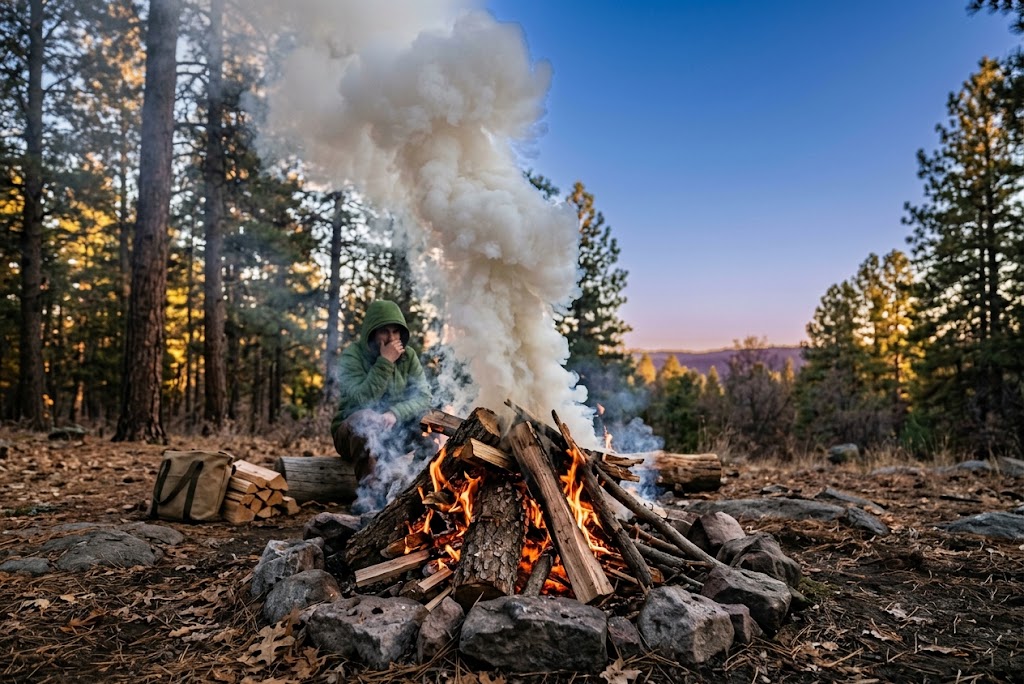
Once you have a stable fire, adding suitable damp organic material can produce more smoke.
Damp leaves, grass or similar material can smoulder rather than burn rapidly, producing a visible column of smoke. Add material gradually rather than covering the fire completely.
The aim is to produce visible smoke while keeping the fire under control.
Don’t use plastics, rubber, petrol, aerosols or other manufactured materials to create smoke. Burning them can produce dangerous fumes and unpredictable fires.
Make the Smoke Easy to See
The best smoke signal is one that contrasts with the surrounding landscape.
In daylight, a darker column of smoke can be easier to distinguish against a bright sky. The important thing is not to create the largest possible fire but to create a visible signal that can be maintained safely.
If the wind is strong, smoke may be blown sideways rather than rising vertically. Position yourself safely and consider where the smoke is likely to travel before adding more material.
Use Smoke Alongside Other Signals
Don’t rely on smoke alone.
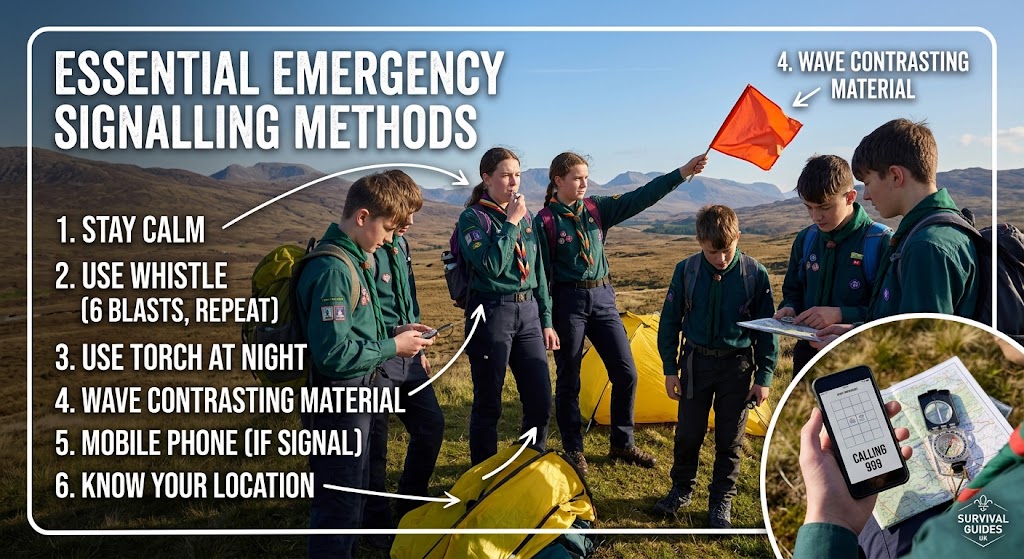
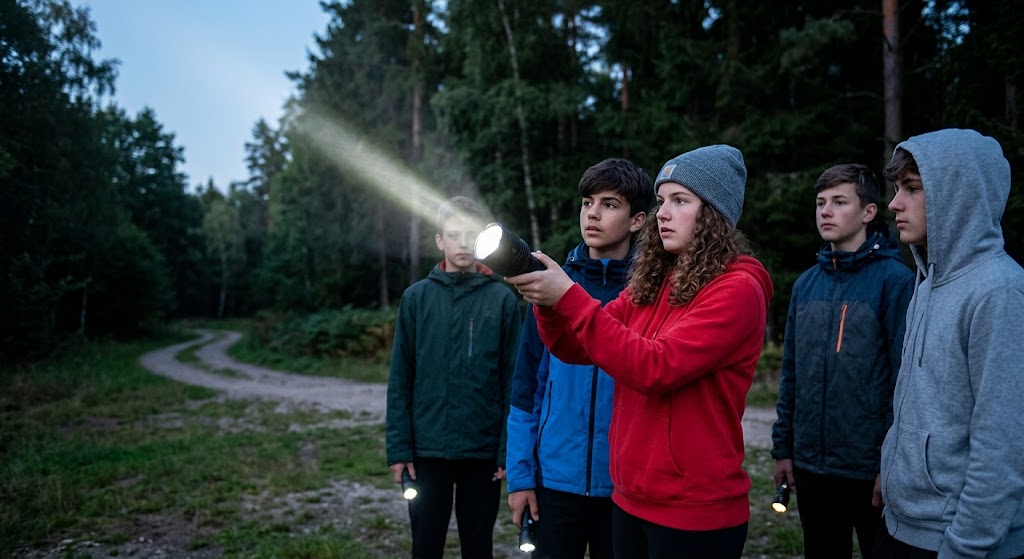
If you have a whistle, torch, phone, mirror or brightly coloured clothing, use the appropriate method alongside the smoke signal. Different signals work better in different conditions.
For example, a smoke signal may help a search team locate the general area, while a whistle or movement may help them identify your exact position.
Make Yourself Visible Too
Once you have created a smoke signal, stay somewhere safe where rescuers can see you if possible.
Wear or display bright clothing and use other appropriate visual signals when you see or hear people searching.
Don’t move away from the smoke unless there is a safety reason to do so. If you have already given rescuers your location, remaining there can make the search much easier.
Use More Than One Smoke Signal Carefully
If you are in a situation where multiple people are involved and you have enough safe fire arrangements, separate smoke signals can make your position more obvious.
However, don’t create several uncontrolled fires simply to make more smoke. One well-controlled signal is better than turning a rescue situation into a wildfire risk.
Watch the Wind
Wind can change the usefulness of a smoke signal very quickly.
Smoke may be blown into trees, across a slope or towards your own position. It can also carry sparks from the fire.
Keep yourself upwind where possible and never allow the smoke signal to spread into dry vegetation or towards buildings, tents or other combustible materials.
Extinguish the Fire Completely
Once the smoke signal is no longer needed, put the fire out completely.
Use plenty of water where available, stir the remains and continue adding water until everything is cold. Don’t simply leave a smoking pile of material behind.
Before leaving, check carefully for remaining embers.
A rescue signal should never become the cause of a second emergency.
Don’t Use Smoke Signals in Dangerous Conditions
Smoke signalling isn’t appropriate everywhere or in every weather condition.
Don’t light a fire in very dry vegetation, during a fire ban, near combustible materials or when strong winds could carry flames or embers.
If the conditions aren’t safe for a fire, use other signalling methods instead.
Practise Fire Safety First
Smoke signalling isn’t a skill to practise by creating unnecessary fires.
If you want to learn the technique, learn it as part of responsible fire-lighting and outdoor fire-safety training. Understanding how to build, control and extinguish a safe fire is much more important than simply knowing how to make smoke.
Remember the Basic Rule
Smoke is a signal, not a rescue plan.
If you need help, contact the emergency services when possible, give them your location and use smoke alongside other appropriate signals.
Only create smoke from a small, controlled and permitted fire, never use dangerous materials to produce smoke, and always extinguish the fire completely when you are finished.
🔒Ready to test your survival skills?
Join Survival Guides UK for free, complete challenges, earn badges and increase your Survival Level.
JOIN FREE →
CRAIG BURR
FOUNDER · SURVIVAL GUIDES UK
I'm Craig, the person behind Survival Guides UK. I created SGUK because I wanted somewhere people could learn real outdoor skills in a practical, straightforward way — from lighting a fire and tying knots to navigation, campcraft and everything in between.
You can read more about the story behind SGUK here as well as our approach here.