How to Use Bright Colours to Help Rescuers Find You
If you need to be found outdoors, making yourself easy to see can make a huge difference. Bright colours can stand out against grass, woodland, rocks, snow and other natural backgrounds, giving rescuers another clue to your location.
This is one of the simplest signalling techniques because you may already be wearing or carrying something suitable. A brightly coloured jacket, rucksack, survival blanket or piece of equipment can become a useful visual signal when you need attention.
Choose Bright Colours for Outdoor Activities
When you’re buying clothing or equipment for walking, camping or other outdoor activities, think about visibility as well as comfort and weather protection.
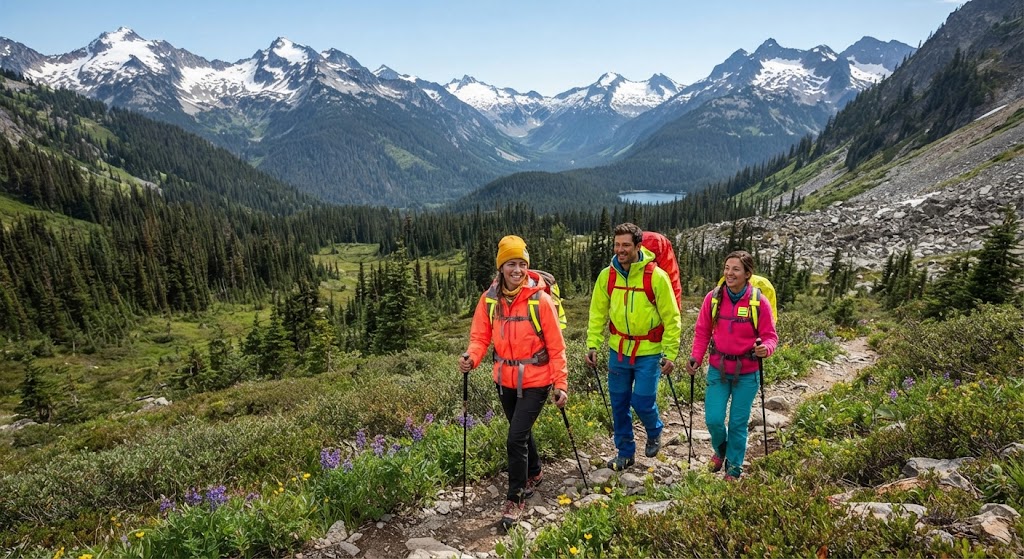
Bright red, orange, yellow and similar high-visibility colours can be easier to spot against many natural backgrounds than dark green, brown or black.
This doesn’t mean every item you carry needs to be fluorescent. Even one brightly coloured layer or piece of equipment can give rescuers something obvious to look for.
Think About Contrast
The best colour depends partly on what is around you.
A bright colour that stands out against woodland may be less noticeable against another background. Think about the landscape and choose the most contrasting colour or item you have available.
If you have several bright items, use them together rather than leaving them scattered around the area.
Make Yourself Visible
If you are lost or waiting for rescue, stay somewhere that is reasonably safe and visible.
If you can safely move to an open area with a clear view from above or from nearby paths, this may make you easier to spot. Don’t move simply for the sake of being visible if doing so would expose you to cliffs, traffic, flooding, severe weather or another hazard.
Your safety comes first.
Use Clothing as a Signal
Your clothing can be one of your easiest signalling tools.
A bright waterproof jacket, hat, fleece or other layer can be much easier for someone searching to spot than a person wearing dark colours.
If you have a bright outer layer that you don’t normally wear, don’t hide it away in the bottom of your rucksack. Keep important emergency equipment accessible so that you can use it quickly if needed.
Display Bright Equipment
You can also use bright equipment to make your location more obvious.
A brightly coloured rucksack, tent, tarp or survival blanket can provide a larger area of colour than a person alone.
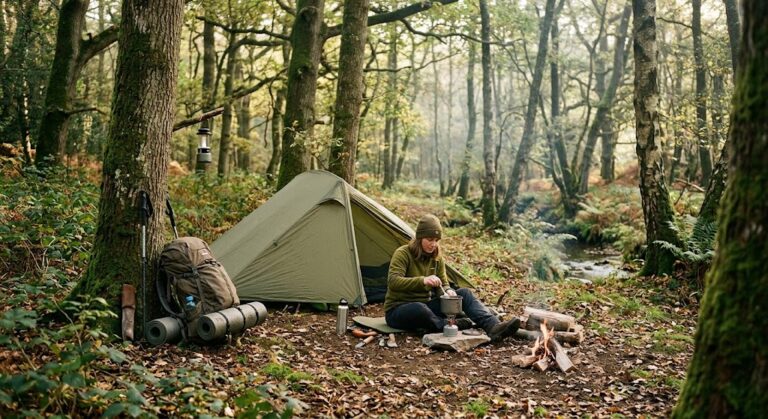
If you are setting up a temporary waiting point for rescuers, position bright equipment where it can be seen from the likely direction of approach, provided you can do so safely.
Use Movement to Attract Attention
A bright colour can help someone notice you, but movement can help attract their attention.
If you can see a search team, helicopter, vehicle or other potential rescuer, deliberately move or wave a bright item to make it clear that you are there.
Don’t wave continuously if it is exhausting or unnecessary. Once you know you have been seen, conserve your energy and follow the instructions you receive.
Make a Bright Signal Larger
A small bright object can be difficult to see from a distance.
If you have suitable clothing or equipment, spread it out rather than leaving it folded or bundled up. A large area of colour is easier to distinguish than a small patch.
A bright survival blanket can be particularly useful because it can provide a much larger visible surface than an item of clothing.
Don’t Rely on Colour Alone
Bright colours are only one way of making yourself easier to find.
Weather, vegetation, distance, darkness and the position of the sun can all affect how visible you are. A bright jacket hidden under trees may still be difficult to see from above.
Combine colour with other appropriate signalling methods such as a whistle, torch, phone, radio, mirror or other signalling equipment.
If you are carrying a whistle, three repeated blasts are widely recognised as a distress signal.
Think About Night-Time Visibility
Bright colours are much less useful after dark because rescuers cannot see colour in the same way.
At night, a torch, headtorch or other light source may be far more useful.
If you are waiting for rescue after dark, use your light to attract attention when appropriate, but preserve your battery if you don’t know how long you will need it.
Make Your Location Obvious
If you have contacted rescuers, don’t unnecessarily move away from the location you gave them.
Make your position as visible as possible using the equipment you have and listen for instructions from the rescue team.
If you hear rescuers but cannot see them, use appropriate signals to help them work out where you are.
Stay Safe While Signalling
Never put yourself in greater danger just to become easier to see.
Don’t climb onto exposed rocks, stand near cliff edges, enter open water or cross dangerous terrain simply because you think a rescuer might spot you more easily.
A good signalling position is one where you are safe, visible and able to remain there until help arrives.
Make Visibility Part of Your Kit
When choosing outdoor clothing and equipment, visibility is worth considering alongside weight, waterproofing and durability.
A bright jacket, whistle and torch take up little space but can become extremely useful if something goes wrong.
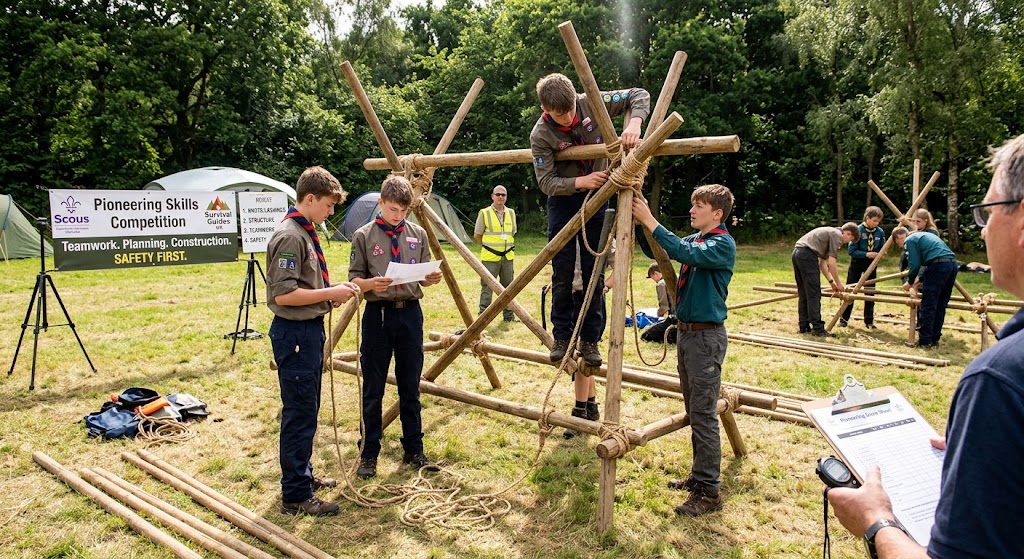
For children and young people in particular, brightly coloured outdoor clothing can make it easier for leaders or parents to keep track of them during activities.
Practise Thinking Like a Rescuer
When you’re outdoors, occasionally stop and look at your surroundings from the perspective of someone searching for you.
Ask yourself what colour you would be able to see from a distance, which areas would provide the best contrast and where you would be most difficult to spot.
It is a simple habit, but it helps you understand why staying visible matters when something goes wrong.
Remember the Basic Rule
Make yourself easy to see without putting yourself in danger.
Wear or display bright colours, use large areas of colour where possible and combine visual signals with other methods such as whistles, lights and phones.
If you ever need rescuing, being safe, visible and easy to locate can make the search much easier.
🔒Ready to test your survival skills?
Join Survival Guides UK for free, complete challenges, earn badges and increase your Survival Level.
JOIN FREE →
CRAIG BURR
FOUNDER · SURVIVAL GUIDES UK
I'm Craig, the person behind Survival Guides UK. I created SGUK because I wanted somewhere people could learn real outdoor skills in a practical, straightforward way — from lighting a fire and tying knots to navigation, campcraft and everything in between.
You can read more about the story behind SGUK here as well as our approach here.