Fire Lighting With a Ferrocerium Rod
Activity Overview
Difficulty: Moderate
Time: 20–30 minutes
Location: Scout campsites and suitable outdoor fire areas
Best for: Cubs, Scouts, Explorers, Patrol Leaders and adult leaders
Skills: Fire lighting, ferrocerium rod use, tinder preparation, fire safety and campcraft
A ferrocerium rod, often called a ferro rod or fire steel, produces hot sparks when a suitable striker is drawn firmly across its surface.
The key to successful fire lighting is having very dry, easily ignited tinder ready before making the sparks.
Build the fire only where fires are permitted, keep the area controlled and have suitable means of extinguishing the fire available.
What You’ll Learn
You’ll learn how to prepare tinder and use a ferrocerium rod to produce sparks safely.
You’ll also learn why spark direction, tinder preparation and fire structure are important, and how to develop a small flame into a controlled campfire.
🔴 SAFETY – HIGH RISK
A ferrocerium rod produces extremely hot sparks that can ignite dry grass, clothing and other combustible materials.
Use it only in an appropriate fire area and under suitable supervision.
Keep sparks away from tents, dry vegetation, fuel containers and other combustible materials.
Wear suitable clothing and secure loose hair and clothing before starting.
Have water or another suitable means of extinguishing the fire immediately available.
Never leave the resulting fire unattended.
Equipment
You’ll need a ferrocerium rod and its appropriate striker.
You’ll also need dry tinder, small kindling and suitable fuel wood.
A suitable fire area or approved fire container is required.
Keep water or another appropriate means of extinguishing the fire close by.
Prerequisites
Check that fires are permitted at the campsite.
Scouts should understand basic fire safety and know how the fire area is controlled.
Practise handling the ferrocerium rod without producing sparks before attempting to light tinder.
Instructions
1. Prepare the Fire Area
Use an established fire area where one is provided.
Clear unnecessary combustible material from around the fire.
Check the weather and wind conditions.
Don’t attempt the activity if conditions make fire unsafe or difficult to control.
2. Prepare Your Tinder
Have the tinder ready before producing any sparks.
Choose material that catches easily from a spark, such as suitable dry natural tinder or an appropriate commercial firelighter.
Fine, dry material generally works better than large pieces of wood.
3. Prepare the Kindling
Arrange progressively larger pieces of dry kindling nearby.
This means that once the tinder catches, you can develop the flame without having to search for materials.
Keep the fuel organised and away from accidental sparks.
4. Hold the Ferrocerium Rod Securely
Hold the rod firmly.
Position the striker so that you can produce sparks in a controlled direction towards the tinder.
Keep your other hand and body away from the spark path.
5. Practise the Spark
Before trying to light the tinder, make a few controlled strokes away from the tinder.
Get comfortable with the movement and make sure the sparks are travelling in the intended direction.
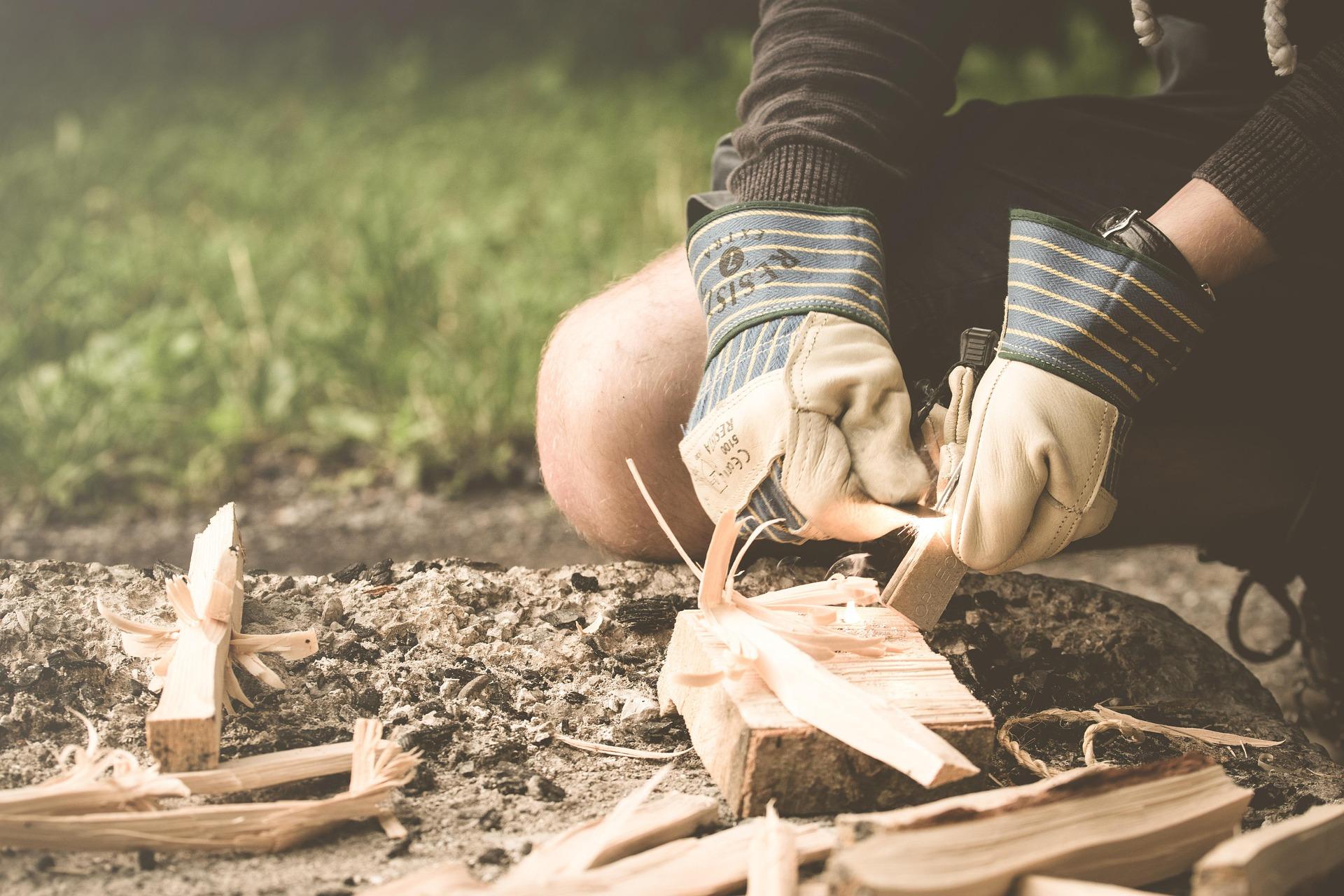
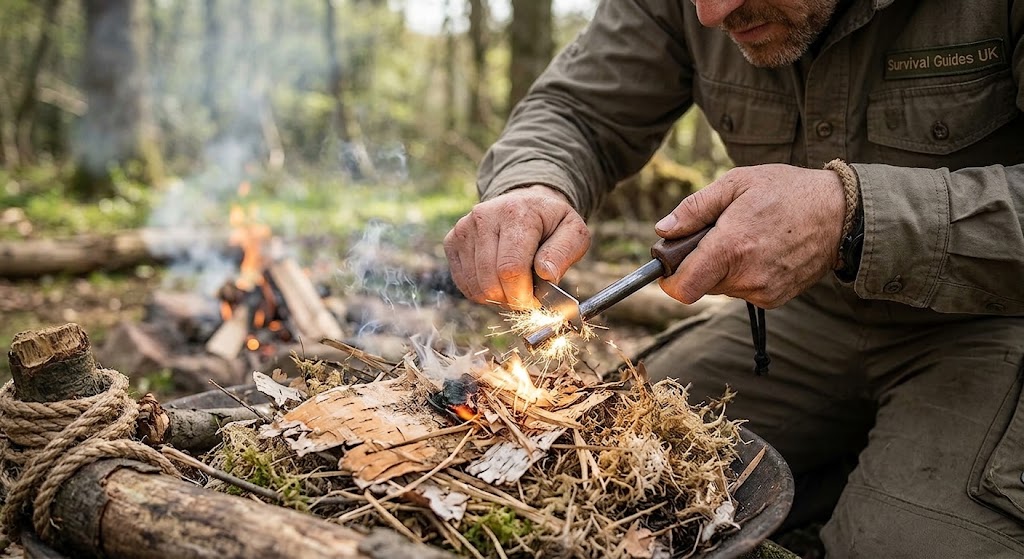
6. Produce Sparks Onto the Tinder
Position the rod close enough to the tinder for the sparks to reach it.
Draw the striker firmly along the rod to produce a shower of sparks.
Avoid wild or uncontrolled movements.
The objective is to direct concentrated sparks onto the prepared tinder.
7. Protect the Initial Ember
Once a spark catches, avoid immediately disturbing the tinder.
Carefully encourage the small ember or flame to develop.
Gentle airflow can help, but don’t blow aggressively into the material or put your face close to it.
8. Add Fine Kindling
Once the tinder has developed a flame, add small pieces of dry kindling.
Place them carefully so that they don’t smother the flame.
Leave enough space for air to circulate.
9. Build the Fire Gradually
As the kindling catches, gradually introduce larger pieces of fuel.
Don’t overload the fire.
A well-established flame should be capable of igniting the next size of fuel without being buried underneath it.
10. Keep the Striker Controlled
The striker can produce sparks even when you’re not attempting to light the fire.
Keep it pointed and handled deliberately.
When finished, put the ferrocerium rod and striker somewhere safe where they cannot accidentally produce sparks.
11. Manage the Fire
Once established, keep the fire within its designated area.
Monitor its size and behaviour.
Don’t deliberately create large flames or add unsuitable materials.
Keep people and combustible equipment at a safe distance.
12. Extinguish the Fire
When the activity is finished, extinguish the fire thoroughly according to the campsite’s procedures.
Don’t rely on the absence of visible flames.
Check for remaining embers and make sure they cannot reignite.
13. Check the Site
Before leaving, inspect the fire area.
Make sure there are no remaining hot materials or smouldering fuel.
Leave the area in accordance with the campsite’s fire arrangements.
Getting More Sparks
If you’re struggling to produce sparks, check your technique rather than simply striking harder.
Keep the ferrocerium rod secure and use a firm, controlled stroke with the striker.
The striker should make good contact with the rod.
A properly prepared tinder bundle makes a significant difference; even a good shower of sparks won’t help much if the tinder is damp or unsuitable.
Ferrocerium Rod vs Matches
A ferrocerium rod requires more technique than a match, but it is a useful outdoor skill because it teaches Scouts to prepare the fire properly rather than relying on a single flame.
A match provides an immediate flame.
A ferrocerium rod provides sparks, so the tinder has to be capable of catching them.
This makes it particularly useful for teaching preparation, patience and fire management.
Using a Ferrocerium Rod in Wet Conditions
Wet weather makes the activity more challenging because tinder and kindling may be damp.
Keep prepared tinder protected from rain and look for suitable dry material where collection is permitted.
Don’t compensate for poor tinder by producing increasingly large quantities of sparks or building a larger fire.
If suitable dry materials aren’t available, don’t light the fire.
Final Tip
With a ferrocerium rod, the sparks are the easy part—the preparation is the skill.
Prepare dry tinder, arrange your kindling before you start and practise directing a controlled shower of sparks onto the tinder.
Once it catches, build the fire gradually and keep it supervised until it has been completely extinguished.
🔒Ready to test your survival skills?
Join Survival Guides UK for free, complete challenges, earn badges and increase your Survival Level.
JOIN FREE →
CRAIG BURR
FOUNDER · SURVIVAL GUIDES UK
I'm Craig, the person behind Survival Guides UK. I created SGUK because I wanted somewhere people could learn real outdoor skills in a practical, straightforward way — from lighting a fire and tying knots to navigation, campcraft and everything in between.
You can read more about the story behind SGUK here as well as our approach here.