Campfire Roasting
Activity Overview
Difficulty: Beginner
Time: 30–60 minutes
Location: Suitable campfire or outdoor cooking area
Best for: Cubs, Scouts and Explorers
Skills: Camp cooking, fire safety, food hygiene, heat control, teamwork
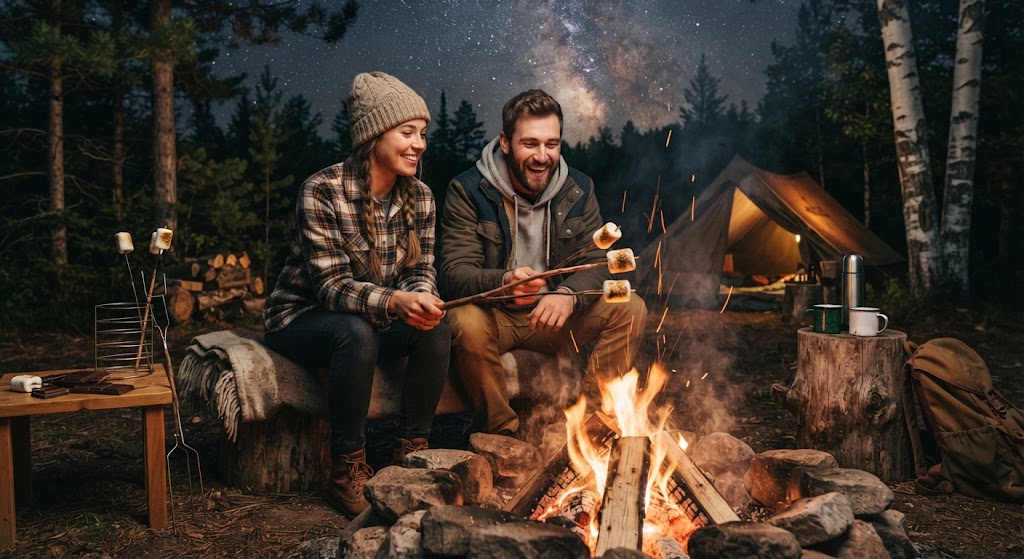
Campfire roasting is a simple outdoor cooking method where food is held over the heat of a campfire using a suitable skewer, roasting fork or other approved equipment.
It is one of the easiest ways to introduce Scouts to cooking over a fire, but the food needs to be positioned carefully to prevent it burning on the outside while remaining raw inside.
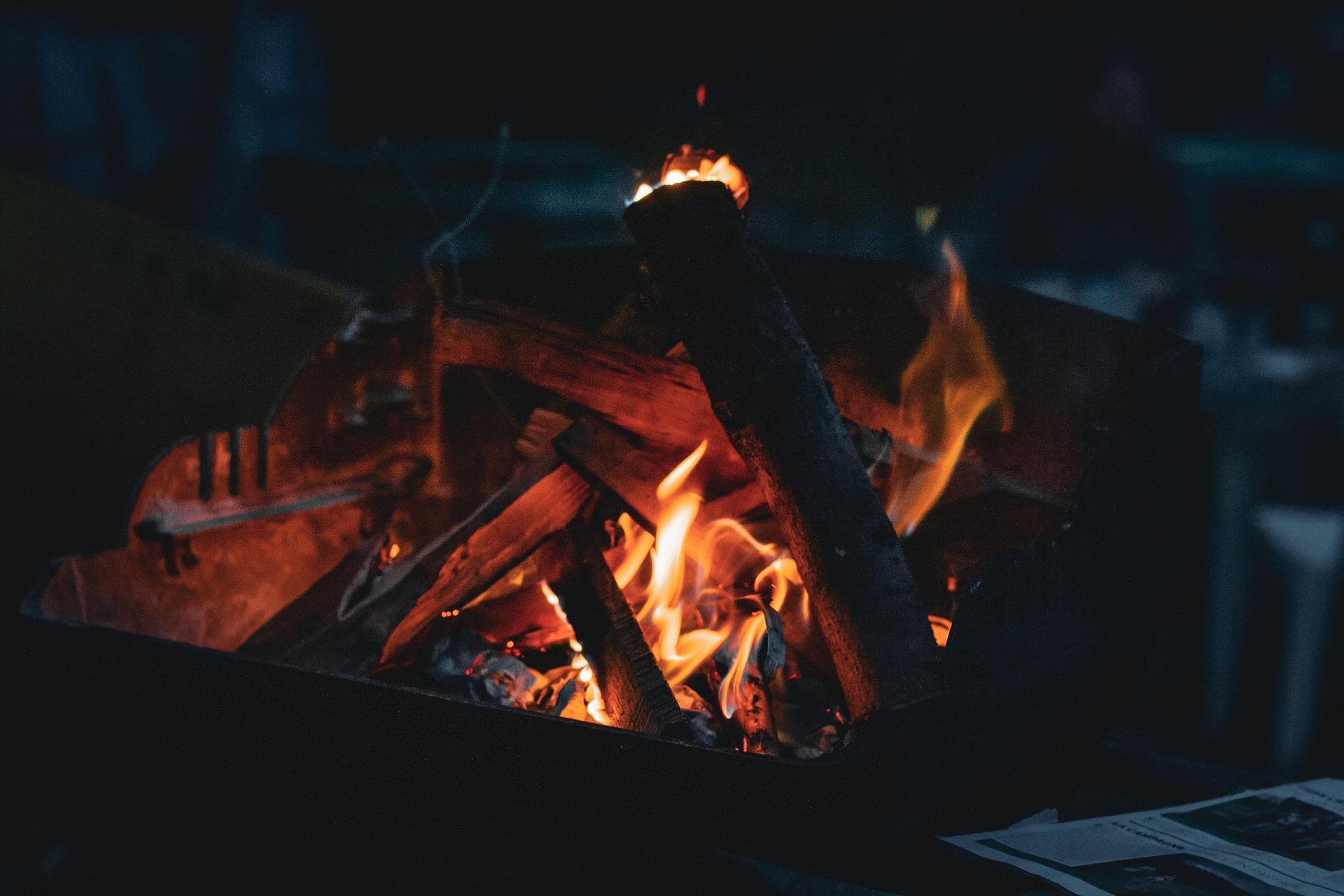
A good roasting fire should have steady heat and manageable flames, rather than a large uncontrolled fire.
What You’ll Learn
You’ll learn how to prepare a suitable campfire for roasting, choose appropriate foods and position them at a safe distance from the heat.
You’ll also practise turning food regularly, judging when it is cooked and handling hot cooking equipment safely.
Campfire roasting is a useful introduction to outdoor cooking because Scouts can see how changing the distance from the fire affects cooking temperature.
🟡 SAFETY – MODERATE RISK
Campfires, hot cooking equipment and freshly cooked food can all cause burns. Keep the cooking area organised and make sure Scouts have enough space to move safely without pushing or reaching across other people.
Use suitable roasting sticks or cooking forks and check that they are secure before placing food over the fire. Never point a roasting stick towards another person.
Avoid leaning across the fire and keep hands, loose clothing and equipment away from the flames. Food can also become very hot, so allow it to cool before eating.
Raw meat must be kept separate from cooked food and cooked thoroughly before eating. Wash hands and use clean utensils and equipment throughout.
An adult should supervise the fire and the activity, and the fire must never be left unattended.
Equipment
You’ll need a suitable campfire, roasting sticks or long-handled cooking forks and the food you intend to cook.
A heat-resistant glove can be useful when handling hot equipment, while plates, utensils and clean containers should be available for preparing and serving food.
If using wooden roasting sticks, choose clean, untreated wood and prepare the end carefully. Avoid painted, treated or chemically contaminated wood.
Prerequisites
Scouts should understand basic campfire safety and know how to behave around an open fire.
They should also understand basic food hygiene, particularly the importance of keeping raw and cooked food separate.
Instructions
1. Prepare the fire
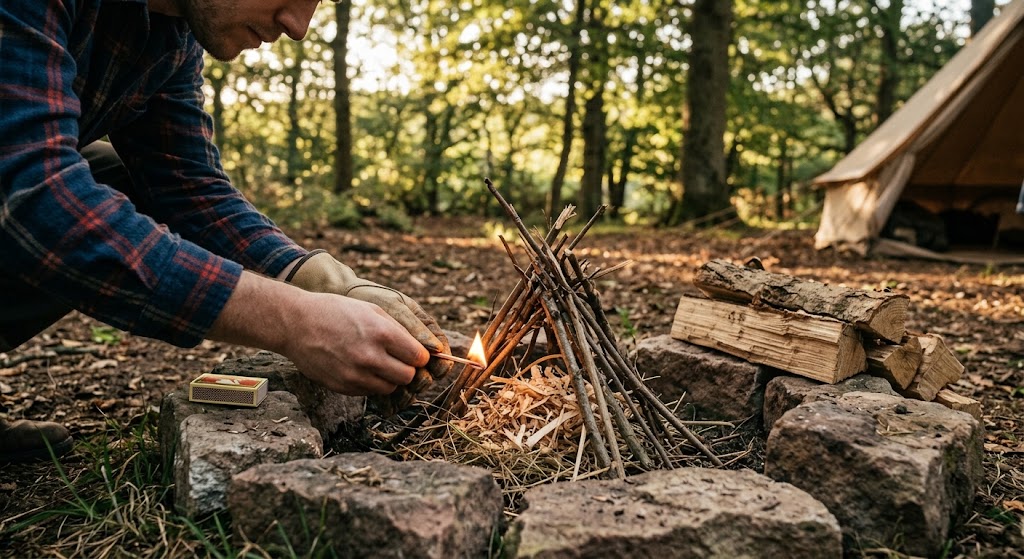
Build and light a suitable campfire and allow it to develop into a steady cooking fire.
You don’t need a huge fire. A manageable flame and a good bed of glowing embers will provide more useful heat.
2. Prepare the food
Cut the food into suitable-sized pieces before approaching the fire.
For beginners, choose foods that are easy to hold securely and don’t require complicated preparation.
3. Prepare the roasting equipment
Check that your roasting stick, fork or skewer is strong enough to hold the food securely.
If using a wooden stick, make sure it is clean and made from untreated wood.
4. Secure the food
Place the food securely onto the skewer or roasting fork.
Leave enough space between pieces for heat to circulate and make sure nothing can easily slide off into the fire.
5. Find the right position
Hold the food above the fire rather than directly in the largest flames.
Start further away from the heat and move closer if necessary. The food should sizzle and cook steadily without immediately blackening.
6. Turn the food regularly
Rotate the skewer slowly so the heat reaches all sides.
Regular turning helps prevent one side from burning while the rest remains undercooked.
7. Control the heat
Move the food further away if it begins to burn or smoke excessively.
If it is cooking too slowly, gradually move it closer to the embers. Learning to control the distance from the fire is an important part of campfire cooking.
8. Check that it is cooked
Check the centre of the food rather than relying only on its colour.
Meat, poultry and other foods that require thorough cooking must be completely cooked before eating.
9. Serve safely
Carefully remove the food from the roasting equipment and place it onto a clean plate or container.
Allow it to cool slightly before eating, particularly if it has been cooked directly over high heat.
10. Finish the fire
When everyone has finished cooking, clear away the food and equipment.
If the fire is no longer needed, extinguish it safely and make sure the embers are completely out before leaving the area.
Final Tip
Control the heat with distance. Moving food a little further from the flames can make the difference between a perfectly roasted meal and something burnt on the outside and raw in the middle.
🔒Ready to test your survival skills?
Join Survival Guides UK for free, complete challenges, earn badges and increase your Survival Level.
JOIN FREE →
CRAIG BURR
FOUNDER · SURVIVAL GUIDES UK
I'm Craig, the person behind Survival Guides UK. I created SGUK because I wanted somewhere people could learn real outdoor skills in a practical, straightforward way — from lighting a fire and tying knots to navigation, campcraft and everything in between.
You can read more about the story behind SGUK here as well as our approach here.