Camp Stove Safety
Activity Overview
Difficulty: Beginner
Time: 30–45 minutes
Location: Suitable outdoor cooking area
Best for: Scouts and Explorers
Skills: Stove safety, fuel handling, camp cooking, fire safety, risk awareness
Camp stoves provide a controlled way to cook outdoors, but they still involve flames, hot surfaces and potentially hazardous fuels. Safe stove use starts before the stove is lit and includes choosing the right location, checking the equipment, handling fuel correctly and knowing how to shut the stove down safely.
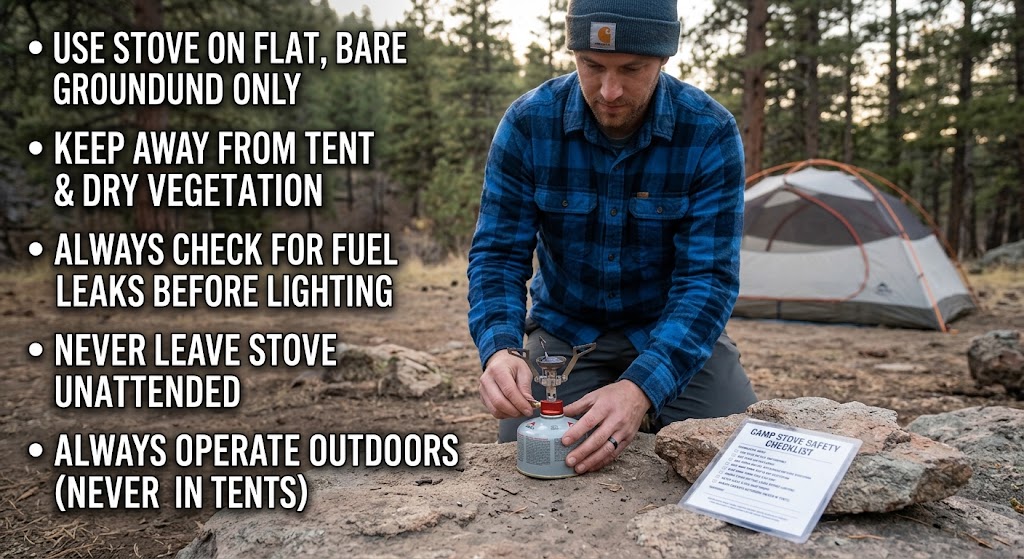
A camp stove should always be used on a stable, level, well-ventilated surface, away from tents, dry vegetation and other flammable materials. Never use a fuel-burning stove inside a tent or other enclosed space because of the risk of fire and carbon monoxide poisoning.
Scouts should understand how their particular stove works before using it and should follow the manufacturer’s instructions for lighting, fuel and operation.
What You’ll Learn
You’ll learn how to prepare a safe cooking area, inspect a camp stove before use and identify potential hazards before lighting it.
You’ll also learn how to position cookware securely, manage the stove while cooking, deal with fuel safely and shut everything down properly.
Good stove safety is about prevention rather than reaction. Taking a few minutes to check the equipment and surroundings can prevent many common camping accidents.
🟡 SAFETY – MODERATE RISK
Camp stoves can cause burns, fires and fuel-related injuries if they are used incorrectly. Always use the stove outdoors in a well-ventilated area and keep it away from tents, sleeping areas and combustible materials.
Place the stove on a firm, level and stable surface where it cannot easily be knocked over. Keep the cooking area clear of loose clothing, bags and other equipment.
Use only the correct fuel for the stove and follow the manufacturer’s instructions. Never refill a stove while it is lit or still hot, and keep fuel containers away from flames and other heat sources.
Keep Scouts supervised while the stove is operating. Do not leave a lit stove unattended, and know how to turn off the fuel supply before starting to cook.
Hot cookware, stove surfaces and escaping steam can cause burns, so use suitable utensils and heat protection when necessary.
If fuel spills, extinguish all flames, move away from ignition sources and allow the area to become safe before continuing.
Equipment
You will need a suitable camping stove, the correct fuel for that stove and appropriate cookware.
A stable surface or suitable stove stand is essential. You should also have cooking utensils, heat-resistant protection where appropriate and equipment for dealing with a small cooking fire.
Carry fuel in the correct container and keep it secure during transport and storage. Fuel should never be transferred into unmarked or unsuitable containers.
Prerequisites
Scouts should understand basic fire safety and know why flammable materials must be kept away from cooking equipment.
Before using a particular stove, they should understand its controls, fuel system and correct lighting procedure. An adult or experienced person should demonstrate unfamiliar equipment before Scouts use it.
Scouts should also know where the stove’s fuel shut-off control is and what to do if the stove behaves unexpectedly.
Instructions
1. Choose the cooking area
Select a clear outdoor location with good ventilation.
Keep the stove well away from tents, tarpaulins, dry grass, firewood and other materials that could catch fire.
Think about where people will walk around the cooking area and position the stove where it is unlikely to be knocked.
2. Prepare a stable surface
Place the stove on firm, level ground.
A stove that rocks or leans can cause a pan to slide or boiling food to spill, so take time to make the cooking surface stable before lighting it.
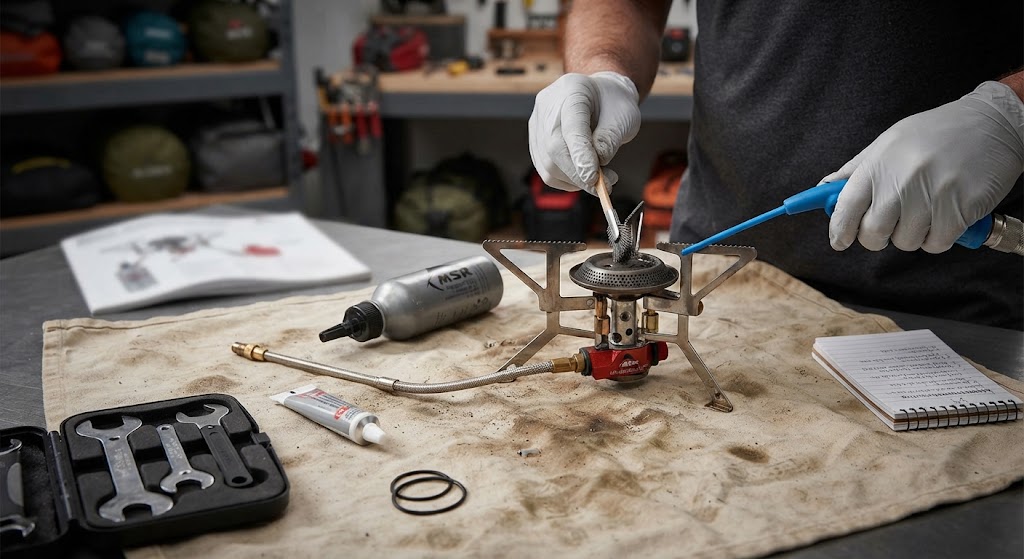
3. Check the stove
Inspect the stove before every use.
Look for damaged hoses, seals, fuel connections, valves, supports or other components. Make sure the burner and connection points are clean and that nothing appears damaged.
Do not use equipment that you suspect is unsafe.
4. Check the fuel
Confirm that you have the correct fuel for the stove.
Check the fuel container and connections for signs of damage or leakage. Keep fuel containers away from the stove while it is operating.
Never experiment with alternative fuels or attempt to modify the stove.
5. Set up the cookware
Choose cookware that is suitable for the stove and not excessively large or unstable.
Place it centrally over the burner so that it cannot easily tip.
If cooking with a large pan, make sure the stove is designed to support its weight.
6. Light the stove safely
Follow the manufacturer’s lighting procedure.
Keep your face, hands and clothing away from the burner when lighting it. If the stove fails to light, turn the fuel supply off and allow any unburnt fuel to disperse before trying again according to the stove’s instructions.
Never lean over a stove while attempting to light it.
7. Control the heat
Once lit, adjust the stove to the heat required for cooking.
A high flame is not always better. Excessive heat can burn food, waste fuel and make pans less stable.
Keep an eye on the stove throughout cooking and don’t leave it operating while you walk away.
8. Handle hot cookware carefully
Use appropriate utensils and heat protection when moving pans.
Remember that handles can become hot, and steam escaping from lids can cause burns even when the pan itself is not being touched.
Warn other Scouts before moving hot cookware.
9. Shut the stove down
When cooking is finished, turn off the fuel supply using the correct procedure for the stove.
Allow the stove and cookware to cool completely before packing them away or handling components that have become hot.
10. Check the area
Before leaving the cooking area, check that the stove is fully shut down and that there are no fuel leaks, hot materials or damaged equipment.
Store the stove and fuel safely once everything has cooled.
Final Tip
A stove should never be rushed. Take the time to check the fuel, equipment, cooking area and surroundings before lighting it. A safe stove setup makes the actual cooking much easier.
🔒Ready to test your survival skills?
Join Survival Guides UK for free, complete challenges, earn badges and increase your Survival Level.
JOIN FREE →
CRAIG BURR
FOUNDER · SURVIVAL GUIDES UK
I'm Craig, the person behind Survival Guides UK. I created SGUK because I wanted somewhere people could learn real outdoor skills in a practical, straightforward way — from lighting a fire and tying knots to navigation, campcraft and everything in between.
You can read more about the story behind SGUK here as well as our approach here.