Stove Maintenance
Activity Overview
Difficulty: Intermediate
Time: 30–45 minutes
Location: Suitable outdoor equipment or cooking area
Best for: Scouts and Explorers
Skills: Equipment care, stove maintenance, fault checking, camp cooking, safety awareness
Regular stove maintenance keeps camping stoves working reliably and helps identify problems before they become dangerous.
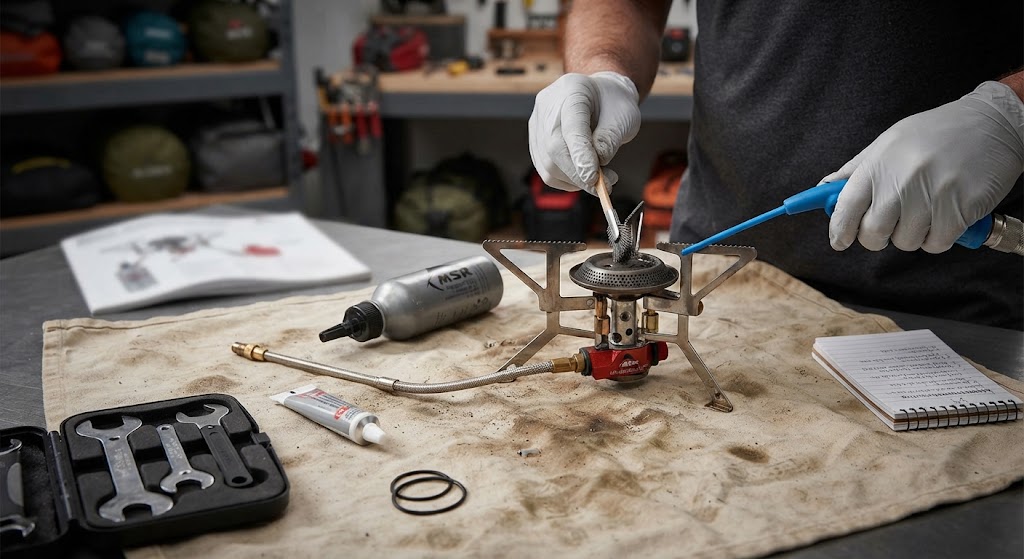
Maintenance should include cleaning the stove, checking the burner and supports, inspecting fuel connections and hoses where fitted, and looking for damaged or worn components. A stove should always be allowed to cool completely before maintenance begins.
Different types of camping stove require different maintenance, so always follow the manufacturer’s instructions for the particular stove being used.
What You’ll Learn
You’ll learn how to carry out a basic inspection of a camping stove and identify signs of damage, dirt, wear or potential fuel problems.
You’ll also learn how to clean the stove correctly, check components without damaging them and prepare the equipment for storage after a camp.
Good stove maintenance is an important Scout skill because looking after equipment is part of using it safely. A well-maintained stove is also less likely to fail when you need it.
🟡 SAFETY – MODERATE RISK
Always allow the stove to cool completely before cleaning, inspecting or handling components that may have become hot.
Carry out maintenance in a well-ventilated area away from flames, sparks and other ignition sources. If the stove uses liquid or pressurised fuel, follow the manufacturer’s instructions for safely disconnecting or handling the fuel system.
Never attempt to repair damaged fuel lines, valves, seals or other safety-critical components unless the manufacturer specifically provides an approved repair procedure.
Do not use a stove that is leaking fuel, has damaged components or shows signs of unsafe operation. Isolate it and report the problem to the person responsible for the equipment.
Equipment
You’ll need the camping stove, the manufacturer’s recommended cleaning equipment and a suitable cloth or brush for removing dirt and food residue.
Depending on the stove, you may also need manufacturer-approved replacement parts or maintenance items.
Keep any tools used for stove maintenance separate from general camp cooking equipment so that they do not introduce dirt or contaminants into food preparation areas.
Prerequisites
Scouts should understand basic camp stove safety and know how the particular stove operates.
They should be able to identify the fuel system, controls and main components before attempting maintenance.
Any maintenance that involves dismantling fuel-system components should be carried out by someone suitably competent and in accordance with the manufacturer’s instructions.
Instructions
1. Let the stove cool
Before doing anything else, make sure the stove is completely cool.
Do not start maintenance immediately after cooking, even if the flame has been extinguished. Components and cookware supports can remain hot for some time.
2. Remove the fuel safely
If the stove has a removable fuel canister or other fuel supply, disconnect or remove it only according to the manufacturer’s instructions.
For some stove types, the fuel system should remain connected during certain maintenance procedures, so avoid guessing.
3. Inspect the stove
Look over the entire stove for obvious damage.
Check the burner, supports, control valves, hoses, connectors and body of the stove. Look for cracks, dents, corrosion, loose components or anything that appears different from normal.
4. Check for contamination
Look for food, grease, soot and dirt around the burner and cooking supports.
Remove loose debris using the appropriate cleaning method for the stove.
Never poke objects into burner holes unless the manufacturer specifically recommends doing so.
5. Clean the cooking surfaces
Clean the pan supports and other areas that come into contact with cookware.
Remove grease and burnt food carefully without damaging the stove’s surface or components.
Keep cleaning products away from fuel connections unless they are specifically suitable for that purpose.
6. Inspect fuel connections
Check fuel connections, seals and hoses where fitted.
Look for signs of cracking, deterioration or damage. If you notice a suspected fuel leak, do not light the stove.
7. Check the controls
Operate the controls as recommended by the manufacturer and make sure they move normally.
Do not force a stiff valve or attempt to dismantle it unless you are following an approved maintenance procedure.
8. Check the burner
Inspect the burner for dirt, damage or blockage.
The burner should be in good condition and correctly positioned. If the manufacturer provides a specific cleaning procedure, follow it rather than improvising.
9. Test the equipment when appropriate
Once maintenance is complete, reassemble the stove correctly and carry out any recommended checks before relying on it for cooking.
If there is any uncertainty about the stove’s condition, don’t use it. Have it checked by someone competent or follow the manufacturer’s servicing procedure.
10. Store the stove correctly
Make sure the stove is clean and completely dry before putting it away.
Store the stove securely with its components protected from damage. Store fuel separately and according to its specific storage requirements.
Final Tip
Maintenance is easier than repair. Give the stove a quick inspection after every camp and deal with small problems before they become failures on your next expedition.
🔒Ready to test your survival skills?
Join Survival Guides UK for free, complete challenges, earn badges and increase your Survival Level.
JOIN FREE →
CRAIG BURR
FOUNDER · SURVIVAL GUIDES UK
I'm Craig, the person behind Survival Guides UK. I created SGUK because I wanted somewhere people could learn real outdoor skills in a practical, straightforward way — from lighting a fire and tying knots to navigation, campcraft and everything in between.
You can read more about the story behind SGUK here as well as our approach here.