Sleeping Bag Care: How to Clean, Dry and Store a Sleeping Bag
Activity Overview
Difficulty: Easy
Time: 15–30 minutes for routine care; several hours for thorough drying
Location: Home, campsite or suitable dry area
Best for: Cubs, Scouts, Explorers, Patrol Leaders, campers and outdoor enthusiasts
Skills: Equipment care, cleaning, drying, storage and camping maintenance
Good sleeping bag care is mainly about keeping it clean, dry and properly stored.
Air your sleeping bag after use, deal with spills and dirt promptly, wash it only when necessary and always follow the manufacturer’s care instructions.
After camping, make sure the bag is completely dry before storing it. For long-term storage, follow the manufacturer’s recommendation rather than automatically leaving it compressed in its small stuff sack.
Looking after a sleeping bag properly helps preserve its insulation, loft and overall performance.
What You’ll Learn
You’ll learn how to look after a sleeping bag before, during and after a camping trip.
You’ll also learn how to clean and dry it safely, how to store it between trips and how to identify damage or deterioration.
🟢 SAFETY – LOW RISK
Sleeping bag care is generally low risk.
Take care when using cleaning products and always follow their instructions.
Don’t use excessive heat to dry a sleeping bag, as this can damage insulation or fabric.
If a sleeping bag becomes wet during a cold-weather trip, prioritise staying warm and dry rather than attempting to carry out a complicated cleaning or drying process outdoors.
Equipment
Routine care usually requires very little equipment.
A suitable drying area, clean cloth and appropriate storage bag are useful.
For deeper cleaning, use only cleaning products and methods recommended by the sleeping-bag manufacturer.
A large storage sack may be supplied with some sleeping bags for long-term storage.
Prerequisites
No previous experience is required.
Before washing or repairing a sleeping bag, check its care label and manufacturer’s instructions.
Down and synthetic sleeping bags can have different cleaning and drying requirements.
Instructions
1. Air Your Sleeping Bag After Use
Don’t immediately stuff your sleeping bag away after waking up.
Open it up and allow moisture from your body to escape.
If conditions allow, air it somewhere dry and shaded.
Even when a sleeping bag doesn’t feel wet, it can contain moisture from overnight use.
2. Keep It Off Wet Ground
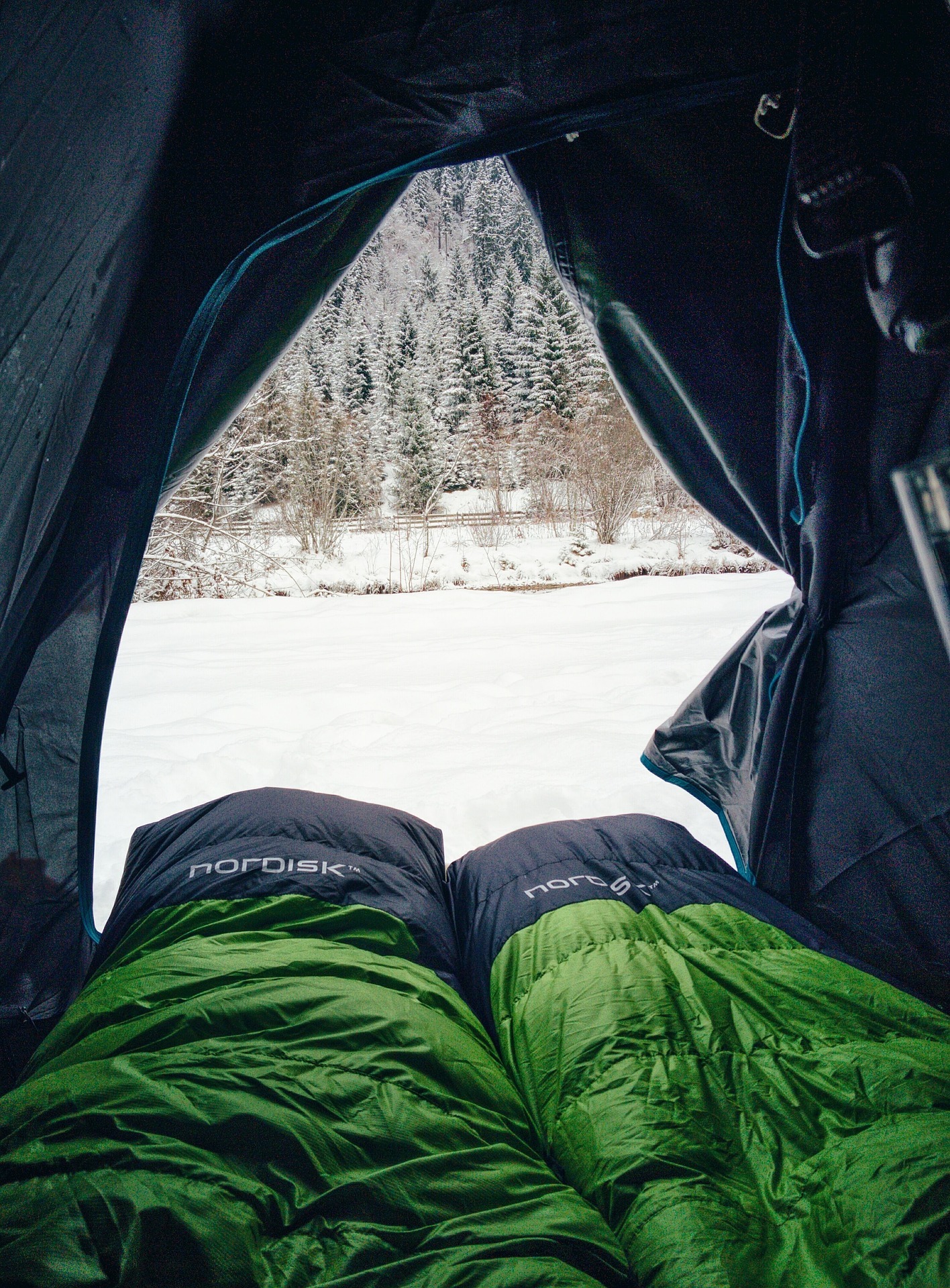
When using your sleeping bag, keep it inside your tent or other suitable shelter.
Avoid placing it directly on wet or muddy surfaces.
A suitable sleeping mat underneath provides insulation from the ground and helps protect the sleeping bag from dirt.
3. Use a Sleeping Bag Liner
A liner can help keep body oils and dirt away from the inside of the sleeping bag.
This can reduce how frequently the sleeping bag itself needs washing.
Liners are available in different materials and can also provide a small amount of additional warmth.
They aren’t essential, but they can be useful for regular campers.
4. Keep Food and Drinks Away
Try not to eat or drink inside your sleeping bag.
Spilled drinks and food can stain the fabric, attract insects and create unpleasant smells.
If you need a drink during the night, keep it securely contained and away from the sleeping bag.
5. Deal With Small Spills Quickly
If something is spilled on the bag, deal with it as soon as practical.
Follow the manufacturer’s cleaning instructions rather than automatically putting the entire bag through a washing machine.
For a small area of dirt, local cleaning may be sufficient.
6. Don’t Wash It Unnecessarily
Sleeping bags don’t normally need washing after every camping trip.
Frequent washing can put additional wear on the fabric and insulation.
If the bag is simply a little damp after use, airing and drying it may be all that’s required.
Deep-clean it when it genuinely needs cleaning and follow the manufacturer’s instructions.
7. Check the Care Label
Before washing, check exactly what the manufacturer recommends.
The instructions may specify:
Don’t assume that because another sleeping bag can be machine washed, yours can too.
8. Wash a Synthetic Sleeping Bag Correctly
Many synthetic sleeping bags can be washed, but the exact method varies.
Use the manufacturer’s recommended washing programme and detergent.
Make sure the bag can move freely in the washing machine if machine washing is permitted.
Don’t overload the machine.
9. Take Extra Care With Down Bags
Down sleeping bags require particular care.
The insulation can clump when wet and may take a long time to dry properly.
Use the manufacturer’s recommended cleaning method and a suitable down-specific cleaning product where required.
Avoid ordinary household detergents unless the manufacturer specifically recommends them.
10. Dry the Sleeping Bag Thoroughly
Drying is one of the most important parts of sleeping-bag care.
A damp sleeping bag should never be put away for long-term storage.
Allow it to dry completely according to the manufacturer’s instructions.
Depending on the bag, this may take considerable time.
Don’t assume that the outside feeling dry means the insulation inside is also dry.
11. Avoid Excessive Heat
Don’t put a sleeping bag directly against a radiator, heater or other intense heat source unless the manufacturer specifically permits it.
Excessive heat can damage fabrics, coatings and insulation.
Natural drying with good airflow is generally safer.
12. Check the Insulation
After drying, inspect the bag for areas where insulation appears unusually thin or uneven.
With down, gently restoring the loft according to the manufacturer’s instructions can help redistribute the filling.
Synthetic insulation can also develop compressed areas over time.
Persistent cold spots or badly deteriorated insulation may indicate that the sleeping bag needs professional attention or replacement.
13. Check the Zip
Run the zip along its full length.
Look for trapped fabric, damaged teeth or a slider that doesn’t operate properly.
Don’t force a jammed zip.
Clear trapped fabric carefully and follow the manufacturer’s advice for any required lubrication or repair.
14. Check the Hood and Drawcords
Inspect the hood, drawcords and toggles for damage.
Make sure adjustments work correctly.
These features are particularly important on sleeping bags designed for cold conditions.
15. Check the Outer Fabric
Look for tears, holes and damaged stitching.
Small damage should be dealt with before it becomes larger.
Use repair materials appropriate for the sleeping bag’s fabric.
For significant damage, particularly around seams or insulation compartments, consider professional repair.
16. Store It Properly
Follow the manufacturer’s storage instructions.
Many sleeping bags are supplied with a small compression or stuff sack for carrying, but prolonged compression isn’t ideal for some types of insulation.
Some manufacturers recommend storing the bag loosely in a larger storage sack.
The important point is to avoid assuming that the small stuff sack is automatically the correct place for long-term storage.
17. Keep It Dry in Storage
Store your sleeping bag somewhere dry and reasonably well ventilated.
Avoid damp sheds, garages or other areas where condensation or humidity can build up.
Don’t store it immediately after a trip until you’re certain it is completely dry.
18. Protect It From Pests
Keep the sleeping bag away from food and other materials that might attract insects or rodents.
A clean, dry storage area reduces the risk of unpleasant surprises when you next unpack it.
19. Check It Before a Trip
Don’t wait until bedtime at camp to discover that the zip is broken or the insulation has deteriorated.
Before a trip, unpack the sleeping bag and inspect it.
Check the zip, fabric, hood and overall condition.
Make sure it is appropriate for the expected overnight temperatures.
20. Keep a Record of Problems
If you discover a damaged zip, tear or other problem, make a note of it.
For group equipment, record repairs and replacements so that damaged sleeping bags don’t accidentally get issued for another trip.
Sleeping Bag Care After a Wet Camp
If your sleeping bag gets damp during a trip, dry it as soon as practical.
Don’t leave it compressed in its stuff sack any longer than necessary.
Once home, unpack it and allow the insulation to dry thoroughly.
If the bag has become genuinely wet rather than simply damp from overnight use, follow the manufacturer’s drying instructions carefully.
Sleeping Bag Care for Regular Campers
If you camp frequently, a simple routine works well.
After each trip, air the bag and inspect it.
Clean it when necessary rather than automatically washing it.
At the end of the camping season, give it a more thorough inspection and make sure it is completely dry before long-term storage.
Sleeping Bag Care for Group Equipment
Sleeping bags used by multiple people need particularly good hygiene management.
Where possible, use liners and make sure each bag is aired properly between users.
Keep clean and used sleeping bags separate during transport.
Before storing group equipment, check every bag rather than assuming that someone else has already dealt with it.
Final Tip
The easiest way to extend the life of a sleeping bag is to avoid unnecessary washing and never store it damp.
Air it after use, keep it clean, repair small problems early and follow the manufacturer’s instructions when it needs washing.
Most importantly, don’t confuse the compact stuff sack you use for transport with the best way to store the sleeping bag long term.
🔒Ready to test your survival skills?
Join Survival Guides UK for free, complete challenges, earn badges and increase your Survival Level.
JOIN FREE →
CRAIG BURR
FOUNDER · SURVIVAL GUIDES UK
I'm Craig, the person behind Survival Guides UK. I created SGUK because I wanted somewhere people could learn real outdoor skills in a practical, straightforward way — from lighting a fire and tying knots to navigation, campcraft and everything in between.
You can read more about the story behind SGUK here as well as our approach here.