Meal Planning: A Beginner’s Guide
Meal Planning
Good food can make a huge difference to an outdoor adventure.
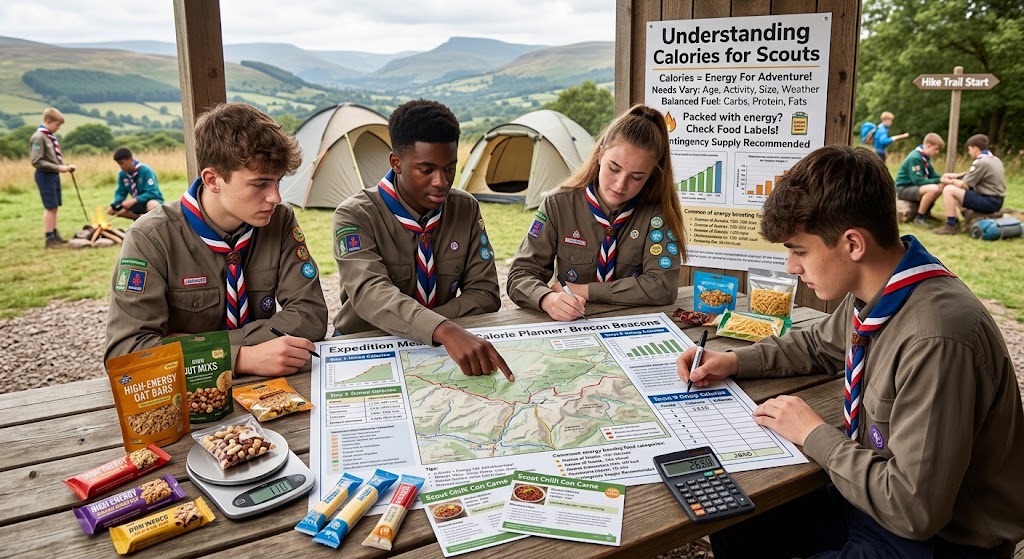
When you’re camping, hiking or taking part in a longer outdoor activity, food isn’t just about satisfying hunger.
Your meals need to provide enough energy, be practical to carry, simple enough to prepare and suitable for the equipment and conditions you’re working with.
That’s why meal planning is an outdoor skill in its own right.
A good meal plan answers five basic questions:
What are we eating?
How much do we need?
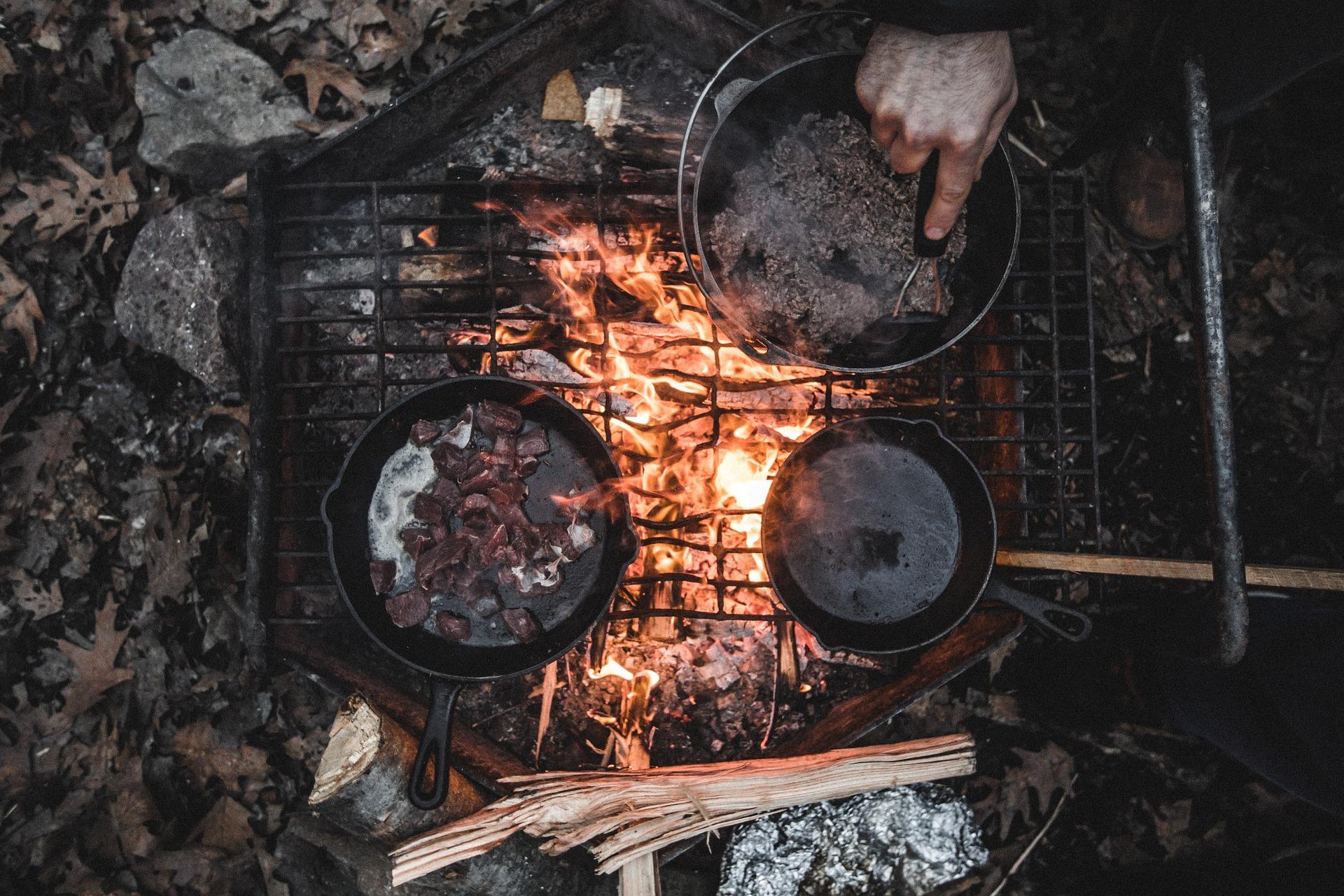
How are we going to cook it?
What equipment do we need?
What happens to the leftovers and packaging?
Plan those things before you leave and mealtimes become much easier.
⚠️ SAFETY FIRST
Food safety is just as important outdoors as it is at home.
Outdoor conditions can make it harder to keep food cold, clean equipment and prevent cross-contamination.
Always consider:
- Food allergies
- Dietary requirements
- Food storage temperatures
- Cross-contamination
- Safe cooking temperatures
- Clean drinking water
- Hand hygiene
- Safe storage of leftovers
For organised activities, follow the food-safety procedures of your group or organisation.
If you’re unsure whether food has been stored or cooked safely, don’t eat it.
Why Meal Planning Matters
It can be tempting to simply throw some food into a rucksack and head outdoors.
That can create problems surprisingly quickly.
You might discover that:
- You haven’t brought enough food
- You’ve brought far too much
- An ingredient needs refrigeration
- You forgot the cooking oil
- You don’t have enough fuel
- A meal takes much longer to cook than expected
- Nobody actually likes what you’ve planned
- You have nowhere to store leftovers
Meal planning prevents many of these problems before they happen.
The aim isn’t to create complicated meals.
The aim is to create meals that work.
Start With the Trip
Before choosing your meals, work out what the trip actually involves.
Ask:
How long are you going?
A single-day hike has very different food requirements from a week-long camp.
How many people are eating?
Count everyone who needs feeding.
How active will you be?
A strenuous hiking day may require more food and snacks than a relaxed campsite day.
Where are you staying?
A campsite with a kitchen provides very different possibilities from a remote wild-camping situation.
What cooking equipment is available?
This can completely change your menu.
Can you resupply?
If you’re able to buy food during the trip, you may not need to carry everything from the beginning.
Build Your Meal Plan Around the Day
A simple starting point is:
Breakfast → Lunch → Dinner → Snacks
Then think about drinks and any additional food required for particularly active days.
Breakfast
Breakfast should provide a practical start to the day.
Possible options might include:
Choose according to your equipment, time and personal preferences.
Lunch
Lunch should be easy to prepare and practical during the day’s activities.
Possible options include:
Dinner
Dinner can be the main cooked meal of the day.
Possible options include:
Snacks
Don’t forget snacks.
These can be useful between meals, particularly during physically demanding activities.
Think About Energy
Outdoor activities can require a lot of energy.
Walking, carrying equipment, climbing, paddling and other activities all increase the amount of energy you may need.
Rather than obsessing over exact numbers, think about building meals from a range of foods.
A useful basic approach is to include:
Carbohydrates
Useful sources of energy include:
Protein
Useful sources include:
Fats
Examples include:
Fruit and vegetables
These can provide important vitamins, minerals and fibre.
A good outdoor meal doesn’t have to be complicated.
It just needs to provide useful nutrition while remaining practical.
Weight Matters
Food is equipment too.
Every item you carry adds weight.
For longer trips, consider the difference between:
Fresh food
and
Shelf-stable food
Fresh food can be excellent when refrigeration and storage are available.
Shelf-stable foods can be much easier for longer trips.
Examples include:
The best choice depends on your trip.
Don’t automatically choose the lightest food if it makes cooking, storage or nutrition impractical.
Think About Storage
One of the biggest differences between home cooking and outdoor cooking is storage.
Before packing food, ask:
Does this need to stay refrigerated?
How long will it be out of refrigeration?
How will I transport it?
Where will I store it at camp?
Could animals access it?
Food that requires refrigeration needs particular care.
Don’t assume that a cool rucksack or campsite shade is an adequate replacement for a refrigerator.
Perishable vs Non-Perishable Foods
A simple way to plan is to divide food into two broad groups.
Perishable
These can spoil relatively quickly if not kept at appropriate temperatures.
Examples include:
These require careful temperature control.
Shelf-stable
These can generally be stored without refrigeration until opened, provided the packaging and manufacturer’s instructions allow it.
Examples include:
Always follow the storage instructions on the packaging.
Plan the Cooking Method
Don’t choose a meal until you know how you’re going to cook it.
Ask:
What heat source are we using?
For example:
- Camping stove
- Designated camp cooking area
- Other permitted cooking equipment
How much fuel will it require?
A meal that takes five minutes to cook may use considerably less fuel than one that needs thirty minutes.
What cookware is needed?
You may need:
- Saucepan
- Frying pan
- Pot
- Kettle
- Cooking utensils
How much water does it require?
Some meals need considerable amounts of water.
This matters when water is limited.
One-Pot Meals
One-pot meals are particularly useful for camping.
Everything is cooked in the same pot.
Advantages include:
- Less washing up
- Fewer cooking utensils
- Simple preparation
- Easy portioning
- Convenient cooking
Examples include:
Pasta + sauce + vegetables
Rice + beans + vegetables
Chilli
Stew
Couscous + vegetables + protein
The exact meal is less important than the principle:
Simple cooking can make outdoor life much easier.
Think About Cooking Time
A meal may look simple on paper but take much longer outdoors.
Consider:
- Preparation time
- Water heating time
- Cooking time
- Fuel availability
- Cleaning time
- Weather conditions
A complicated dinner after a long day on the trail may not be particularly enjoyable.
Sometimes the best meal is simply the one that can be cooked quickly and reliably.
Use Ingredients More Than Once
One clever way to simplify meal planning is to choose ingredients that can be used in several meals.
For example:
Pasta
Could appear in:
- Dinner
- Cold lunch
- Leftover meal
Tortillas or wraps
Could be used for:
- Lunch
- Breakfast wraps
- Leftover fillings
Vegetables
Could be used in:
- Pasta
- Rice
- Soup
- Stew
This reduces the number of different ingredients you need to carry.
Fewer ingredients can mean simpler packing and less waste.
Don’t Forget the Small Things
Many outdoor meals fail because of something tiny.
Before leaving, check whether you need:
- Cooking oil
- Salt
- Pepper
- Herbs
- Spices
- Sauces
- Sugar
- Tea or coffee
- Milk or alternative
- Foil or suitable food containers
Small ingredients can make a huge difference to a meal.
Don’t Forget Drinks
Food planning shouldn’t ignore hydration.
Plan for:
- Drinking water
- Hot drinks
- Cooking water
- Additional water for particularly active days
Remember that drinking water and cooking water are both part of your overall water plan.
Never assume that a natural water source is safe simply because it looks clean.
Planning for a Group
Cooking for a group creates additional challenges.
Before planning the menu, find out about:
Allergies
Make sure known allergies are taken seriously.
Dietary requirements
People may have requirements related to:
- Vegetarian diets
- Vegan diets
- Religious diets
- Medical dietary requirements
- Food intolerances
Preferences
You don’t have to make everyone their favourite meal, but knowing what people will actually eat can prevent food waste.
Portion sizes
You need enough food for everyone without creating unnecessary leftovers.
How Much Food Do You Need?
This is one of the hardest parts of meal planning.
A useful starting point is:
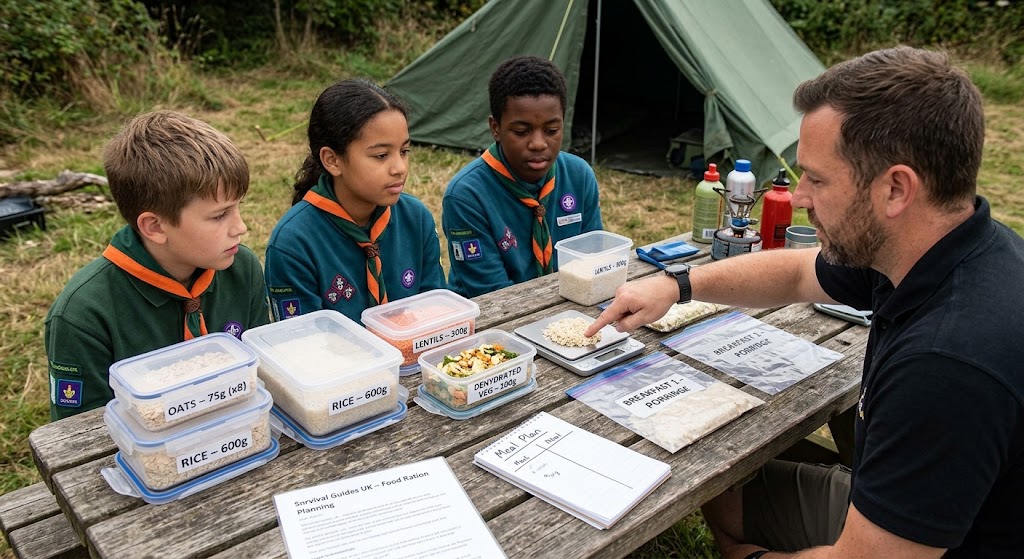
Number of people × number of meals × portion size
Then consider the activity level and whether snacks are included separately.
Don’t forget that children and adults may require different quantities.
For organised group activities, use the guidance and experience of your leaders or catering arrangements rather than relying solely on a generic calculation.
Better planning comes with experience.
After every trip, ask:
What did we run out of?
What did we have too much of?
What did nobody eat?
Use those answers to improve your next plan.
Create a Meal Plan
A simple meal plan might look like this:
|
Day |
Breakfast |
Lunch |
Dinner |
Snacks |
|---|---|---|---|---|
|
Day 1 |
Porridge & fruit |
Wraps |
Pasta |
Fruit & bars |
|
Day 2 |
Cereal & fruit |
Sandwiches |
Chilli & rice |
Nuts & snacks |
|
Day 3 |
Porridge |
Wraps |
One-pot meal |
Fruit & bars |
The exact meals don’t matter.
The important thing is that every meal is planned before you pack.
Turn the Meal Plan Into a Shopping List
Once you’ve planned the meals, create your shopping list.
Organise it into groups such as:
Breakfast
- Oats
- Cereal
- Milk
- Fruit
Lunch
- Bread
- Wraps
- Fillings
- Fruit
Dinner
- Pasta
- Rice
- Vegetables
- Protein
- Sauces
Snacks
- Fruit
- Nuts
- Bars
Cooking
- Oil
- Seasoning
- Fuel
This makes shopping and packing much easier.
Pack Food by Meal
Instead of throwing everything into one large bag, consider grouping food by meal or day.
For example:
DAY 1 — DINNER
Pasta
Sauce
Vegetables
Seasoning
This makes finding food much easier at camp.
It can also help prevent accidentally opening food that you don’t need yet.
Reduce Food Waste
Good meal planning should also reduce waste.
Try to:
- Plan realistic portions
- Use ingredients across multiple meals
- Avoid unnecessary packaging
- Choose reusable containers where practical
- Store leftovers safely
- Take rubbish home or dispose of it correctly
Remember:
Pack it in, pack it out.
Don’t leave food scraps behind.
Food waste can attract wildlife and create problems for other visitors.
Protect Food From Wildlife
Food can attract animals.
Never assume that a sealed tent is a secure food store.
Follow campsite or land-management guidance about food storage.
Keep food:
- Secure
- Clean
- Properly sealed
- Away from sleeping areas where appropriate
- Protected from animals
Don’t feed wildlife.
And never leave food scraps around camp.
Common Meal Planning Mistakes
❌ Planning meals without checking equipment
A meal isn’t useful if you can’t cook it.
❌ Forgetting fuel
The stove is useless if you can’t operate it.
❌ Bringing too much food
Extra weight makes carrying harder.
❌ Bringing too little
Being hungry after a long activity is miserable.
❌ Ignoring dietary requirements
Always check these before finalising the menu.
❌ Choosing complicated recipes
Simple often works better outdoors.
❌ Forgetting snacks
Long activities can leave you needing additional food.
❌ Ignoring food storage
Perishable food needs appropriate temperature control.
❌ Forgetting cleaning
Cooking equipment still needs to be cleaned safely.
Meal Planning: The Skills You’re Really Learning
Meal planning teaches much more than deciding what you’re having for dinner.
Organisation
Can you plan several days of meals?
Budgeting
Can you feed everyone without unnecessary expense?
Nutrition
Can you create balanced meals?
Logistics
Can you carry, store and cook everything?
Time management
Can you prepare meals without wasting valuable time?
Problem solving
Can you adapt if the weather or equipment changes?
Responsibility
Can you provide safe food for everyone in your group?
These skills are useful far beyond camping.
Your Meal Planning Challenge
The Three-Day Camp Challenge
Try planning three days of outdoor meals.
Before you finish, make sure you can answer:
□ How many people are eating?
□ How many meals are required?
□ What snacks are needed?
□ Does every meal provide useful energy?
□ What ingredients are required?
□ Which ingredients need refrigeration?
□ How will food be stored?
□ What cooking equipment is needed?
□ How much fuel is required?
□ How much water is needed for cooking?
□ Are allergies and dietary requirements covered?
□ How will leftovers be handled?
□ How will rubbish be disposed of?
The real challenge?
Try to create the simplest possible menu that still gives everyone enjoyable, practical meals.
Scout Connection
Meal planning is an excellent campcraft skill.
Planning food for a camp can involve:
- Menu planning
- Cooking
- Nutrition
- Food hygiene
- Budgeting
- Teamwork
- Equipment management
- Responsibility
For Scouts, the exact requirements associated with badges and programme activities can change.
If you’re working towards a particular badge or activity:
Always check the current official Scouts requirements and speak to your leader.
SurvivalGuidesUK is an independent educational resource and isn’t an official Scouts website. Always follow the current Scouts programme requirements and your leader’s instructions.
The Golden Rules of Meal Planning
If you remember nothing else:
1. Plan before you pack.
2. Know how many people you’re feeding.
3. Match the meals to the equipment.
4. Consider weight and storage.
5. Plan for enough food and snacks.
6. Check allergies and dietary requirements.
7. Keep food at safe temperatures.
8. Keep preparation and cooking areas clean.
9. Minimise waste.
10. Keep meals practical.
The best outdoor meal isn’t necessarily the fanciest.
It’s the one that tastes good, provides what you need and works in the conditions you’re actually in.
SurvivalGuidesUK Safety Notice
Outdoor cooking and food storage can involve burns, fires, food poisoning, allergies and other hazards.
This article provides general educational information and does not replace appropriate food-safety training, medical advice, manufacturer instructions or organisational safety procedures.
Children and young people should undertake outdoor cooking activities with appropriate adult supervision and safety arrangements.
🔒Ready to test your survival skills?
Join Survival Guides UK for free, complete challenges, earn badges and increase your Survival Level.
JOIN FREE →
CRAIG BURR
FOUNDER · SURVIVAL GUIDES UK
I'm Craig, the person behind Survival Guides UK. I created SGUK because I wanted somewhere people could learn real outdoor skills in a practical, straightforward way — from lighting a fire and tying knots to navigation, campcraft and everything in between.
You can read more about the story behind SGUK here as well as our approach here.