How to Set Up an Outdoor Cooking Area
A well-organised cooking area makes outdoor food preparation safer, cleaner and easier.
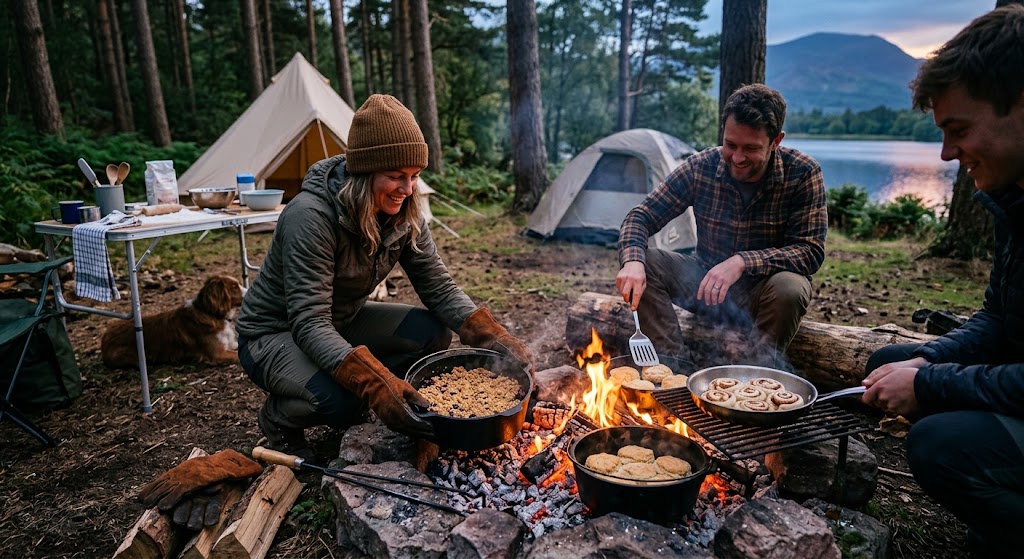
Before you start preparing food, take a few minutes to decide where everything should go. A good layout helps keep food, equipment and people organised throughout the activity.
Choose a Suitable Location
Start by choosing an appropriate cooking area.
Look for a location that is:
The exact requirements will depend on the equipment and cooking method.
Keep Cooking Away From Tents
Don’t set up cooking equipment inside a tent or enclosed shelter.
Cooking equipment can introduce fire, burns and carbon monoxide hazards.
Use a designated outdoor cooking area with suitable ventilation and enough space to work safely.
Check the Ground
Look at the ground before setting up.
Remove unnecessary items that could cause trips, but don’t create additional disturbance to the campsite.
Avoid muddy, unstable or excessively sloping ground.
The cooking area should provide a stable surface for equipment and people.
Create a Simple Layout
Try to arrange the area so that everything has a logical place.
For example:
Food preparation → Cooking → Serving → Cleaning
Keeping these activities organised can help prevent raw ingredients, cooked food and dirty equipment from becoming mixed together.
Keep Raw and Ready-to-Eat Food Separate
Raw ingredients should be kept away from food that is ready to eat.
Use separate utensils and preparation surfaces where appropriate.
Don’t place cooked food on a surface that has been used for raw ingredients without cleaning it first.
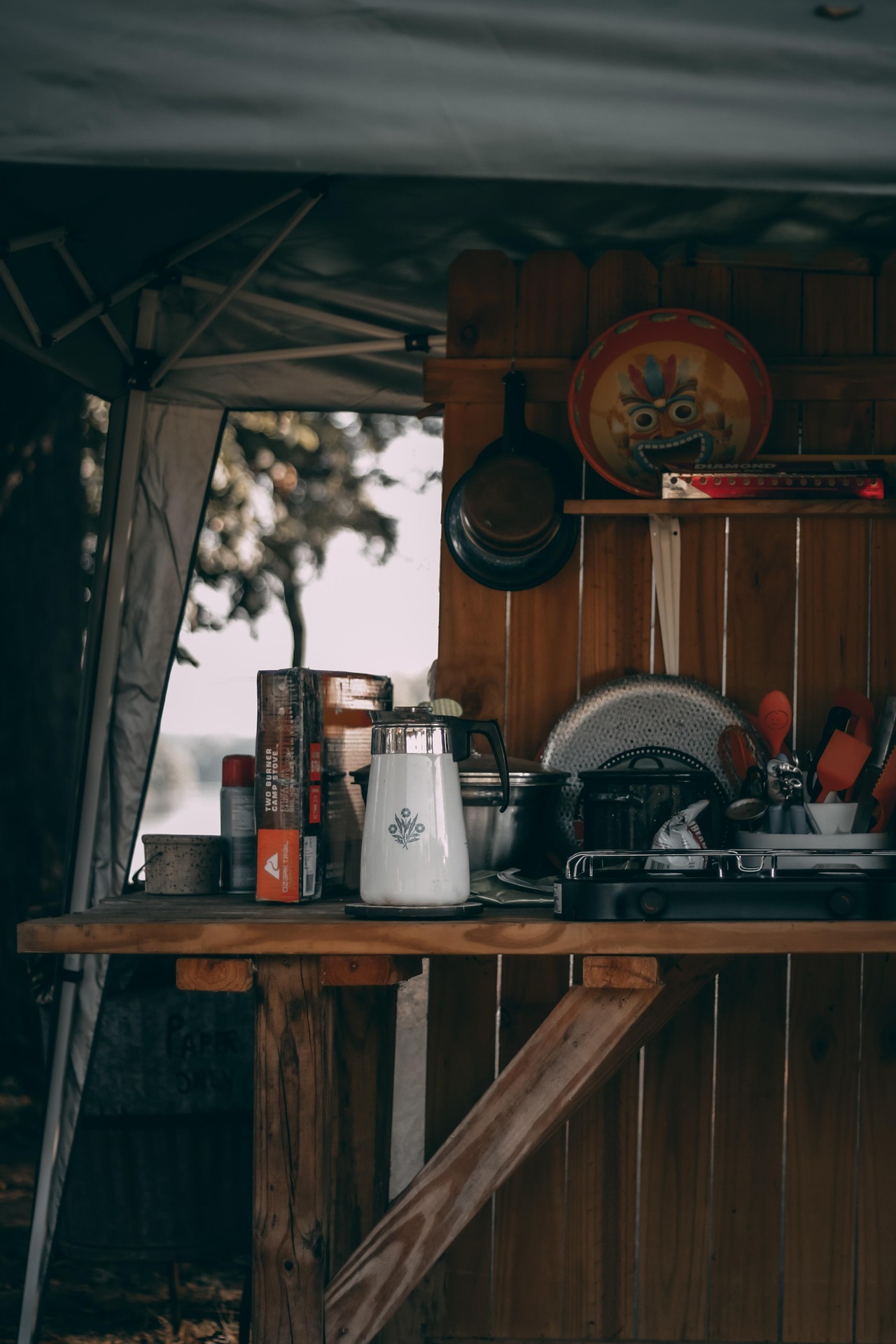
Keep Equipment Within Easy Reach
Place frequently used equipment where it can be accessed without people having to walk through the cooking area unnecessarily.
Keep sharp or potentially hazardous equipment stored safely when it isn’t being used.
Create a Food Storage Area
Keep ingredients protected from dirt, insects and weather.
Food containers should be closed when you’re not using them.
If you’re using chilled or perishable foods, make sure they remain appropriately stored until needed.
Keep Water Available
Outdoor cooking may require water for drinking, food preparation, handwashing and cleaning.
Plan the water supply before beginning.
Keep drinking water separate from dirty washing water and untreated water.
Set Up a Cleaning Area
Don’t leave cleaning until everything else has finished.
Have a designated place for washing equipment where practical.
Think about where wastewater will go and follow the arrangements for the site.
Never simply pour dirty water wherever you happen to be standing.
Keep Waste Under Control
Have suitable rubbish bags or containers available from the beginning.
This prevents food packaging and scraps from accumulating around the cooking area.
Keep food waste contained and follow the site’s arrangements for disposal.
Consider the Weather
Your cooking area may need to change depending on conditions.
Rain can make surfaces slippery and equipment wet.
Wind can blow rubbish, dust and debris around the cooking area.
Cold weather can also affect food storage and preparation.
Have a backup plan if conditions become unsuitable.
Allow Enough Space
Don’t overcrowd the cooking area.
People need enough room to move safely without bumping into equipment or one another.
If several Scouts are involved, give each person a clear task and working space.
Establish Boundaries
Make sure everyone knows where the cooking area begins and ends.
Younger Scouts in particular should understand which areas they can enter and which equipment they should not touch without permission.
Keep the Area Supervised
Cooking areas should remain appropriately supervised.
Don’t leave cooking equipment operating unattended.
If the activity is paused, make sure the equipment and cooking area are left in a safe state.
Think About Emergencies
Before starting, know where the appropriate first-aid equipment is and how help would be summoned if needed.
Everyone involved should know who to tell if something goes wrong.
The exact emergency arrangements will depend on the activity and location.
Younger Scouts
Younger Scouts can help prepare the cooking area by:
Tasks involving potentially hazardous equipment should be supervised appropriately.
Older Scouts
Older Scouts can take responsibility for planning the layout of a cooking area.
Ask them to explain why they have positioned food, equipment, water and waste in particular places.
This develops planning and risk-awareness skills.
Leader Notes
The cooking area should reflect the equipment and cooking method being used.
Consider access, supervision, food hygiene, weather, trip hazards and emergency arrangements before the activity starts.
Avoid creating unnecessary hazards by overcrowding the area with equipment.
Safety
Don’t cook inside tents or enclosed shelters.
Keep raw and ready-to-eat foods separate.
Keep cooking equipment stable and appropriately positioned.
Don’t leave operating cooking equipment unattended.
Keep unnecessary people away from hazardous equipment.
Maintain suitable hygiene and waste arrangements.
Follow the manufacturer’s instructions for cooking equipment.
Learning Outcomes
Scouts can learn to:
Final Thought for Scouts
A good cooking area doesn’t happen by accident.
Choose the location, organise the space and give everything a sensible place.
A few minutes of preparation can make the whole cooking activity safer and much easier.
🔒Ready to test your survival skills?
Join Survival Guides UK for free, complete challenges, earn badges and increase your Survival Level.
JOIN FREE →
CRAIG BURR
FOUNDER · SURVIVAL GUIDES UK
I'm Craig, the person behind Survival Guides UK. I created SGUK because I wanted somewhere people could learn real outdoor skills in a practical, straightforward way — from lighting a fire and tying knots to navigation, campcraft and everything in between.
You can read more about the story behind SGUK here as well as our approach here.