Camp Kitchen Setup: How to Set Up a Scout Camp Kitchen
Activity Overview
Difficulty: Moderate
Time: 30–60 minutes
Location: Scout campsites and outdoor camps
Best for: Scouts, Explorers, Patrol Leaders and adult leaders
Skills: Campcraft, food hygiene, outdoor cooking, organisation and teamwork
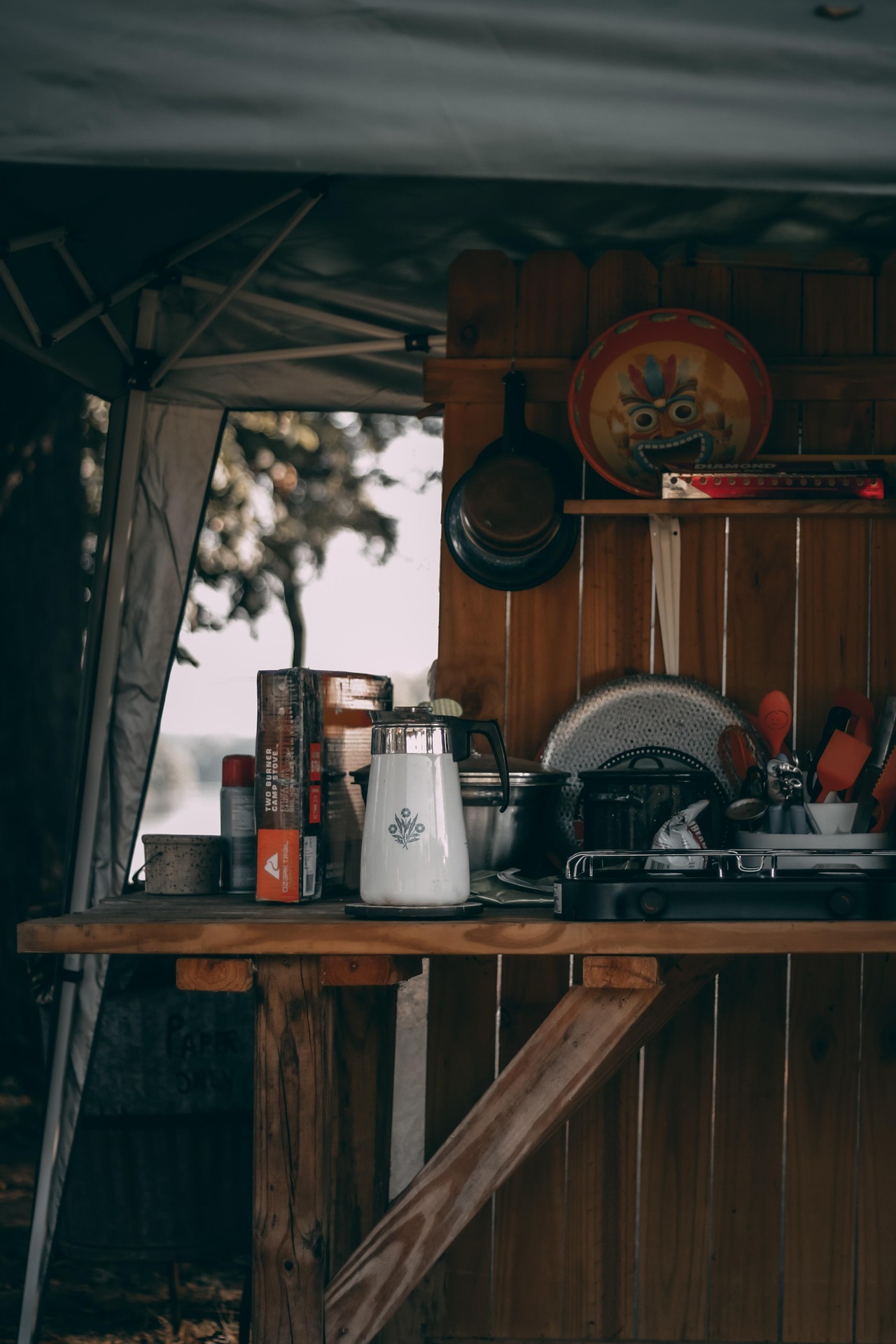
A good camp kitchen should have separate areas for food preparation, cooking, eating, washing up and waste, with enough space to work safely.
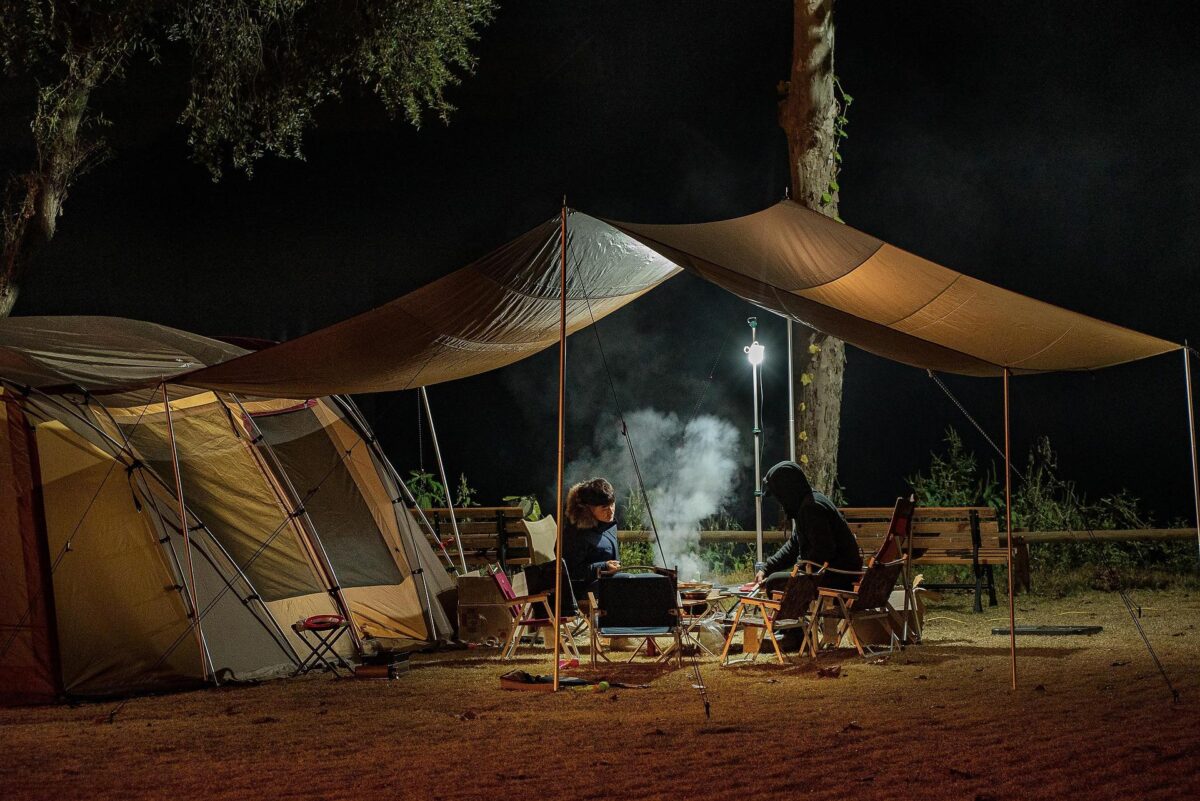
Set the kitchen up on suitable ground, away from sleeping tents and other hazards. Keep cooking equipment stable, store food appropriately and organise utensils so that everything needed can be found easily.
The kitchen should be designed around the people using it, rather than simply putting all the equipment in one place.
What You’ll Learn
You’ll learn how to plan and set up a practical camp kitchen for outdoor cooking.
You’ll cover the layout, cooking area, food storage, preparation space, washing up, waste and basic hygiene arrangements.
🟡 SAFETY – MODERATE TO HIGH RISK
Outdoor kitchens involve several hazards, particularly hot equipment, flames, fuel, sharp tools, food hygiene and boiling liquids.
Set up cooking equipment on stable ground and follow the manufacturer’s instructions.
Keep combustible materials away from flames and hot surfaces.
Cooking areas should be supervised appropriately, particularly when younger Scouts are involved.
Never leave a lit stove or fire unattended.
If using gas or other fuel, follow the equipment manufacturer’s instructions and campsite rules. Don’t use damaged fuel equipment.
Equipment
The exact equipment depends on the menu and type of camp.
A typical patrol kitchen may include a suitable stove or fire setup, fuel, cooking pots, pans, utensils, chopping boards, food containers, mugs and plates.
You’ll also need clean water, washing-up equipment, rubbish containers and suitable storage for food.
A table or other stable preparation surface can make a major difference to the organisation of the kitchen.
Prerequisites
Before setting up, check the campsite’s rules concerning cooking, fires, fuel and wastewater.
Plan the meals first so that you know what equipment and ingredients are actually required.
Make sure anyone responsible for cooking understands the equipment being used and the relevant safety procedures.
Instructions
1. Choose the Kitchen Location
Start by choosing a suitable area.
The kitchen should be on stable ground with enough room for people to move around without constantly crossing the cooking area.
Keep it appropriately separated from sleeping tents and away from anything that could easily catch fire.
Consider wind direction, drainage and access to water when selecting the location.
2. Plan the Layout
Think about the kitchen as a series of working areas.
A simple arrangement is:
Food storage → preparation → cooking → serving → washing up → waste
This reduces people crossing through each other’s workspace.
Don’t make the kitchen unnecessarily complicated. A simple layout that everyone understands is usually more effective.
3. Set Up the Cooking Area
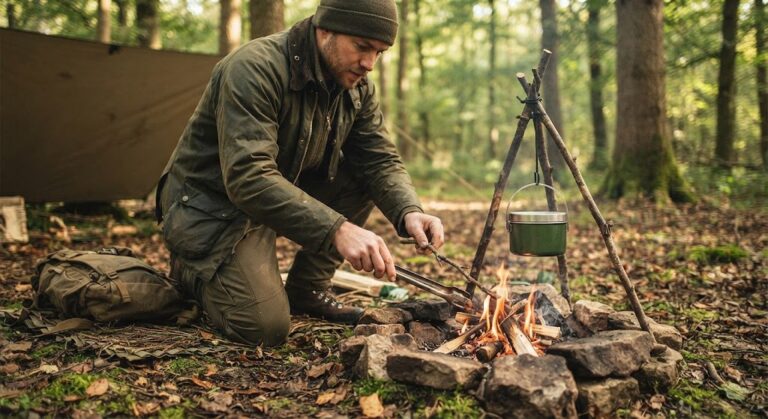
Place the stove or fire on a suitable stable surface and follow the manufacturer’s or campsite’s requirements.
Make sure there is enough room around the cooking equipment to work safely.
Keep bags, clothing, tent fabric and other combustible materials away from flames and hot surfaces.
4. Organise Fuel
Store fuel safely and according to the manufacturer’s instructions.
Keep fuel away from flames and unnecessary sources of heat.
Only use the correct fuel for the appliance.
Don’t improvise fuel connections or use damaged equipment.
5. Create a Preparation Area
Set up a clean, stable surface for preparing food.
Keep preparation equipment organised so that knives, chopping boards and utensils aren’t scattered around the cooking area.
Use separate equipment where appropriate for different types of food and maintain good food hygiene throughout preparation.
6. Organise the Food
Keep ingredients protected from dirt, insects and weather.
Use suitable containers and keep perishable food appropriately chilled.
Don’t leave food sitting out unnecessarily, particularly in warm weather.
Only bring the ingredients needed for the meal into the preparation area.
7. Keep Clean Water Available
Make sure there is enough suitable water for cooking, drinking and cleaning.
Keep clean water protected from contamination.
If the campsite has specific arrangements for water collection or disposal, follow them.
8. Set Up a Washing-Up Area
Position the washing-up area away from the main food preparation space.
Have a clear system for washing, rinsing and allowing equipment to dry.
Deal with wastewater according to the campsite’s instructions rather than simply tipping it onto the ground.
9. Provide a Waste Area
Use suitable containers for rubbish and food waste.
Keep waste contained rather than allowing it to accumulate around the kitchen.
Empty it according to the campsite’s arrangements.
Don’t leave food waste around the campsite overnight.
10. Organise Cooking Equipment
Keep commonly used utensils within easy reach but away from areas where they could be knocked over.
Place hot pans somewhere stable and make sure handles aren’t positioned where someone walking past could catch them.
Don’t overcrowd the cooking surface.
11. Establish Kitchen Responsibilities
On a patrol camp, divide the jobs between people.
One person might prepare ingredients while another cooks and another organises washing up.
Responsibilities can be rotated between meals so everyone gains experience.
Avoid having too many people working directly around a hot stove.
12. Establish Kitchen Rules
Before cooking begins, make sure everyone understands the basic rules.
People should know where they can stand, which equipment they can use and who is responsible for the stove or fire.
Keep unnecessary running and horseplay away from the kitchen.
13. Check the Kitchen Before Cooking
Before lighting a stove or fire, carry out a quick check.
Make sure the equipment is stable, the fuel is correct, the cooking area is clear and the necessary ingredients and utensils are available.
It is much easier to discover a missing item before cooking starts.
14. Keep the Kitchen Clean While Cooking
Don’t allow dirty equipment and rubbish to build up around the kitchen.
Put ingredients away when they are no longer required.
Clean spills promptly and keep preparation surfaces as clean as practical.
Good organisation makes cooking safer as well as easier.
15. Serve Food Safely
Once the meal is ready, keep hot cookware in a secure position.
Warn people when equipment or food is hot.
Use suitable utensils for serving rather than allowing people to reach across hot cooking equipment.
16. Clean Up Immediately Afterwards
Once everyone has eaten, start cleaning the kitchen.
Wash and dry cooking equipment, clear food waste and clean preparation surfaces.
Return equipment to its storage location so that the kitchen is ready for the next meal.
17. Make the Kitchen Safe Overnight
Before leaving the kitchen at night, make sure cooking equipment and fuel have been dealt with correctly.
Stoves should be turned off and stored according to their instructions.
Any fire must be dealt with in accordance with the campsite’s fire arrangements.
Food and rubbish should be securely stored.
Example Patrol Kitchen Layout
A simple patrol kitchen might work like this:
|
Area |
Purpose |
|---|---|
|
Food store |
Keep ingredients protected |
|
Preparation table |
Prepare ingredients |
|
Cooking area |
Stove or fire and cookware |
|
Serving area |
Serve finished food |
|
Washing-up area |
Clean equipment |
|
Waste area |
Manage rubbish and food waste |
Keeping these areas distinct helps prevent congestion and makes it easier for everyone to know where they should be working.
Camp Kitchen Hygiene
Good hygiene is just as important outdoors as it is at home.
Wash hands before handling food and after handling raw ingredients.
Keep food preparation surfaces clean and protect food from contamination.
Pay particular attention to chilled and perishable food, as outdoor temperatures can make safe storage more difficult.
If in doubt about whether food has remained at a safe temperature, don’t take unnecessary risks.
Camp Kitchen in Bad Weather
Rain and wind can make outdoor cooking considerably more difficult.
Protect food and equipment without enclosing cooking appliances in a way that creates a dangerous build-up of heat or combustion gases.
Never use fuel-burning camping stoves inside a tent or other enclosed sleeping shelter because of the risk from fire and carbon monoxide.
If conditions become unsuitable for safe cooking, change the plan rather than trying to force the kitchen to operate normally.
Final Tip
A good Scout camp kitchen is organised before the cooking starts.
Give food preparation, cooking, serving, washing up and waste their own places, keep the cooking area controlled and make sure everyone understands their role.
The best kitchen isn’t necessarily the biggest one. It’s the one where everyone can work safely, find what they need and get a meal on the table without chaos.
🔒Ready to test your survival skills?
Join Survival Guides UK for free, complete challenges, earn badges and increase your Survival Level.
JOIN FREE →
CRAIG BURR
FOUNDER · SURVIVAL GUIDES UK
I'm Craig, the person behind Survival Guides UK. I created SGUK because I wanted somewhere people could learn real outdoor skills in a practical, straightforward way — from lighting a fire and tying knots to navigation, campcraft and everything in between.
You can read more about the story behind SGUK here as well as our approach here.