Responsible Bushcraft: How to Enjoy the Outdoors Without Damaging It
Bushcraft is about learning how to use practical skills and make the most of what the outdoors provides. You might learn to light a fire, build a shelter, identify useful plants or make things from natural materials. But learning bushcraft also means learning when not to do something.
Responsible bushcraft is about enjoying these skills while respecting wildlife, plants, trees and the places where you spend time. The aim is to leave the outdoors healthy and cared for rather than damaged by your activities.
What You’ll Learn
By the end of this guide, you should understand:
- What responsible bushcraft means
- Why you should avoid damaging living plants and trees
- How to collect natural materials carefully
- Why wildlife should always be respected
- How to leave your activity area tidy
Look, Don’t Just Take
When you’re exploring, it’s tempting to collect everything interesting you find.
A better habit is to stop and look first. You can learn a huge amount about the outdoors without picking or breaking anything.
If you do need natural materials for a bushcraft activity, only collect things that you’re allowed to collect and that are suitable for the activity. In many places, collecting wood, plants or other natural materials isn’t permitted without permission.
Don’t Damage Living Trees
One of the most important rules of responsible bushcraft is simple: don’t damage living trees or plants to get materials.
Don’t cut branches from trees just because you need a stick for a shelter or camp gadget. Don’t strip bark from living trees and don’t carve into them.
Instead, use suitable materials that have already fallen where collecting them is permitted, or use materials supplied for your activity.
A tree might look like it has plenty of branches, but even small amounts of damage can affect it.
Respect Wildlife
Bushcraft takes place in the homes of wild animals, insects and birds.
If you find an animal, nest, burrow or other sign of wildlife, give it plenty of space. Don’t chase animals, disturb nests or move things simply because you’re curious.
Watching quietly is often much more rewarding anyway. You might see behaviour that you would completely miss if you were rushing around.
Remember that you’re a visitor in the environment that you’re exploring.
Take Care With Fire
Fire is an important bushcraft skill, but it also has the potential to cause serious damage.
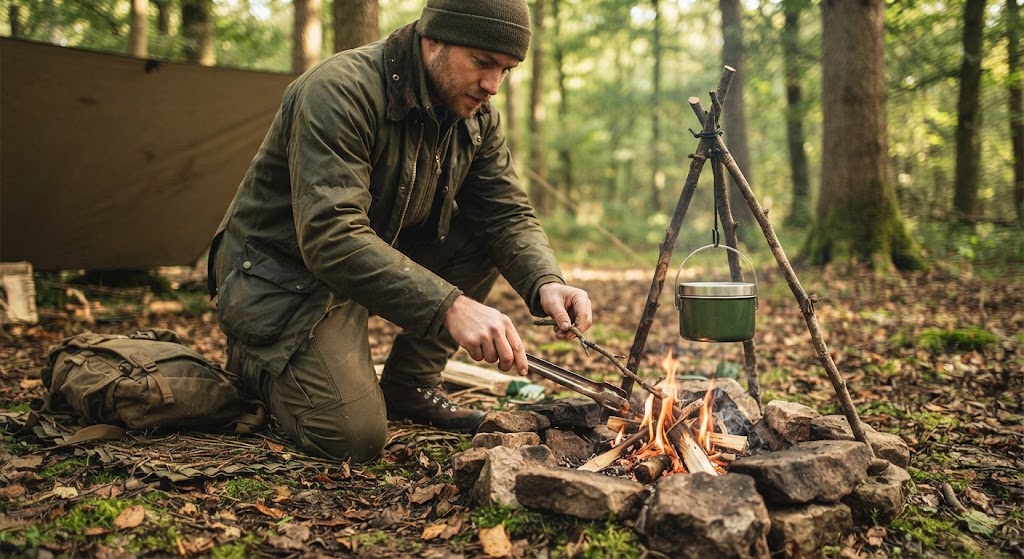
Only light a fire where you’re allowed to do so and under the supervision of a responsible adult. Use a suitable fire area and follow the rules of the campsite or location.
When you’re finished, the fire must be completely extinguished and the site left safe.
A fire should never be started simply because you can. Think about whether you actually need one and whether the location and conditions make it appropriate.
Use Tools Responsibly
Bushcraft can involve tools such as knives, axes and saws, but these should only be used when you are old enough, trained and properly supervised.
A tool isn’t a toy. Learn what it is designed for, use it correctly and listen to the person supervising you.
If you’re not sure whether you’re ready to use a particular tool, ask rather than simply trying it yourself.
There are plenty of bushcraft skills you can practise without using cutting tools at all.
Leave Plants and Natural Habitats Alone
Not everything you find outdoors is there for you to use.
Plants provide food and shelter for wildlife, fallen branches can provide homes for insects and decaying wood is an important part of a woodland ecosystem.
Try to leave natural habitats undisturbed. If you’re practising bushcraft as part of a group activity, use materials and areas that have been specifically chosen for that purpose.
Leave No Trace
When you’ve finished your activity, look around before you leave.
Collect your equipment, remove rubbish and make sure you haven’t left rope, food, packaging or other materials behind. If you’ve made a temporary camp gadget or shelter, take it apart when you’re finished unless you’ve been specifically told otherwise.
The best bushcraft activity is one where someone walking through the area afterwards would hardly know you’d been there.
Learn the Rules of the Place
Different woods, parks, campsites and countryside areas have different rules.
Some places may allow certain activities while others don’t. You might need permission before lighting a fire, collecting wood or carrying out a particular bushcraft activity.
Don’t assume that something is allowed just because you’ve seen someone else doing it.
Ask a responsible adult, landowner, campsite manager or activity leader if you’re unsure.
Think Before You Act
Responsible bushcraft comes down to making good decisions.
Before you collect something, ask whether you really need it. Before making a fire, ask whether it’s allowed and appropriate. Before disturbing something, ask whether an animal or plant might depend on it.
Learning bushcraft isn’t about taking as much as possible from the outdoors. It’s about understanding your surroundings and using your skills thoughtfully.
Final Tip
Leave the outdoors at least as good as you found it — and ideally with no sign that you were there at all.
The more you learn about nature, the more you’ll understand why responsible bushcraft matters. Being good at bushcraft isn’t just about what you can build, light or make. It’s also about knowing when to leave something exactly as you found it.
🔒Ready to test your survival skills?
Join Survival Guides UK for free, complete challenges, earn badges and increase your Survival Level.
JOIN FREE →
CRAIG BURR
FOUNDER · SURVIVAL GUIDES UK
I'm Craig, the person behind Survival Guides UK. I created SGUK because I wanted somewhere people could learn real outdoor skills in a practical, straightforward way — from lighting a fire and tying knots to navigation, campcraft and everything in between.
You can read more about the story behind SGUK here as well as our approach here.