How to Wash Clothes While Camping
Washing clothes is not usually the first thing people think about when planning a camping trip.
But on a longer camp, expedition or family trip, clothes can quickly become muddy, sweaty or wet.
The good news is that you do not need a washing machine to deal with basic camping laundry.
With a small amount of water, suitable soap and somewhere to dry your clothes, you can wash essential items by hand.
Do you need to wash your clothes while camping?
Not necessarily.
One of the easiest ways to reduce camping laundry is to avoid washing clothes unnecessarily.
A T-shirt worn for a short period in cool weather may not need washing immediately.
On the other hand, socks, underwear and heavily soiled clothing may need more attention.
Before washing something, ask:
- Is it actually dirty?
- Is it wet?
- Does it smell?
- Can it simply be aired?
- Do I need it again tomorrow?
This can save water, time and effort.
What clothes are easiest to wash at camp?
Small lightweight items are generally easiest to wash by hand.
These include:
- Socks
- Underwear
- T-shirts
- Lightweight base layers
- Small towels
- Hats
Large heavy items such as trousers, fleeces and jackets can take much longer to wash and dry.
For a short camping trip, it can be more practical to bring enough spare clothing rather than planning to wash everything.
What do you need for camping laundry?
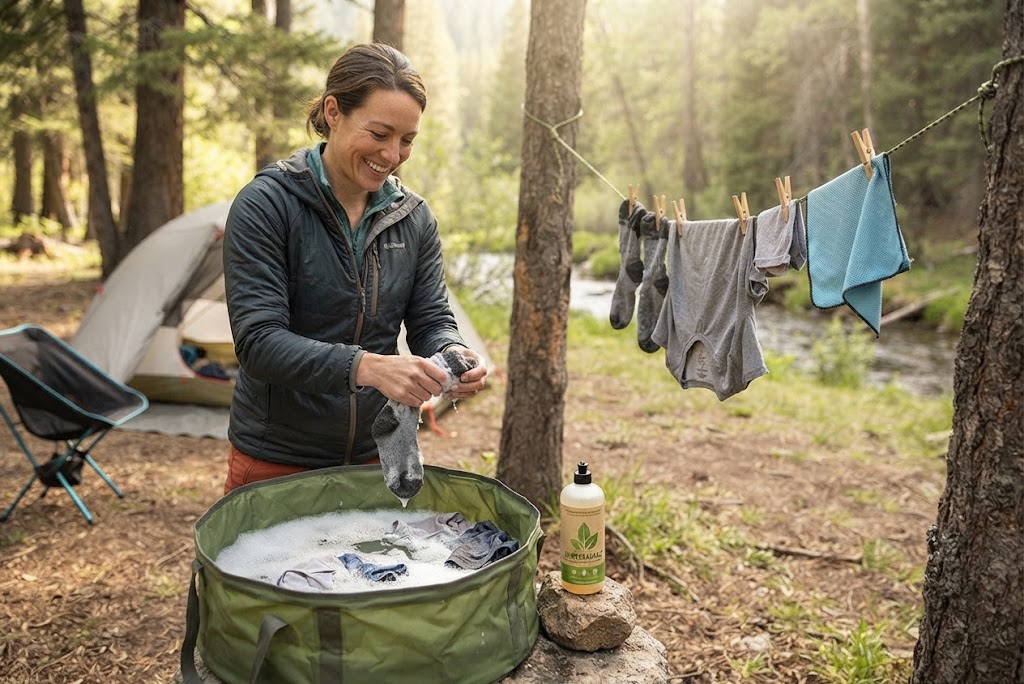
A simple hand-washing setup might include:
- A container or washing bag
- Clean water
- Suitable biodegradable camping soap where appropriate
- A small towel
- A place to hang clothes
- Spare dry clothing
You do not need a complicated system.
The most important thing is having somewhere suitable to wash and somewhere suitable to dry the clothing.
Never wash clothes directly in natural water
Do not treat rivers, streams, lakes or ponds as your personal washing machine.
Soap, detergents and dirty wash water can affect the environment and wildlife.
Instead, use a suitable container and follow the rules and guidance for the campsite or location you are staying at.
Keep washing activities away from natural water sources.
How to wash clothes by hand while camping
A basic hand-washing method is straightforward.
Step 1: Separate the clothes
Separate heavily dirty clothing from items that only need freshening.
Keep anything contaminated with food or other substances separate.
Step 2: Remove loose dirt
Shake or brush off mud and loose dirt before adding water.
This prevents the washing water from becoming unnecessarily dirty.
Step 3: Soak the clothing
Place the clothing in clean water.
Allow it to soak for a short period so dirt and sweat can loosen.
Step 4: Wash the fabric
Gently rub the fabric together, paying particular attention to:
- Collars
- Cuffs
- Armpits
- Socks
- Muddy areas
Avoid aggressive scrubbing if the fabric is delicate.
Step 5: Rinse thoroughly
Use clean water to rinse away soap and dirt.
Continue until the water coming from the clothing is reasonably clear and there is no obvious soap residue.
Step 6: Remove excess water
Do not simply leave wet clothes dripping.
Gently squeeze them or roll them inside a towel and press to remove excess moisture.
Avoid twisting delicate clothing aggressively.
How to dry clothes while camping
Drying can actually be more difficult than washing.
The best conditions are:
- Warm air
- Moving air
- Low humidity
- Some sunlight
But you cannot rely on good weather.
Use airflow
Air movement is extremely useful.
Hang clothes where air can circulate around them rather than bunching them together.
Turn them over periodically if one side remains damp.
Don’t pack damp clothes away
Putting wet clothing into a sealed bag for a long period can lead to unpleasant smells and other problems.
If something cannot dry completely, keep it separate from your dry clothing.
Use a dedicated wet bag if appropriate.
How to dry clothes when it is raining
Rain makes outdoor drying difficult, but there are still options.
Look for a covered, well-ventilated location where you are permitted to hang clothing.
A shelter that blocks rain but allows air movement is more useful than a completely enclosed space.
Do not create a damp, poorly ventilated environment inside your sleeping area simply to dry clothes.
Use your tent carefully
Wet clothing can increase condensation inside a tent.
If clothing needs to be stored overnight, keep it organised and avoid covering ventilation points.
Do not hang so much wet clothing inside that the sleeping area becomes excessively damp.
How to deal with muddy clothes
Let mud dry where practical before brushing it off.
Trying to wash thick wet mud immediately can use a lot of water.
Once dry, much of the loose dirt can often be removed by shaking or brushing.
Then wash the remaining marks.
How to wash clothes on a Scout or group camp
Group camps require additional planning.
You may need:
- A designated washing area
- Containers
- Water
- Suitable soap
- Drying lines
- Pegs
- A system for keeping clean and dirty clothing separate
A simple system prevents the washing area becoming chaotic.
Keep personal clothing separate
Everyone should know which clothing belongs to them.
This is particularly useful when several people are washing similar items such as socks or T-shirts.
Labels or distinctive clothing can help on larger camps.
How to reduce laundry on a camping trip
The easiest laundry is the laundry you do not create.
You can reduce washing by:
- Packing clothing appropriately
- Keeping clean and dirty clothes separate
- Wearing layers
- Airing clothes rather than washing them unnecessarily
- Keeping muddy footwear outside sleeping areas
- Using dedicated sleep clothing
- Protecting clothes from rain
For longer trips, plan which items genuinely need washing and which can simply be aired.
A simple camping laundry routine
For a multi-day trip, you could use a simple routine:
Morning: air overnight clothing.
During the day: keep dirty clothes separate.
Evening: wash essential small items if needed.
After washing: remove as much water as possible.
Drying: hang clothing where there is good airflow.
Before bed: move anything still damp into a separate wet-clothing area.
This prevents laundry becoming a daily nuisance.
Camping laundry checklist
Before your trip:
- Pack enough clothing
- Bring a small washing container if needed
- Pack suitable soap
- Take a few pegs
- Bring a wet bag
- Consider a lightweight towel
- Plan where washing can take place
At camp:
- Remove loose dirt first
- Wash small items rather than everything
- Keep soap away from natural water
- Rinse thoroughly
- Remove excess water
- Dry clothes with good airflow
- Keep damp clothing separate
Washing clothes while camping does not need to be complicated.
For most trips, the combination of packing sensibly, washing only what needs washing and drying clothing properly is enough to keep your kit manageable.
🔒Ready to test your survival skills?
Join Survival Guides UK for free, complete challenges, earn badges and increase your Survival Level.
JOIN FREE →
CRAIG BURR
FOUNDER · SURVIVAL GUIDES UK
I'm Craig, the person behind Survival Guides UK. I created SGUK because I wanted somewhere people could learn real outdoor skills in a practical, straightforward way — from lighting a fire and tying knots to navigation, campcraft and everything in between.
You can read more about the story behind SGUK here as well as our approach here.