How to Keep Food Cold While Camping
Keeping food cold while camping can be surprisingly difficult.
At home, you can simply put everything in the fridge. At camp, you may have a cool box, ice packs, frozen food and a warm day to deal with.
The key is to start with cold food, keep it insulated and avoid letting warm air into your storage container unnecessarily.
Good food storage is also an important part of camping safety, particularly when you are taking meat, dairy products, cooked food or other chilled items.
Why keeping food cold matters
Some foods need to be kept chilled because bacteria can multiply more quickly when food is stored at unsuitable temperatures.
This is particularly important with foods such as:
- Meat
- Poultry
- Fish
- Dairy products
- Cooked foods
- Some prepared salads
- Certain sandwiches
- Leftovers
Keeping these foods properly chilled helps reduce the risk of food poisoning.
For camping, the challenge is maintaining a suitable temperature from the moment you leave home until the food is needed.
Start by chilling your food at home
One of the easiest ways to keep camping food cold is to start with cold food.
Do not pack food straight from a warm kitchen into your cool box if you can avoid it.
Instead:
- Refrigerate chilled food before the trip.
- Freeze suitable foods where practical.
- Pre-chill drinks.
- Freeze your ice packs.
- Prepare the cool box before packing it.
The less heat your cool box has to remove, the longer it can maintain a low temperature.
Use frozen food as part of your cooling system
Frozen food can be useful on camping trips because it acts as both food and a source of cold.
For example, you could freeze suitable items before leaving home and allow them to gradually thaw during the trip.
This works particularly well for:
- Bread
- Some cooked meals
- Certain sauces
- Suitable fruit
- Some meat products
- Ice packs
- Bottles of water
Always consider whether a particular food is suitable for freezing and how it needs to be handled once thawed.
Don’t rely on frozen food indefinitely
Frozen food eventually becomes chilled food and then warm food.
Plan when you intend to eat it rather than assuming that everything will remain frozen throughout the trip.
Choose the right cool box
A well-insulated cool box can make a significant difference.
When choosing one, think about:
- Insulation
- Size
- Lid design
- How often it will be opened
- How much food you need
- How easy it is to transport
- Whether it is suitable for your type of camping
Bigger is not automatically better.
An unnecessarily large cool box contains more empty space that needs to be kept cold.
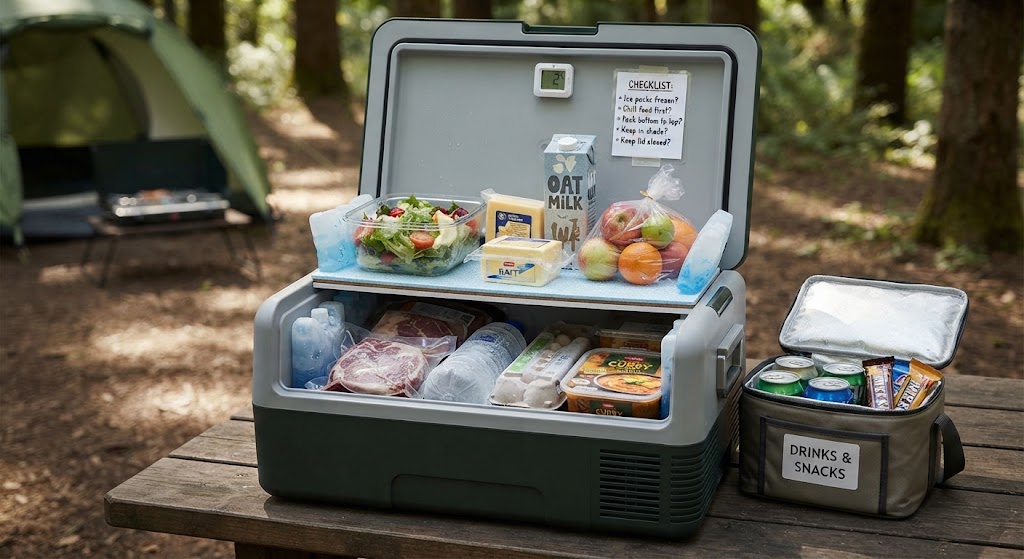
Use a separate drinks container if possible
Drinks are often accessed much more frequently than food.
Every time the cool box is opened, warmer air can enter.
If practical, keeping drinks separate means your food storage can remain closed for longer.
Pack your cool box properly
The way you pack a cool box matters.
A useful approach is to put the items you are likely to need first near the top and less frequently used food further down.
Try to minimise empty spaces.
Use ice packs or other suitable cooling methods around the food rather than simply placing all the cooling material in one area.
Keep the lid closed
This is one of the simplest rules.
Every unnecessary opening allows cold air to escape and warmer air to enter.
Before opening the cool box, think about what you need.
Get everything out at once if possible.
Keep the cool box out of the sun
Where you store your cool box can make a big difference.
Avoid leaving it:
- In direct sunlight
- Inside a hot tent
- In a warm vehicle
- Next to cooking equipment
- Beside a fire
Look for a cool, shaded location.
If the campsite becomes hotter during the day, move the cool box to a more sheltered position if practical.
Don’t put warm food straight into your main cool box
If you have cooked food that needs to be stored, allow it to cool safely rather than putting a large quantity of hot food directly into a cool box full of chilled food.
Large amounts of warm food can raise the temperature inside the container.
Plan meals so that you do not have unnecessary leftovers to store.
Organise food by when you will eat it
A simple meal plan can reduce the amount of time your cool box is open.
For example:
First meal: easily accessible chilled food
Second meal: food stored underneath
Later meals: less frequently accessed items
You can also separate food into meal-sized containers.
This means you are not searching through the entire cool box every time you need something.
Keep raw and ready-to-eat food separate
Raw meat and other raw foods should be stored carefully so that they cannot contaminate foods that are ready to eat.
Keep raw food securely packaged and prevent leaking.
Ideally, store raw meat separately from:
- Bread
- Fruit
- Salads
- Cooked food
- Snacks
- Drinks
If a container leaks, clean it appropriately rather than simply wiping around it and continuing to use the same area for ready-to-eat food.
How to keep milk cold while camping
Milk can be one of the more awkward camping foods because it needs to stay chilled and is often accessed repeatedly.
Consider:
- Taking only the amount you need
- Keeping it in the coldest part of the cool box
- Using smaller containers
- Keeping the container closed
- Avoiding unnecessary opening of the cool box
For longer trips, consider whether shelf-stable alternatives might be more practical for some meals.
What about butter, cheese and other foods?
Not every food has exactly the same storage requirements.
Some foods are more tolerant of short periods outside refrigeration than others.
The safest approach is to check the storage instructions for the specific food and follow them.
Do not assume that because something looks or smells normal it is necessarily safe to eat.
What if your food gets warm?
If chilled food has become noticeably warm, do not automatically assume it is safe because it was cold earlier.
Consider:
- What food is it?
- How long has it been out of suitable refrigeration?
- How warm has it become?
- Has the packaging been opened?
- Does the food have specific storage instructions?
When in doubt, it is safer to discard questionable perishable food than risk food poisoning.
Keeping food cold on a family camping trip
Family camping trips often involve frequent trips into the cool box.
Children may want drinks, snacks or food throughout the day.
You can reduce this by creating a separate area for frequently used items.
For example:
Cool box: meals and perishable food
Separate bag: snacks that do not require refrigeration
Separate drinks container: drinks
This means the main food supply stays closed more often.
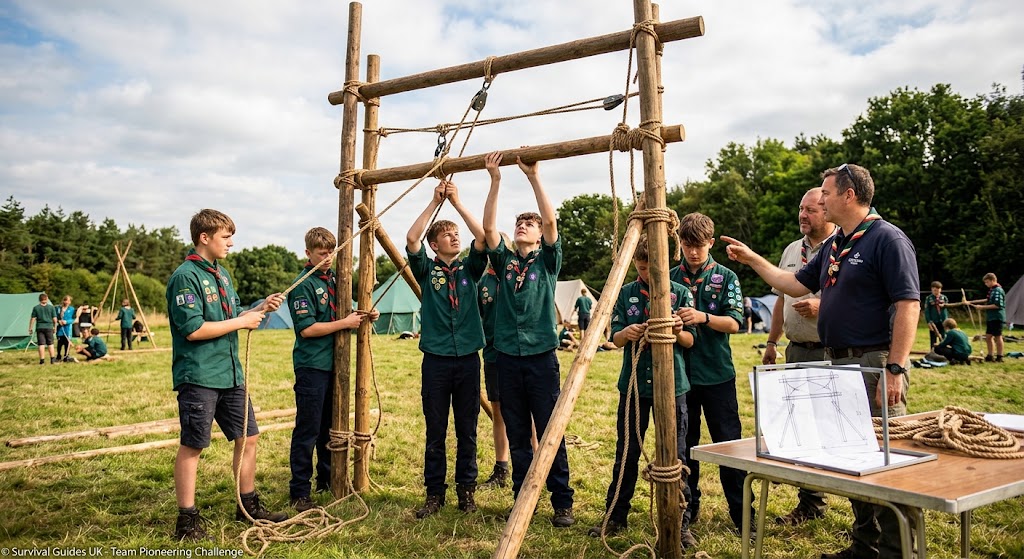
Keeping food cold on a Scout camp
Group camping adds another challenge because many people may be accessing the same food.
Good organisation helps.
Consider:
- Labelling food
- Keeping raw and ready-to-eat food separate
- Assigning responsibility for food storage
- Limiting unnecessary opening
- Keeping the food area shaded
- Checking chilled food regularly
- Planning meals around available storage
For leaders, food storage should form part of the wider camp food-safety plan.
A simple camping food cooling checklist
Before leaving:
- Chill food thoroughly
- Freeze suitable items
- Freeze ice packs
- Prepare the cool box
- Plan meals
- Separate raw and ready-to-eat food
- Decide what needs refrigeration
At camp:
- Keep the cool box shaded
- Keep the lid closed
- Avoid unnecessary opening
- Keep raw food secure
- Monitor chilled food
- Use food in a sensible order
- Avoid keeping questionable food
Plan your food around your camping trip
The easiest way to keep food cold is to avoid creating a problem in the first place.
Think about:
How long is the trip?
What foods actually need chilling?
How much food will we eat?
How often will the cool box be opened?
How much cooling capacity do we have?
A little planning can make camping meals much easier and reduce the amount of perishable food you need to manage.
🔒Ready to test your survival skills?
Join Survival Guides UK for free, complete challenges, earn badges and increase your Survival Level.
JOIN FREE →
CRAIG BURR
FOUNDER · SURVIVAL GUIDES UK
I'm Craig, the person behind Survival Guides UK. I created SGUK because I wanted somewhere people could learn real outdoor skills in a practical, straightforward way — from lighting a fire and tying knots to navigation, campcraft and everything in between.
You can read more about the story behind SGUK here as well as our approach here.