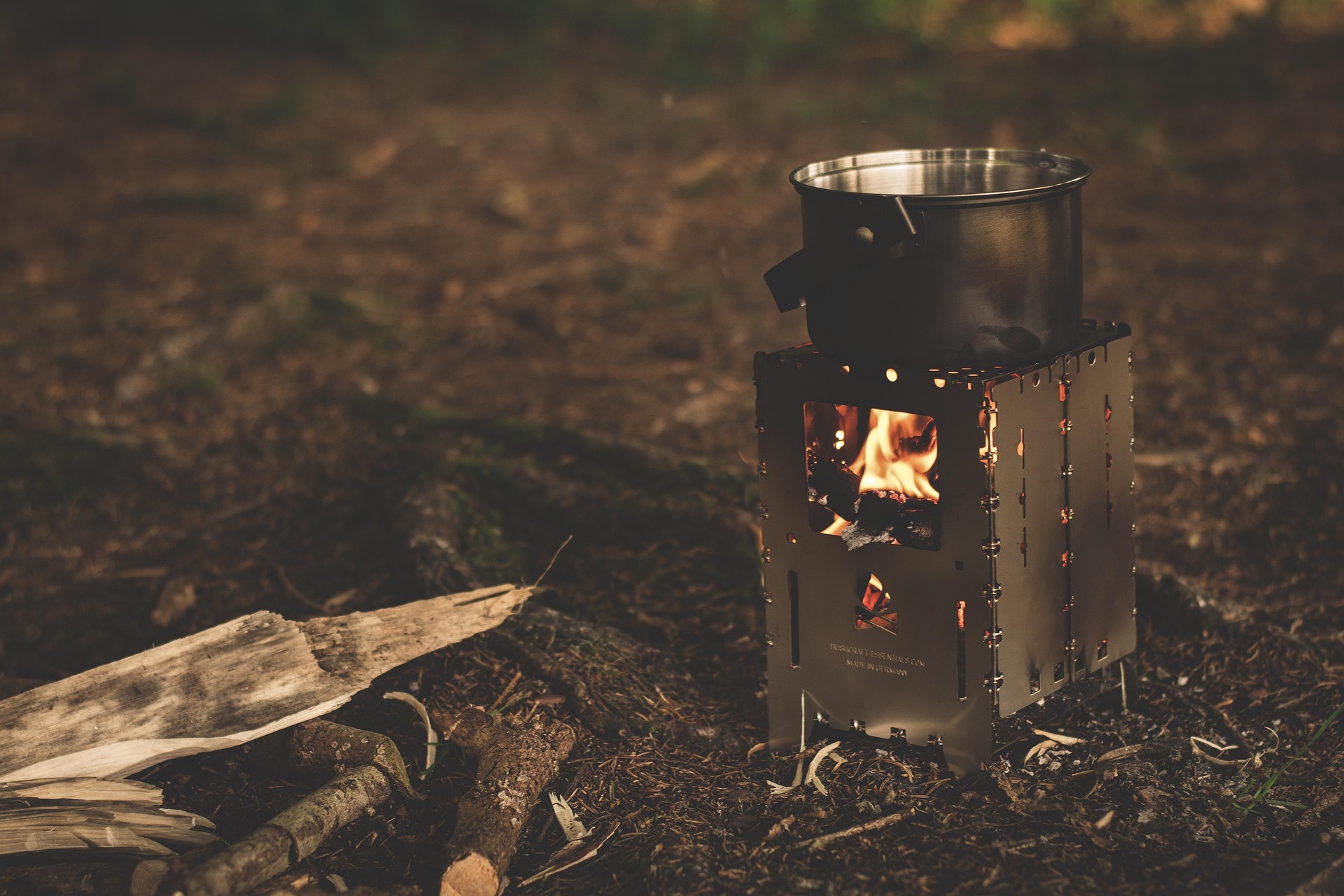
How to Set Up a Camp Kitchen
A well-organised camp kitchen makes outdoor cooking easier, cleaner and safer.
Whether Scouts are using camping stoves or another approved cooking system, the cooking area should be planned before equipment is unpacked. Good organisation helps everyone understand where to work, where equipment belongs and how people should move around the area.
Choose a Suitable Location
The first step is deciding where the camp kitchen should be.
Use a location that is suitable for the cooking equipment being used and follows the campsite’s rules.
The area should have enough space for people to work without crowding one another.
Avoid placing the kitchen where people will constantly walk through it.
Keep It Away From Tents
Cooking areas should be positioned with appropriate separation from tents and other combustible materials.
The exact distance and setup will depend on the equipment and manufacturer’s instructions.
Never assume that a sheltered position beside a tent is automatically suitable for cooking.
Consider the Wind
Wind can affect outdoor cooking considerably.
It can make flames harder to control and may blow heat, smoke or hot material towards people.
Think about wind direction when choosing and organising the kitchen.
If conditions become unsuitable, stop and reassess the cooking setup.
Create a Working Area
A camp kitchen needs somewhere to prepare food and organise equipment.
Use suitable surfaces and keep them clean.
Try to arrange equipment so that frequently used items are easy to reach without creating clutter.
Separate Clean and Dirty Areas
Keep food preparation areas separate from places where dirty equipment is being collected.
This helps maintain better hygiene and makes washing up more straightforward.
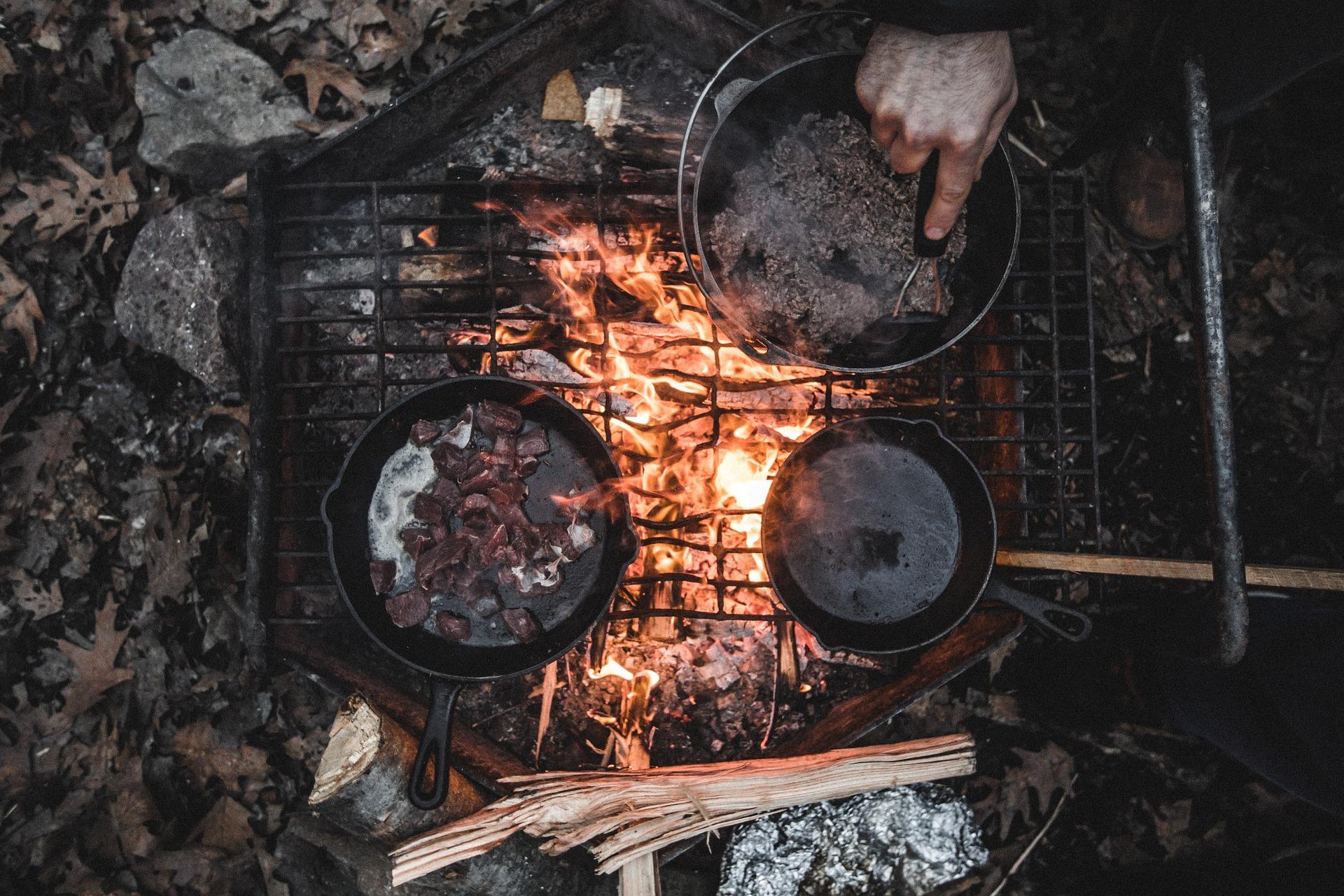
A simple system can be enough: one area for preparation, one for cooking and another for used equipment.
Organise Cooking Equipment
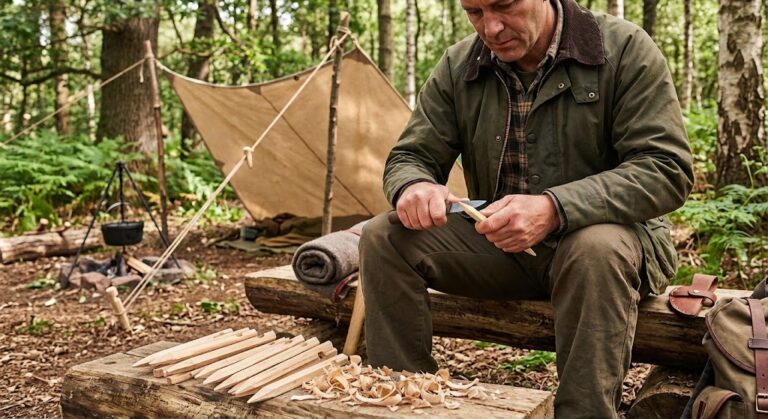
Keep cooking equipment together and organised.
Stoves, fuel, cookware and utensils should be stored and used according to their instructions.
Don’t leave equipment scattered around the campsite.
When something isn’t being used, return it to an appropriate location.
Store Fuel Correctly
Fuel needs particular attention.
Follow the manufacturer’s instructions for storage and handling, and use only the fuel specified for the appliance.
Keep fuel away from flames, heat and ignition sources.
Scouts should only handle fuel when this is appropriate for their age, training and the activity arrangements.
Keep Water Available
Have suitable water available for the cooking activity where appropriate.
It can be useful for food preparation, cleaning and dealing with minor spills.
Don’t assume that water from a nearby stream or lake is automatically suitable for drinking or cooking.
Use an appropriate safe water supply.
Keep Food Covered
Protect food from rain, dirt and insects.
Keep food in suitable containers when it isn’t being prepared or eaten.
Don’t leave food scattered around the cooking area.
Think About Washing Up
Washing up should be part of the kitchen plan rather than something considered afterwards.
Decide where dirty equipment will go and how it will be cleaned.
Follow the site’s arrangements for disposing of wastewater.
Don’t pour dirty water into natural watercourses.
Keep a Clear Route
People should be able to enter and leave the cooking area without squeezing between hot equipment or containers.
Keep the route clear of bags, ropes and other camping equipment.
This becomes particularly important when people are carrying hot food or cookware.
Keep Children Out of Unnecessary Danger
Not everyone at camp needs to be inside the cooking area.
Set clear boundaries appropriate to the activity.
Scouts who aren’t involved in cooking should understand where they can and cannot go.
Check the Setup Before Cooking
Before lighting or operating equipment, take a moment to inspect the kitchen.
Check that:
Keep the Kitchen Tidy
Tidiness matters during cooking, not just afterwards.
Put equipment away when you’ve finished using it.
Clear spills promptly.
Keep rubbish contained.
Don’t allow dirty utensils and packaging to build up around the cooking area.
Deal With Hot Equipment Carefully
Pots, pans and cooking surfaces can remain hot after cooking has stopped.
Make sure Scouts understand that equipment doesn’t become safe immediately when the flame is turned off.
Allow equipment to cool appropriately before moving or storing it.
Younger Scouts
Younger Scouts can help with suitable preparation and organisation tasks.
They might help arrange ingredients, keep surfaces tidy or collect equipment under supervision.
Cooking responsibilities should match their age, experience and the equipment being used.
Older Scouts
Older Scouts can take more responsibility for planning and organising a camp kitchen.
They can help decide how equipment should be arranged and identify potential problems before cooking starts.
This develops useful campcraft and leadership skills.
Leader Notes
The best camp kitchens are usually simple.
Avoid unnecessary equipment and complicated layouts.
Give Scouts clear responsibilities and make sure everyone understands the boundaries around cooking equipment.
Supervision should match the risks involved rather than relying on Scouts simply knowing what to do.
Safety
Follow the manufacturer’s instructions for all cooking equipment.
Use only the correct fuel for each appliance.
Keep flames, hot surfaces and fuel away from tents and other combustible materials.
Never use camping stoves in enclosed tents or other unsuitable spaces.
Keep the cooking area clear of unnecessary traffic.
Ensure appropriate supervision at all times.
Store fuel safely and away from ignition sources.
Allow hot equipment to cool before handling or storing it.
Follow campsite rules and any local requirements for cooking and fires.
Learning Outcomes
Scouts can learn to:
Final Thought for Scouts
A good camp kitchen doesn’t need to be complicated.
Keep it organised, keep it clean and keep people safely separated from hazards.
Good preparation makes outdoor cooking much easier.
🔒Ready to test your survival skills?
Join Survival Guides UK for free, complete challenges, earn badges and increase your Survival Level.
JOIN FREE →
CRAIG BURR
FOUNDER · SURVIVAL GUIDES UK
I'm Craig, the person behind Survival Guides UK. I created SGUK because I wanted somewhere people could learn real outdoor skills in a practical, straightforward way — from lighting a fire and tying knots to navigation, campcraft and everything in between.
You can read more about the story behind SGUK here as well as our approach here.