What Is Campcraft?
Campcraft is the collection of practical skills used to set up, run and look after a campsite.
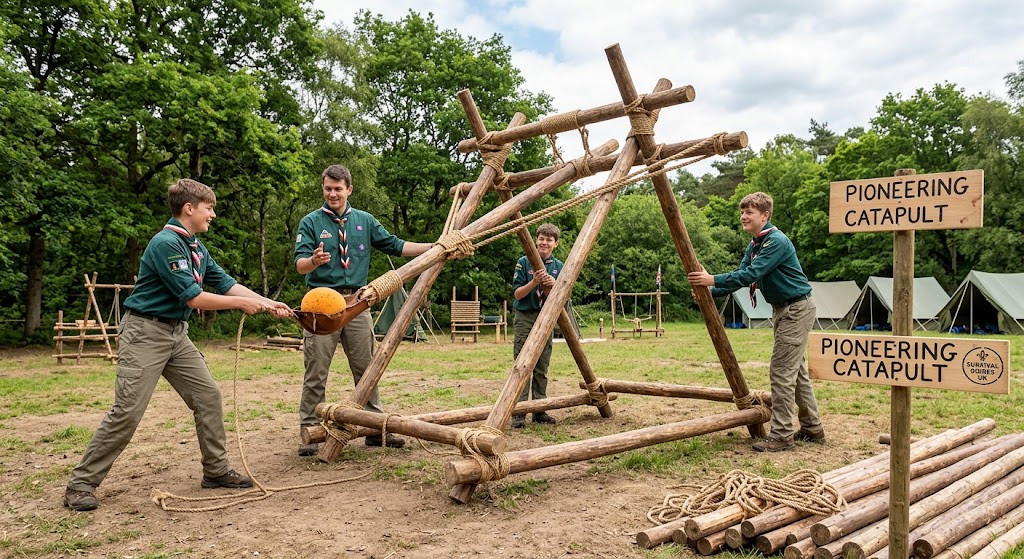
For Scouts, it can include everything from pitching tents and organising equipment to setting up cooking areas, managing camp routines and leaving a site clean and tidy.
Campcraft isn’t about making camping complicated. It’s about learning how to look after yourself, your equipment and the people around you.
Why Is Campcraft Important?
A well-run campsite is usually easier and safer to manage.
Scouts learn to organise equipment, work as a team and think about how different parts of camp fit together.
These skills become particularly useful as young people take on more responsibility during camps and outdoor activities.
What Skills Are Included?
Campcraft covers a wide range of practical activities.
Tent pitching is an obvious example, but there is much more to it.
Scouts can learn about campsite layout, equipment management, cooking areas, safe use of tools, fire management where appropriate, keeping kit dry and maintaining a clean campsite.
The exact skills will depend on the Scout section, activity and environment.
Campcraft Is About Teamwork
Many camp jobs are easier when people work together.
One Scout might help organise equipment while another prepares a tent area.
Someone else might help with the cooking setup or check that a walkway is clear.
Good communication makes these jobs more efficient and helps Scouts understand that a campsite is a shared space.
Start With the Campsite Layout
Before setting everything up, think about where different activities will happen.
Tents need suitable locations.
Cooking areas need to be appropriately positioned.
Equipment needs somewhere organised to be stored.
There should also be sensible routes for people to move around.
The layout should suit the site rather than trying to force the site into a particular arrangement.
Keep Equipment Organised
Campcraft includes knowing where equipment is and keeping it in good condition.
Loose equipment scattered around camp can become difficult to find and may create trip hazards.
Simple habits such as returning equipment to the same place after use can make a campsite much easier to manage.
Learn to Look After Shared Equipment
Scout camps often involve equipment shared by the whole group.
This might include tents, cooking equipment, ropes, tools or other camping kit.
Scouts should understand that shared equipment needs to be used carefully and returned properly.
Looking after equipment is part of being responsible at camp.
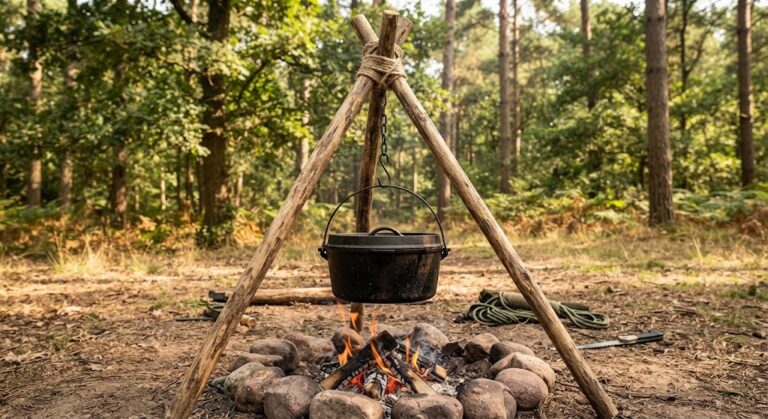
Cooking Is Part of Campcraft
Preparing food outdoors is another important campcraft skill.
Scouts can learn how to organise a cooking area, prepare equipment and maintain good hygiene.
Cooking methods and equipment should always be appropriate for the age group, activity and supervision available.
Campcraft and Outdoor Skills
Campcraft connects with many other outdoor skills.
A Scout who understands how to choose a campsite will have a better understanding of where to position a tent.
Someone who understands weather conditions will be better prepared to protect equipment.
Someone who knows how to organise a campsite will find it easier to work efficiently with others.
The skills support one another.
Younger Scouts
For younger Scouts, campcraft can start with simple responsibilities.
They might help organise personal equipment, keep a tent area tidy or carry out straightforward campsite jobs under supervision.
The emphasis should be on developing good habits.
Older Scouts
Older Scouts can take greater responsibility for planning and running parts of a campsite.
They can help decide how equipment should be organised, identify potential problems and coordinate tasks with other Scouts.
This can develop leadership, communication and decision-making skills.
Leader Notes
Campcraft works particularly well when Scouts are given genuine responsibility appropriate to their age and experience.
Rather than doing every job for them, give them opportunities to plan, try, check and improve.
The leader still provides appropriate supervision and makes the final decisions about safety.
Safety
All campcraft activities should be appropriate for the age, ability and experience of the Scouts taking part.
Provide suitable supervision for equipment and activities.
Keep walkways and shared areas clear of unnecessary hazards.
Store equipment safely when it isn’t being used.
Use cooking equipment, tools and other potentially hazardous equipment only with appropriate instruction and supervision.
Follow the manufacturer’s instructions for equipment and the rules of the campsite or activity location.
Regularly reassess the campsite if weather or other conditions change.
Learning Outcomes
Scouts developing campcraft skills can learn to:
Final Thought for Scouts
Campcraft isn’t one single skill.
It’s all the little things that help a campsite work well.
Organise your kit, look after your surroundings, work with others and take pride in doing camp jobs properly.
Those simple habits can turn camping from something you take part in into something you know how to manage.
🔒Ready to test your survival skills?
Join Survival Guides UK for free, complete challenges, earn badges and increase your Survival Level.
JOIN FREE →
CRAIG BURR
FOUNDER · SURVIVAL GUIDES UK
I'm Craig, the person behind Survival Guides UK. I created SGUK because I wanted somewhere people could learn real outdoor skills in a practical, straightforward way — from lighting a fire and tying knots to navigation, campcraft and everything in between.
You can read more about the story behind SGUK here as well as our approach here.