Food Ration Planning: Scout Camping and Expedition Guide
Activity Overview
Difficulty: Moderate
Time: 30–60 minutes
Location: Campsites, expedition bases and suitable outdoor planning areas
Best for: Scouts, Explorers, Patrol Leaders and experienced Cubs with supervision
Skills: Meal planning, nutrition, portion control, budgeting, packing and expedition planning
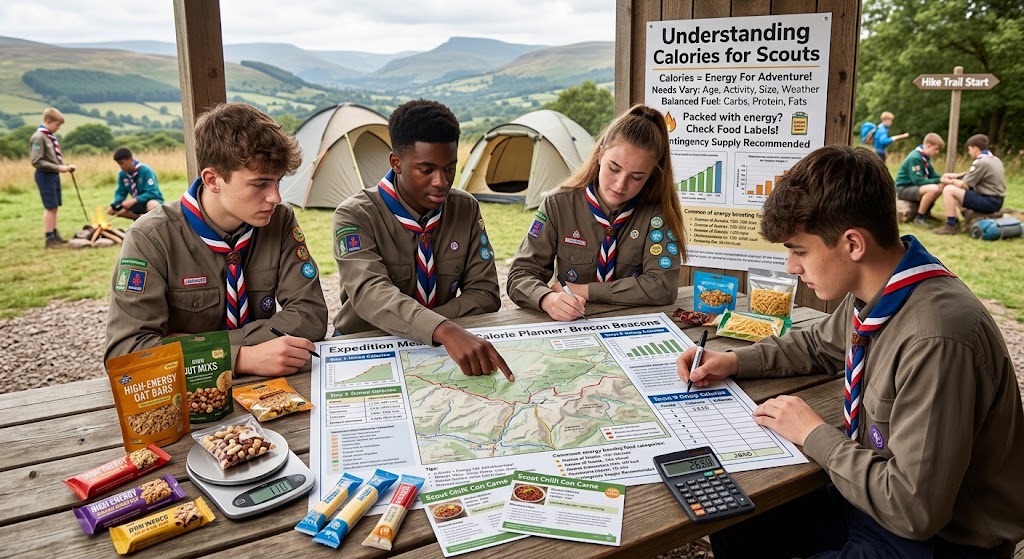
Food ration planning means working out what food is needed, how much is required and how it will be stored, carried and prepared for an outdoor activity.
A good ration plan provides enough food and energy without carrying unnecessary weight.
For Scouts, plan around the length and intensity of the activity, the number of people, available cooking facilities, dietary requirements and the conditions expected.
What You’ll Learn
You’ll learn how to estimate food requirements for a camp or expedition.
You’ll also learn how to balance meals, plan portions, organise ingredients, reduce waste and keep a sensible reserve for unexpected delays.
🟡 SAFETY – MODERATE RISK
Food planning needs to account for food allergies, intolerances, dietary requirements and food hygiene.
Keep raw and ready-to-eat foods separate where appropriate.
Perishable food needs suitable temperature control and should not be carried or stored for longer than is safe.
Make sure Scouts know which ingredients are in meals, particularly where allergies are involved.
Consider how weather and activity levels may affect food storage and preparation.
Equipment
You’ll need a meal plan and shopping list.
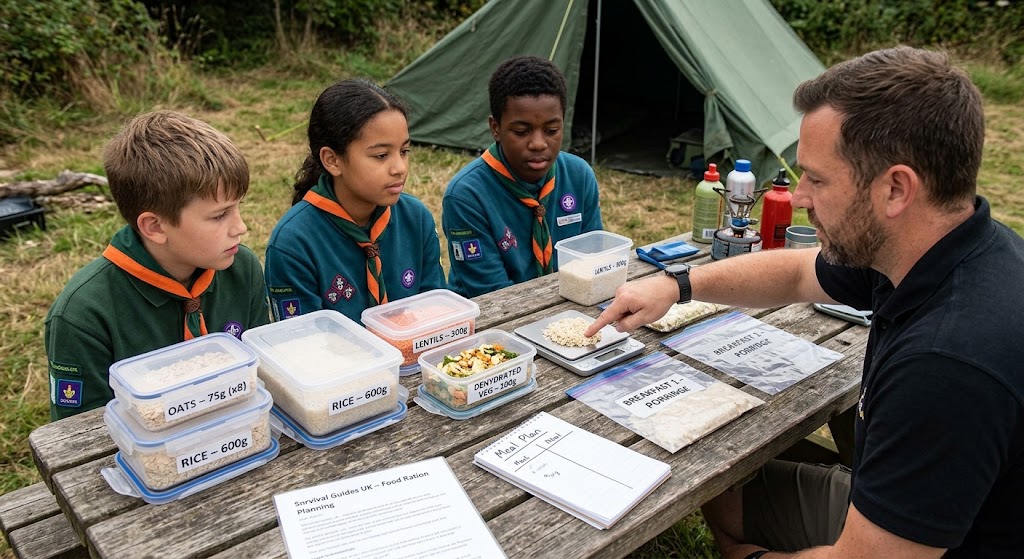
Kitchen scales can help with accurate portions.
Reusable food containers or bags can keep ingredients organised.
Labels are useful for identifying meals, ingredients and dietary requirements.
For expeditions, a lightweight stove and appropriate cooking equipment may be required.
Prerequisites
Before planning rations, establish:
Instructions
1. Establish the Duration
Start by working out exactly how many meals are needed.
A weekend camp may require considerably fewer rations than a week-long expedition.
Remember to include snacks and drinks as well as main meals.
2. Count the Group
Work out the number of people who need feeding.
Don’t simply multiply a generic portion size without considering the age and activity level of the group.
Younger Scouts and adults may have different requirements.
3. Consider the Activity
A demanding hike, pioneering session or other physically active day can increase energy requirements.
Cold weather can also affect appetite and energy needs.
Plan food around the actual activity rather than using the same ration for every type of camp.
4. Plan the Main Meals
Aim for a mixture of carbohydrates, protein, fruit and vegetables where practical.
Breakfast should provide a useful start to the day.
Lunch may need to be portable if the group is away from camp.
Dinner can be more substantial when there is time to cook.
5. Plan Snacks
Snacks can be particularly useful during active days.
Choose foods that travel well and can be eaten safely outdoors.
Avoid relying entirely on foods that melt, spoil quickly or are easily damaged in a rucksack.
6. Plan Drinks
Include sufficient drinking water and consider how water will be obtained or carried during the activity.
Don’t rely on finding suitable natural water sources unless they have been properly assessed and there is an appropriate treatment plan.
7. Calculate Portions
Work out the amount required for each meal before shopping or packing.
For example, if a meal uses 75 g of an ingredient per person and there are 8 people, the basic requirement is:
75 g × 8 = 600 g
Add an appropriate contingency where necessary rather than simply doubling every ingredient.
8. Build in a Contingency
Outdoor activities don’t always run according to plan.
A delayed journey or change in weather could mean an additional snack or meal is required.
Keep a sensible emergency food reserve, particularly on expeditions where resupply isn’t readily available.
9. Consider Weight
For backpacking, every extra gram matters.
Choose foods that provide useful energy without unnecessary packaging or water weight.
Dehydrated ingredients can be useful where appropriate because they are lightweight and have good storage characteristics.
10. Consider Packaging
Remove unnecessary outer packaging before an expedition.
Repackage ingredients into secure, labelled containers or bags where appropriate.
Clearly identify ingredients and keep meal components together.
11. Label Dietary Requirements
Check every ingredient against known allergies and dietary requirements.
Don’t assume that a product is suitable simply because it doesn’t obviously contain an allergen.
Keep dietary-specific food clearly identified to reduce the risk of accidental substitution.
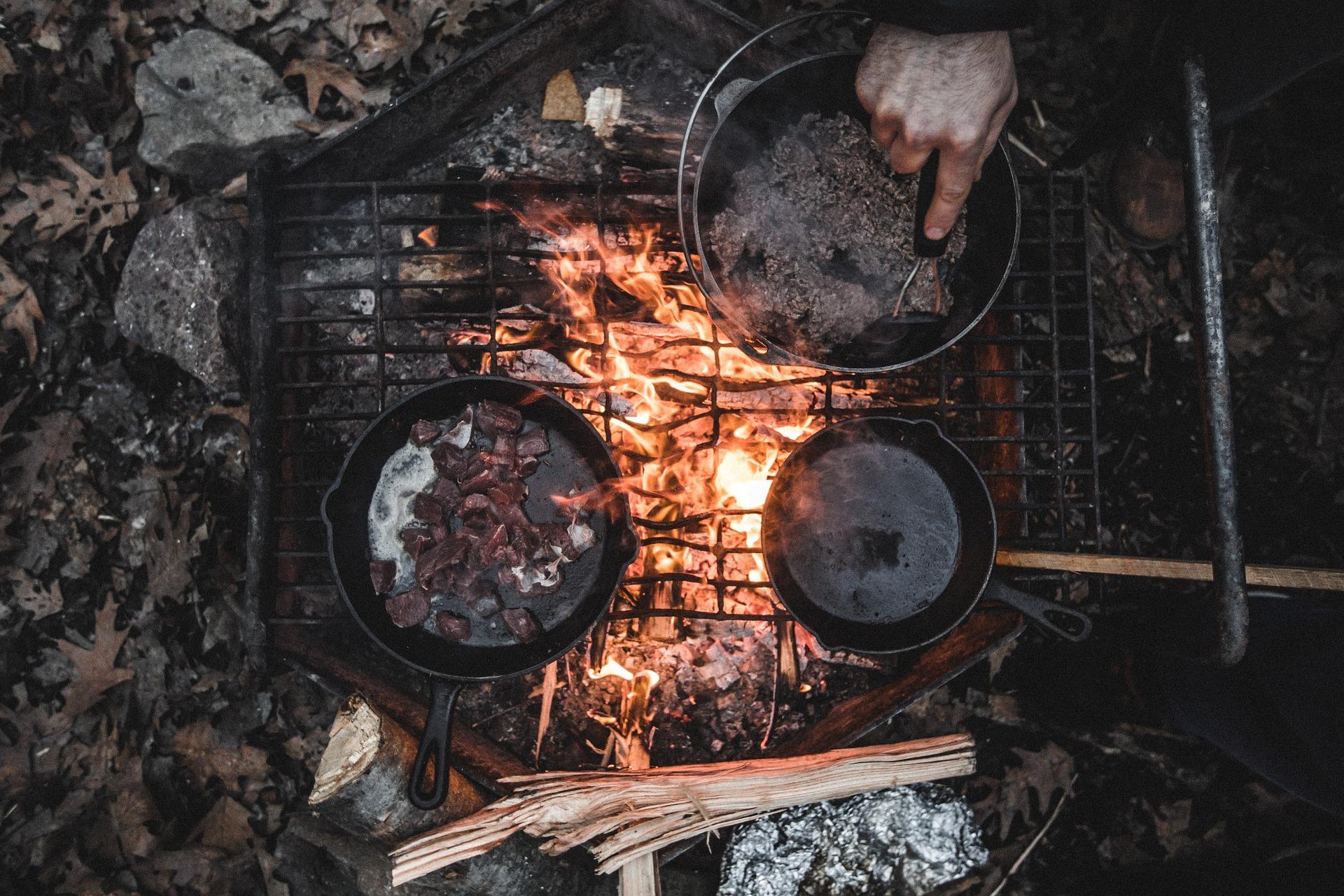
12. Plan Cooking Requirements
For every meal, consider how it will actually be prepared.
Check the cooking time, fuel requirements, water requirements and equipment needed.
A meal that looks simple at home can become impractical if it requires several pans and a long cooking time on a small camping stove.
13. Match Meals to the Day
Plan simpler meals for days when the group will be tired or arriving late at camp.
More elaborate meals can be saved for times when there is plenty of daylight and cooking time.
This makes the ration plan more practical.
14. Plan Food Storage
Keep food protected from rain, contamination and animals.
Perishable foods require appropriate storage temperatures.
Don’t leave food waste or open food around the campsite.
Follow the site’s requirements for food storage and disposal.
15. Reduce Waste
Use ingredients across several meals where practical.
For example, an ingredient bought for one dinner might also form part of the following day’s lunch.
Plan quantities carefully so that excess food doesn’t become unnecessary waste.
16. Check the Complete Ration Plan
Before leaving, review the entire plan.
Check that every meal has its ingredients, cooking equipment and required fuel.
Make sure snacks and drinks haven’t been forgotten.
17. Pack by Meal
For group expeditions, packing food by meal can make preparation much easier.
A labelled meal bag can contain the ingredients needed for that particular meal.
This reduces searching through several food bags when everyone is tired and hungry.
18. Keep an Emergency Ration
Carry a suitable reserve that can be kept separately from the normal meals.
It should be something that can be eaten without complicated preparation if plans change.
The amount needed depends on the activity and its remoteness.
Example Daily Plan
A simple one-day ration might consist of:
Breakfast: porridge with fruit and a hot drink.
Lunch: sandwiches or wraps with fruit and a suitable snack.
Afternoon: energy-dense snack and drink.
Dinner: a one-pot meal containing carbohydrates, protein and vegetables.
Evening: optional snack or hot drink.
The exact quantities should be adjusted for the group, activity and individual dietary requirements.
Food Ration Planning for Backpacking
When Scouts are carrying their own food, weight becomes particularly important.
Choose compact ingredients that don’t require excessive packaging.
Avoid carrying unnecessary water in food where it can safely be added at camp.
However, don’t sacrifice adequate nutrition simply to reduce pack weight.
A lighter rucksack is useful, but having enough food and water is more important.
Planning for Unexpected Delays
An expedition may take longer than expected because of poor weather, navigation problems or a slower pace.
A sensible contingency ration gives the group some flexibility.
For longer or remote activities, consider what would happen if the group had to remain out overnight unexpectedly and plan accordingly.
Final Tip
Good food ration planning is about finding the balance between enough food, manageable weight, good nutrition and practical preparation.
Plan every meal, include snacks and drinks, account for dietary requirements and carry a sensible contingency.
The best ration plan is one that the Scouts can actually carry, cook, eat and store safely.
🔒Ready to test your survival skills?
Join Survival Guides UK for free, complete challenges, earn badges and increase your Survival Level.
JOIN FREE →
CRAIG BURR
FOUNDER · SURVIVAL GUIDES UK
I'm Craig, the person behind Survival Guides UK. I created SGUK because I wanted somewhere people could learn real outdoor skills in a practical, straightforward way — from lighting a fire and tying knots to navigation, campcraft and everything in between.
You can read more about the story behind SGUK here as well as our approach here.