Ferrocerium Rod Safety
Activity Overview
Difficulty: Easy–Moderate
Time: 15–20 minutes
Location: Scout campsites and suitable outdoor activity areas
Best for: Cubs, Scouts, Explorers, Patrol Leaders and adult leaders
Skills: Fire safety, ferrocerium rod handling, spark control, situational awareness and campcraft
A ferrocerium rod is generally straightforward to use, but it produces very hot sparks capable of igniting dry materials.
The main safety priorities are controlling where the sparks go, keeping combustible materials away, preparing the fire area properly and ensuring that everyone understands when the rod can be used.
Treat the rod as a fire-lighting tool, not a toy.
What You’ll Learn
You’ll learn how to handle a ferrocerium rod and striker safely and how to control the direction of sparks.
You’ll also learn how to prevent accidental ignition, manage tinder and surrounding materials, and store the equipment safely after use.
🔴 SAFETY – HIGH RISK
The sparks produced by a ferrocerium rod can ignite tinder, dry grass, paper and other combustible materials.
Use the rod only in a suitable fire area where fires are permitted.
Keep the spark path directed towards the intended tinder and away from people, clothing and equipment.
Never use a ferrocerium rod near fuel containers, aerosols, tents or other easily ignited materials.
Secure loose clothing and hair before producing sparks.
A responsible person should supervise the activity, particularly with younger Scouts.
Have suitable means of extinguishing the fire immediately available.
Equipment
You’ll need a ferrocerium rod and a suitable striker.
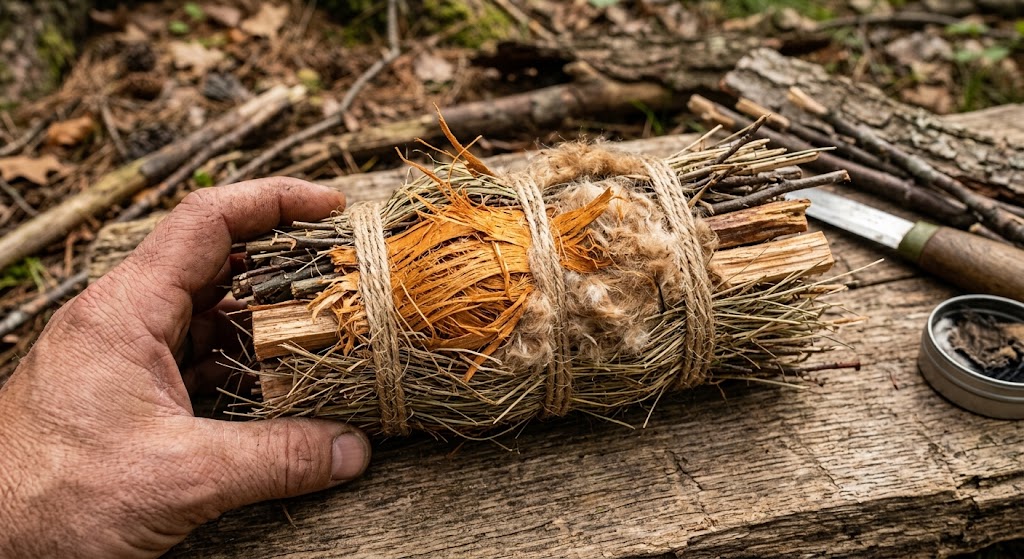
You should also have suitable tinder if the activity involves actually lighting a fire.
A safe fire area or approved fire container is required.
Keep water or another suitable means of extinguishing the resulting fire readily available.
Prerequisites
Scouts should understand basic fire safety before using a ferrocerium rod.
They should know where the fire may be lit, where people should stand and who is responsible for supervising the activity.
Before producing sparks, practise holding and handling the rod and striker safely.
Instructions
1. Check That Fire Is Permitted
Before taking out the ferrocerium rod, establish whether fires are permitted at the location.
Follow campsite rules and any restrictions caused by weather or local conditions.
If fires aren’t permitted, the ferrocerium rod should not be used to create one.
2. Prepare the Fire Area
Use a designated fire area where available.
Remove unnecessary combustible materials from around the working area.
Don’t produce sparks over dry grass, leaves or other materials that could catch accidentally.
3. Establish a Safe Spark Direction
Decide where the sparks will travel before striking the rod.
Keep them directed towards the prepared tinder.
Make sure nobody is standing in the spark path.
4. Check Clothing
Secure loose sleeves, straps and other items that could enter the spark path.
Tie back long hair where appropriate.
Synthetic fabrics can melt or ignite when exposed to sufficiently hot sparks, so keep clothing away from direct sparks.
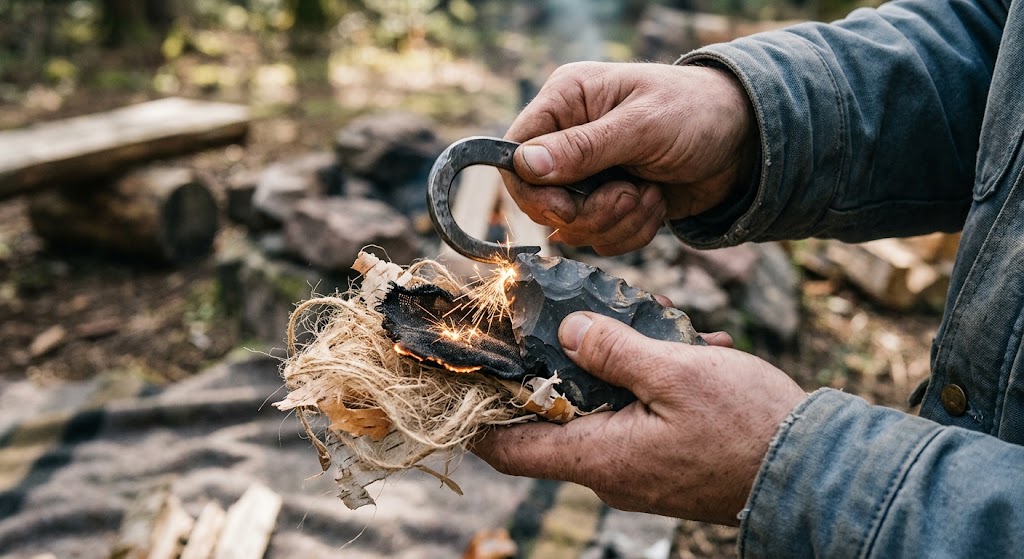
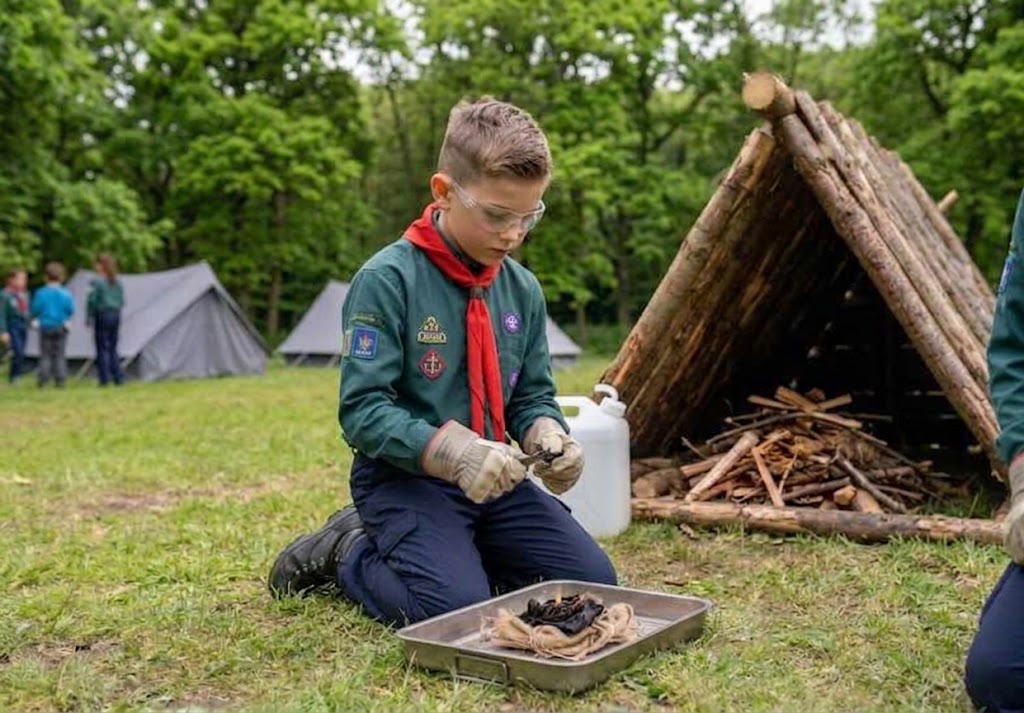
5. Hold the Equipment Correctly
Hold the ferrocerium rod securely.
Keep your fingers behind the area where the striker will make contact.
Hold the striker firmly and maintain control of its movement.
Don’t grip the equipment in a way that could cause your hand to travel towards the sharp edge or spark path.
6. Produce Controlled Sparks
Use deliberate strokes rather than wild or exaggerated movements.
Direct the sparks towards the tinder.
Don’t swing the striker around or deliberately shower sparks over the surrounding area.
7. Keep People Back
Anyone not directly involved should remain outside the immediate working area.
Don’t allow Scouts to crowd around the person producing sparks.
This also makes it easier for the operator to maintain control.
8. Keep Combustibles Away
Don’t keep loose paper, dry vegetation, packaging or other easily ignited materials beside the striking area.
Keep fuel containers and other hazardous materials well away from the fire area.
9. Don’t Use the Rod as a Toy
Don’t use a ferrocerium rod to produce sparks for entertainment.
Never deliberately direct sparks towards another person, clothing, tents or equipment.
Don’t use the rod to test whether random materials will ignite.
10. Keep Tinder Under Control
Only bring the amount of tinder needed for the activity into the immediate fire area.
Keep the remainder safely away from accidental sparks.
Once tinder catches, treat it as a developing fire and follow normal fire-safety procedures.
11. Watch for Accidental Ignition
Don’t assume that a material hasn’t caught simply because you can’t see a flame.
If sparks land outside the intended area, check carefully for smouldering material.
This is particularly important when working around dry grass or woodland.
12. Manage the Fire Once Lit
Once the tinder catches, the ferrocerium rod is no longer the main concern—the fire is.
Keep the fire within its designated area and maintain supervision.
Don’t add large amounts of fuel simply because the initial flame is small.
13. Stop if Conditions Change
Wind can carry sparks beyond the intended area.
If the wind increases or changes direction unexpectedly, stop producing sparks and reassess the situation.
Very dry conditions may also make fire lighting inappropriate.
14. Put the Equipment Away
When finished, allow the equipment to be safely handled and return it to its storage place.
Don’t leave the striker or ferrocerium rod loose in a pocket or equipment bag where it could cause damage or accidental sparks.
15. Extinguish the Fire Completely
If you’ve used the ferrocerium rod to light a fire, extinguish that fire properly when finished.
Follow the site’s fire-extinguishing procedure.
Check for remaining embers and ensure nothing is capable of reigniting.
Using Ferrocerium Rods With Younger Scouts
The skill can be introduced progressively.
Younger Scouts can first learn what the rod does and practise the correct hand positions under close supervision.
The emphasis should be on control and fire awareness, rather than producing the biggest shower of sparks.
As their competence develops, they can progress to lighting suitable tinder under appropriate supervision.
Ferrocerium Rods and Clothing
One easily overlooked hazard is clothing.
Ferrocerium sparks are hot enough to ignite some combustible materials and can leave small melted or scorched marks on synthetic fabrics.
Keep the spark path away from clothing and don’t deliberately strike the rod close to your body.
Ferrocerium Rod Storage
Store the rod and striker securely with other campcraft equipment.
Keep them dry and protected from unnecessary contact with other equipment.
The striker’s edge can damage other items, while the rod can produce sparks if struck accidentally.
Final Tip
A ferrocerium rod is a simple tool, but the sparks it produces should always be treated as a genuine ignition source.
Control the direction of every spark, keep the surrounding area clear, supervise younger Scouts closely and never use the rod as a toy.
The safest technique is also the most useful: prepare first, control the sparks and only ignite what you intend to ignite.
🔒Ready to test your survival skills?
Join Survival Guides UK for free, complete challenges, earn badges and increase your Survival Level.
JOIN FREE →
CRAIG BURR
FOUNDER · SURVIVAL GUIDES UK
I'm Craig, the person behind Survival Guides UK. I created SGUK because I wanted somewhere people could learn real outdoor skills in a practical, straightforward way — from lighting a fire and tying knots to navigation, campcraft and everything in between.
You can read more about the story behind SGUK here as well as our approach here.