Making Tinder Bundles
Activity Overview
Difficulty: Beginner
Time: 30–45 minutes
Location: Outdoors or indoors for preparation; fire-lighting area for testing
Best for: Cubs, Scouts and Explorers
Skills: Fire lighting, woodcraft, material selection, preparation, observation
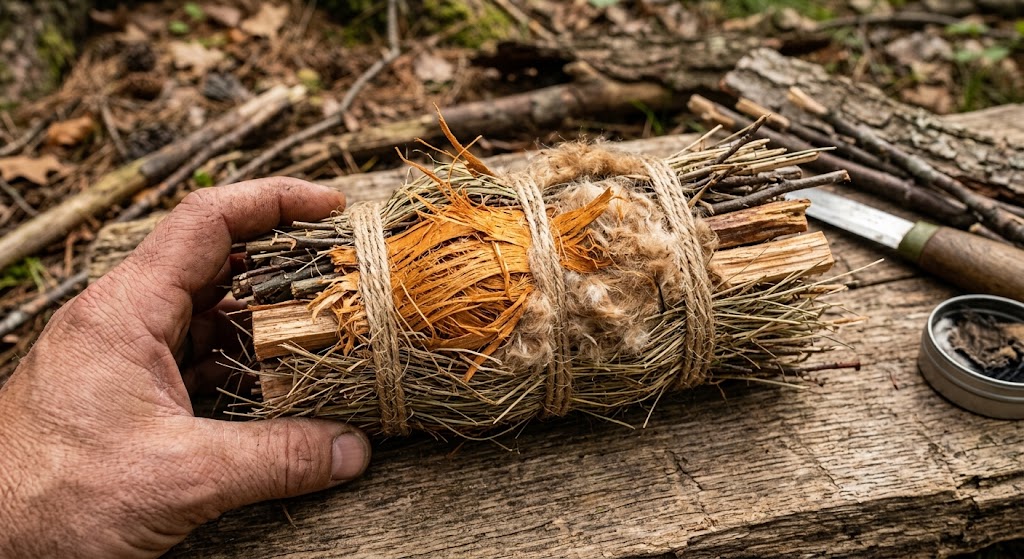
A tinder bundle is a loose collection of dry, easily ignited material used to turn a spark or ember into a small flame. Good tinder should be dry, fine and arranged so that air can move through it.
A well-made bundle makes fire lighting much easier because it gives a small ember somewhere to develop into a flame.
What You’ll Learn
You will learn how to identify suitable tinder, prepare natural materials and build a bundle that catches and spreads a small flame effectively.
You will also learn why dryness, surface area and airflow are important when preparing tinder.
🟡 SAFETY – MODERATE RISK
Tinder is designed to catch fire easily, so it must be treated as a fire-lighting material.
Only prepare and test tinder where fire lighting is permitted and under appropriate adult supervision. Keep tinder away from flames, sparks and other ignition sources until you are ready to use it.
Keep spare tinder and other combustible materials well away from the fire.
Never leave a lit tinder bundle unattended, and make sure all fire and embers are completely extinguished when the activity finishes.
Equipment
You can make tinder bundles from suitable dry natural materials such as dry grass, fine bark fibres, dead leaves, seed heads and other approved materials.
You may also use prepared commercial tinder where appropriate.
A small container or bag can be useful for keeping collected tinder dry.
Prerequisites
Scouts should understand basic fire-lighting safety before testing a tinder bundle with a flame or ember.
If collecting natural materials, make sure participants understand that they should only collect material where they have permission and should avoid damaging living plants.
Instructions
1. Find suitable material
Look for material that is naturally dry and catches easily.
Fine, lightweight material is usually more useful than thick sticks because it has a large surface area and can ignite more readily.
Avoid anything damp, mouldy or contaminated.
2. Keep your tinder dry
Dry tinder is one of the most important parts of successful fire lighting.
If conditions are damp, collect material from sheltered locations where appropriate and keep it protected from rain.
Store prepared tinder in a dry container or waterproof bag until needed.
3. Prepare the material
Break or tease the material into smaller, finer fibres.
The aim is to create material that a small flame or ember can ignite easily.
Do not compress it into a tight ball. Tinder needs space for air to move through it.
4. Build the bundle
Start with the finest material in the centre and gradually add slightly coarser material around it.
Shape the material into a loose bundle that can hold an ember while still allowing plenty of airflow.
A useful bundle should be easy to hold without falling apart, but not packed so tightly that air cannot reach the centre.
5. Create an ignition point
Make a small depression or opening in the centre of the bundle.
This gives you a clear place to introduce a spark, ember or small flame.
The finest tinder should be concentrated around this area.
6. Test the bundle
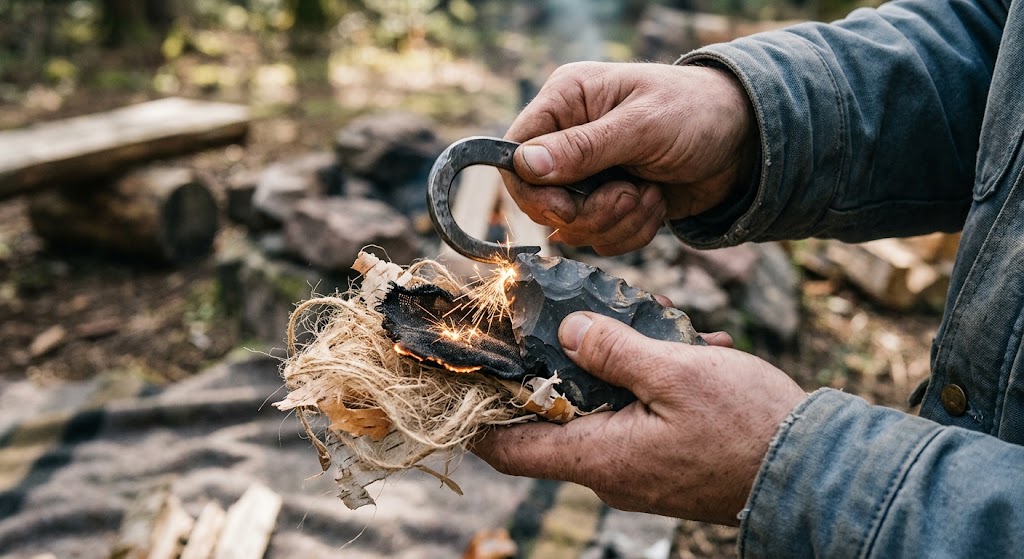
Use the tinder bundle with an appropriate fire-lighting method under supervision.
Introduce the ignition source carefully and watch how the material reacts.
If it catches quickly and develops a flame, the preparation is working well.
If the ember goes out, examine whether the material was too damp, too coarse or packed too tightly.
7. Add fuel gradually
Once the tinder bundle produces a stable flame, gradually add small dry kindling.
Do not immediately cover the bundle with large pieces of wood.
The aim is to allow the flame to grow while maintaining good airflow.
8. Compare different materials
Try preparing bundles using different approved natural materials.
Discuss which materials catch most easily, which hold an ember well and which produce a longer-lasting flame.
This helps Scouts understand that not all tinder performs equally well.
9. Prepare tinder in advance
For a campfire activity, prepare several tinder bundles before attempting to light the fire.
This saves time and allows the group to concentrate on the fire-lighting technique rather than searching for material after the fire has already been prepared.
Keep unused bundles protected from moisture.
10. Extinguish the fire safely
When the activity is finished, extinguish the fire completely according to your group’s fire-safety procedure.
Check carefully for remaining embers before leaving the area.
Final Tip
The best tinder bundle is dry, fine and airy. If you can easily blow air through the bundle, an ember has a much better chance of developing into a flame.
🔒Ready to test your survival skills?
Join Survival Guides UK for free, complete challenges, earn badges and increase your Survival Level.
JOIN FREE →
CRAIG BURR
FOUNDER · SURVIVAL GUIDES UK
I'm Craig, the person behind Survival Guides UK. I created SGUK because I wanted somewhere people could learn real outdoor skills in a practical, straightforward way — from lighting a fire and tying knots to navigation, campcraft and everything in between.
You can read more about the story behind SGUK here as well as our approach here.