Making Feather Sticks | Scout Fire Lighting Skills
Activity Overview
Difficulty: Intermediate
Time: 30–45 minutes
Location: Suitable outdoor woodcraft or fire-lighting area
Best for: Scouts and Explorers
Skills: Knife skills, woodcraft, fire lighting, preparation, concentration
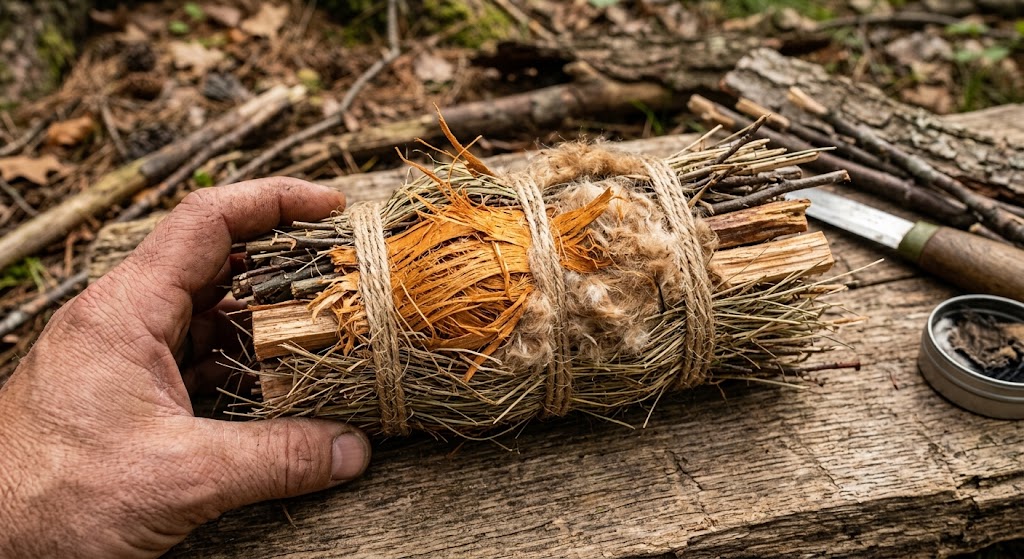
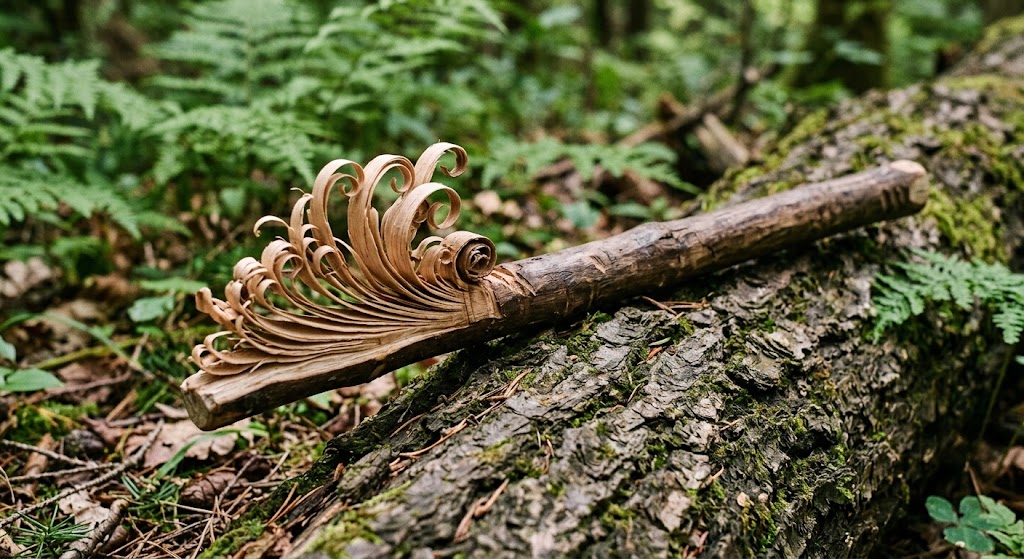
A feather stick is a piece of dry wood with thin curls of wood shaved from the surface while remaining attached to the stick. These fine curls provide extra surface area and can catch a small flame more easily than an ordinary piece of kindling.
Making feather sticks is a useful Scout woodcraft skill, but it involves a sharp knife and should only be taught and practised with appropriate supervision.
What You’ll Learn
You will learn how to select suitable dry wood, safely hold the stick and create controlled curls with a knife.
You will also learn how feather sticks can help when natural firewood is damp or when you need easily ignited kindling.
🟡 SAFETY – MODERATE RISK
Making feather sticks involves using a sharp knife and should only be carried out by Scouts who have been taught the appropriate knife skills and are permitted to use a knife for the activity.
Use a stable position and keep the cutting path away from your body and other people. Never place a hand or finger in front of the blade.
Work slowly and concentrate on each cut. Do not attempt to make large or aggressive cuts simply to produce feathers more quickly.
Only use dry, untreated wood approved by the supervising leader. Do not use treated, painted or chemically contaminated timber.
Keep the knife safely stored when it is not being used.
Equipment
You will need a suitable fixed-blade or other approved outdoor knife, a piece of dry, straight-grained wood and a suitable place to work.
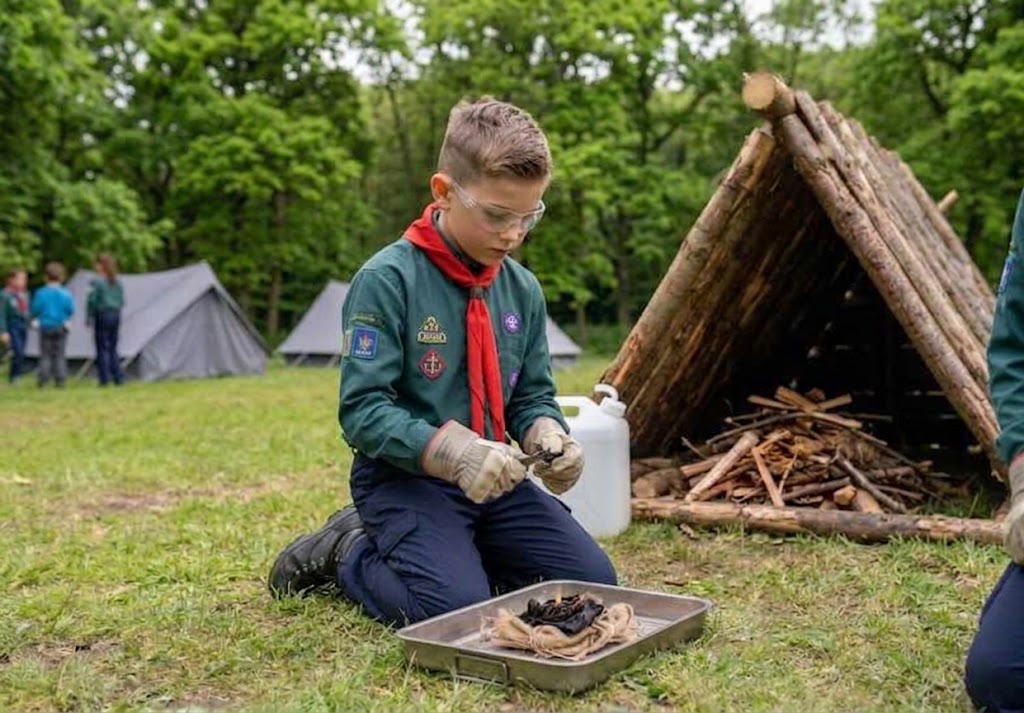
You will also need the normal fire-lighting equipment and fire safety equipment if the feather sticks are going to be tested.
Prerequisites
Before making feather sticks, Scouts should understand basic knife safety and have demonstrated that they can handle the chosen knife responsibly.
You should also understand basic fire-lighting safety if the finished feather stick will be used to start a fire.
Instructions
1. Choose suitable wood
Select a piece of dry, reasonably straight-grained wood.
Softwoods can be particularly useful because they can produce thin shavings, but the most important factors are that the wood is dry and suitable for the activity.
Avoid rotten, contaminated or treated timber.
2. Prepare your working position
Choose a stable position with plenty of space around you.
Keep other Scouts outside your cutting area and make sure there are no obstacles that could cause you to lose your balance.
Your knife should always have a clear cutting path.
3. Hold the wood securely
Hold the stick so that your supporting hand remains well away from the knife’s cutting path.
Do not grip the wood in a position where a slipping blade could strike your fingers.
For beginners, use a method demonstrated and approved by the supervising leader.
4. Start the first shaving
Place the knife against the wood and make a controlled cut along the surface.
The aim is to remove a thin shaving, not a large chunk of wood.
Keep the shaving attached to the stick rather than cutting it completely away.
5. Create the feathers
Repeat the same controlled movement alongside the first shaving.
Gradually work around the stick, creating a collection of thin curls.
The thinner the curls, the more easily they can catch a small flame, but avoid making them so fine that they break away immediately.
6. Keep the feathers attached
A good feather stick has several curls attached to the main piece of wood.
If a shaving breaks off, simply continue with the next one. There is no need to force the knife to produce a perfect curl.
7. Check the finished stick
Inspect the feather stick before using it.
Make sure the curls are dry and loose enough to catch a flame while remaining attached to the stick.
Remove any loose pieces that could interfere with safe handling.
8. Use the feather stick
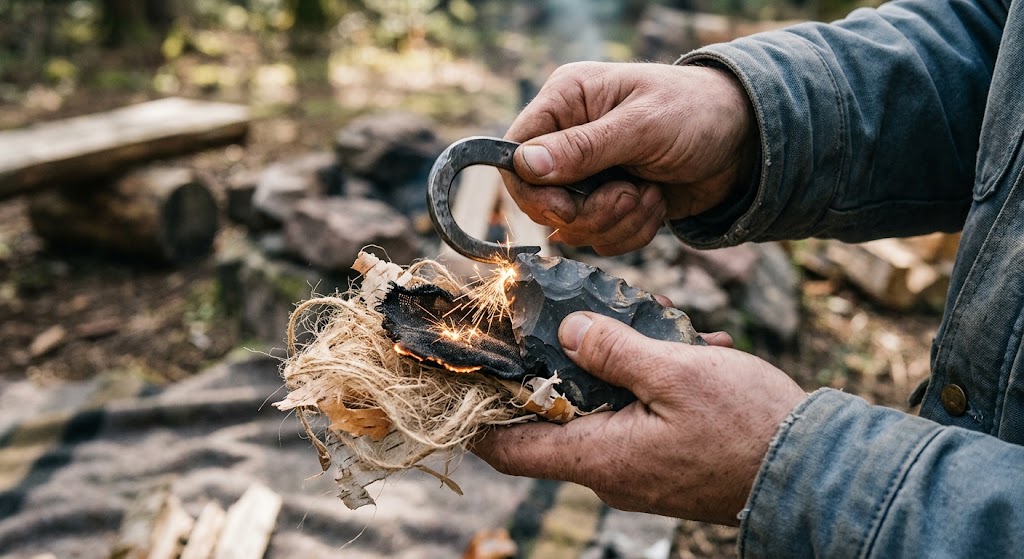
Place the feather stick in an appropriate fire-lighting setup with the fine curls positioned where they can receive the ignition source.
Use a suitable fire-lighting method under supervision.
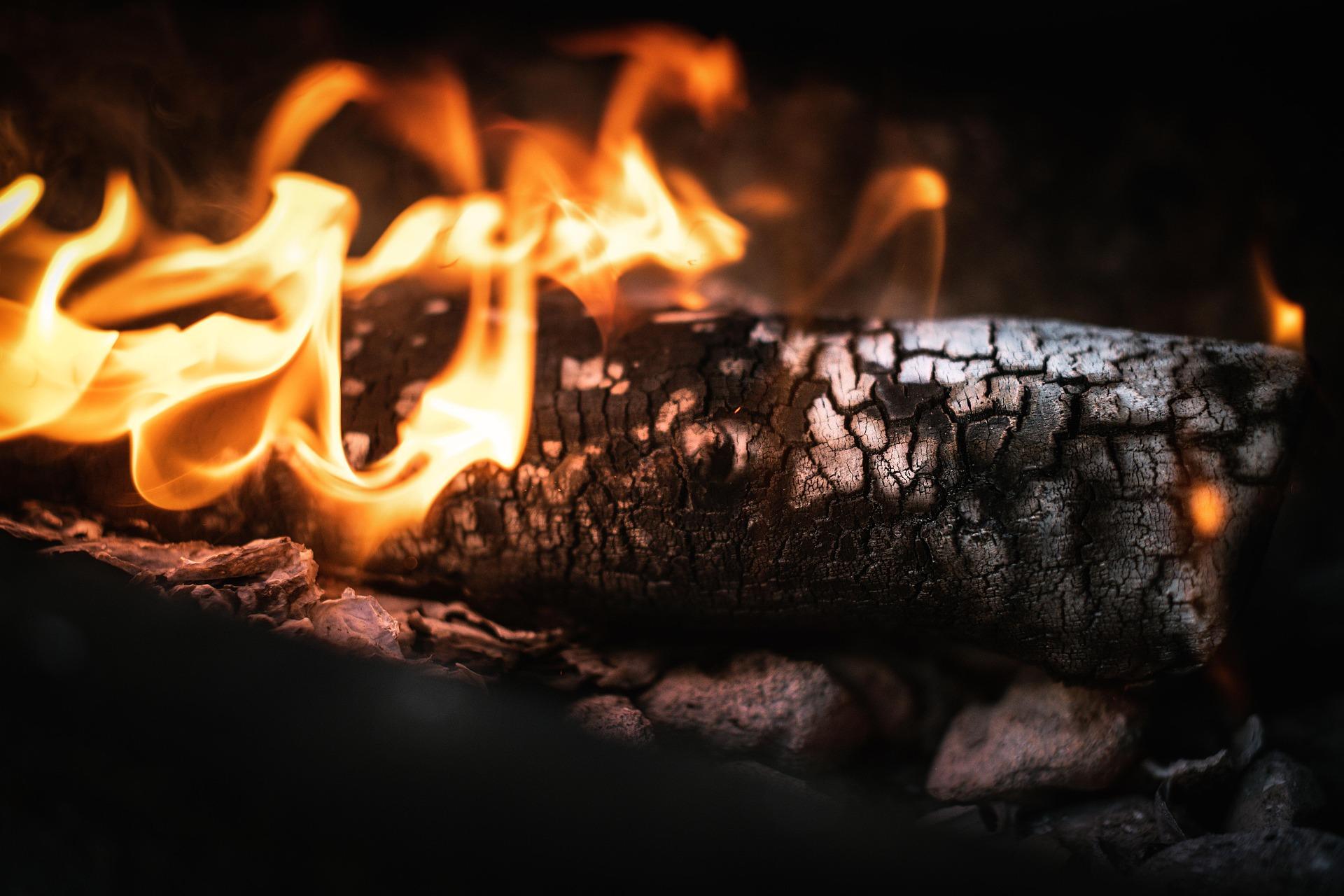
Once the feathers ignite, add progressively larger pieces of dry kindling while maintaining good airflow.
9. Extinguish the fire safely
When the activity is complete, extinguish the fire completely according to your group’s fire-safety procedure.
Make sure no glowing embers remain before leaving the area.
10. Store the knife safely
Clean the knife if necessary and return it to its sheath or designated storage location.
Never leave a knife exposed on the ground, on a log or hidden among wood.
Final Tip
Thin curls are more useful than big shavings. Take your time and concentrate on producing controlled, attached feathers. A well-made feather stick can turn a small flame into useful kindling without needing a large amount of extra material.
🔒Ready to test your survival skills?
Join Survival Guides UK for free, complete challenges, earn badges and increase your Survival Level.
JOIN FREE →
CRAIG BURR
FOUNDER · SURVIVAL GUIDES UK
I'm Craig, the person behind Survival Guides UK. I created SGUK because I wanted somewhere people could learn real outdoor skills in a practical, straightforward way — from lighting a fire and tying knots to navigation, campcraft and everything in between.
You can read more about the story behind SGUK here as well as our approach here.